The Complete Pet Rabbit Care Guide for Beginners (2026)Rabbits are one of the most rewarding pets you can own. Their playful personalities, gentle nature, and adorable appearance make them wonderful companions for families, singles, and even apartment dwellers. However, many first-time owners underestimate the level of care rabbits require. Unlike small pets that can spend most of their lives in a cage, rabbits need daily exercise, mental stimulation, a proper diet, and regular health care to thrive.
Whether you’ve just adopted your first bunny or are considering bringing one home, this guide will help you understand everything you need to know about rabbit care. By following these best practices, you’ll create a safe, healthy, and happy environment where your rabbit can live a long and fulfilling life.
Why Rabbits Make Great Pets
Rabbits are intelligent, affectionate animals that can develop strong bonds with their owners. With patience and gentle handling, many rabbits enjoy being around people and can even learn their names, recognize routines, and perform simple tricks.
Some of the biggest benefits of owning a rabbit include:
- Quiet pets that rarely make loud noises.
- Can be litter-trained like cats.
- Clean animals that groom themselves frequently.
- Intelligent and curious personalities.
- Suitable for indoor living.
- Can live 8–12 years with proper care.
- Excellent companions for patient owners.
Although rabbits are often seen as easy pets, they actually require commitment, daily attention, and proper veterinary care.

Choosing the Right Rabbit Breed
Different rabbit breeds have different sizes, personalities, and grooming needs. Before adopting a rabbit, consider your available space, experience level, and the amount of grooming you’re willing to provide.
Some beginner-friendly breeds include:
Mini Lop
- Friendly personality
- Easy to handle
- Moderate grooming needs
Holland Lop
- Small size
- Gentle temperament
- Great for families
Lionhead Rabbit
- Very cute appearance
- Requires regular brushing
- Active and playful
Rex Rabbit
- Soft velvet-like fur
- Calm temperament
- Low grooming requirements
Dutch Rabbit
- Intelligent
- Easy to train
- Social and affectionate
Remember that every rabbit has its own personality, regardless of breed.
Preparing Your Home for a Rabbit
Before bringing your rabbit home, prepare a safe environment. Rabbits love to chew, dig, and explore, so rabbit-proofing your home is essential.
Your rabbit should have:
- A spacious enclosure or exercise pen.
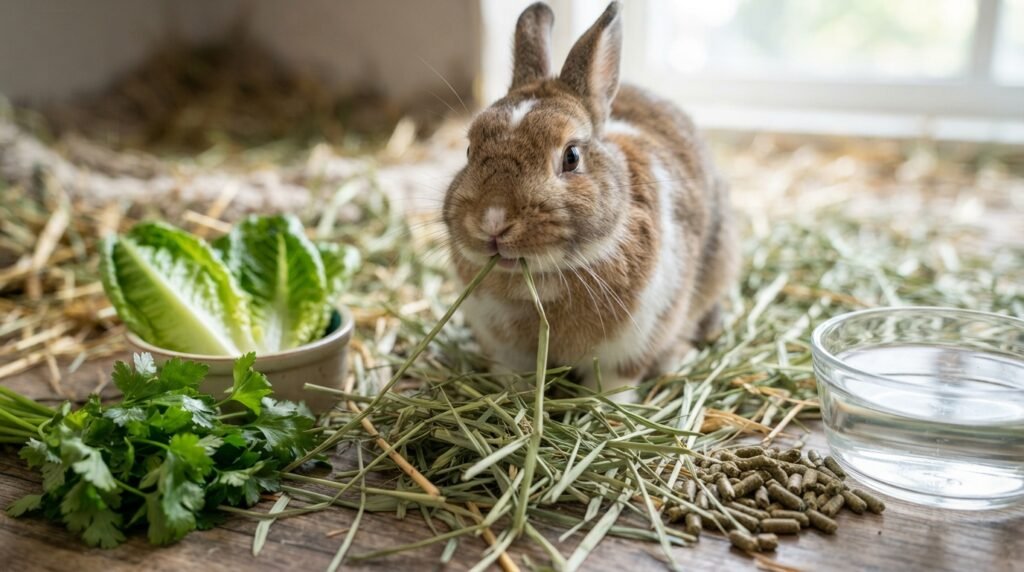
- Unlimited access to fresh hay.
- Fresh water available at all times.
- Food bowls.
- A litter box.
- Safe chew toys.
- Hideouts for security.
- Soft resting areas.
- Daily exercise space outside the enclosure.
Avoid placing your rabbit near direct sunlight, loud televisions, or areas with constant foot traffic.

Rabbit-Proof Your Home
Just like puppies, rabbits investigate the world with their mouths. Protect both your rabbit and your belongings by:
- Covering electrical cords.
- Removing toxic houseplants.
- Blocking access to small spaces behind furniture.
- Keeping cleaning chemicals out of reach.
- Protecting wooden furniture from chewing.
- Removing small objects that could be swallowed.
A rabbit-proof home greatly reduces the risk of accidents and keeps your bunny safe while exploring.
Creating the Perfect Home for Your Rabbit
A rabbit’s living environment has a major impact on its health and happiness. While many people think rabbits should spend their lives in a small cage, the truth is that they need plenty of room to move, stretch, hop, and play every day.
The ideal setup combines a spacious enclosure with supervised free-roam time in a rabbit-proofed area of your home.
Rabbit Cage vs. Exercise Pen
A traditional cage can work as a sleeping and feeding area, but it should be large enough for your rabbit to stand on its hind legs, stretch out fully, and move around comfortably. Even better, many rabbit owners choose an exercise pen (x-pen), which offers significantly more space.
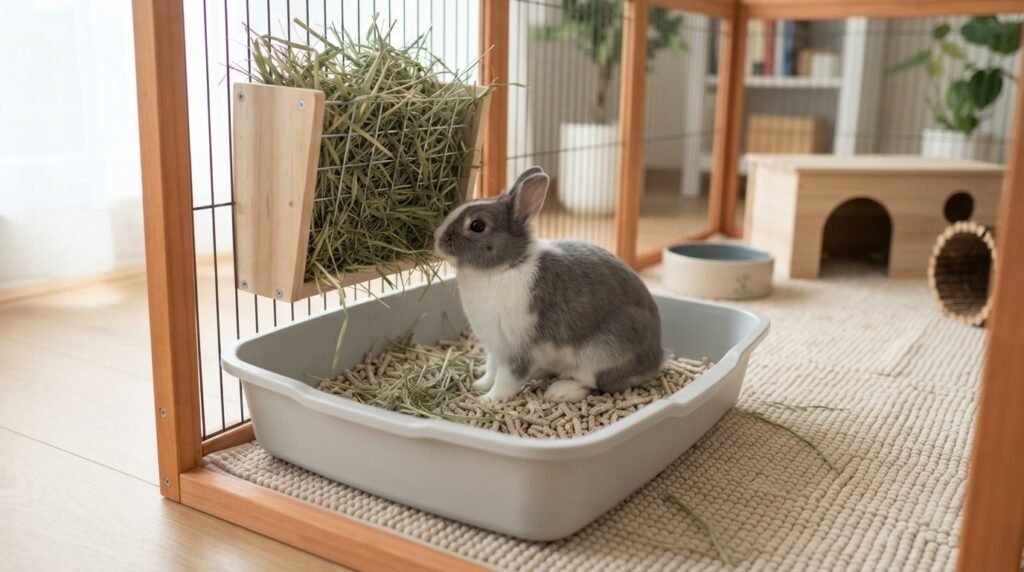
A Good Rabbit Enclosure Should Include:
- Space to hop at least three to four times.
- A separate litter box.
- Unlimited hay in a hay rack.
- Food and water bowls or a water bottle.
- A hiding house or tunnel.
- Soft resting mats.
- Toys for chewing and enrichment.
Avoid keeping rabbits in cramped cages for long periods, as limited movement can lead to obesity, muscle weakness, and boredom.
Choosing the Best Bedding
Comfortable bedding helps keep your rabbit healthy and your home cleaner.
Safe Bedding Options
- Paper-based bedding
- Aspen wood shavings
- Recycled paper pellets
- Fleece liners
- Straw (for nesting, not as the main food source)
Bedding to Avoid
- Cedar shavings
- Pine shavings (unless kiln-dried)
- Cat litter containing clay
- Clumping litter
- Scented bedding
Replace soiled bedding regularly to prevent odors and reduce the risk of infections.
Feeding Your Rabbit the Right Diet
A healthy diet is the foundation of rabbit care. Rabbits have delicate digestive systems that require a high-fiber diet to maintain healthy teeth and proper digestion.
1. Unlimited Hay (Most Important)
Hay should make up about 80–90% of your rabbit’s diet.
The best options include:
- Timothy hay
- Orchard grass
- Meadow hay
- Oat hay
Hay supports healthy digestion, prevents digestive problems, and naturally wears down continuously growing teeth.
2. High-Quality Rabbit Pellets
Pellets provide additional vitamins and minerals but should only be fed in moderate amounts.
Choose pellets that are:
- High in fiber
- Low in sugar
- Free from colorful treats or seeds
Follow feeding recommendations based on your rabbit’s age, size, and activity level.
3. Fresh Vegetables
Offer a variety of fresh leafy greens every day.
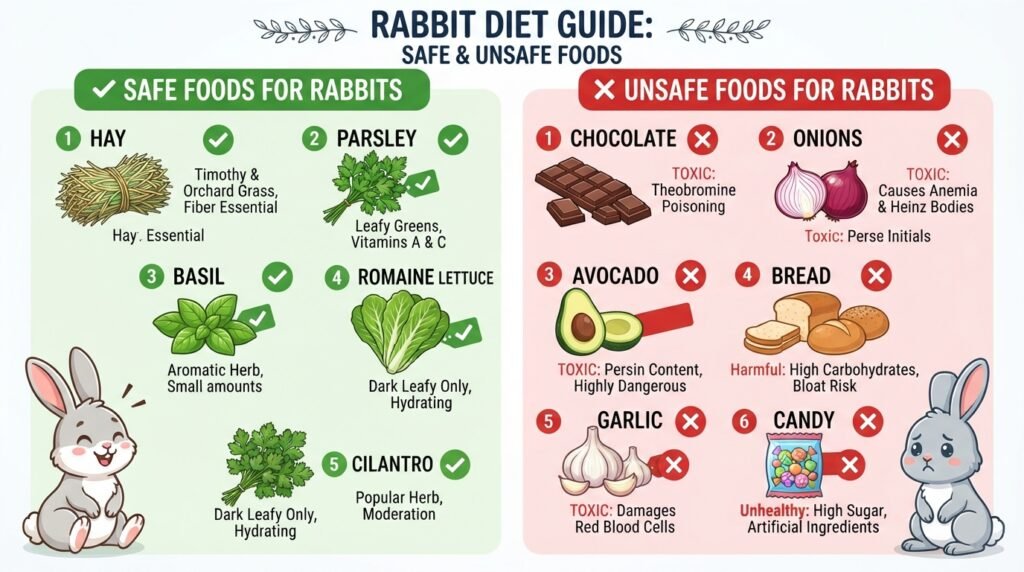
Great choices include:
- Romaine lettuce
- Cilantro
- Parsley
- Basil
- Bok choy
- Dandelion greens
- Mint
- Kale (in moderation)
Introduce new vegetables gradually and monitor for digestive upset.
4. Fresh Water
Your rabbit should always have access to clean, fresh water.
Many rabbits prefer a heavy ceramic bowl because it is easier to drink from and less likely to tip over than a bottle.
Wash and refill the water container daily.
Foods Rabbits Should Never Eat
Some foods can cause serious digestive problems or even be toxic.
Avoid feeding:
- Chocolate
- Onions
- Garlic
- Avocado
- Iceberg lettuce
- Rhubarb
- Potatoes
- Bread
- Cookies
- Chips
- Sugary cereals
- Candy
- Dairy products
- Meat or eggs
Fruit such as apples, strawberries, and bananas can be offered occasionally as small treats because they are high in natural sugar.
Feeding Schedule
A simple daily routine helps keep your rabbit healthy:
Morning
- Refill hay.
- Provide fresh water.
- Offer a measured portion of pellets.
Evening
- Add fresh leafy greens.
- Check hay supply.
- Replace water if needed.
Keeping a consistent feeding schedule supports good digestion and reduces stress.
Grooming, Exercise, and Bonding With Your Rabbit
A happy rabbit needs more than food and shelter. Regular grooming, daily exercise, and mental stimulation are essential for keeping your bunny healthy and preventing boredom. Rabbits are active, curious animals that thrive when they have opportunities to explore, play, and interact with their owners.
Grooming Your Rabbit
Rabbits are naturally clean animals and spend a lot of time grooming themselves. However, they still need help from their owners, especially during seasonal shedding.
Brushing
Brush your rabbit at least 1–2 times per week, and more often during heavy shedding. Regular brushing helps:
- Remove loose fur
- Reduce hair ingestion
- Prevent painful mats
- Keep the coat shiny and healthy
Long-haired breeds like Lionhead rabbits may need daily brushing to avoid tangles.
Nail Trimming
Rabbit nails grow continuously and should be trimmed every 4–8 weeks, depending on how quickly they grow.
If nails become too long, they can:
- Cause discomfort while walking
- Snag on carpets or bedding
- Lead to foot injuries
Use nail clippers designed for small animals and avoid cutting the pink “quick,” which contains blood vessels.
Dental Care
A rabbit’s teeth never stop growing. Chewing on hay and safe wooden toys naturally wears them down.
Signs of dental problems include:
- Drooling
- Difficulty eating
- Weight loss
- Swelling around the mouth
- Reduced appetite
If you notice any of these signs, schedule a visit with a rabbit-experienced veterinarian as soon as possible.
Daily Exercise
Rabbits need at least 3–4 hours of supervised exercise outside their enclosure every day.
Exercise helps:
- Maintain a healthy weight
- Strengthen muscles
- Improve digestion
- Prevent boredom
- Reduce destructive chewing
Always rabbit-proof the exercise area before letting your bunny roam.
Fun Enrichment Activities
Mental stimulation is just as important as physical exercise. Rotate toys regularly to keep your rabbit interested.
Great enrichment ideas include:
- Cardboard tunnels
- Paper bags filled with hay
- Untreated wooden chew toys
- Digging boxes with shredded paper
- Puzzle feeders
- Willow balls
- Stacking cups
- Treat-dispensing toys
Avoid toys with small plastic parts that could be chewed and swallowed.
Litter Training Your Rabbit
One of the best things about rabbits is that they can often be litter-trained.
How to Litter Train
- Place a litter box in the corner your rabbit naturally uses.
- Fill it with rabbit-safe litter.
- Add fresh hay near or above the litter box.
- Clean accidents without using strong-smelling cleaners.
- Reward your rabbit with praise or a small healthy treat when it uses the litter box.
Most rabbits learn quickly with patience and consistency.
Building Trust With Your Rabbit
Rabbits are prey animals, so they may be cautious around people at first. Building trust takes time.
Here are some tips:
- Sit quietly on the floor and let your rabbit approach you.
- Offer healthy treats by hand.
- Avoid chasing or forcing interaction.
- Speak in a calm, gentle voice.
- Pet your rabbit slowly on the forehead or cheeks if it seems comfortable.
- Respect your rabbit’s need for quiet time.
With regular positive interactions, many rabbits become affectionate companions who enjoy spending time with their owners.
Signs of a Happy Rabbit
A content rabbit often shows these behaviors:
- Binkies (joyful jumps and twists in the air)
- Flopping onto its side to relax
- Gentle tooth purring while being petted
- Curious exploration
- Eating and drinking normally
- Bright, alert eyes
- Smooth, clean coat
Recognizing these signs helps you know your rabbit is thriving.

Common Rabbit Health Problems
Even with excellent care, rabbits can sometimes develop health issues. Because rabbits instinctively hide signs of illness, it’s important to notice changes in their behavior early.
1. Gastrointestinal (GI) Stasis
GI stasis is one of the most serious conditions in rabbits. It occurs when the digestive system slows down or stops.
Symptoms
- Loss of appetite
- Few or no droppings
- Lethargy
- Teeth grinding from pain
- Bloated abdomen
This is a medical emergency. Contact a rabbit-savvy veterinarian immediately if you notice these signs.
2. Dental Problems
Rabbit teeth grow continuously throughout their lives. Without enough hay and safe chew toys, teeth can become overgrown.
Signs
- Drooling
- Difficulty chewing
- Weight loss
- Wet fur around the mouth
- Reduced appetite
Regular dental checks and a hay-rich diet help prevent these issues.
3. Respiratory Infections
Respiratory infections may cause:
- Sneezing
- Nasal discharge
- Watery eyes
- Difficulty breathing
- Loss of energy
Keep your rabbit’s enclosure clean and well-ventilated to reduce the risk.
4. Parasites
External parasites such as mites can cause:
- Excessive scratching
- Hair loss
- Scaly skin
- Ear irritation
Routine health checks and prompt veterinary treatment are essential.
When Should You Visit the Veterinarian?
Schedule regular wellness exams at least once a year, even if your rabbit appears healthy.
Seek veterinary care immediately if your rabbit:
- Stops eating for more than a few hours
- Has diarrhea
- Produces very few droppings
- Has difficulty breathing
- Suffers an injury
- Cannot stand or move normally
- Shows sudden weight loss
- Has swollen eyes or unusual discharge
Early treatment often leads to much better outcomes.
Daily Rabbit Care Checklist
Follow this simple routine every day:
✅ Refill unlimited fresh hay
✅ Replace drinking water
✅ Feed fresh leafy greens
✅ Provide measured rabbit pellets
✅ Remove dirty bedding
✅ Clean the litter box if needed
✅ Check for signs of illness
✅ Spend quality bonding time
✅ Allow 3–4 hours of supervised exercise
✅ Offer safe chew toys and enrichment
Weekly Rabbit Care Checklist
Once a week:
- Deep-clean the enclosure
- Wash food and water bowls thoroughly
- Inspect toys for damage
- Brush your rabbit
- Check nails and teeth
- Weigh your rabbit to monitor health
- Rotate enrichment toys to prevent boredom
A consistent routine helps your rabbit stay healthy and happy.
Frequently Asked Questions
Can rabbits live indoors?
Yes. Indoor rabbits are generally safer and protected from extreme weather, predators, and many diseases.
How long do pet rabbits live?
With proper care, most pet rabbits live 8–12 years, and some can live even longer.
Do rabbits need a companion?
Many rabbits enjoy living with another compatible rabbit, but introductions should be done carefully. If you keep a single rabbit, provide daily interaction and enrichment.
Can rabbits be litter-trained?
Yes. Most rabbits learn to use a litter box with patience and consistency.
What is the most important part of a rabbit’s diet?
Unlimited grass hay should make up the majority of a healthy rabbit’s diet.
Final Thoughts
Rabbits are intelligent, social, and affectionate pets that reward responsible owners with years of companionship. While they require more care than many people expect, meeting their needs is straightforward once you establish a daily routine.
By providing a spacious living area, a hay-based diet, regular exercise, mental enrichment, and routine veterinary care, you can help your rabbit enjoy a long, healthy, and happy life.
Whether you’re welcoming your first bunny or improving the care of a longtime companion, investing time in proper rabbit care will strengthen your bond and ensure your pet thrives.

hammadniazi6663@gmail.com
Contributor at PetZuoo, publishing practical information for pet owners and animal lovers.
Related guides

Why Do Dog Tilt Their Heads? 9 Fascinating Reason
Why Do Dog Tilt Their Heads? 9 Fascinating Reason Behind This Adorable Behavior. Have you ever spoken to your dog and watched…
What You Should Know About Pet Rabbit Care
What You Should Know About Pet Rabbit Care, Rabbits are quiet, cute and surprisingly full of personality. They can learn routines, recognize…
Why Do Dogs Eat Grass? 9 Surprising Causes & Solutions
Why Do Dogs Eat Grass? 9 Surprising Causes & Solutions and Why Do Dogs Eat Grass? 9 Causes and What Every Dog…