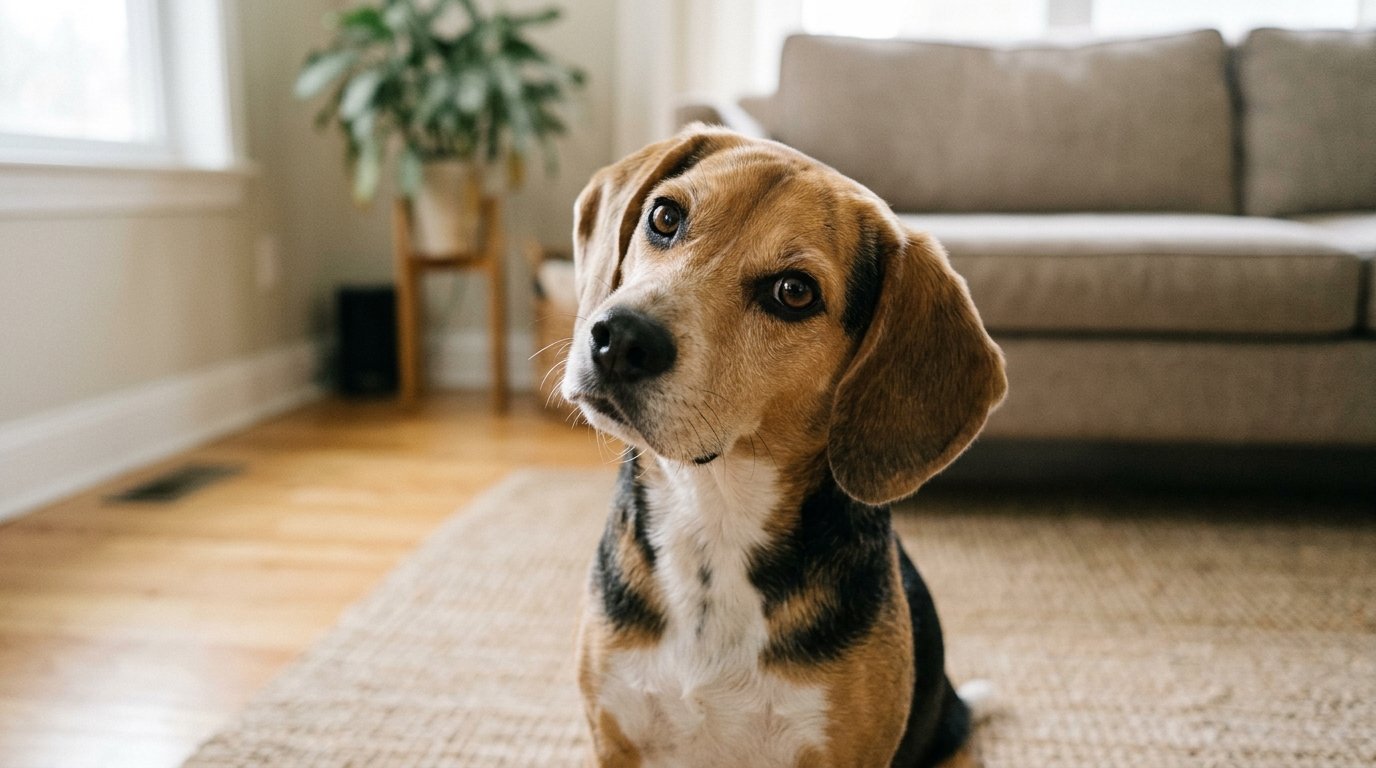
Why Do Dog Tilt Their Heads? 9 Fascinating Reason Behind This Adorable Behavior. Have you ever spoken to your dog and watched them tilt their head to one side as if they were trying to understand every word you said? It is one of the most adorable things dogs do, and many pet owners find it impossible not to smile when it happens.
But why do dogs tilt their heads? Is your dog listening carefully, trying to understand your voice, or simply reacting to a sound? In many cases, head tilting may be connected to attention, sound processing, communication, or a learned behavior. However, the exact reason can vary from one dog to another.
Understanding your dog’s body language can help you recognize their needs, strengthen your relationship, and identify when an unusual movement might require veterinary attention.
In this guide, we will explore nine fascinating reasons dogs tilt their heads, explain how to interpret this behavior, and share practical tips for understanding your furry companion.
What Does It Mean When a Dog Tilts Its Head?
A dog head tilt occurs when a dog angles its head to one side instead of keeping it straight. The movement may last only a second or two, or your dog may hold the position while looking at you.
Many healthy dogs tilt their heads when they hear unfamiliar sounds, recognize certain words, or watch something interesting. Some dogs do it frequently, while others rarely show this behavior.
A brief head tilt that happens during an ordinary interaction is generally different from persistent head tilting accompanied by difficulty walking, falling, or other unusual symptoms.
The context matters. Pay attention to what happened immediately before the movement, whether your dog appears comfortable, and whether the behavior stops normally.

1. Your Dog Is Paying Close Attention to Your Voice
One of the most common situations in which dogs tilt their heads is when their owners speak to them.
Dogs are skilled at noticing differences in sounds, tone, rhythm, and familiar words. When you call your dog’s name or say something interesting, your pet may tilt their head while focusing on your voice.
For example, your Golden Retriever might react when you ask, “Do you want to go outside?” Your dog may recognize the familiar phrase and look at you expectantly.
The head tilt does not necessarily mean your dog understands every word. Instead, it may indicate that your pet is paying attention to a sound or trying to interpret the situation.
What you can do: Speak naturally, use consistent words for important commands, and reward your dog for responding appropriately. Avoid repeating commands excessively if your dog already understands them.
2. Your Dog May Be Trying to Locate a Sound
Dogs have sensitive hearing and can detect sounds that humans might overlook. When something unusual happens, your dog may turn or tilt their head while trying to determine where the sound originated.
Imagine that your dog hears a quiet noise coming from another room. They may pause, lift their ears, turn their head, and look toward the doorway.
This combination of movements helps your dog investigate the environment. A head tilt can be part of that response, although turning the head alone does not prove that your dog is calculating the exact location of a sound.
Common sound triggers include:
- A squeaky toy.
- A doorbell or knock.
- Birds calling outside.
- A familiar voice coming from a phone.
- An unfamiliar noise from the kitchen.
Pet owner tip: Give your dog opportunities to explore ordinary household sounds without frightening them. If a noise consistently causes fear, help your dog become comfortable with it gradually rather than deliberately startling them.
3. Your Dog Recognizes a Familiar Word
Dogs can learn associations between particular words and enjoyable activities. Words such as “walk,” “dinner,” “treat,” and “outside” may become exciting because they predict something your dog enjoys.
When your dog hears a familiar word, they might tilt their head, raise their ears, wag their tail, or move toward the door.
Research has also investigated dogs’ responses to familiar object names and speech. Individual dogs differ considerably in what they learn, so a head tilt should not automatically be interpreted as proof that a dog recognizes a particular word.
Try noticing which words consistently capture your dog’s attention.
For example, say your dog’s name in a friendly voice and observe their reaction. Later, use a familiar cue such as “outside” and see whether their body language changes.
Important: Do not assume that every head tilt means your dog wants a treat. Consider their complete body language and the situation.

4. Your Dog Is Watching Your Facial Expressions
Dogs pay attention to human faces, gestures, posture, and emotional cues. A head tilt may occur while your dog studies your face or follows a change in your expression.
For instance, you might bend down to talk to your dog, smile, and make an unusual sound. Your dog may tilt their head while watching you.
However, researchers have not established that every head tilt is an attempt to read human facial expressions. The movement may occur for several reasons at once, including sound attention and visual interest.
You can encourage healthy communication by using calm body language, consistent commands, and positive reinforcement.
Avoid leaning over a nervous dog or staring directly into their eyes if they appear uncomfortable. Give them enough space to approach you voluntarily.
5. Your Dog Has Learned That Head Tilting Gets Attention
Here is another fascinating possibility: your dog may have learned that tilting their head makes you smile, laugh, talk to them, or offer affection.
Dogs learn from the consequences of their behavior. If a particular movement repeatedly receives attention, some dogs may become more likely to repeat it.
For example, imagine that your dog tilts their head and you immediately say, “Aww, you’re so cute!” You then pet them or take a photograph.
If your dog enjoys that interaction, they may repeat the movement during future conversations.
This does not mean your dog is deliberately manipulating you. It simply means they can learn which behaviors produce rewarding responses.
How to respond: Enjoy the moment and reward friendly, relaxed behavior. There is no need to force your dog to tilt their head for photographs or repeatedly make loud noises to trigger the movement.
6. Your Dog May Be Responding to Something Visually Interesting
Dogs do not experience the world exactly as humans do. Their visual attention is influenced by movement, contrast, distance, and the environment.
A dog might tilt their head while observing a moving toy, watching a person make a gesture, or inspecting an unfamiliar object.
Changing the angle of the head can alter the dog’s viewing position, but researchers have not established that ordinary head tilting is always a deliberate strategy for seeing around the muzzle.
Some dogs may also combine head tilting with leaning forward, moving their ears, or taking a few steps closer.
If your dog seems curious, let them investigate safe objects at their own pace. Keep small items, sharp objects, and anything they might swallow out of reach.
7. Your Dog May Be Excited or Curious
Dogs often display several body-language signals when something captures their interest. A head tilt may accompany a wagging tail, forward-facing ears, an alert posture, or an eager expression.
Suppose you bring home a new toy. Your dog may stare at it, tilt their head, sniff it, and then begin playing.
This behavior can be part of ordinary exploration.
Nevertheless, not every head tilt indicates happiness. Dogs may tilt their heads while confused, uncertain, or responding to an unfamiliar sound.
Look at the entire body rather than judging the head position alone.
Signs that your dog may be comfortable include a loose body, relaxed facial muscles, and the freedom to approach or move away. Stiffness, tucked posture, repeated lip licking, or attempts to retreat may indicate discomfort or uncertainty.

8. Your Dog May Have an Ear Problem
Not every head tilt is harmless. Ear irritation or disease can sometimes cause a dog to hold their head at an unusual angle, particularly when the movement is new or persistent.
Potential ear-related problems include inflammation, infection, a foreign object in the ear canal, and other conditions affecting the ear.
Watch for additional signs such as:
- Frequent head shaking.
- Repeated scratching at one ear.
- Redness or swelling around the ear.
- Unusual odor or discharge.
- Sensitivity when the head or ear is touched.
- Reduced comfort or changes in normal behavior.
These symptoms do not identify a specific condition on their own. A veterinarian can examine your dog and determine whether treatment is needed.
What to do: Arrange a veterinary appointment if head tilting is new, persistent, or accompanied by ear discomfort. Avoid inserting cotton swabs or other objects into the ear canal, and do not use leftover ear medication without veterinary guidance.
9. Persistent Head Tilting Can Signal a Balance or Neurological Problem
A sustained head tilt can sometimes indicate a problem involving the vestibular system, which helps dogs maintain balance and orient their bodies.
The vestibular system involves structures in the inner ear and parts of the brain. When something affects this system, a dog may have difficulty maintaining normal balance.
Possible warning signs include:
- A head that remains tilted even when the dog is resting.
- Stumbling, circling, or falling.
- Unusual side-to-side eye movements.
- Difficulty standing or walking.
- Nausea or vomiting.
- Sudden disorientation or weakness.
These signs can have several causes, and only a veterinary examination can determine the underlying problem.
Seek urgent veterinary care if your dog develops a sudden, persistent head tilt, particularly if it occurs with balance difficulties, abnormal eye movements, or repeated falling. If your dog cannot stand, collapses, has a seizure, or develops other severe symptoms, seek emergency veterinary care.
Keep your dog away from stairs and other fall hazards while arranging help. Do not force them to walk or give human medication.
Why Do Some Dogs Tilt Their Heads More Than Others?
You may notice that one dog tilts their head during almost every conversation, while another dog rarely does it.
There is no single explanation for this difference. Individual dogs vary in temperament, learning history, hearing, physical characteristics, and how they respond to their surroundings.
Some dogs have learned that head tilting receives attention. Others may react more strongly to certain sounds or spoken cues.
Research published in 2021 examined dogs that learned the names of toys. The researchers observed more head tilting among the small group of dogs classified as gifted word learners when those dogs heard the names of familiar toys. The study was interesting, but it did not establish that head tilting is a general measure of canine intelligence.
In other words, a dog that tilts their head frequently is not necessarily smarter than a dog that does it rarely.
Do Puppies Tilt Their Heads Too?
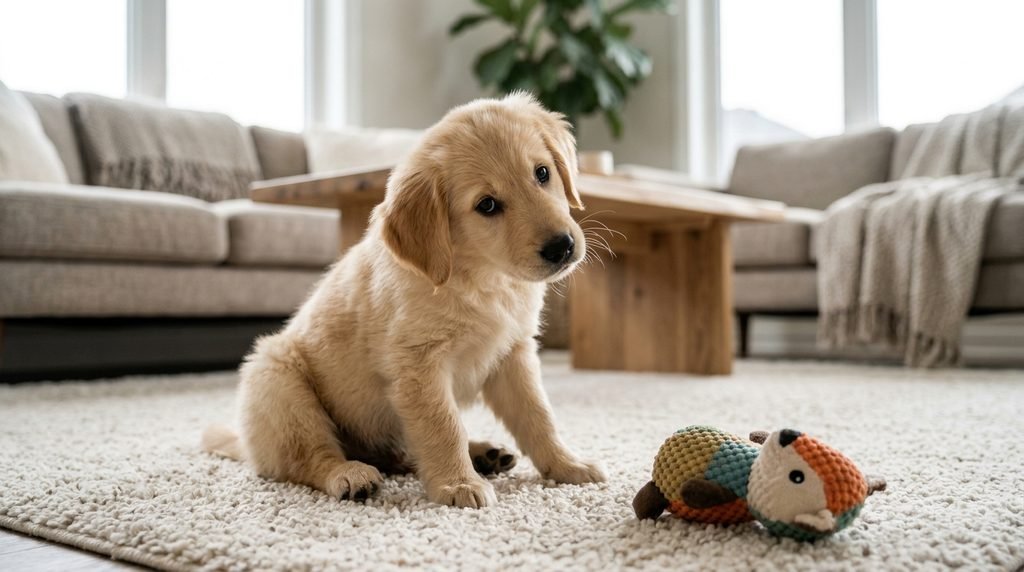
Yes. Puppies can tilt their heads while exploring unfamiliar sounds, observing people, and learning about their environment.
Young dogs often encounter new experiences every day. A strange noise, a moving object, or an unfamiliar voice may capture their attention.
You can support your puppy’s learning through short training sessions, gentle exposure to everyday experiences, and rewards for calm behavior.
Avoid deliberately frightening your puppy to produce a cute reaction. A frightened puppy may develop negative associations with the sound or situation.
If a puppy develops a persistent head tilt, difficulty walking, or other unusual symptoms, contact a veterinarian rather than assuming the behavior is part of normal development.
How to Tell Whether Your Dog’s Head Tilt Is Normal
The most useful clue is the pattern of the behavior.
A brief tilt during a conversation or in response to a sound is different from a head that remains tilted throughout the day.
Use the following guide to decide what to do next.
| What you notice | Recommended action |
|---|---|
| Brief tilt when you speak or make a familiar sound | Observe your dog’s normal behavior |
| Occasional tilt while exploring a new object | Monitor the context and overall body language |
| New head tilting with scratching, odor, or ear discharge | Arrange a veterinary examination |
| Persistent head tilt without an obvious trigger | Contact your veterinarian promptly |
| Sudden head tilt with falling, abnormal eye movements, or severe balance problems | Seek urgent veterinary care |
This guide is not a diagnosis. When you are uncertain, contacting your veterinarian is the safest choice.
How to Encourage Healthy Communication With Your Dog
Understanding your dog’s body language takes patience. You do not need to interpret every movement perfectly to build a strong relationship.
Here are five helpful practices.
Use Consistent Words and Cues
Choose clear words for everyday activities, such as “sit,” “come,” and “outside.” Use the same cues consistently and reward your dog when they respond correctly.
Reward Calm, Positive Behavior
Treats, praise, and play can help reinforce useful behaviors. Choose rewards that suit your dog’s dietary needs and keep training sessions short enough to maintain their interest.
Pay Attention to the Whole Body
A tilted head may occur alongside relaxed ears, a wagging tail, a stiff posture, or other signals. Consider the full picture instead of interpreting one movement in isolation.
Give Your Dog Time to Explore
Allow your dog to sniff safe objects and investigate familiar surroundings. Supervised exploration can provide mental stimulation without forcing your pet into uncomfortable situations.
Record Unusual Changes
If your dog begins tilting their head repeatedly, note when it happens and whether other symptoms appear. A short video can help your veterinarian understand the movement, provided recording does not delay urgent care.
Frequently Asked Questions
1. Why does my dog tilt their head when I talk?
Your dog may be paying attention to your voice, recognizing familiar words, or reacting to the sound and tone of your speech. The exact reason depends on the individual dog and the situation.
2. Does a dog head tilt mean they are confused?
Not necessarily. A head tilt may occur during curiosity, sound attention, or familiar interactions. It does not automatically mean your dog is confused.
3. Are dogs that tilt their heads more intelligent?
There is not enough evidence to use head tilting as a general intelligence test. One small study found an association between head tilting and recognizing toy names in a selected group of gifted word-learning dogs, but that finding cannot be generalized to all dogs.
4. Why does my dog tilt their head when I say their name?
Your dog’s name may have become a familiar cue associated with attention, interaction, or rewards. The tilt may be part of how your dog responds to hearing it.
5. Should I reward my dog for tilting their head?
You can reward relaxed, friendly interaction, but you do not need to train head tilting as a trick. Avoid startling your dog or making them uncomfortable just to get a particular reaction.
6. Is a head tilt a sign of an ear infection?
It can sometimes accompany an ear problem, but head tilting alone does not establish that an infection is present. Ear scratching, odor, discharge, or discomfort are additional reasons to seek veterinary advice.
7. When should I worry about my dog’s head tilt?
Be concerned if the tilt is persistent, starts suddenly, or occurs with stumbling, falling, unusual eye movements, weakness, or disorientation. Seek urgent veterinary care for sudden head tilting accompanied by balance problems or other neurological signs.
8. Can older dogs develop head tilting?
Yes. Dogs of any age can develop head tilting. A new or persistent tilt in an older dog should not automatically be attributed to aging; a veterinarian should evaluate the change.

Final Thoughts
So, why do dogs tilt their heads? The answer depends on the circumstances. Your dog may be paying attention to your voice, reacting to an unfamiliar sound, responding to a familiar cue, or repeating a behavior that has earned affection.
Although the head tilt is often a charming part of everyday dog behavior, it is important to recognize the difference between a brief, situational movement and a persistent change that may signal a medical problem.
Observe your dog’s body language, encourage healthy communication, and seek veterinary advice when something seems unusual.
At PetZuoo, our goal is to help dog owners understand their pets and make informed decisions about their care. By learning more about your dog’s behavior, you can build a stronger bond and help your furry friend enjoy a happier, healthier life.
Disclaimer: This article is for general educational purposes and does not replace professional veterinary advice, diagnosis, or treatment.
Suggested References for Editorial Verification
Before publishing, verify the research and medical guidance against reputable sources such as:
- American Kennel Club (AKC) — dog behavior and communication.
- Merck Veterinary Manual — canine ear and vestibular disorders.
- Scientific Reports (2021) — research on head tilting in dogs during word-learning tasks.

hammadniazi6663@gmail.com
Contributor at PetZuoo, publishing practical information for pet owners and animal lovers.