What You Should Know About Pet Rabbit Care, Rabbits are quiet, cute and surprisingly full of personality. They can learn routines, recognize their owners, enjoy playtime and even become comfortable using a litter box. But one thing new owners sometimes discover too late is that rabbits are not low-maintenance pets.
Good pet rabbit care is about much more than putting a rabbit inside a cage and filling a food bowl. Rabbits need enough space to move, plenty of hay, fresh water, safe vegetables, regular grooming, mental stimulation and proper veterinary care.
They are also prey animals, which means they can hide signs of illness. A rabbit may look normal even when something is wrong, so knowing your rabbit’s normal eating, drinking, bathroom and activity habits is extremely important.
One of the biggest mistakes is treating a rabbit like a small version of a dog or cat. Rabbits have different digestive systems, different nutritional needs and different ways of communicating. Their teeth continue growing throughout life, they need a high-fibre diet, and daily movement is important for both their body and mind.
A well-cared-for rabbit can become a wonderful companion. The goal of this guide is to make rabbit care easier to understand, especially if you are bringing home your first rabbit.
Understanding Rabbit Breeds and Personalities
Before choosing a rabbit, it helps to understand that rabbits come in many different sizes, coat types and personalities.
Some popular rabbit breeds include:
- Holland Lop
- Mini Rex
- Netherland Dwarf
- Dutch Rabbit
- Lionhead
- Mini Lop
- Flemish Giant
- New Zealand Rabbit
- English Angora
- Rex Rabbit
Breed can influence size, coat care and sometimes temperament, but personality is not determined by breed alone.
For example, one rabbit may be confident and curious, while another rabbit of the same breed may be shy. Some rabbits enjoy sitting beside their owners, while others prefer exploring the room and coming over when they want attention.
Small Rabbits Are Not Always Easier
A common assumption is that a smaller rabbit requires less care. That is not necessarily true.
A tiny rabbit still needs appropriate housing, exercise, hay, veterinary care, grooming and enrichment.
Some small breeds can also be more energetic than people expect. Netherland Dwarf rabbits, for example, may be small but can have plenty of personality and energy.
Large breeds have different challenges because they require more floor space and larger equipment.
When choosing a rabbit, think about the animal’s needs rather than simply choosing the smallest or cutest one.
Creating the Right Rabbit Housing
Housing is one of the most important parts of responsible rabbit ownership.
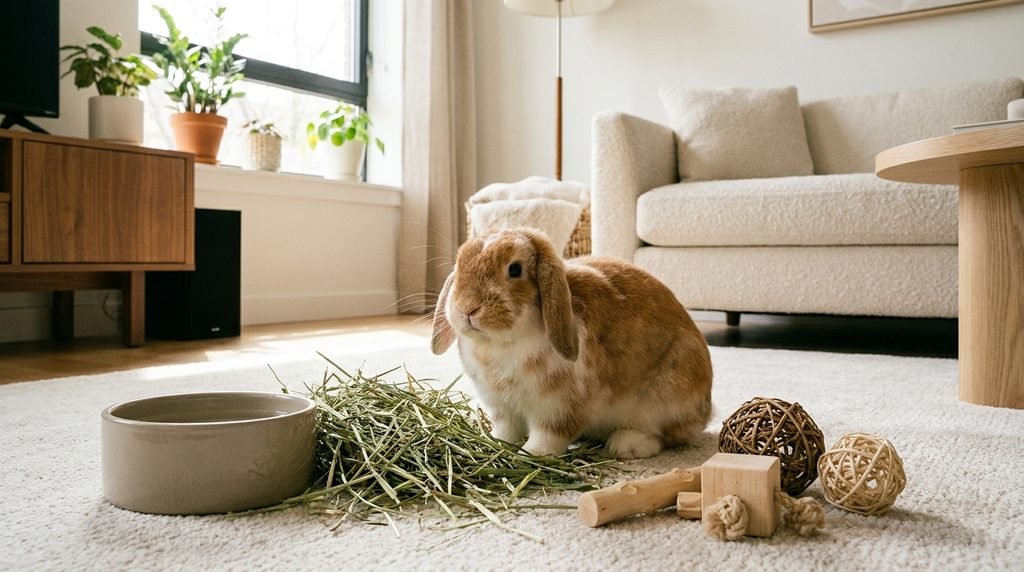
A rabbit should have enough room to stand comfortably, stretch, turn around, hop and explore. A small commercial cage may look convenient, but it should not be treated as the rabbit’s entire living environment.
A larger exercise pen or rabbit-proofed room can provide much better space.
The living area should include:
- A comfortable resting area
- A hiding place
- A litter box
- Hay
- Fresh water
- Food dishes
- Safe chew toys
- Areas for movement
- Safe flooring
Rabbits also need opportunities to explore outside their main enclosure.
Research into rabbit welfare highlights the importance of running, digging, playing and other natural behaviors.
Rabbit-Proof Your Home
If your rabbit is allowed to explore the house, rabbit-proofing is essential.
Rabbits naturally like to chew. Unfortunately, electrical cables can become an attractive chewing target.
Keep electrical wires protected or completely out of reach.
Also check:
- Houseplants
- Small plastic objects
- Cleaning products
- Open doors
- Small gaps behind furniture
- Carpet edges
- Wooden furniture
- Other pets
Get down to your rabbit’s level and look around the room. You may notice hazards that are easy to miss when standing up.
A rabbit can turn a harmless-looking room into a dangerous place very quickly if it has access to something it should not chew.
What Do Rabbits Eat? Building a Healthy Rabbit Diet
Food is one of the most important parts of pet rabbit care.
The foundation of a rabbit’s diet should be good-quality grass hay. Hay provides fibre and supports healthy digestion while also helping rabbits naturally wear down their continuously growing teeth.
Rabbit owners sometimes make the mistake of giving too many pellets or treats because rabbits appear to enjoy them.
The problem is that a rabbit can happily eat foods that are not appropriate in large quantities.
Hay Should Be Available Every Day
Fresh hay should be available to your rabbit regularly.
Common options include:
- Timothy hay
- Orchard grass hay
- Oat hay
- Other suitable grass hays
Hay should be clean, dry and free from mold.
Your rabbit should have access to it throughout the day rather than receiving a small portion once daily.
Rabbit welfare guidance also emphasizes the importance of hay and appropriate forage in a rabbit’s diet.
Fresh Greens
Fresh leafy greens can be included as part of a balanced rabbit diet.
Examples may include suitable leafy vegetables such as:
- Romaine lettuce
- Coriander
- Parsley
- Basil
- Some safe leafy greens
Introduce new foods gradually rather than suddenly giving your rabbit a large amount.
Every rabbit is an individual. If a particular food causes digestive problems, stop giving it and speak with a veterinarian.
Pellets and Treats
Good-quality rabbit pellets can provide useful nutrients, but they should not replace hay.
Treats should be small and occasional.
Fruit, for example, contains natural sugar, so it is better treated as a small treat rather than a major part of the diet.
Avoid making treats the easiest way to show affection.
Sometimes the best reward for a rabbit is simply time spent exploring, playing or receiving gentle attention.

Why Rabbit Teeth Need Special Attention
Rabbit teeth are different from human teeth.
Their teeth continue growing throughout their lives. This is one reason fibre-rich foods and appropriate chewing opportunities are so important.
A rabbit that does not have the right diet may develop dental problems.
Possible warning signs include:
- Dropping food
- Difficulty chewing
- Reduced appetite
- Wet fur around the mouth
- Weight loss
- Changes in droppings
- Less interest in food
A rabbit that suddenly stops eating should never simply be assumed to be picky.
Changes in appetite can become serious quickly because rabbits rely heavily on normal movement through their digestive system.
If your rabbit stops eating, produces very few droppings, becomes unusually quiet or shows other concerning symptoms, contact a rabbit-experienced veterinarian promptly.
Fresh Water Is Essential
Your rabbit should always have access to clean drinking water.
Some rabbits prefer a heavy bowl, while others are comfortable using a bottle. A bowl can be easier for some rabbits to drink from naturally, but it needs to be kept clean.
Check the water every day.
Hay, food particles and bedding can get into the water surprisingly quickly.
If the bowl becomes dirty, wash it and refill it with fresh water.
Do not wait until the water is completely empty before checking it.
A simple daily routine makes this much easier:
Morning: Check water and refill if necessary.
Evening: Check again and clean the bowl if needed.
Small habits like this can make a major difference to rabbit care.
Rabbit Grooming: Keeping Your Bunny Clean and Comfortable
Rabbits are naturally clean animals and spend plenty of time grooming themselves.
However, that does not mean they never need help.
The amount of grooming required depends heavily on the rabbit’s coat.
Short-haired rabbits generally need less brushing, while long-haired rabbits may require much more frequent grooming.
Brushing Your Rabbit
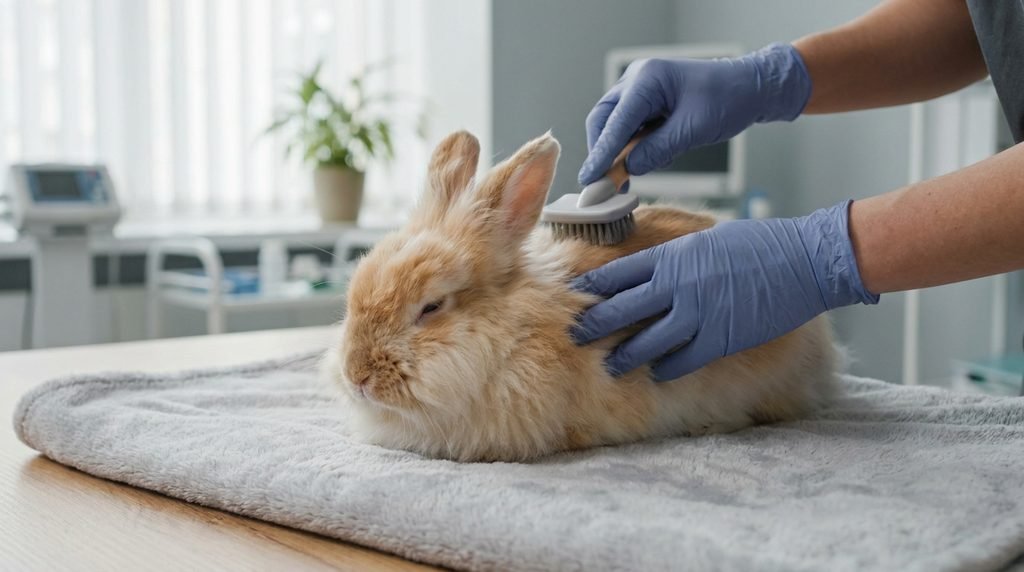
Regular brushing can help remove loose hair.
This becomes particularly important when your rabbit is shedding.
Too much swallowed fur can contribute to digestive problems, especially when a rabbit is already eating poorly or has reduced gut movement.
Brush gently and never pull aggressively at tangled fur.
If you discover a severe mat or skin problem, it is safer to ask a veterinarian or experienced rabbit groomer for help rather than cutting close to the skin yourself.
Pet Rabbit Care Guide
Rabbit Exercise: Why Daily Movement Matters
A rabbit needs more than food and a comfortable place to sleep. Daily exercise is an important part of keeping your rabbit physically and mentally healthy.
In the wild, rabbits spend a lot of time moving around, exploring, searching for food and investigating their surroundings. A pet rabbit still has many of these natural instincts.
Allow your rabbit to spend time outside its main enclosure in a safe, rabbit-proofed area. The space should be large enough for hopping, running, stretching and exploring.
You can make exercise time more interesting by adding:
- Cardboard boxes
- Safe tunnels
- Paper bags without handles
- Wooden chew toys
- Low platforms
- Digging boxes
- Hay-filled toys
- Safe hiding areas
You do not need expensive toys to keep a rabbit entertained. A cardboard box with two openings can become an exciting hiding place.
Create a Simple Daily Routine
Rabbits often become comfortable when they know what to expect.
For example:
Morning: Fresh water, hay and food check
Afternoon: Quiet rest time
Evening: Exercise, play and interaction
Night: Fresh hay and a final health check
The exact schedule can vary, but consistency can help your rabbit feel secure.
Rabbit Litter Training: How to Teach Good Habits
One of the pleasant surprises for new rabbit owners is that rabbits can learn to use a litter box.
Litter training usually works best when you take advantage of the rabbit’s natural bathroom habits.
Start by placing a suitable litter box in an area where your rabbit already tends to urinate.
Put some hay near or above the litter box. Rabbits naturally like to eat and use the bathroom around the same time, so this arrangement can encourage the desired behavior.
Choose Safe Rabbit Litter
Not every type of cat or small-animal litter is appropriate for rabbits.
Avoid products that can be dangerous if swallowed or that create excessive dust.
Paper-based litter is commonly used by rabbit owners, but always check that the specific product is appropriate for rabbits.
Clean the litter box regularly.
A dirty litter box can create unpleasant smells and may also make your rabbit less willing to use it.
Accidents can happen, particularly with young rabbits or rabbits adjusting to a new home.
Do not punish your rabbit.
Instead, clean the area thoroughly and make the litter box easier to access.
Rabbit Training: Can Rabbits Really Learn Commands?
Yes, rabbits can learn.
They may not respond to training exactly like a dog, but they can learn routines, names, behaviors and simple commands.
Positive reinforcement is usually the best approach.
If your rabbit does something you want to encourage, reward it immediately with a small appropriate treat, gentle attention or another positive reward.
For example, you can teach your rabbit to come when called by using the same word every time.
Say the rabbit’s name in a calm voice.
When the rabbit comes toward you, reward it.
Repeat this regularly.
Over time, the rabbit may begin connecting the sound with something positive.
Never Use Punishment
Punishment can make a rabbit frightened and less trusting.
Rabbits are naturally cautious animals. Yelling, chasing or hitting will not teach them good behavior.
Instead:
- Identify what caused the unwanted behavior.
- Remove the temptation when possible.
- Redirect the rabbit toward something safe.
- Reward the behavior you want.
If your rabbit keeps chewing furniture, for example, provide appropriate chew toys and protect the furniture rather than frightening the rabbit.
Building Trust With Your Rabbit
A new rabbit may not immediately want to be picked up or cuddled.
This is normal.
Remember that rabbits are prey animals. Being lifted off the ground can feel frightening because, in nature, being grabbed from above can signal danger.
Instead of immediately picking up your rabbit, sit quietly nearby.
Allow the rabbit to approach you.
You can place your hand on the floor and let your rabbit investigate it.
Avoid sudden movements.
Speak softly.
Over time, your rabbit may become comfortable sitting beside you.
Some rabbits eventually enjoy being stroked, while others prefer interacting without being picked up.
Respect your rabbit’s personality.
A strong bond does not require constant cuddling.
Sometimes simply sitting together while your rabbit explores the room is enough.
Rabbit Health: Signs of a Healthy Bunny
Knowing what normal looks like is one of the best things you can do as a rabbit owner.
A healthy rabbit will generally:
- Eat regularly
- Drink normally
- Produce regular droppings
- Move around actively
- Groom itself
- Show interest in its surroundings
- Maintain a healthy body condition
- Have clear eyes and a clean nose
- Have a clean rear area
You should pay attention to changes.
Because rabbits can hide illness, even a small change in behavior can be worth investigating.
If your rabbit suddenly becomes unusually quiet, refuses food, hides more than normal or produces fewer droppings, do not simply wait several days to see what happens.
A veterinarian who is experienced with rabbits can help determine whether there is a serious problem.
Common Rabbit Health Problems
Rabbits can experience a variety of health problems. Some are preventable through good nutrition, hygiene and housing, while others require veterinary treatment.
Digestive Problems
Digestive health is particularly important for rabbits.
A high-fibre diet containing plenty of suitable hay supports normal digestion.
Warning signs can include:
- Reduced appetite
- Very small droppings
- Fewer droppings
- No droppings
- Lethargy
- Sitting hunched up
- Signs of abdominal discomfort
A rabbit that stops eating can become seriously ill.
This is not a situation where you should simply offer more treats and wait.
Contact a veterinarian promptly.
Dental Problems
Rabbit teeth grow continuously, so dental health deserves regular attention.
Poor dental health can make eating painful.
Look for:
- Difficulty eating
- Dropping food
- Excessive salivation
- Weight loss
- Changes in food preferences
- Swelling around the face
Regular veterinary checks can help identify dental issues.

Rabbit Grooming and Nail Care
Your rabbit’s nails may need trimming when they become too long.
Long nails can affect movement and may become caught in bedding or other materials.
If you are inexperienced, ask a veterinarian or trained professional to show you how to trim them safely.
The quick inside the nail contains blood vessels, so cutting too far can cause pain and bleeding.
Do not rush the process.
If your rabbit becomes very stressed, stop and try again later or seek professional help.
Check the Rear Area
Long-haired rabbits especially need regular checks around the rear.
Urine, droppings or damp fur can cause skin irritation and attract flies in warm conditions.
Keep the living area clean and check your rabbit regularly.
If you notice a dirty, wet or irritated rear end, contact a veterinarian for advice rather than simply covering up the problem.
Keeping Rabbits Safe During Hot Weather
Rabbits can be particularly vulnerable to high temperatures.
During hot weather, make sure your rabbit has access to a cool, shaded and well-ventilated environment.
Never leave a rabbit inside a hot car.
Avoid placing the enclosure in direct sunlight.
You can also provide cool surfaces for your rabbit to move onto.
Watch carefully for signs of heat stress.
If your rabbit appears weak, unusually quiet, breathes abnormally or shows other concerning signs during hot weather, seek veterinary assistance immediately.
Good ventilation and prevention are much better than trying to cool an overheated rabbit after the problem has already become serious.
Common Rabbit Behavior Problems and Solutions
Understanding rabbit behavior makes many problems easier to solve.
Chewing Everything
Chewing is normal rabbit behavior.
The solution is not to stop chewing completely. Instead, provide safe things your rabbit is allowed to chew.
Protect electrical cables and furniture.
Offer suitable untreated wooden toys, cardboard and other rabbit-safe enrichment.
Digging
Digging is another natural behavior.
If your rabbit constantly digs at carpets or bedding, create a safe digging area.
A cardboard box filled with appropriate paper or hay can provide an outlet for this instinct.
Hiding
Some rabbits hide more than others.
A new rabbit may spend a lot of time hiding during its first days at home.
Give it a safe hiding place and avoid forcing it out.
However, if a rabbit that normally enjoys eating and exploring suddenly starts hiding constantly, consider whether illness, pain or stress could be involved.
Aggression
A rabbit may lunge, growl, nip or become defensive for several reasons.
Fear, pain, territorial behavior and hormonal changes can all influence behavior.
Do not respond with punishment.
Give the rabbit space and try to understand the cause.
A veterinarian can help rule out pain or illness, while an experienced rabbit behavior professional can help with persistent behavior problems.
Rabbit Toys and Mental Enrichment
A rabbit’s environment should provide opportunities to explore and make choices.
You can rotate toys rather than leaving every toy available all the time.
This can make familiar objects feel interesting again.
Try simple enrichment ideas such as:
Hay Puzzle
Place hay inside a safe cardboard tube or suitable feeder.
Your rabbit has to work a little to reach it.
Treat Search
Hide a tiny amount of an appropriate food among hay and let your rabbit search for it.
Cardboard Castle
Connect several cardboard boxes to create tunnels and hiding areas.
Make sure there are no staples, tape or other dangerous pieces that your rabbit can swallow.
Digging Box
Provide a safe container filled with appropriate material for digging.
Always supervise new enrichment until you know your rabbit can use it safely.

When Should You Take Your Rabbit to a Veterinarian?
Finding a veterinarian before an emergency happens is a smart part of responsible rabbit ownership.
Look for a veterinary practice with experience treating rabbits and other small mammals.
Contact a veterinarian if you notice significant changes such as:
- Your rabbit stops eating
- Droppings suddenly decrease
- Your rabbit appears very weak
- Breathing becomes difficult
- There is unexplained bleeding
- Your rabbit develops a swollen area
- There is persistent diarrhea
- Your rabbit appears to be in pain
- Your rabbit suddenly cannot move normally
- There is a major change in behavior
Do not attempt to diagnose serious illness yourself based only on internet information.
Rabbit health problems can progress quickly, and professional assessment may be necessary.
Internal Linking Opportunities
You can naturally add these links inside the article:
[Internal Link Suggestion: Complete Rabbit Grooming Guide] — Add this when discussing brushing, nail trimming and coat care.
[Internal Link Suggestion: Best Pet Food and Treats for Small Animals] — Add this when discussing rabbit food, treats and healthy feeding habits.
FAQ: Pet Rabbit Care
1. Are rabbits easy pets for beginners?
Rabbits can be wonderful pets for beginners, but they require more care than many people expect. They need appropriate food, space, exercise, grooming, enrichment and veterinary attention.
2. What is the most important food for rabbits?
Good-quality grass hay is one of the most important parts of a rabbit’s diet because rabbits need plenty of fibre for healthy digestion and normal tooth wear.
3. Can rabbits live inside the house?
Yes. Indoor rabbits can live happily in a properly rabbit-proofed home. They still need adequate space, exercise, enrichment, clean housing and protection from household hazards.
4. Can rabbits be litter trained?
Yes. Many rabbits can learn to use a litter box, especially when the box is placed in an area where the rabbit naturally prefers to go.
5. How often should I groom my rabbit?
The answer depends on the rabbit’s coat. Short-haired rabbits generally need less brushing, while long-haired rabbits require more frequent grooming to prevent mats and remove loose hair.
6. Why does my rabbit chew everything?
Chewing is a normal rabbit behavior. Rabbits should be given safe chewing opportunities while dangerous objects such as electrical cables, toxic plants and unsafe materials are kept away.
7. How do I know if my rabbit is sick?
Changes in appetite, droppings, activity, grooming or behavior can be warning signs. A rabbit that stops eating or suddenly produces very few droppings needs prompt veterinary attention.
8. Do rabbits need exercise every day?
Yes. Regular movement is important for physical fitness, natural behavior and mental stimulation. Rabbits should have sufficient safe space to hop, explore and exercise.
Conclusion
Taking care of a rabbit is a commitment, but it can also be incredibly rewarding.
The basics are simple: provide a suitable living environment, plenty of appropriate hay, fresh water, a balanced diet, regular exercise, safe enrichment and proper grooming. Just as importantly, learn your rabbit’s normal habits so you can recognize changes quickly.
Every rabbit has its own personality. Some are adventurous, some are shy, some love attention and others prefer to stay nearby without being handled too much.
The best relationship develops through patience.
Give your rabbit time to trust you. Let it explore. Provide safe opportunities to chew, dig and play. Keep its environment clean and watch its eating and bathroom habits every day.
Most importantly, don’t wait until your rabbit becomes seriously unwell before finding a rabbit-experienced veterinarian.
Good pet rabbit care is not about doing one big thing occasionally. It is about doing many small things correctly every day.
When those habits become part of your routine, your rabbit has a much better opportunity to live a comfortable, active and happy life.

hammadniazi6663@gmail.com
Contributor at PetZuoo, publishing practical information for pet owners and animal lovers.
Related guides

Why Do Dog Tilt Their Heads? 9 Fascinating Reason
Why Do Dog Tilt Their Heads? 9 Fascinating Reason Behind This Adorable Behavior. Have you ever spoken to your dog and watched…
Why Do Dogs Eat Grass? 9 Surprising Causes & Solutions
Why Do Dogs Eat Grass? 9 Surprising Causes & Solutions and Why Do Dogs Eat Grass? 9 Causes and What Every Dog…
“Why Is Dog Licking Its Paws? 9 Powerful Causes
“Why Is Dog Licking Its Paws? 9 Powerful Causes. Have you noticed your dog constantly licking, chewing, or nibbling at its paws?…