The Complete Beginner’s Guide to Keeping Pet Parrots Healthy and HappyParrots are among the most intelligent and colorful companion animals in the world. Their ability to mimic sounds, solve puzzles, recognize people, and build strong emotional bonds makes them one of the most rewarding pets for dedicated owners. Whether you’re considering bringing home your first bird or you’ve recently adopted one, understanding proper parrot care is essential for a long, healthy, and happy life.
Unlike many small pets, parrots require daily interaction, mental stimulation, a balanced diet, and a carefully designed environment. With proper care, many parrot species can live for decades, making them a long-term commitment rather than a short-term hobby.
In this comprehensive guide, you’ll learn everything a beginner needs to know—from choosing the right species and setting up the perfect cage to feeding, training, enrichment, and maintaining your bird’s health.
Why Parrots Make Excellent Pets
Parrots offer companionship that is very different from most other pets. They are highly social animals that enjoy interacting with their human families and often develop deep emotional connections.
Some benefits of owning a pet parrot include:
- Highly intelligent and curious
- Can learn words, sounds, and tricks
- Beautiful colors and unique personalities
- Long lifespan with proper care
- Excellent companions for dedicated owners
- Entertaining and playful behavior
Every parrot has its own personality. Some are quiet and gentle, while others are energetic, vocal, and adventurous.
Choosing the Right Parrot Species
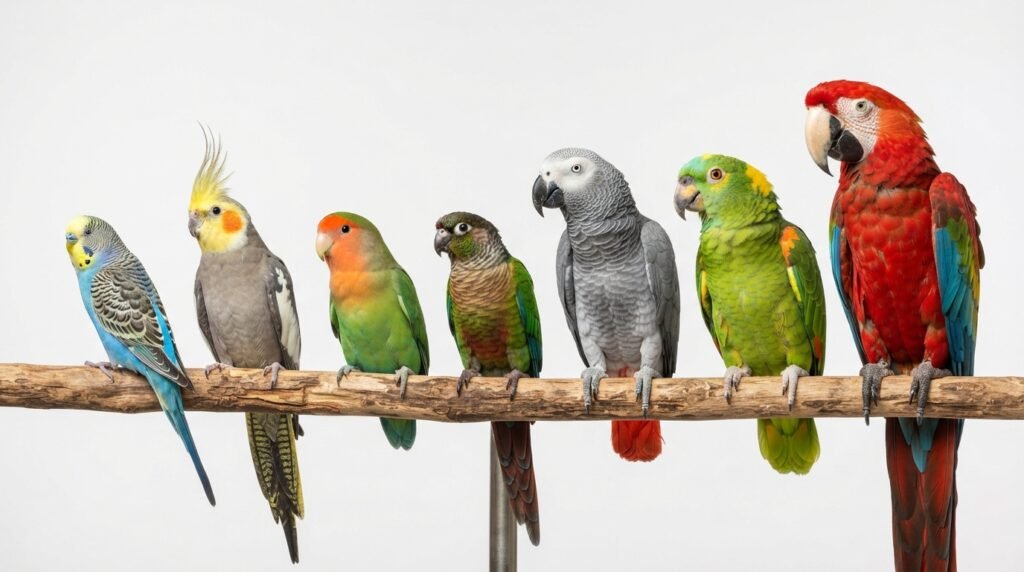
Selecting the right species is one of the most important decisions you’ll make. Different parrots vary greatly in size, lifespan, noise level, and care requirements.
Budgie (Budgerigar)
Perfect for beginners.
Pros
- Affordable
- Friendly
- Easy to tame
- Can learn to talk
- Smaller cage requirements
Average lifespan
7–15 years
Cockatiel
Cockatiels are affectionate birds that enjoy spending time with people.
Pros
- Gentle temperament
- Whistles beautifully
- Easy to train
- Great family bird
Average lifespan
15–25 years
Lovebirds
Lovebirds are energetic and playful with lots of personality.
Pros
- Small size
- Active
- Colorful
- Intelligent
Average lifespan
10–20 years
Green-Cheek Conure
An excellent option for owners wanting a cuddly bird.
Pros
- Affectionate
- Funny
- Intelligent
- Loves interaction
Average lifespan
20–30 years
African Grey
Often considered one of the smartest birds in the world.
Pros
- Exceptional talking ability
- Incredible intelligence
- Strong memory
- Can learn hundreds of words
Challenges
- Requires constant mental stimulation
- Needs experienced owners
- Can become stressed if neglected
Average lifespan
40–60 years

Preparing Your Home Before Bringing a Parrot Home
Your home should be safe before your bird arrives.
Remove household dangers
Keep parrots away from:
- Non-stick cookware fumes
- Cigarette smoke
- Air fresheners
- Aerosol sprays
- Candles
- Toxic plants
- Open toilets
- Ceiling fans
- Open windows
Birds have extremely sensitive respiratory systems, making clean air essential.
Choosing the Perfect Cage
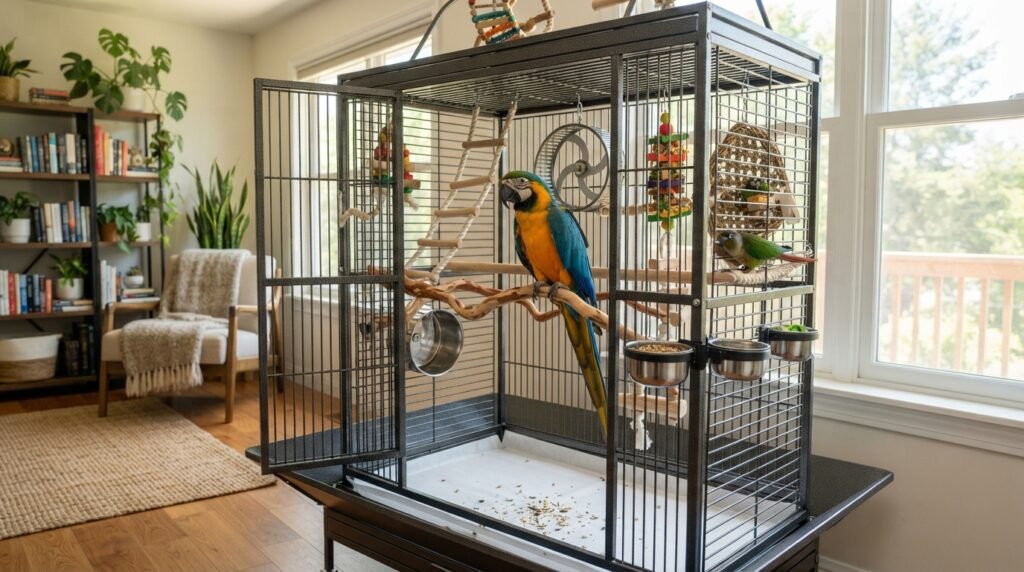
The cage is your parrot’s home, so size matters.
A quality cage should provide enough room for your bird to fully stretch its wings, climb comfortably, and play with toys.
Look for:
- Horizontal climbing bars
- Stainless steel construction
- Secure locks
- Multiple perches
- Easy-to-clean tray
- Food and water stations
- Space for enrichment toys
Remember, bigger is always better when choosing a cage.
Best Cage Placement
Avoid placing the cage:
- In direct sunlight all day
- Near the kitchen
- Beside air conditioners
- Near loud televisions
- In isolated rooms
Instead, choose a bright room where the family spends time. Parrots enjoy feeling included in daily activities while still having quiet periods for rest.
The Best Diet for Pet Parrots
A healthy diet is the foundation of a happy, active, and long-lived parrot. While many people believe parrots can live on seeds alone, this is one of the biggest myths in bird care. A seed-only diet can lead to obesity, vitamin deficiencies, liver disease, and a shorter lifespan.
A balanced diet should include high-quality pellets, fresh vegetables, fruits, and occasional healthy treats.
What Should a Pet Parrot Eat?
A varied diet provides the nutrients parrots need for strong feathers, healthy bones, and a strong immune system.
A general guideline is:
- 60–70% high-quality parrot pellets
- 20–30% fresh vegetables
- 5–10% fresh fruits
- Small amounts of seeds and healthy treats for training
Fresh, clean water should always be available.
Best Vegetables for Parrots
Vegetables should make up a large part of your parrot’s daily meals.
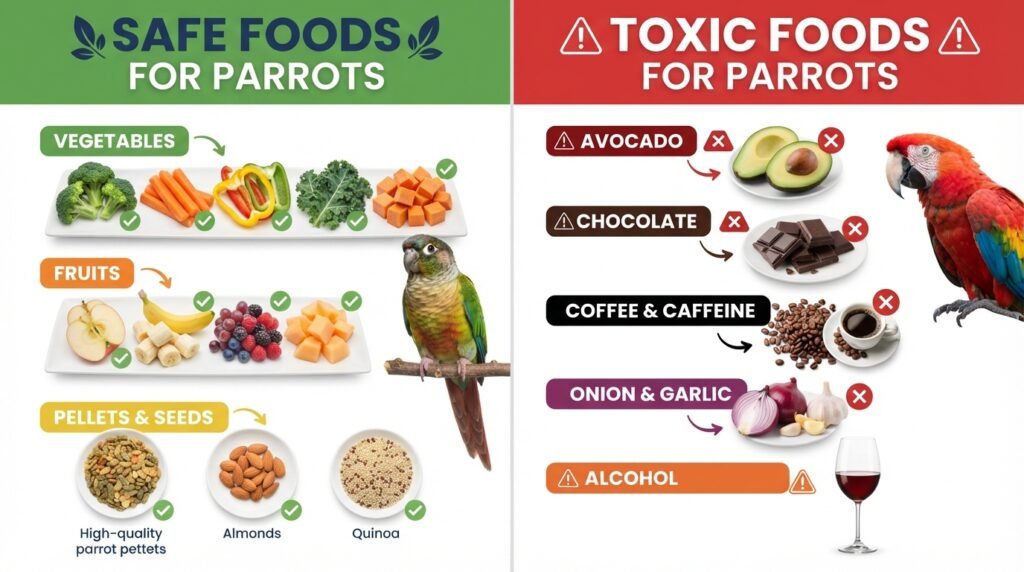
Excellent choices include:
- Carrots
- Broccoli
- Bell peppers
- Spinach (in moderation)
- Kale
- Green beans
- Peas
- Sweet potato (cooked)
- Zucchini
- Cucumber
Serve vegetables washed and cut into bird-sized pieces. Offering a variety of colors can encourage picky eaters to try new foods.
Healthy Fruits
Fruit is a nutritious treat because it contains vitamins and natural sugars. Feed it in moderation.
Good options include:
- Apples (remove seeds)
- Bananas
- Mango
- Blueberries
- Strawberries
- Grapes
- Papaya
- Kiwi
- Pears (remove seeds)
- Pomegranate
Remove any uneaten fruit after a few hours to prevent spoilage.
Foods That Are Dangerous for Parrots
Some common household foods are toxic to birds and should never be fed.
Avoid:
- Avocado
- Chocolate
- Caffeine
- Alcohol
- Onion
- Garlic
- Apple seeds
- Fruit pits
- Rhubarb
- Salty snacks
- Sugary candy
- Xylitol-sweetened products
If your parrot accidentally eats a toxic food, contact an avian veterinarian immediately.
The Importance of High-Quality Pellets
Pellets are formulated to provide balanced nutrition and help prevent vitamin deficiencies.
When choosing pellets:
- Look for products made specifically for parrots.
- Avoid artificial colors and excessive sugar.
- Transition gradually if your bird is used to a seed-based diet.
Changing diets slowly over several weeks helps reduce stress and encourages acceptance.
Hydration Matters
Fresh water is just as important as food.
To keep your bird hydrated:
- Replace water at least once or twice daily.
- Wash the water dish every day.
- Use clean, fresh drinking water.
- Keep food out of the water bowl.
In hot weather, check the water more frequently.
Healthy Treats
Treats are useful for bonding and training but should only make up a small portion of the diet.
Healthy treats include:
- Millet spray
- Small sunflower seeds
- Pumpkin seeds (unsalted)
- Chopped almonds (in moderation)
- Walnuts (small pieces)
- Pistachios (unsalted, occasional)
Use treats as rewards rather than everyday meals.
Feeding Schedule
Most parrots benefit from a consistent routine.
A simple daily schedule:
Morning
- Fresh pellets
- Mixed vegetables
- Fresh water
Afternoon
- A small serving of fruit or a healthy treat
Evening
- Refresh pellets if needed
- Replace water
- Remove leftover fresh foods before bedtime
A regular feeding routine helps your parrot feel secure and can reduce food waste.
Signs of a Healthy Diet
A well-fed parrot often shows these positive signs:
- Bright, clear eyes
- Smooth, vibrant feathers
- Healthy body weight
- Active and playful behavior
- Normal droppings
- Good energy levels
- Strong appetite
Monitoring these signs can help you notice health issues early.
Daily Exercise, Enrichment, Training, and Socialization
Parrots are among the most intelligent pets you can own. In the wild, they spend hours flying, climbing, solving problems, and interacting with their flock. A pet parrot needs similar mental and physical stimulation every day to stay healthy and happy. Without enough activity, parrots can become bored, stressed, or develop unwanted behaviors like excessive screaming or feather plucking.
Why Daily Exercise Is Essential
Exercise helps maintain a healthy weight, strengthens muscles, improves heart health, and keeps your bird mentally engaged.
Benefits of daily exercise include:
- Stronger muscles and wings
- Better coordination and balance
- Reduced boredom and stress
- Improved confidence
- Lower risk of obesity
- Better overall behavior
Aim to give your parrot 2–4 hours of supervised out-of-cage time each day, depending on its species and temperament.
Bird-Proof Your Home
Before letting your parrot explore outside its cage, make the environment safe.
Check that you have:
- Closed all windows and doors
- Turned off ceiling fans
- Covered mirrors if needed
- Removed toxic plants
- Hidden electrical cords
- Kept other pets supervised
- Closed toilet lids
- Removed hot drinks and sharp objects
A safe space allows your bird to explore with confidence.
The Best Toys for Parrots
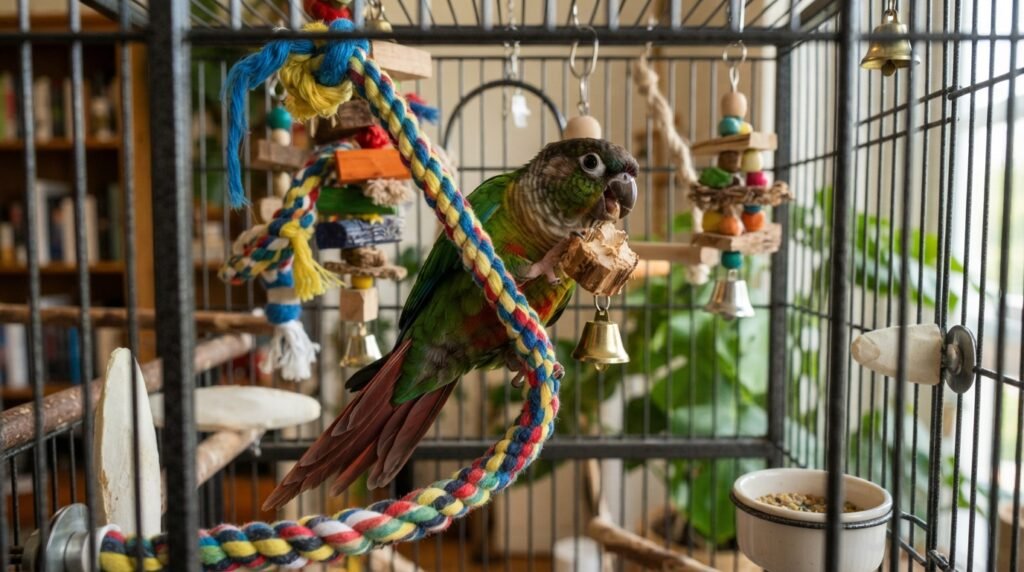
Toys prevent boredom and encourage natural behaviors such as chewing, climbing, and problem-solving.
Great toy options include:
- Wooden chew toys
- Rope climbing toys
- Swings
- Ladders
- Bells
- Foraging toys
- Puzzle feeders
- Shreddable paper toys
- Natural branches
- Hanging activity toys
Rotate toys every week to keep them exciting and prevent boredom.
The Importance of Foraging
Wild parrots spend much of their day searching for food. Recreating this activity at home keeps them mentally stimulated.
Simple foraging ideas:
- Hide treats inside paper cups
- Use puzzle feeders
- Wrap food in clean paper
- Place pellets inside cardboard tubes
- Hang vegetables around the cage
Foraging encourages natural instincts and reduces destructive behaviors.
Training Your Parrot
Training builds trust and makes everyday care easier. Keep sessions short—about 5–10 minutes, once or twice a day.
Start with simple commands such as:
- Step Up
- Step Down
- Come Here
- Target Training
- Turn Around
- Wave
Use positive reinforcement by rewarding your bird with praise or a small healthy treat whenever it performs the desired behavior.

Socialization and Bonding
Parrots are flock animals and thrive on interaction. Spend quality time with your bird every day.
Ways to strengthen your bond:
- Talk to your parrot throughout the day.
- Read a book aloud.
- Offer treats by hand.
- Teach simple tricks.
- Allow supervised shoulder time (if your bird is comfortable).
- Play interactive games.
Avoid forcing interaction if your parrot seems nervous. Let trust develop at its own pace.
Understanding Body Language
Learning your parrot’s body language helps you respond appropriately.
Signs of a Happy Parrot
- Relaxed posture
- Bright eyes
- Gentle chirping or talking
- Playing with toys
- Preening normally
- Curious behavior
Signs of Stress or Fear
- Fluffed feathers for long periods
- Hissing or lunging
- Feather plucking
- Loss of appetite
- Hiding
- Constant screaming
- Rapid breathing
If these behaviors continue, review your bird’s environment and consult an avian veterinarian if necessary.
Preventing Boredom
Bored parrots often develop behavioral problems.
Keep your bird entertained by:
- Rotating toys weekly
- Teaching new tricks
- Offering different vegetables
- Creating new foraging challenges
- Providing climbing opportunities
- Playing bird-safe music occasionally
- Spending daily one-on-one time together
Mental stimulation is just as important as physical exercise.
Building a Daily Routine
Parrots feel more secure with a predictable schedule.
A simple daily routine might include:
- Morning: Fresh food, water, and social interaction
- Midday: Out-of-cage exercise and play
- Afternoon: Training session and foraging activities
- Evening: Quiet family time, fresh water, and bedtime
Consistency helps reduce stress and encourages good behavior.
Common Health Problems in Pet Parrots
Even with excellent care, parrots can sometimes become ill. Birds often hide signs of sickness until a condition becomes serious, so it’s important to recognize subtle changes early.
Watch for These Warning Signs
Contact an avian veterinarian if your parrot shows:
- Loss of appetite
- Weight loss
- Fluffed feathers for long periods
- Difficulty breathing
- Discharge from the eyes or nostrils
- Changes in droppings
- Lethargy or sleeping more than usual
- Feather plucking
- Swollen feet or beak abnormalities
- Sudden aggression or unusual behavior
Early diagnosis often leads to better treatment outcomes.
Grooming and Hygiene
Good hygiene helps prevent infections and keeps your parrot comfortable.
Bathing
Most parrots enjoy regular baths. You can:
- Mist them gently with clean, lukewarm water.
- Offer a shallow dish for bathing.
- Let them bathe naturally several times a week if they enjoy it.
Never use soap or shampoo unless specifically recommended by an avian veterinarian.
Nail and Beak Care
Healthy parrots naturally wear down their nails and beaks by climbing and chewing.
Provide:
- Natural wood perches
- Safe chew toys
- Mineral blocks (if recommended)
If the nails or beak become overgrown, have them trimmed by a qualified professional rather than attempting it yourself.
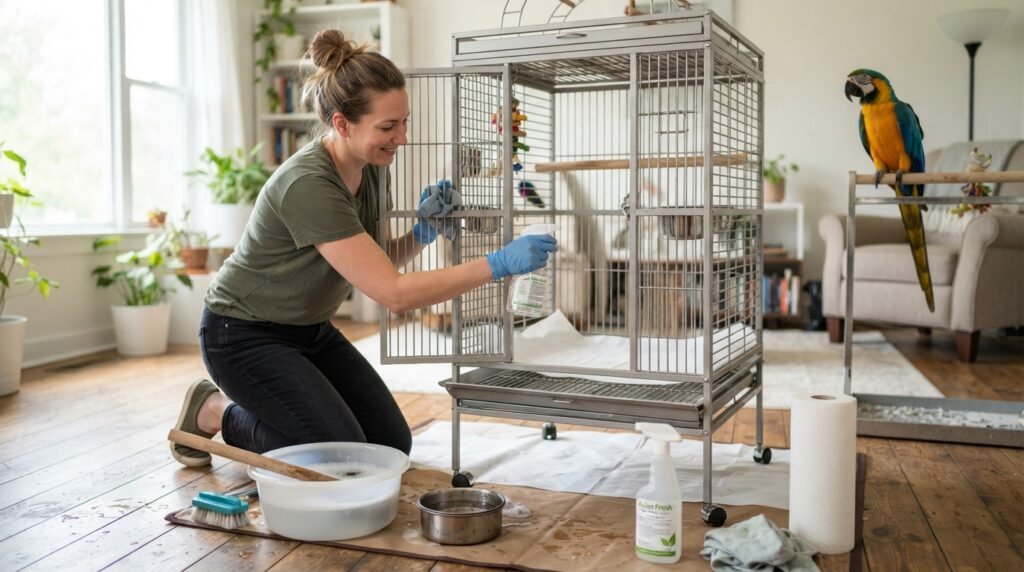
Cage Cleaning Routine
A clean cage reduces the risk of disease.
Daily Tasks
- Replace food and water.
- Remove leftover fresh food.
- Clean food and water bowls.
- Spot-clean droppings.
Weekly Tasks
- Wash perches and toys.
- Clean the cage bars and tray.
- Replace cage liner.
Monthly Tasks
- Deep-clean the entire cage.
- Inspect toys and replace damaged ones.
- Check perches for wear.
Common Beginner Mistakes
Avoiding these common errors can help your parrot live a healthier, happier life.
1. Buying a Cage That’s Too Small
Your bird should be able to stretch its wings fully and move freely.
2. Feeding Only Seeds
A seed-only diet lacks essential nutrients. Offer a balanced mix of pellets, vegetables, fruits, and healthy treats.
3. Ignoring Mental Stimulation
Parrots need toys, training, and daily interaction to stay mentally healthy.
4. Skipping Veterinary Checkups
Annual wellness exams with an avian veterinarian can detect health problems before they become serious.
5. Using Unsafe Household Products
Avoid non-stick cookware fumes, cigarette smoke, aerosol sprays, candles, and strong chemical cleaners around birds.
6. Leaving the Bird Alone for Long Periods
Parrots are social animals. Extended isolation can lead to boredom, stress, and behavioral issues.
Frequently Asked Questions
How long do pet parrots live?
Lifespan depends on the species. Budgies may live 7–15 years, cockatiels 15–25 years, green-cheek conures 20–30 years, and African greys can live 40–60 years or more with proper care.
Can parrots learn to talk?
Many species can mimic words and sounds. African greys, Amazon parrots, budgies, and some conures are especially known for their talking ability.
Do parrots need another bird?
Not necessarily. A single parrot can thrive if it receives plenty of daily attention, social interaction, and enrichment from its owner.
How much sleep does a parrot need?
Most parrots need 10–12 hours of uninterrupted sleep each night. A quiet, dark sleeping environment helps support their health.
Are parrots good pets for children?
Some smaller species, such as budgies and cockatiels, can be suitable family pets with adult supervision. Children should always be taught how to handle birds gently and respectfully.
Final Thoughts
Keeping a pet parrot is a rewarding journey that requires time, patience, and commitment. These intelligent birds thrive when they have a spacious cage, a balanced diet, plenty of exercise, mental stimulation, and daily interaction with their family.
By understanding your parrot’s physical and emotional needs, you can build a lasting bond and provide a safe, enriching environment where your feathered companion can flourish for many years.
Whether you choose a playful budgie, an affectionate cockatiel, a lively conure, or an exceptionally intelligent African grey, responsible care will help your parrot enjoy a healthy, happy, and fulfilling life.

hammadniazi6663@gmail.com
Contributor at PetZuoo, publishing practical information for pet owners and animal lovers.
Related guides
Why Do Dog Tilt Their Heads? 9 Fascinating Reason
Why Do Dog Tilt Their Heads? 9 Fascinating Reason Behind This Adorable Behavior. Have you ever spoken to your dog and watched…
What You Should Know About Pet Rabbit Care
What You Should Know About Pet Rabbit Care, Rabbits are quiet, cute and surprisingly full of personality. They can learn routines, recognize…
Why Do Dogs Eat Grass? 9 Surprising Causes & Solutions
Why Do Dogs Eat Grass? 9 Surprising Causes & Solutions and Why Do Dogs Eat Grass? 9 Causes and What Every Dog…