
introduction To can Rabbits Eat Cucumbers? Safe Feeding Guide for Rabbit Owners
Description: Can rabbits eat cucumbers? Learn the benefits, risks, proper serving sizes, and safe feeding tips to keep your rabbit healthy and happy.
Can Rabbits Eat Cucumbers?
If you’ve ever prepared a fresh salad while your rabbit watched with curiosity, you may have wondered: Can rabbits eat cucumbers?
The good news is yes—rabbits can safely eat cucumbers when offered in moderation. Cucumbers are non-toxic, low in calories, and contain plenty of water, making them a refreshing treat, especially during warm weather. However, they should never replace the fiber-rich foods that make up a healthy rabbit diet.
Understanding how to feed cucumbers correctly is important. Offering too much can upset your rabbit’s sensitive digestive system, while serving them in the right amount provides a tasty and hydrating snack.
In this complete guide, you’ll learn:
- Whether cucumbers are safe for rabbits
- The nutritional benefits of cucumbers
- Potential health risks
- How much cucumber rabbits can eat
- The safest way to prepare and serve cucumbers
- Vegetables that are safe—and unsafe—for rabbits
By the end of this guide, you’ll know exactly how to include cucumbers in your rabbit’s diet without risking their health.
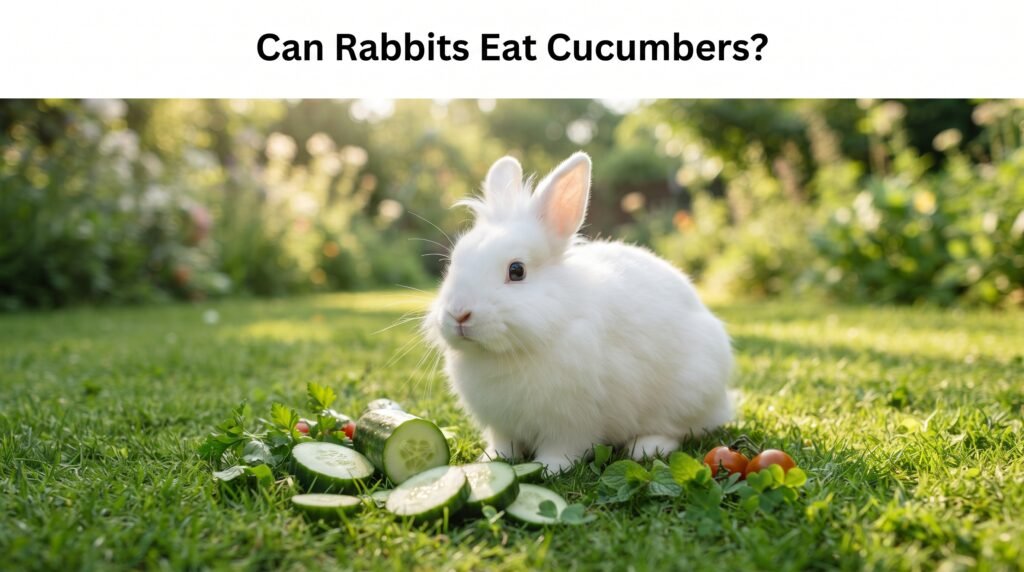
Can Rabbits Eat Cucumbers?
Yes, rabbits can eat cucumbers safely.
Cucumber flesh is soft, easy to chew, and contains mostly water. It also provides small amounts of vitamins and minerals that can complement a balanced diet.
However, cucumbers should be considered an occasional treat, not a dietary staple.
A healthy rabbit’s daily diet should consist of approximately:
- 80–90% high-quality grass hay
- Fresh leafy greens every day
- A limited amount of rabbit pellets
- Small portions of healthy treats like cucumber
Because cucumbers are low in fiber, feeding large amounts may fill your rabbit’s stomach without providing the nutrients needed for proper digestion. Rabbits rely on fiber to keep their digestive system moving and to maintain healthy teeth.
For this reason, cucumber should always be served alongside—not instead of—hay and leafy greens.
Nutritional Value of Cucumbers
Cucumbers are made up of about 95% water, making them one of the most hydrating vegetables available.
They also contain:
- Vitamin K
- Small amounts of Vitamin C
- Potassium
- Magnesium
- Antioxidants
- Natural plant compounds
- Very few calories
- Minimal sugar
Although cucumbers aren’t packed with nutrients compared to dark leafy greens, they can still be a refreshing addition to your rabbit’s treat rotation.
The seeds and skin are generally safe for healthy adult rabbits as long as the cucumber is thoroughly washed before serving. Organic cucumbers are a good option if available, as they may contain fewer pesticide residues.
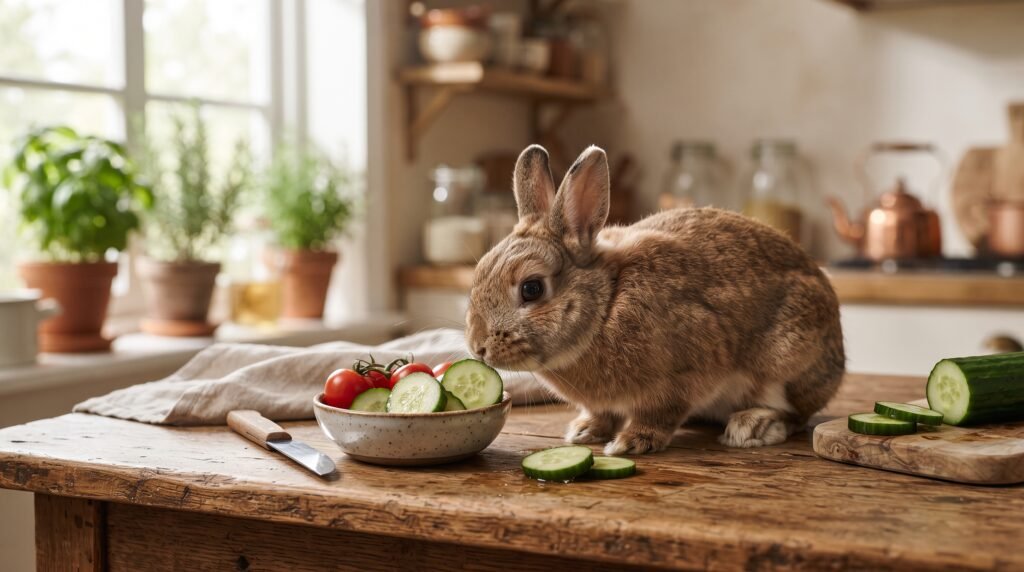
Health Benefits of Cucumbers for Rabbits
When fed in moderation, cucumbers can provide several benefits for rabbits. While they should never replace hay or leafy greens, they make a refreshing and healthy occasional snack.
1. Keeps Rabbits Hydrated
Since cucumbers are made up of about 95% water, they help increase your rabbit’s water intake, especially during hot summer months. Although rabbits should always have access to clean drinking water, cucumber can provide additional hydration.
2. Low in Calories
Unlike sugary fruits, cucumbers contain very few calories. This makes them a better treat option for rabbits that need to maintain a healthy weight.
3. Provides Small Amounts of Vitamins and Minerals
Cucumbers contain nutrients such as:
- Vitamin K
- Potassium
- Magnesium
- Small amounts of Vitamin C
These nutrients support normal body functions, although they should only supplement—not replace—a balanced rabbit diet.
4. Safe Crunchy Treat
Many rabbits enjoy the crunchy texture of fresh cucumber. Offering different safe vegetables can help provide enrichment and prevent boredom during feeding time.
5. Gentle on Healthy Adult Rabbits
When introduced gradually and served in small portions, cucumbers are generally easy for healthy adult rabbits to digest.
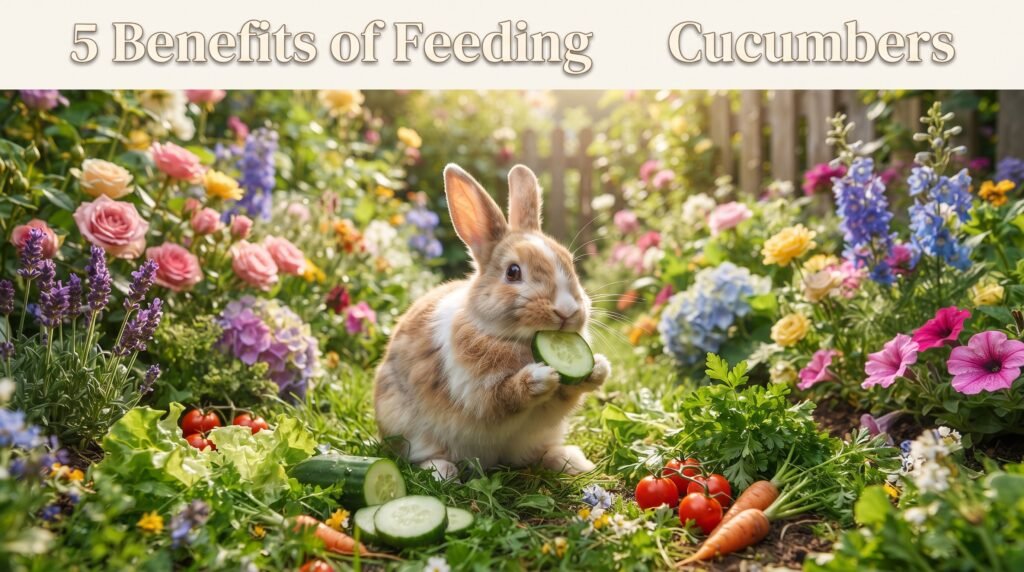
Risks of Feeding Too Much Cucumber
Even healthy foods can become harmful when fed in excess. Because cucumbers contain very little fiber, too much can interfere with your rabbit’s digestive health.
Digestive Upset
A rabbit’s digestive system depends on fiber to function properly. Eating too much cucumber may cause:
- Soft stools
- Diarrhea
- Gas
- Reduced appetite
- Digestive imbalance
If you notice any of these symptoms after introducing cucumber, stop feeding it and monitor your rabbit closely.
Reduced Hay Consumption
One of the biggest concerns is that rabbits may fill up on cucumber instead of eating hay.
Hay is essential because it:
- Supports healthy digestion
- Prevents gastrointestinal stasis
- Helps wear down continuously growing teeth
- Provides the fiber rabbits need every day
If your rabbit starts eating less hay after receiving treats, reduce the amount of cucumber you offer.
Pesticide Residue
Store-bought cucumbers may contain pesticides or wax coatings.
To reduce risk:
- Wash cucumbers thoroughly under running water.
- Peel them if you’re unsure about chemical treatments.
- Choose organic cucumbers whenever possible.

Introducing New Foods Too Quickly
Young rabbits and rabbits with sensitive stomachs should not be introduced to new vegetables suddenly.
Whenever offering cucumber for the first time:
- Give a very small slice.
- Wait 24 hours.
- Watch for changes in appetite or droppings.
- Increase the amount gradually if no problems occur.
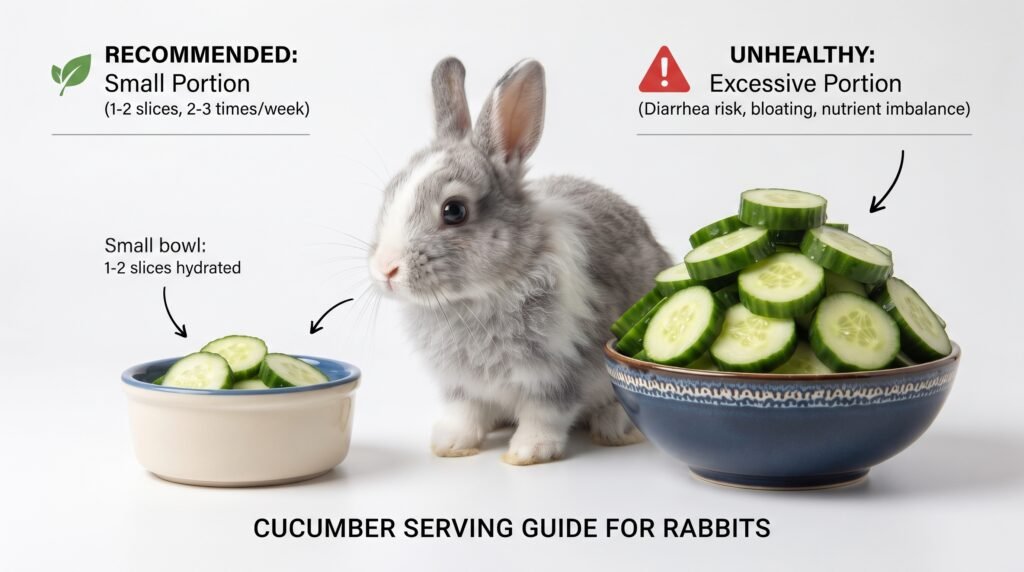
How Much Cucumber Can Rabbits Eat?
Moderation is the key.
For most healthy adult rabbits:
- Offer 2–4 thin slices once or twice per week.
- Always serve cucumber as a treat—not a daily food.
- Ensure unlimited hay remains available at all times.
Small rabbit breeds may require even less, while larger breeds can tolerate slightly larger portions.
Remember that every rabbit is different. If your rabbit experiences digestive issues, discontinue feeding cucumber and consult a veterinarian.
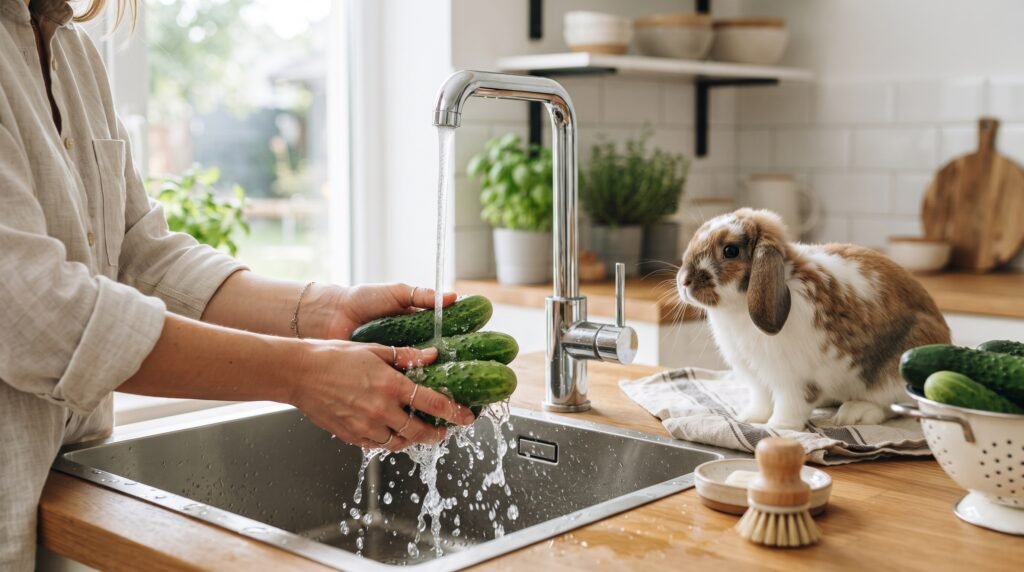
How to Feed Cucumbers to Rabbits Safely
Following a few simple steps can help ensure cucumbers remain a safe and enjoyable treat for your rabbit.
1. Wash the Cucumber Thoroughly
Always rinse cucumbers under clean running water to remove dirt, pesticides, and surface chemicals. If you’re unsure how the cucumber was grown, peeling the skin is another way to reduce potential residue.
2. Cut into Small Pieces
Slice the cucumber into thin, bite-sized pieces that are easy for your rabbit to chew. Small portions also help prevent overeating.
3. Feed Fresh Only
Serve fresh cucumber and remove any leftovers after a few hours. Wilted or spoiled vegetables can grow harmful bacteria that may upset your rabbit’s digestive system.
4. Introduce Slowly
If your rabbit has never eaten cucumber before:
- Start with one small slice.
- Observe your rabbit for 24 hours.
- Check that droppings remain normal.
- Continue only if there are no signs of digestive upset.
5. Keep Hay Available
Even on treat days, unlimited grass hay should remain your rabbit’s primary food source. Hay supports healthy digestion and helps keep your rabbit’s teeth worn down naturally.
Can Rabbits Eat Cucumber Skin?
Yes, healthy adult rabbits can usually eat cucumber skin.
The peel contains additional fiber compared to the flesh, making it slightly more nutritious. However, because cucumber skins may contain pesticide residue or wax coatings, always wash them carefully before serving.
If your rabbit has a sensitive stomach or you’re unsure how the cucumber was grown, removing the peel is a safe option.
Can Rabbits Eat Cucumber Seeds?
Yes. The small, soft seeds found in common cucumbers are safe for rabbits.
Unlike some fruit seeds, cucumber seeds are not toxic and are easy to digest when eaten in normal amounts.

Can Rabbits Eat Cucumber Leaves?
If you grow cucumbers at home without pesticides, small amounts of fresh cucumber leaves can be offered occasionally.
However:
- Only feed clean, healthy leaves.
- Never offer leaves treated with pesticides or chemicals.
- Introduce them gradually, just like any new food.
If you’re unsure whether the leaves are safe, it’s better to avoid feeding them.
Foods Rabbits Should Never Eat
While cucumbers are safe in moderation, some foods are harmful or even dangerous for rabbits.
Avoid feeding:
- Chocolate
- Onions
- Garlic
- Avocado
- Potatoes
- Rhubarb
- Iceberg lettuce
- Processed human foods
- Sugary snacks
- Candy
- Bread
- Cookies
- Meat or dairy products
A rabbit’s digestive system is designed for high-fiber plant foods, so sticking to hay, leafy greens, and rabbit-safe vegetables is the healthiest choice.
Frequently Asked Questions
Can rabbits eat cucumber every day?
No. Cucumbers should only be offered once or twice a week because they are low in fiber and should not replace hay or leafy greens.
Can baby rabbits eat cucumbers?
It’s best not to feed cucumbers to young rabbits. Baby rabbits have sensitive digestive systems and should remain on their recommended diet until they are old enough to safely try fresh vegetables.
Can rabbits eat cucumber peel?
Yes, as long as it has been washed thoroughly to remove dirt, wax, and pesticide residue.
Can rabbits eat cucumber seeds?
Yes. The seeds in regular cucumbers are soft and safe for healthy adult rabbits.
What vegetables are better than cucumbers?
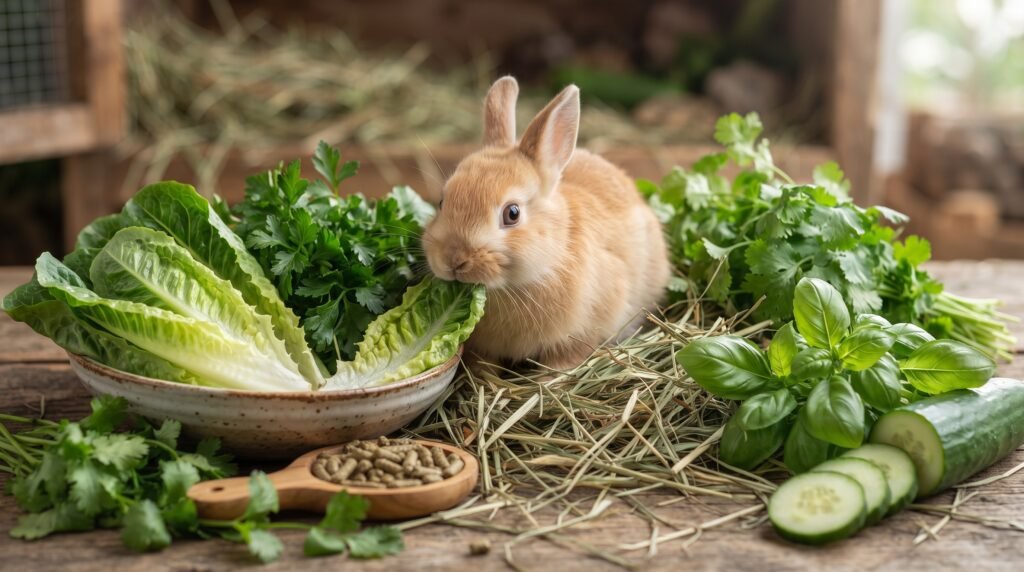
Leafy greens such as romaine lettuce, cilantro, parsley, bok choy, and basil provide more fiber and nutrients than cucumbers, making them better choices for everyday feeding.

Final Verdict
So, can rabbits eat cucumbers?
Yes! Cucumbers are a safe, refreshing, and low-calorie treat for healthy adult rabbits when fed in moderation. Their high water content makes them especially enjoyable during warm weather, but they should never replace the fiber-rich hay that rabbits need every day.
Remember these key points:
- Feed cucumbers only as an occasional treat.
- Offer small portions once or twice per week.
- Wash cucumbers thoroughly before serving.
- Introduce new foods gradually.
- Make unlimited hay the foundation of your rabbit’s diet.
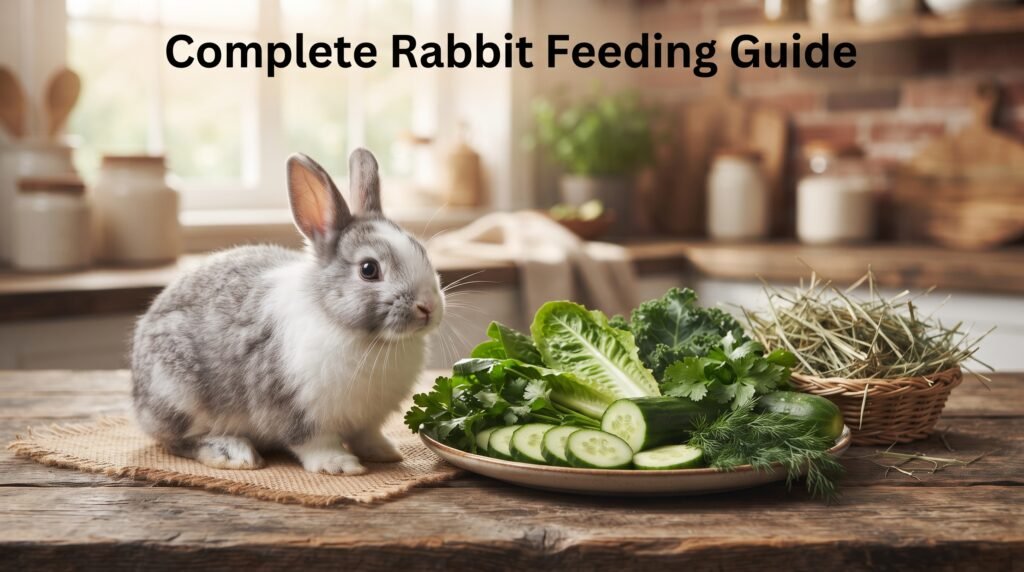
By following these simple guidelines, you can safely add cucumbers to your rabbit’s menu while supporting a healthy, balanced diet.

hammadniazi6663@gmail.com
Contributor at PetZuoo, publishing practical information for pet owners and animal lovers.
Related guides

Why Do Dog Tilt Their Heads? 9 Fascinating Reason
Why Do Dog Tilt Their Heads? 9 Fascinating Reason Behind This Adorable Behavior. Have you ever spoken to your dog and watched…
What You Should Know About Pet Rabbit Care
What You Should Know About Pet Rabbit Care, Rabbits are quiet, cute and surprisingly full of personality. They can learn routines, recognize…
Why Do Dogs Eat Grass? 9 Surprising Causes & Solutions
Why Do Dogs Eat Grass? 9 Surprising Causes & Solutions and Why Do Dogs Eat Grass? 9 Causes and What Every Dog…