Can Cats Eat Watermelon?
Can Cats Eat Watermelon?
Is Watermelon Safe for Cats?
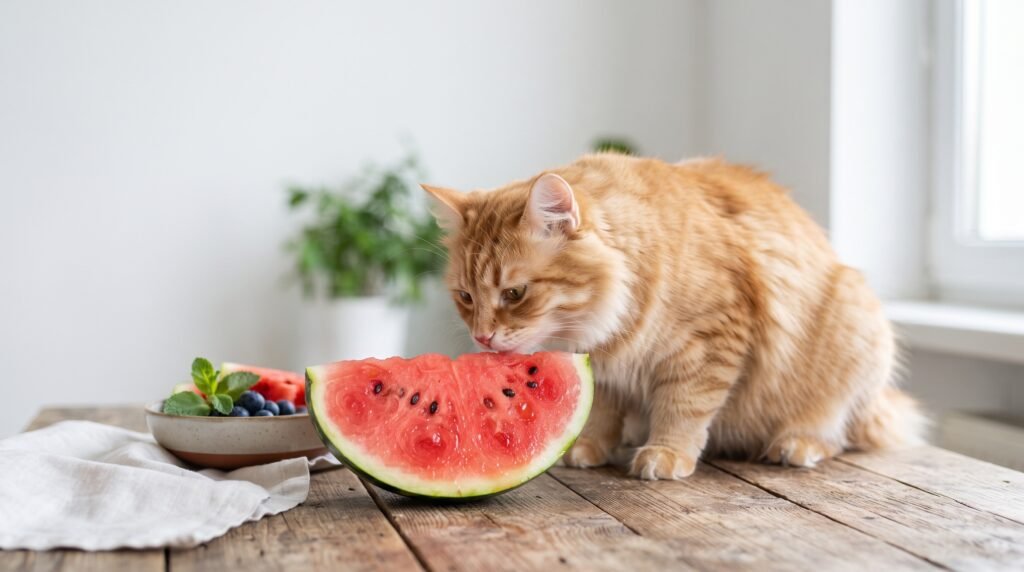
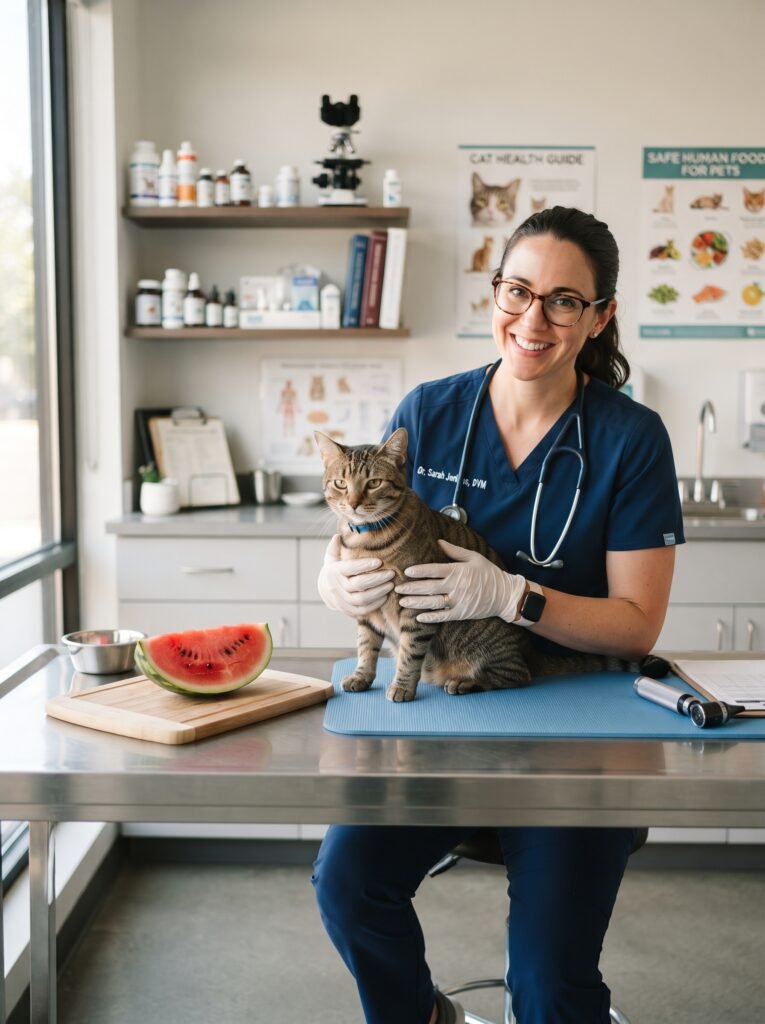
Yes, watermelon is generally safe for cats when served in moderation and prepared correctly. While cats are obligate carnivores and do not require fruit in their diet, a small piece of fresh watermelon can be an occasional treat for many healthy adult cats.
The key is to serve only the soft, red flesh. Before offering watermelon to your cat, remove all seeds and the rind. Black seeds can pose a choking hazard and may cause digestive discomfort if swallowed, while the tough green rind is difficult for cats to digest and may lead to stomach upset or even an intestinal blockage if eaten in large pieces.
Watermelon is made up of more than 90% water, making it a refreshing snack during hot summer months. It also contains small amounts of vitamins such as vitamin A and vitamin C, along with potassium and antioxidants. However, these nutrients are not essential for cats because they obtain nearly everything they need from a balanced, meat-based diet.
When introducing watermelon for the first time:
- Offer only a tiny bite-sized piece.
- Watch your cat for 24 hours for signs of vomiting, diarrhea, or allergic reactions.
- If your cat enjoys it and experiences no digestive issues, you can offer it occasionally as a treat.
Remember that treats—including fruit—should make up no more than 10% of your cat’s daily calorie intake. The remaining 90% should come from a complete and balanced cat food.
Nutritional Benefits of Watermelon for Cats
Although watermelon is not a necessary part of a cat’s diet, it does provide a few nutritional benefits when fed in small amounts.
1. Excellent Source of Hydration
Watermelon consists of approximately 92% water, making it one of the most hydrating fruits available. Cats naturally have a low thirst drive, so a small piece of watermelon may help increase their water intake, especially during warm weather.
2. Low in Calories
A tiny serving of watermelon contains very few calories, making it a better occasional treat than many processed snacks designed for humans. This can be helpful for cats that need to maintain a healthy weight.
3. Contains Antioxidants
Watermelon contains antioxidants such as lycopene and beta-carotene. These compounds help protect cells from oxidative damage. While cats don’t need fruit to obtain antioxidants, small amounts from safe fruits are generally not harmful.
4. Provides Small Amounts of Vitamins
Watermelon contains:
- Vitamin A
- Vitamin C
- Potassium
- Magnesium
These nutrients support overall health in humans, but cats primarily meet their nutritional needs through animal-based proteins and specially formulated cat food.
5. A Fun Enrichment Treat
Some cats enjoy exploring different textures and flavors. Offering a tiny cube of watermelon occasionally can provide mental stimulation and enrichment, making treat time more interesting.
Important Reminder
Even though watermelon has several positive qualities, it should never replace a nutritionally complete cat diet. Cats require high-quality animal protein, taurine, healthy fats, and other nutrients that fruit simply cannot provide.
Think of watermelon as an occasional summertime snack rather than a regular food item.
Health Risks of Feeding Watermelon to Cats
Although watermelon is considered safe for most healthy cats, there are a few risks every cat owner should understand before sharing this fruit.
1. Seeds Can Be Dangerous
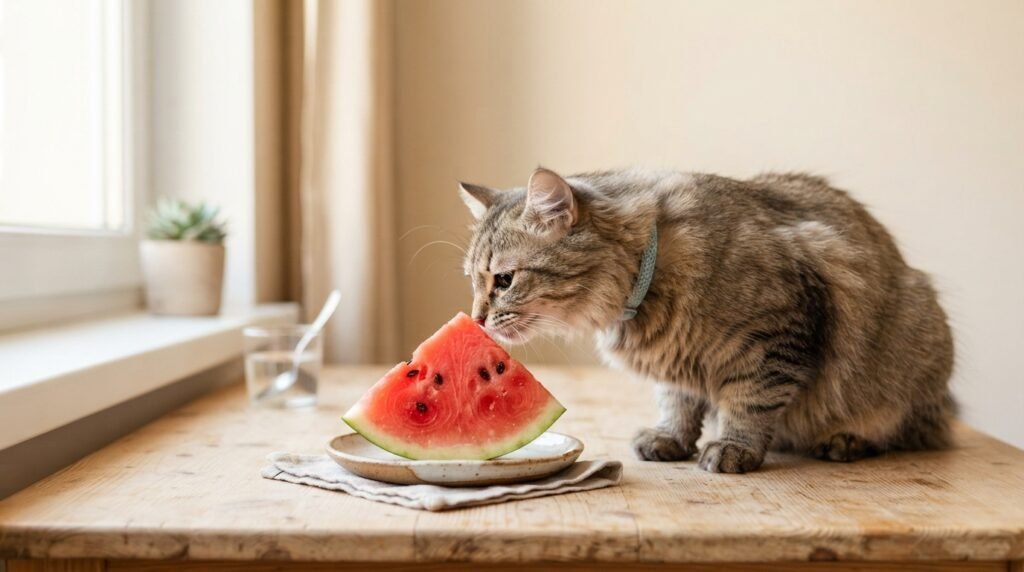
Always remove every seed before serving watermelon to your cat. Seeds can become a choking hazard, especially for kittens, and may cause digestive problems if swallowed. While a single seed is unlikely to be toxic, it’s best not to take the risk.
2. The Rind Is Difficult to Digest
The thick green rind is tough and fibrous. Cats cannot digest it properly, which may lead to:
- Vomiting
- Diarrhea
- Stomach pain
- Intestinal blockage in severe cases
Only offer the soft, seedless red flesh.
3. Too Much Sugar
Although watermelon contains natural sugar, cats don’t need sugar in their diet. Feeding large amounts regularly may contribute to:
- Weight gain
- Digestive upset
- Blood sugar concerns for diabetic cats
If your cat has diabetes or another medical condition, consult your veterinarian before offering any fruit.
4. Digestive Upset
Every cat reacts differently to new foods. Some cats may experience:
- Loose stools
- Vomiting
- Gas
- Mild stomach discomfort
If any of these symptoms occur, stop feeding watermelon and monitor your cat. Contact your veterinarian if symptoms persist or become severe.
How Much Watermelon Can Cats Eat?
Moderation is the key.
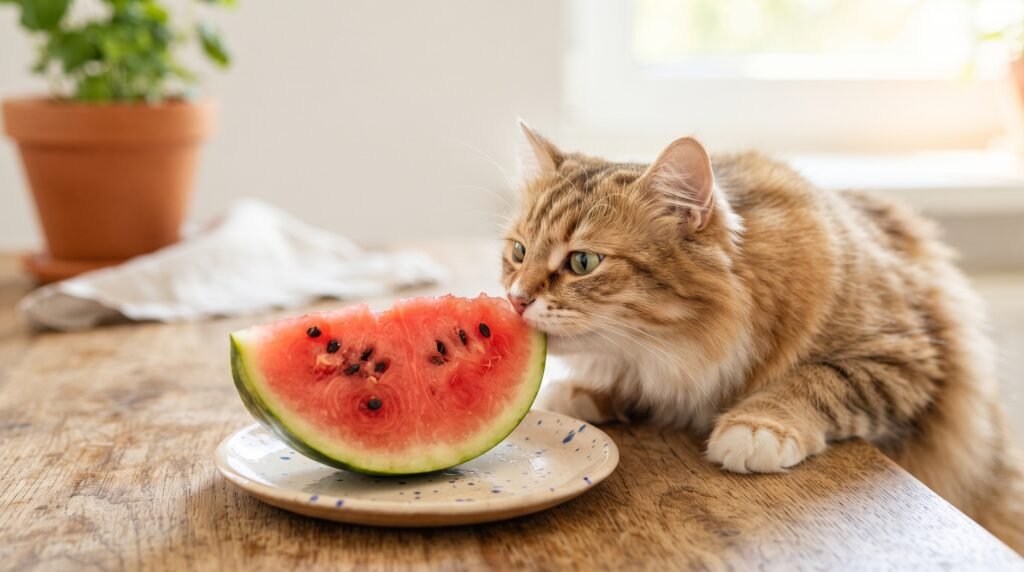
For most healthy adult cats, one or two small cubes of seedless watermelon are plenty as an occasional treat.
A good serving guideline is:
- Adult cats: 1–2 small bite-sized cubes once or twice a week.
- Senior cats: Start with a very small piece and monitor digestion.
- Overweight or diabetic cats: Avoid watermelon unless your veterinarian approves.
Treats—including fruit—should account for no more than 10% of your cat’s daily calorie intake.
Never force your cat to eat watermelon. Some cats simply aren’t interested in fruit, and that’s completely normal.

Can Kittens Eat Watermelon?
Kittens can technically eat a tiny piece of seedless watermelon, but it isn’t recommended as a regular treat.
Young kittens have sensitive digestive systems and need a complete diet formulated specifically for growth and development. Introducing unnecessary foods too early can upset their stomach.
If your kitten is older than 8–10 weeks and already eating solid food, you may offer a tiny, seedless piece once in a while. Watch closely for any signs of digestive upset.
Avoid giving watermelon to very young kittens that are still nursing or transitioning to solid food.

Signs Your Cat Ate Too Much Watermelon
Most cats recover without problems after eating a little too much watermelon, but excessive amounts may cause digestive issues.
Watch for these signs:
- Vomiting
- Diarrhea
- Loss of appetite
- Lethargy
- Excessive drooling
- Abdominal discomfort
If your cat accidentally eats the rind or a large number of seeds, contact your veterinarian as soon as possible. These parts are much more likely to cause complications than the fruit itself.
Seek emergency veterinary care immediately if your cat shows:
- Repeated vomiting
- Difficulty breathing
- Severe abdominal pain
- Inability to pass stool
- Extreme weakness
- Collapse
Prompt treatment can prevent more serious health problems.
Safe Ways to Serve Watermelon to Your Cat
If you’d like to let your cat enjoy watermelon as an occasional treat, proper preparation is essential.
Follow these simple safety tips:
Choose Fresh Watermelon
Select ripe, fresh watermelon without added sugar, syrups, seasonings, or artificial sweeteners. Never feed canned or processed watermelon products.
Remove All Seeds
Carefully remove every black or white seed before serving. Seeds can present a choking hazard and may cause digestive discomfort.
Cut Away the Rind
Only offer the soft red flesh. The green rind is too tough for cats to digest and may cause stomach problems or intestinal blockage.
Serve Small Pieces
Cut the watermelon into tiny, bite-sized cubes that are easy for your cat to chew and swallow.
Introduce Slowly
If it’s your cat’s first time trying watermelon, offer just one small piece and monitor them over the next 24 hours for any signs of digestive upset.
Keep It Occasional
Watermelon should be an occasional treat—not a daily snack. A balanced, high-quality cat food should always remain the primary source of nutrition.

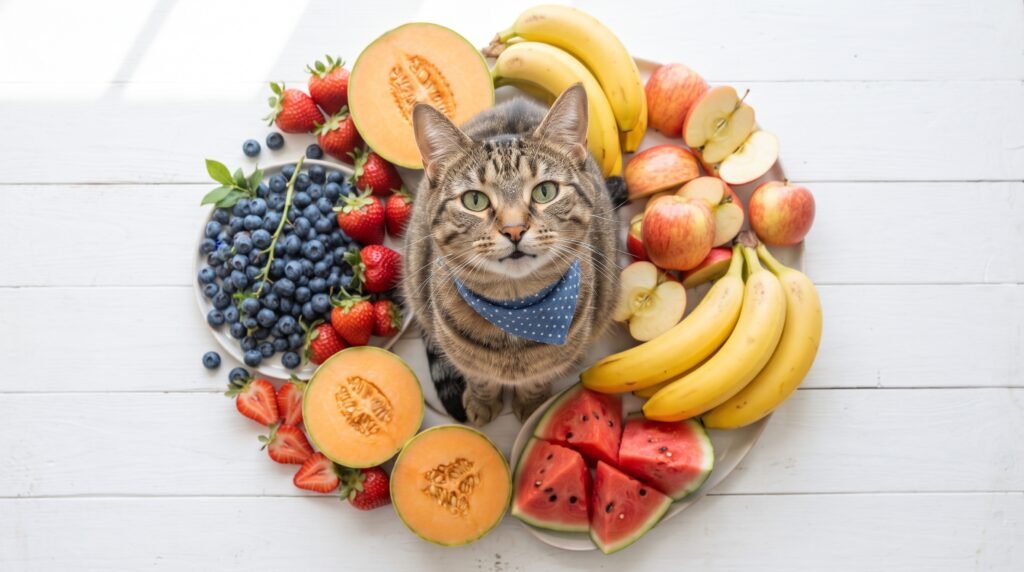
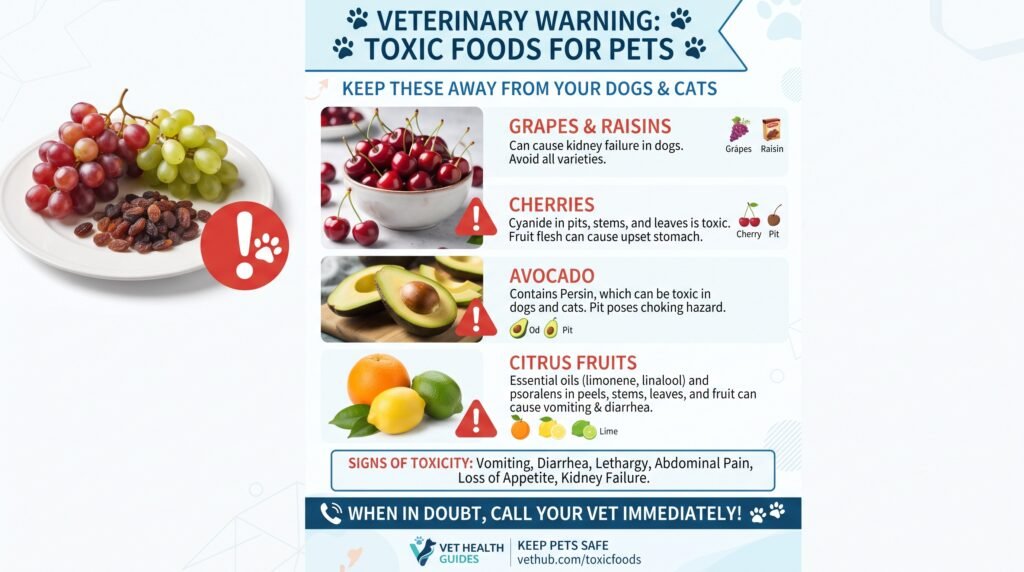
Fruits Cats Can and Cannot Eat
| Safe in Moderation | Avoid Feeding |
|---|---|
| Watermelon (seedless) | Grapes |
| Blueberries | Raisins |
| Strawberries | Cherries (pits and stems) |
| Bananas | Citrus fruits in large amounts |
| Apples (without seeds) | Avocado |
| Cantaloupe | Unripe tomatoes |
Always introduce new foods gradually and consult your veterinarian if your cat has a medical condition or special dietary needs.
Frequently Asked Questions
1. Can cats eat watermelon every day?
No. Watermelon should only be offered occasionally as a treat. Cats need a meat-based diet for complete nutrition.
2. Can cats eat watermelon seeds?
No. Watermelon seeds can be a choking hazard and may cause digestive problems. Always remove them before serving.
3. Is watermelon rind safe for cats?
No. The rind is difficult to digest and may lead to stomach upset or intestinal blockage.
4. Can kittens eat watermelon?
Older kittens can have a tiny piece occasionally, but it should never replace a balanced kitten diet.
5. Why does my cat like watermelon?
Some cats enjoy the texture, cool temperature, or moisture content. Others simply like exploring new foods.
6. Is frozen watermelon safe for cats?
Small pieces of plain frozen watermelon can be safe if thawed slightly. Avoid giving large frozen chunks that could become a choking hazard.
7. Can diabetic cats eat watermelon?
Because watermelon contains natural sugars, diabetic cats should only eat it if approved by a veterinarian.
8. What fruits are safest for cats?
Small amounts of blueberries, strawberries, bananas, apples without seeds, and seedless watermelon are generally considered safe for healthy cats.
9. What should I do if my cat eats watermelon rind?
Monitor your cat closely. If they develop vomiting, constipation, abdominal pain, or difficulty passing stool, contact your veterinarian immediately.
10. Is watermelon toxic to cats?
No. The flesh of seedless watermelon is not toxic to cats when fed in small amounts.
Final Thoughts
So, can cats eat watermelon? The answer is yes—but only in moderation.
A few small pieces of fresh, seedless watermelon can be a refreshing treat for many healthy cats, especially during warm weather. However, watermelon should never replace a balanced, protein-rich diet designed specifically for feline nutrition.
Remember to remove all seeds and the rind, introduce watermelon slowly, and watch your cat for any signs of digestive upset. Every cat is unique, so what works for one may not work for another.
When in doubt, ask your veterinarian before introducing any new food into your cat’s diet. Keeping treats occasional and prioritizing complete cat food is the best way to support your feline friend’s long-term health and happiness.

hammadniazi6663@gmail.com
Contributor at PetZuoo, publishing practical information for pet owners and animal lovers.
Related guides

Why Do Dog Tilt Their Heads? 9 Fascinating Reason
Why Do Dog Tilt Their Heads? 9 Fascinating Reason Behind This Adorable Behavior. Have you ever spoken to your dog and watched…
What You Should Know About Pet Rabbit Care
What You Should Know About Pet Rabbit Care, Rabbits are quiet, cute and surprisingly full of personality. They can learn routines, recognize…
Why Do Dogs Eat Grass? 9 Surprising Causes & Solutions
Why Do Dogs Eat Grass? 9 Surprising Causes & Solutions and Why Do Dogs Eat Grass? 9 Causes and What Every Dog…