“Why Is Dog Licking Its Paws? 9 Powerful Causes. Have you noticed your dog constantly licking, chewing, or nibbling at its paws? A little paw licking can be completely normal. Dogs often clean their paws after walking outside, eating, playing, or getting something on their feet.
But when paw licking becomes frequent, intense, or difficult for your dog to stop, it may be a sign that something is irritating or bothering them.
Excessive paw licking is one of those behaviors that pet owners should not simply ignore. The underlying problem could be as simple as dry skin or an irritant picked up during a walk, but it can also be associated with allergies, infections, parasites, injuries, or discomfort.
For dog owners, the important question is not simply “How do I stop my dog from licking its paws?” The better question is:
“Why is my dog licking its paws so much?”
Finding the underlying cause is the first step toward helping your dog feel comfortable again.
Is Paw Licking Normal in Dogs?
Yes. Occasional paw licking is usually normal.
Dogs use their mouths to groom themselves, and their paws can collect dirt, dust, grass, or other materials during everyday activities. Your dog may briefly lick its paws after coming inside from outdoors or after a particularly active day.
The concern begins when the behavior becomes excessive.
Watch for patterns such as:
- Licking the same paw repeatedly
- Chewing between the toes
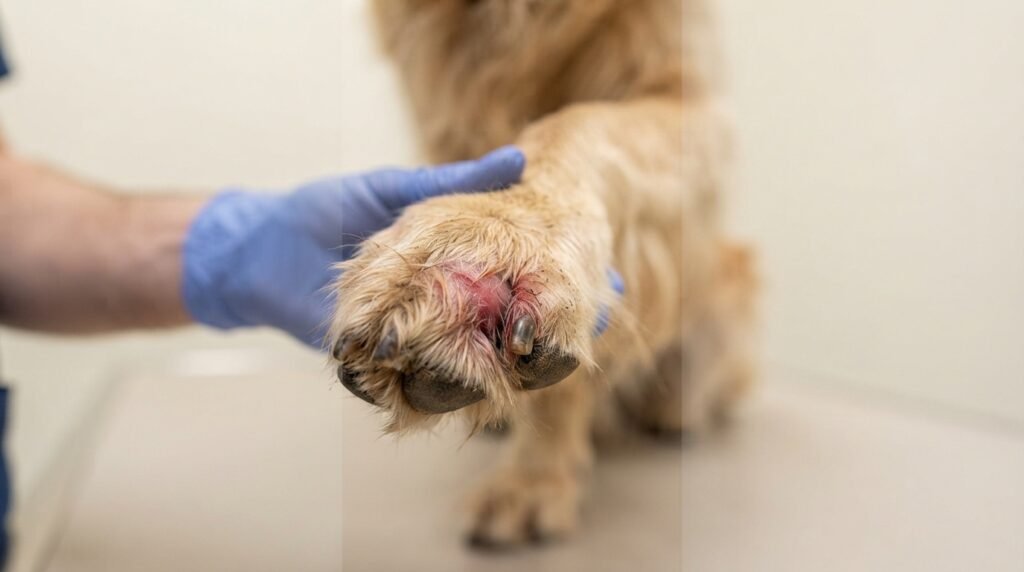
- Red or swollen paws
- Staining of the fur around the paws
- Hair loss
- Cracked or irritated skin
- An unusual odor
- Limping or reluctance to walk
- Licking that interrupts sleep or normal activities
If your dog repeatedly focuses on one or more paws, there may be an underlying reason.
Why Does Excessive Paw Licking Matter?
Repeated licking can create a frustrating cycle.
Your dog may initially lick its paw because of a small irritation. The constant moisture and mechanical irritation from licking can then damage the skin further. Damaged skin may become more uncomfortable, encouraging even more licking.
This can create a cycle:
Irritation → Licking → Skin damage → More irritation → More licking
Over time, the skin can become inflamed and vulnerable to secondary problems.
That is why identifying the cause early can be much easier than trying to manage a severely irritated paw later.
9 Common Reasons Dogs Lick Their Paws
There isn’t one single explanation for excessive paw licking. Different dogs can have completely different triggers.
In the next sections, we’ll examine the most common causes and explain what owners should look for.
1. Allergies
Allergies are one of the important possibilities when a dog repeatedly licks its paws.
Dogs can react to environmental allergens such as pollen, grasses, dust mites, or molds. Some dogs can also develop reactions associated with certain foods or other exposures.
Allergic irritation can affect multiple areas of the body, including the paws.
You may notice additional signs such as:
- Itchy skin
- Scratching
- Redness
- Repeated ear problems
- Face rubbing
- Licking other parts of the body
If paw licking occurs alongside widespread itching, allergies may be worth discussing with your veterinarian.
2. Environmental Irritation
Your dog’s paws come into contact with many surfaces every day.
Grass, dirt, cleaning products, road debris, lawn treatments, and other substances can irritate sensitive paw skin.
This is especially worth considering if your dog starts licking its paws shortly after returning from walks.
Pay attention to whether the licking happens more frequently after visiting a particular park, lawn, trail, or other environment.

3. Dry or Damaged Skin
Dry skin can make the paws uncomfortable.
Cold weather, hot surfaces, excessive bathing, low humidity, or repeated exposure to irritating substances may contribute to dryness or cracking.
Look carefully at the paw pads and the skin between the toes.
Dry, flaky, rough, or cracked areas may indicate that the paw needs attention.
4. A Paw Injury
Sometimes the reason is surprisingly simple: your dog may have hurt its paw.
A small cut, scrape, torn nail, blister, or irritated paw pad can cause significant discomfort.
Dogs may lick an injured area because they are instinctively trying to clean or soothe it.
If your dog suddenly begins licking one particular paw, inspect it carefully if your dog allows you to do so safely.
Look for visible cuts, swelling, bleeding, damaged nails, or something stuck between the toes.
If the injury appears serious or your dog is experiencing significant pain, veterinary care is appropriate.
Don’t Ignore Sudden Changes
One of the most useful things a dog owner can do is pay attention to changes in normal behavior.
If your dog has always occasionally licked its paws but suddenly begins licking them constantly, that change deserves attention.
Likewise, if the licking is accompanied by redness, swelling, odor, discharge, bleeding, limping, or obvious pain, don’t assume it will automatically disappear.
A veterinarian can help determine whether the problem involves allergies, infection, injury, parasites, inflammation, or another underlying condition.
What Should You Do Next?
Before trying random home remedies, start by observing your dog’s behavior.
Ask yourself:
When did the paw licking begin?
Is your dog licking one paw or several?
Does the licking happen after walks?
Are the paws red, swollen, cracked, or smelly?
Is your dog scratching other parts of its body?
These details can help you recognize patterns and provide useful information to your veterinarian.
Why Is My Dog Licking Its Paws? Hidden Causes You Should Know
In the first part, we explored why occasional paw licking can be normal and why frequent licking deserves closer attention. Now let’s look at several causes that can be harder for owners to recognize.
Sometimes the paw looks almost normal at first, while the underlying irritation continues to bother the dog.
5. Yeast or Bacterial Skin Problems
A dog that constantly licks its paws may develop a secondary skin problem.
Warm, moist areas between the toes can provide an environment where microorganisms can multiply. Repeated licking also keeps the area damp, which can make irritation worse.
Possible warning signs include:
- Red or inflamed skin
- A noticeable unpleasant odor
- Brown or reddish staining around the toes
- Swelling
- Crusts or scabs
- Increased sensitivity
- Persistent chewing between the toes
Importantly, paw odor alone does not tell you exactly what is causing the problem. Yeast, bacteria, allergies, moisture, and other skin conditions can produce overlapping signs.
If the paws are persistently red, painful, swollen, or smelly, a veterinarian can examine the skin and determine the appropriate treatment.
Why Treating Only the Licking May Not Work
Stopping the licking without addressing the underlying problem may provide only temporary relief.
For example, if allergies are causing the original irritation, preventing licking alone won’t remove the allergic trigger. Similarly, if there is an infection or injury, the underlying issue needs appropriate care.
The goal should always be to identify why the dog is licking, not simply to suppress the behavior.
6. Parasites Can Cause Itching and “Why Is Dog Licking Its Paws? 9 Powerful Causes
Parasites are another possibility when a dog develops unusual itching or licking.
Fleas, mites, and other parasites can cause skin irritation. Some dogs may react particularly strongly to flea bites, even when owners don’t see obvious fleas.
Check your dog’s entire body rather than focusing only on the paws.
Look for:
- Excessive scratching
- Biting at the skin
- Red irritated areas
- Hair loss
- Flea dirt
- Restlessness
- Increased grooming
If you suspect parasites, speak with your veterinarian about an appropriate parasite-control plan.
Avoid using random insecticides or household chemicals on your dog’s skin or paws. Products intended for other animals or household surfaces can be dangerous when used incorrectly.
7. Something May Be Stuck in the Paw
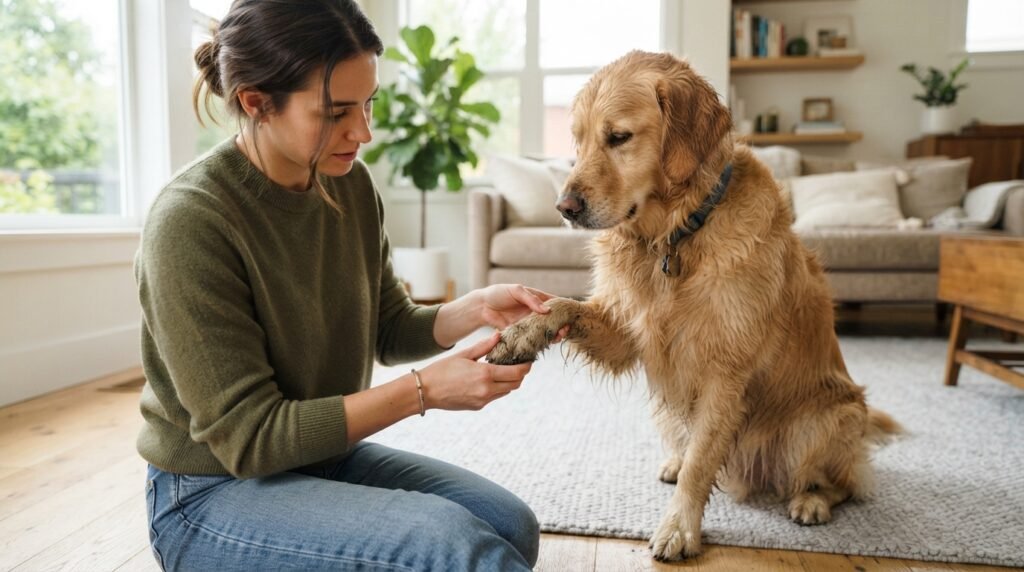
Dogs explore the world with their feet, and small foreign objects can sometimes become trapped around the paws.
Grass seeds, tiny pieces of debris, thorns, stones, or other materials can cause localized discomfort.
This is especially important when your dog suddenly starts obsessively licking one paw after being outdoors.
If your dog permits it, gently inspect the paw in good lighting.
Check:
- Between the toes
- Around the paw pads
- Around the nails
- The underside of the paw
- Areas that appear swollen or irritated
Never dig deeply into the skin trying to remove an object you cannot easily see or safely grasp.
If something appears deeply embedded, or your dog is in significant pain, veterinary assistance is safer.
8. Pain or Inflammation and “Why Is Dog Licking Its Paws? 9 Powerful Causes.
Not every paw problem is primarily a skin problem.
Dogs may lick an area because it hurts.
A sore nail, strained toe, damaged pad, joint discomfort, or another painful condition can cause repeated attention to a limb.
Watch your dog’s movement.
Does your dog:
- Limp?
- Walk differently?
- Avoid stairs?
- Hesitate before jumping?
- Hold one paw up?
- Resist having the paw touched?
- Become less active?
These changes can be important clues.
A dog experiencing pain should not simply be forced to stop licking. The underlying source of discomfort needs to be identified.
9. Stress, Anxiety, or Boredom
Sometimes repetitive licking can have a behavioral component.
Dogs need physical exercise, mental stimulation, social interaction, and predictable routines. When these needs aren’t being met, some dogs may develop repetitive behaviors.
Paw licking can occasionally become part of this pattern.
Consider whether the licking happens:
- When your dog is left alone
- During stressful situations
- When the household is unusually quiet
- After a major routine change
- When your dog appears bored
- Before bedtime or during periods of inactivity
However, behavioral explanations should not automatically be assumed.
A medical problem should generally be considered first when a dog suddenly develops excessive licking.
One Paw or All Four Paws?
This simple observation can provide useful clues.
One Paw
If your dog suddenly focuses intensely on one paw, consider a localized problem such as:
- Injury
- Foreign object
- Damaged nail
- Local irritation
- Pain
Multiple Paws
If your dog repeatedly licks several paws, broader causes may deserve consideration, including:
- Environmental allergies
- Skin irritation
- Allergic disease
- Generalized itching
- Certain infections
This isn’t a diagnosis, but the pattern can help you describe the problem accurately to your veterinarian.
The Paw-Licking Cycle
Excessive licking can become self-perpetuating.
Imagine a dog develops mild irritation after walking through grass.
The dog licks the paw because it feels uncomfortable.
Repeated licking makes the skin wetter and more irritated.
The damaged skin becomes increasingly uncomfortable.
The dog licks even more.
The cycle continues.
Initial trigger → Itching or discomfort → Licking → Skin irritation → More discomfort → More licking
Breaking this cycle requires addressing the original trigger whenever possible.
When Should You Contact a Veterinarian?
Contact your veterinarian if paw licking is persistent, worsening, or accompanied by concerning symptoms.
Seek professional advice particularly when you notice:
- Significant swelling
- Bleeding
- Pus or discharge
- Severe redness
- Strong or unusual odor
- Open wounds
- A deeply embedded object
- Severe pain
- Persistent limping
- A damaged nail
- Sudden severe symptoms
- Licking that continues despite basic care
A veterinarian can examine the paw and, when appropriate, perform tests to determine whether allergies, infection, parasites, injury, or another condition is responsible.
Don’t Guess the Diagnosis
Many paw problems look similar from the outside.
Red paws do not automatically mean an infection.
Paw odor does not automatically mean yeast.
Licking does not automatically mean allergies.
And chewing does not automatically mean anxiety.
Several conditions can produce similar symptoms, which is why persistent or severe cases deserve professional evaluation.
The good news is that once the underlying cause is identified, your veterinarian can recommend a treatment plan designed for your dog’s specific problem.
Why Is My Dog Licking Its Paws? Safe At-Home Care and Prevention
After identifying possible causes of excessive paw licking, the next step is knowing what you can safely do at home. Gentle paw care can help with minor dirt or surface irritation, but it should never replace veterinary treatment when your dog has an injury, infection, significant pain, or persistent symptoms.
Safe At-Home Paw Care
If your dog’s paws appear mildly dirty or irritated, start with simple, gentle care.
1. Check the Paws After Walks
Make paw inspection part of your dog’s routine.
Look between the toes, around the nails, and across the paw pads. You’re looking for obvious debris, cuts, swelling, redness, or anything unusual.
This is particularly useful after walks through grass, wooded areas, or rough terrain.
2. Gently Clean Dirty Paws
If your dog’s paws are dirty after being outside, gently rinse them with clean, lukewarm water.
Avoid vigorous scrubbing because irritated skin can become more uncomfortable when rubbed.
After cleaning, gently pat the paws dry, paying particular attention to the spaces between the toes.
Keeping the paws clean and dry can reduce exposure to surface irritants and excess moisture.
3. Keep Nails Properly Trimmed
Overgrown nails can affect the way a dog places its feet and may contribute to discomfort.
Check the nails regularly and have them trimmed appropriately.
If you’re uncomfortable trimming them yourself, ask a veterinarian or professional groomer to help.
4. Reduce Exposure to Irritants
If you notice that paw licking becomes worse after certain walks, consider changing the route temporarily.
Avoid areas that may contain obvious chemical treatments, excessive debris, or other substances that appear to irritate your dog’s paws.
Pay attention to patterns rather than assuming every outdoor exposure is harmless.
What Should You NOT Put on Your Dog’s Paws?
This is extremely important.
When owners see an irritated paw, they may be tempted to use household products or human skincare products.
That can create additional problems.
Avoid applying random creams, disinfectants, essential oils, cleaning products, or medications unless a veterinarian has specifically recommended them for your dog.
Dogs frequently lick their paws, meaning anything placed on the skin may potentially be swallowed.
Be Careful With Human Medications
A product that is safe for people is not automatically safe for dogs.
Some human medications and topical products can be harmful if swallowed or used incorrectly.
If you think your dog needs medication for an irritated paw, ask your veterinarian which product and dosage are appropriate.
Should You Stop Your Dog From Licking?
Sometimes preventing further licking can be useful, but simply stopping the behavior doesn’t solve the underlying problem.
Think of licking as a signal.
If a dog is licking because its paw hurts, preventing licking without addressing the pain leaves the original problem unresolved.
If allergies are causing itching, the allergic trigger still needs attention.
If an infection is present, appropriate veterinary treatment may be necessary.
The goal is to identify and manage the cause while preventing additional self-trauma.
How Can You Help Prevent Excessive Paw Licking?
Prevention begins with understanding your dog’s normal routine.
Maintain Regular Paw Checks
Spend a few seconds checking your dog’s paws regularly.
Early changes are often easier to manage than advanced irritation.
Keep the Environment Clean
Wash your dog’s bedding regularly and keep frequently used areas reasonably clean.
This is especially useful for dogs with sensitive skin or known environmental triggers.
Provide Appropriate Exercise
A dog with enough physical activity may be less likely to develop boredom-related repetitive behaviors.
Choose exercise appropriate for your dog’s age, breed, fitness, and health.
Daily walks, supervised play, and safe activities can all contribute to a healthier routine.
Add Mental Stimulation
Physical exercise isn’t the only form of enrichment dogs need.
Puzzle toys, training sessions, scent games, and interactive play can provide mental stimulation.
A dog that is mentally engaged may have fewer opportunities to develop repetitive behaviors caused by boredom.
Create a Paw-Friendly Walking Routine
You don’t necessarily need to stop taking your dog outside.
Instead, become more observant.
After walks:
- Check the paws.
- Remove visible surface debris safely.
- Rinse dirty paws when appropriate.
- Dry them gently.
- Watch for changes in redness or irritation.
This simple routine can help you notice problems before they become more serious.
When Home Care Is Not Enough
Home care is not appropriate for every paw problem.
Contact your veterinarian if the condition doesn’t improve, keeps returning, or becomes worse.
Professional evaluation is especially important if your dog develops:
- Severe swelling
- Bleeding
- Open wounds
- Pus or discharge
- Persistent bad odor
- Significant pain
- Limping
- A deeply embedded foreign object
- Severe redness
- Repeated licking despite your efforts
- Sudden changes in behavior
Don’t wait indefinitely for a serious problem to resolve on its own.
A Simple Rule for Dog Owners
Remember this:
Clean gently. Observe carefully. Avoid unsafe products. Treat the cause—not just the licking.
Paw licking can be caused by something minor, but persistent licking deserves attention because repeated irritation can make a small problem progressively worse.
Why Is My Dog Licking Its Paws? Allergies, Diagnosis and Veterinary Care
One of the biggest challenges with excessive paw licking is that several different conditions can look remarkably similar. A dog may lick its paws because of allergies, irritation, an injury, parasites, infection, or pain.
That is why paying attention to the pattern of licking can be extremely useful.
Could Allergies Be Causing Your Dog’s Paw Licking?
Allergies are an important possibility, particularly when a dog repeatedly licks several paws and also has itching elsewhere on the body.
Environmental triggers can include things such as pollen, grasses, dust mites, or molds. Some dogs can also experience food-related allergic reactions.
However, paw licking by itself cannot confirm an allergy.
Look for additional signs such as:
- Frequent scratching
- Face rubbing
- Repeated ear irritation
- Red or itchy skin
- Chewing other parts of the body
- Recurrent skin problems
- Symptoms that appear during particular seasons
If several of these signs occur together, discuss them with your veterinarian.
Seasonal Paw Licking
Does your dog seem to lick its paws more during certain times of the year?
A seasonal pattern can provide useful information.
For example, some dogs may experience more environmental exposure during periods when particular plants are producing pollen.
Keep a simple record of when the licking occurs and whether it changes after walks or outdoor activities.
This information can help your veterinarian understand the pattern.
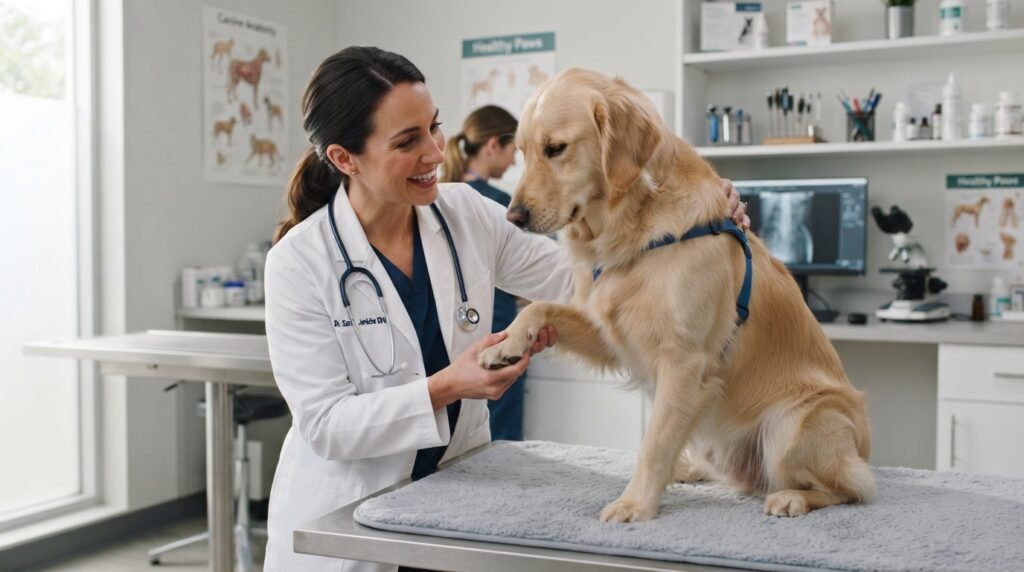
How Veterinarians Investigate Paw Problems
When you take your dog to the veterinarian, expect questions about the dog’s history.
You may be asked:
- When did the paw licking begin?
- Is one paw affected or several?
- Is the licking getting worse?
- Does it happen after walks?
- Does your dog scratch other areas?
- Has there been a change in food?
- Have you noticed an odor?
- Has your dog had similar problems before?
- What products have you used on the paws?
The veterinarian may then examine the paws, skin, nails, ears, and other areas of the body.
Depending on the signs, additional diagnostic tests may be recommended.
Why the History Matters
Your observations at home can provide information that isn’t available during a short examination.
For example, you may notice that your dog starts licking immediately after returning from a particular walking area.
Or perhaps the licking happens mostly at night.
Maybe your dog has also been scratching its ears.
These details can help your veterinarian identify patterns that might otherwise be missed.
Before your appointment, write down anything unusual you’ve noticed.
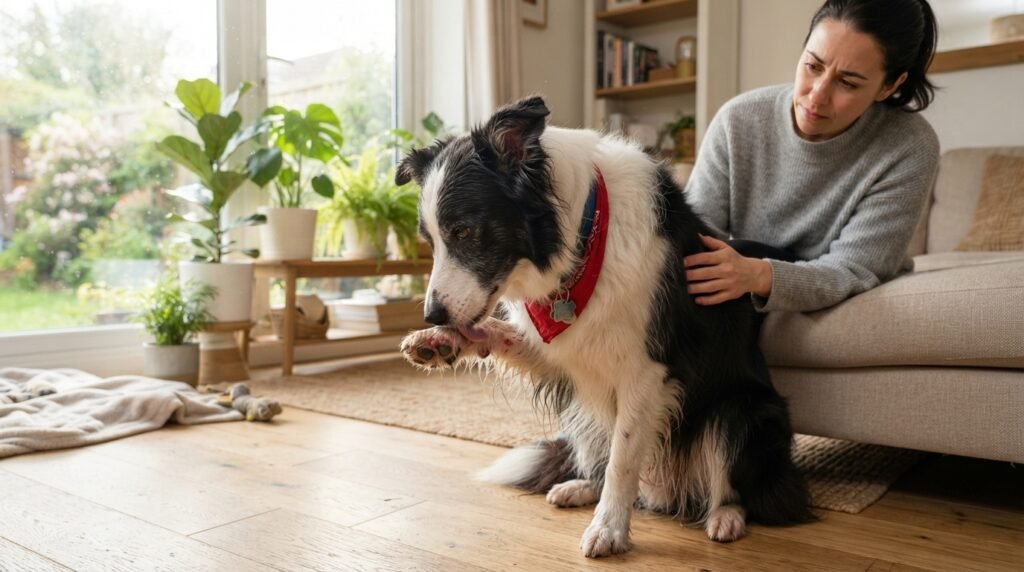
Take Photos or Videos
If your dog behaves differently at home than at the veterinary clinic, photographs and short videos can be helpful.
For example, you could record:
- How frequently the dog licks
- Which paw is affected
- How the dog walks
- Any visible redness or swelling
- Changes in the skin over time
Clear observations can help demonstrate what you are seeing in your dog’s normal environment.
Don’t Assume Every Red Paw Is an Infection
A common mistake is seeing redness and immediately assuming the dog has an infection.
Redness can have multiple causes.
It may occur with irritation, allergies, trauma, excessive licking, inflammation, or infection.
Likewise, dark staining around the paws can have several possible explanations and should not be used alone to diagnose a specific condition.
A proper examination is more reliable than guessing based on appearance.
Why Repeated Paw Licking Can Become a Bigger Problem
Even if the original trigger is mild, constant licking can damage the skin.
The dog may continue licking because the area feels itchy or uncomfortable.
This creates additional irritation, which can encourage further licking.
Over time, the problem can become more difficult to manage.
That’s why early attention is valuable.
You don’t need to panic over occasional paw licking, but persistent changes should not be ignored.
Questions to Ask Your Veterinarian
If you’re concerned about your dog’s paws, consider asking:
“What could be causing the licking?”
Understanding the possible causes helps you know what you’re treating.
“Does my dog need any testing?”
Your veterinarian can explain whether diagnostic tests are appropriate.
“Could allergies be involved?”
If your dog has other itching or recurring skin problems, this may be worth discussing.
“What should I use to clean the paws?”
Ask for specific, dog-safe recommendations rather than experimenting with household products.
“How can I prevent this from happening again?”
Prevention may involve environmental management, parasite control, grooming, diet evaluation, or treatment of an underlying condition.
When Is Paw Licking an Emergency?
Most cases of paw licking are not emergencies.
However, urgent veterinary attention may be appropriate if your dog has severe pain, significant bleeding, a serious wound, rapidly increasing swelling, or another sudden and severe change.
A dog that cannot comfortably walk or appears seriously unwell should not be left waiting for a minor home remedy to work.
When in doubt about a severe or rapidly changing condition, contact a veterinary professional.
The Most Important Lesson
The biggest mistake is focusing only on the licking.
Paw licking is a behavior. The real problem may be underneath it.
Your dog could be reacting to:
itching → irritation → pain → injury → allergy → infection → parasites → environmental exposure
Finding the underlying trigger is the key to long-term improvement.
Why Is My Dog Licking Its Paws? Prevention Checklist, FAQs and Final Guide
Excessive paw licking can be frustrating for both dogs and their owners, but understanding the possible causes makes it much easier to respond appropriately.
A dog may occasionally lick its paws as part of normal grooming. The concern begins when licking becomes frequent, intense, or accompanied by visible changes such as redness, swelling, wounds, odor, hair loss, or limping.
The most important step is to look beyond the behavior and consider what may be causing it.
A Simple Paw-Care Routine for Dog Owners
A few simple habits can help you monitor your dog’s paws.
Step 1: Check the paws regularly
Look between the toes, around the nails, and across the paw pads.
You’re looking for anything unusual, including:
- Cuts
- Cracks
- Swelling
- Redness
- Foreign objects
- Damaged nails
- Unusual odor
Step 2: Check after outdoor activities
After walks, particularly through grass or rough areas, briefly inspect your dog’s paws.
If they’re dirty, gently rinse them with clean water and dry them carefully.
Step 3: Monitor changes
Don’t just look at the paws once.
Pay attention to whether the condition is improving, staying the same, or getting worse.
A simple photo taken every few days can sometimes help you compare changes objectively.
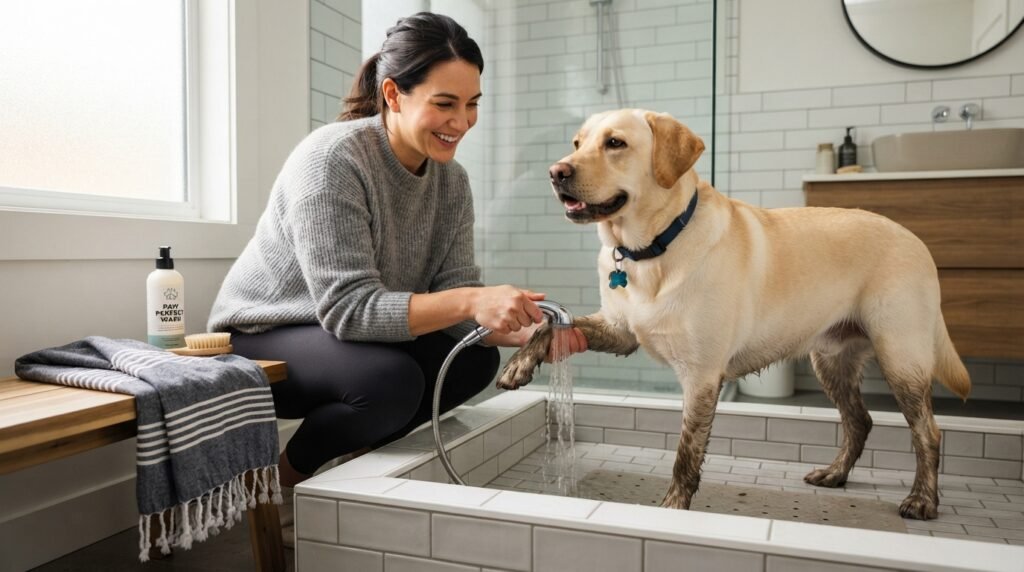
Step 4: Watch your dog’s behavior
Notice whether your dog is:
- Walking normally
- Sleeping comfortably
- Playing normally
- Eating normally
- Licking one paw or several
- Scratching other parts of the body
Changes outside the paws can provide important clues.
How to Reduce Future Paw Problems
Prevention depends on the underlying cause, but several general habits can support healthier paws.
Keep paws clean
Gently cleaning dirty paws after outdoor activities can reduce the amount of debris and potential irritants left on the skin.
Keep nails maintained
Regular nail care helps prevent overgrown nails from interfering with normal movement.
Maintain parasite prevention
Work with your veterinarian to choose an appropriate parasite-prevention program for your dog.
Provide balanced nutrition
Your dog needs an appropriate, complete diet for its life stage and individual needs.
If you suspect food may be contributing to recurring skin problems, don’t make major dietary changes without discussing them with a veterinarian.
Provide exercise and enrichment
Dogs need both physical activity and mental stimulation.
Daily walks, appropriate games, training, scent activities, and interactive toys can help keep your dog engaged.
Frequently Asked Questions
Why is my dog licking its paws all the time?
Frequent paw licking can have many possible causes, including allergies, irritation, infection, parasites, injury, pain, or behavioral factors.
The pattern of licking and any additional symptoms can help narrow down the possibilities.
Why does my dog lick only one paw?
Licking one paw may suggest a localized issue such as an injury, damaged nail, foreign object, or localized irritation.
Check the paw carefully if your dog allows it, but don’t dig into the skin or force an examination if the dog is painful.
Why are my dog’s paws red?
Red paws can occur for several reasons, including irritation, allergies, inflammation, excessive licking, or infection.
Redness alone cannot establish the exact cause.
Can allergies make dogs lick their paws?
Yes. Allergies can contribute to itching and paw licking in some dogs.
If paw licking occurs alongside scratching, face rubbing, ear problems, or other itchy skin, discuss allergies with your veterinarian.
Should I put cream on my dog’s paws?
Don’t automatically apply human creams or medications.
Dogs may lick products from their paws, and some substances may be unsafe when swallowed or used incorrectly.
Ask your veterinarian which products are appropriate for your dog’s specific condition.
How can I stop my dog from licking its paws?
The most effective long-term approach is usually to identify and address the reason for the licking.
Simply preventing the behavior without addressing the underlying problem may not solve it.
When should I take my dog to the vet?
Arrange veterinary care when paw licking is persistent, worsening, or accompanied by significant redness, swelling, wounds, discharge, odor, pain, or limping.
Severe pain, substantial bleeding, or a serious sudden injury warrants prompt professional attention.
A Quick Paw-Licking Checklist
Before deciding what to do, ask yourself:
- Is the licking occasional or constant?
- Is one paw affected or multiple paws?
- Is there redness or swelling?
- Are there cuts or cracks?
- Is there an unusual odor?
- Is my dog limping?
- Does my dog have itchy ears or skin?
- Did the licking begin after a walk?
- Could something be stuck in the paw?
- Has my dog experienced similar problems before?
These observations can help you decide whether simple monitoring is reasonable or whether veterinary advice is needed.
Final Thoughts
A dog licking its paws occasionally isn’t necessarily a reason for concern. Dogs naturally groom themselves, and their paws can become dirty after everyday activities.
But persistent paw licking is worth investigating.
Allergies, irritation, infections, parasites, injuries, foreign objects, pain, and stress can all potentially contribute to excessive licking. The same visible symptom can have very different underlying causes, so guessing at a diagnosis can sometimes delay appropriate treatment.
The best approach is simple:
Observe the behavior. Check the paws gently. Avoid unsafe home remedies. Look for additional symptoms. And seek veterinary advice when the problem persists or appears serious.
Your dog’s paws support every walk, run, jump, and adventure. Taking a few minutes to monitor them regularly can help you notice changes early and keep your companion comfortable.
Healthy paws mean more comfortable walks, more playful days, and more happy moments together.

hammadniazi6663@gmail.com
Contributor at PetZuoo, publishing practical information for pet owners and animal lovers.
Related guides
Why Do Dog Tilt Their Heads? 9 Fascinating Reason
Why Do Dog Tilt Their Heads? 9 Fascinating Reason Behind This Adorable Behavior. Have you ever spoken to your dog and watched…
What You Should Know About Pet Rabbit Care
What You Should Know About Pet Rabbit Care, Rabbits are quiet, cute and surprisingly full of personality. They can learn routines, recognize…
Why Do Dogs Eat Grass? 9 Surprising Causes & Solutions
Why Do Dogs Eat Grass? 9 Surprising Causes & Solutions and Why Do Dogs Eat Grass? 9 Causes and What Every Dog…