Introduction,Complete Hamster Care Guide for Beginners and Is a Hamster the Right Pet?, and Choosing the Right Hamster BreedHamsters are among the most popular small pets in the world, and for good reason. They are adorable, relatively easy to care for, and don’t require as much space as larger pets like cats or dogs. Their playful personalities, tiny paws, and curious nature make them entertaining companions for families, children, and adults alike.
However, many first-time owners assume that hamsters require very little care. In reality, these small animals have specific needs that must be met to keep them healthy and happy. A proper habitat, balanced diet, regular cleaning, and mental stimulation are all essential parts of responsible hamster ownership.
Whether you’re planning to adopt your first hamster or simply want to improve the quality of life for your current furry friend, this complete guide will walk you through everything you need to know. From choosing the right breed and setting up the perfect cage to feeding, cleaning, health care, and daily enrichment, you’ll discover practical tips that help your hamster thrive.
By the end of this guide, you’ll have the knowledge and confidence to provide your pet with a safe, comfortable, and enriching home.
Why Hamsters Make Great Pets
Hamsters are popular for several reasons:
- Small size makes them suitable for apartments and smaller homes.
- Affordable compared to many other pets.
- Quiet animals that rarely disturb neighbors.
- Fun to watch, especially during the evening when they become active.
- Easy to bond with when handled gently and consistently.
- Require less daily maintenance than many larger pets.
Because hamsters are naturally independent, they can be excellent pets for busy people who still have enough time each day to feed, observe, and interact with them.
Is a Hamster the Right Pet for You?
Before bringing any pet home, it’s important to consider whether its needs match your lifestyle.
A hamster may be an excellent choice if you:
- Have limited living space.
- Want a small pet that’s relatively inexpensive to maintain.
- Enjoy observing natural animal behaviors.
- Can provide daily fresh food and clean water.
- Are willing to clean the cage regularly.
- Understand that hamsters are mostly active during the evening and nighttime.
However, hamsters may not be ideal if:
- You want a pet that enjoys constant cuddling.
- You expect your pet to be awake during the daytime.
- You cannot clean the enclosure consistently.
- You have very young children who may accidentally handle the hamster too roughly.
Understanding your expectations before adopting a hamster helps create a happier experience for both you and your pet.

Understanding Hamster Behavior
Hamsters have unique personalities and natural instincts that influence how they behave.
They are naturally curious and love exploring new environments. In the wild, hamsters travel long distances every night searching for food. This instinct explains why pet hamsters enjoy running on exercise wheels and exploring tunnels.
Hamsters also like to collect food in their cheek pouches and store it inside their nests. This behavior is completely normal and helps them feel secure.
Another important trait is that most hamsters prefer living alone. Unlike guinea pigs or rats, many hamster species become aggressive if forced to share a cage.
Understanding these natural behaviors allows owners to create an environment where hamsters feel safe and comfortable.
Choosing the Right Hamster Breed
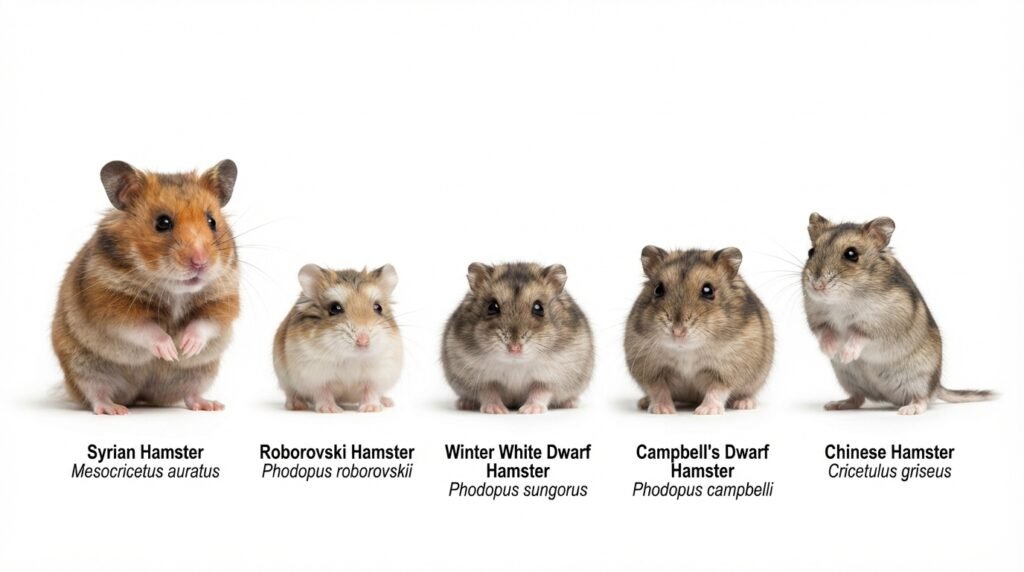
Not all hamsters are the same. Different breeds have different personalities, sizes, and care requirements.
1. Syrian Hamster
The Syrian hamster is the largest and most popular pet hamster.
Characteristics:
- Friendly and easy to tame.
- Ideal for beginners.
- Larger size makes handling easier.
- Must always live alone.
Adult Size:
Approximately 6–8 inches.
Lifespan:
2–3 years.
Best For:
First-time hamster owners and families.
2. Dwarf Campbell Hamster
Campbell’s dwarf hamsters are much smaller and move very quickly.
Characteristics:
- Energetic and curious.
- Can sometimes live with same-sex siblings if introduced young.
- Requires more patience during handling.
Adult Size:
About 3–4 inches.
Lifespan:
1.5–2 years.
Best For:
Experienced owners who enjoy active pets.
3. Winter White Dwarf Hamster
Winter White hamsters are known for their adorable appearance and calm temperament.
Interesting fact:
Their fur may become lighter during winter in cooler environments.
Characteristics:
- Gentle personality.
- Small but relatively easy to tame.
- Active during the evening.
Adult Size:
3–4 inches.
Lifespan:
Around 2 years.
4. Roborovski Hamster
Roborovski hamsters are the smallest pet hamster species.
Characteristics:
- Extremely fast runners.
- Prefer observing rather than cuddling.
- Excellent for large natural-style habitats.
Adult Size:
2 inches.
Lifespan:
3–3.5 years.
Best For:
Owners who enjoy watching active pets rather than handling them frequently.
5. Chinese Hamster
Chinese hamsters have slender bodies and longer tails than other hamster species.
Characteristics:
- Calm personality.
- Can become affectionate with patient handling.
- Less common in pet stores.
Adult Size:
4–5 inches.
Lifespan:
2–3 years.
Which Hamster Breed Is Best for Beginners?
If you’re buying your first hamster, the Syrian hamster is generally the best choice. Their larger size, friendly nature, and ease of handling make them ideal for new pet owners. They also adapt well to regular interaction when treated gently and consistently.
Smaller breeds like Roborovski and Campbell’s dwarf hamsters are incredibly fun to watch but can be more challenging to handle because of their speed and tiny size.
Complete Hamster Care Guide for Beginners (2026)
Setting Up the Perfect Hamster Cage
Creating the right habitat is one of the most important aspects of hamster care. A well-designed enclosure gives your hamster enough space to exercise, explore, burrow, and rest. A cramped or poorly equipped cage can lead to stress, boredom, obesity, and even health problems.
In the wild, hamsters travel long distances every night and spend much of their time digging tunnels. Your pet hamster should have opportunities to express these natural behaviors in captivity.
Choosing the Best Cage
Many cages sold in pet stores are unfortunately too small. While they may look attractive, they often don’t provide enough room for a hamster to live comfortably.
A good hamster cage should offer:
- Plenty of floor space
- Excellent ventilation
- Secure locks to prevent escapes
- Easy access for cleaning
- Space for toys and enrichment
For most hamsters, aim for at least 775 square inches (5,000 cm²) of uninterrupted floor space. Bigger is always better.
Popular Cage Types
1. Glass Tank
A large glass aquarium or terrarium is an excellent choice because it allows for deep bedding and prevents bedding from being kicked out.
Pros
- Holds deep bedding well
- Easy to observe your hamster
- Escape-resistant
Cons
- Heavy to move
- Requires a mesh lid for ventilation
2. Wire Cage
Wire cages provide excellent airflow and are easy to clean.
Pros
- Great ventilation
- Lightweight
- Easy to access
Cons
- Bedding may fall through the bars
- Bar spacing must be narrow enough to prevent escapes
3. Plastic Bin Cage
Many experienced hamster owners create DIY bin cages using large plastic storage containers.
Pros
- Affordable
- Spacious
- Lightweight
- Customizable
Cons
- Requires some DIY work
- Ventilation holes must be added carefully

Where to Place the Cage
The cage location has a big impact on your hamster’s well-being.
Choose a location that is:
- Quiet
- Away from direct sunlight
- Free from drafts
- Safe from cats and dogs
- Away from loud televisions or speakers
Avoid placing the cage near windows where temperatures can change quickly.
The Importance of Deep Bedding
Hamsters naturally dig tunnels and underground chambers. Giving them deep bedding helps satisfy this instinct and reduces stress.
Provide at least 8–10 inches (20–25 cm) of bedding, and more if your enclosure allows.
Suitable bedding materials include:
- Unscented paper bedding
- Aspen wood shavings
- Hemp bedding
Avoid:
- Cedar shavings
- Pine shavings (unless kiln-dried)
- Scented bedding
- Cotton nesting fluff, which can cause injuries if swallowed or wrapped around limbs
Nesting Materials
Hamsters need soft materials to build a cozy sleeping area.
Safe options include:
- Plain white toilet paper
- Unscented tissue paper
- Soft paper nesting materials made specifically for small pets
Avoid synthetic fluffy nesting products that can be dangerous.
Choosing the Right Exercise Wheel
An exercise wheel is one of the most important accessories in a hamster’s home. Hamsters can run several miles each night, and a wheel helps them stay active.
Choose a solid-surface wheel—never a wire or mesh wheel, as these can injure tiny feet.
Recommended wheel sizes:
- Syrian Hamsters: 11–12 inches
- Chinese Hamsters: 8–10 inches
- Dwarf Hamsters: 8–10 inches
Your hamster’s back should remain straight while running. If it bends noticeably, the wheel is too small.

Hides and Sleeping Areas
Hamsters need secure hiding places where they can rest during the day.
Provide at least two or three hides, such as:
- Wooden houses
- Ceramic shelters
- Cork logs
- Coconut shell hides
Having multiple hiding spots helps your hamster feel safe and reduces stress.
Tunnels and Burrowing Fun
Tunnels encourage exploration and mimic the underground burrows hamsters create in nature.
Great tunnel options include:
- Cork tunnels
- Cardboard tubes
- Wooden tunnels
- Bendable bridges
You can also create different levels in the enclosure using platforms and ramps, ensuring they are low enough to prevent falls.
Chew Toys Are Essential
A hamster’s teeth grow continuously throughout its life. Chewing helps wear them down naturally.
Safe chew toys include:
- Apple wood sticks
- Willow balls
- Untreated wooden blocks
- Loofah chews
- Natural vine balls
Avoid painted, varnished, or chemically treated wood.
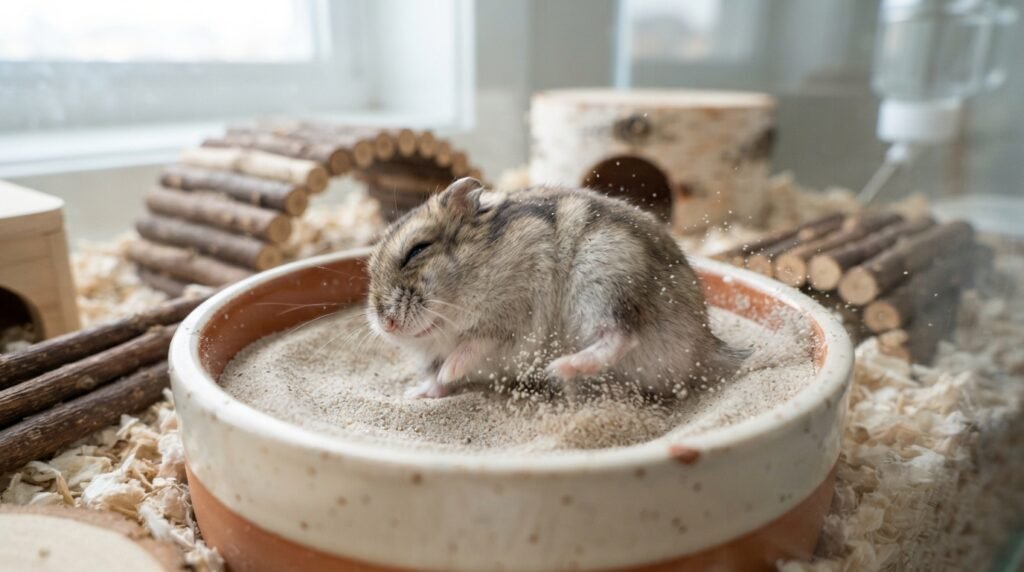
Sand Bath for Grooming
Most hamsters love rolling in sand to clean their fur and remove excess oils.
Use:
- Chinchilla sand (not dust)
- Reptile sand without added calcium or dyes
Never use dusty products, as they can cause respiratory problems.
A ceramic dish or glass container filled with sand makes a perfect bathing area.
Food and Water Setup
Use a sturdy ceramic food bowl to prevent tipping.
For water, choose either:
- A quality water bottle with a metal drinking tube
- A shallow ceramic water dish that is cleaned daily
Always provide fresh, clean water.
Enrichment Ideas
Hamsters become bored if their environment never changes. Rotate toys and enrichment items every few weeks to keep life interesting.
Ideas include:
- Cardboard boxes
- Egg cartons
- Paper bags
- Puzzle feeders
- Treat balls
- Dig boxes filled with safe substrates
- Foraging toys that encourage natural food-searching behavior
Changing the cage layout occasionally also encourages exploration.
Common Cage Setup Mistakes
Many new hamster owners unknowingly make mistakes that affect their pet’s health.
Avoid these common errors:
- Buying a cage that’s too small
- Using unsafe bedding
- Choosing a wheel that’s too small
- Not providing enough bedding for burrowing
- Overcrowding the cage with decorations
- Cleaning away all of your hamster’s scent at once, which can cause stress
- Using scented cleaning products near the enclosure
Creating a Comfortable Environment
Your hamster’s enclosure should be more than just a place to sleep—it should be a stimulating home where they can dig, climb, forage, run, and rest safely. Investing time in setting up the habitat correctly will greatly improve your pet’s quality of life and help prevent many common behavioral and health issues.
Complete Hamster Care Guide for Beginners (2026)
Feeding, Nutrition, Exercise, and Handling Your Hamster
A healthy diet and regular exercise are essential for keeping your hamster active, maintaining a healthy weight, and preventing common illnesses. Along with proper nutrition, gentle handling and daily enrichment help your hamster become more confident and comfortable around people.

What Do Hamsters Eat?
Hamsters are omnivores, which means they eat both plant-based foods and small amounts of animal protein. In the wild, they consume seeds, grains, grasses, insects, roots, and vegetables.
A balanced pet hamster diet should include:
- High-quality hamster food mix or pellets
- Fresh vegetables
- Small portions of fruit
- Healthy treats in moderation
- Occasional protein sources
- Fresh, clean water every day
The majority of your hamster’s diet should come from a nutritionally balanced commercial hamster food.
Choosing the Best Hamster Food
Not all hamster foods are created equal. Look for a mix that contains a variety of wholesome ingredients such as:
- Seeds
- Whole grains
- Oats
- Millet
- Dried vegetables
- Healthy legumes
- Limited sunflower seeds
Avoid foods with:
- Artificial colors
- Excessive sugary treats
- Large amounts of corn fillers
- Sticky ingredients that may get caught in cheek pouches
Feed your hamster approximately 1–2 tablespoons of food per day, depending on its size and breed.
Safe Vegetables for Hamsters
Fresh vegetables provide vitamins, minerals, and hydration.
Safe vegetables include:
- Carrots (small amounts)
- Broccoli
- Cucumber
- Bell peppers
- Zucchini
- Romaine lettuce
- Spinach (occasionally)
- Green beans
- Peas
Introduce new vegetables slowly and remove uneaten fresh food after a few hours to prevent spoilage.
Safe Fruits
Because fruits contain natural sugars, they should only be offered as occasional treats.
Safe fruits include:
- Apple (without seeds)
- Blueberries
- Strawberries
- Banana (small slice)
- Pear
- Watermelon (seedless)
- Raspberry
Offer fruit once or twice a week in very small portions.
Protein Sources
Protein helps support healthy muscles, skin, and fur.
Healthy protein treats include:
- Plain cooked chicken
- Boiled egg
- Mealworms
- Crickets raised for reptiles
- Small amounts of plain cooked turkey
Offer protein once or twice per week.
Foods Hamsters Should Never Eat
Some foods are toxic or dangerous for hamsters.
Never feed:
- Chocolate
- Garlic
- Onion
- Avocado
- Citrus fruits
- Raw potatoes
- Rhubarb
- Apple seeds
- Fruit pits
- Almonds
- Candy
- Chips
- Sugary cereals
- Alcohol
- Caffeine
Also avoid heavily salted or seasoned human foods.
Fresh Water Is Essential
Your hamster should always have access to clean drinking water.
Check the water bottle daily to ensure it isn’t blocked, and clean it regularly to prevent bacteria buildup.
If you use a water bowl:
- Change the water every day.
- Wash the bowl frequently.
- Make sure bedding doesn’t contaminate it.
Preventing Obesity
Hamsters love eating, but overfeeding can quickly lead to obesity.
Signs of excess weight include:
- Difficulty running
- Reduced activity
- Trouble grooming
- Visible fat around the body
Help prevent obesity by:
- Feeding appropriate portions
- Providing an exercise wheel
- Offering foraging opportunities
- Limiting sugary treats
Why Exercise Matters
In the wild, hamsters travel long distances every night while searching for food. Pet hamsters need opportunities to stay active.
Daily exercise helps:
- Prevent obesity
- Improve heart health
- Reduce boredom
- Prevent destructive behaviors
- Keep muscles strong

Enrichment Activities
Mental stimulation is just as important as physical exercise.
Try adding:
- Cardboard tunnels
- Dig boxes
- Wooden bridges
- Puzzle feeders
- Scatter feeding
- Paper bags
- Toilet paper tubes filled with hay and treats
Changing the arrangement of toys occasionally encourages exploration and keeps your hamster interested in its environment.
Free-Roam Time
Many owners enjoy giving their hamsters supervised time outside the cage.
Always ensure the area is:
- Escape-proof
- Free of electrical wires
- Safe from other pets
- Free of toxic plants
- Supervised at all times
A secure playpen designed for small pets is often the safest option.
Building Trust with Your Hamster
Hamsters need time to adjust to their new home.
For the first few days:
- Allow your hamster to settle in.
- Avoid unnecessary handling.
- Speak softly near the cage.
Once your hamster appears relaxed, begin offering treats from your hand.
This helps your hamster associate you with positive experiences.
How to Handle a Hamster Safely
Never grab a hamster suddenly from above, as this can frighten it.
Instead:
- Wash your hands to remove food scents.
- Place your hand flat inside the cage.
- Allow your hamster to approach voluntarily.
- Offer a small treat.
- Gently scoop the hamster using both hands.
- Hold it close to your body in case it jumps.
Keep early handling sessions short—about 5–10 minutes—and gradually increase the duration as your hamster becomes more comfortable.
Why Hamsters Bite
A hamster may bite if it:
- Feels scared
- Is startled while sleeping
- Smells food on your fingers
- Feels trapped
- Is in pain
- Has not yet built trust with you
Avoid forcing interaction. Patience and gentle handling are the best ways to earn your hamster’s confidence.
Daily Care Checklist
To keep your hamster healthy, follow this simple daily routine:
- Refill fresh water.
- Provide the correct amount of food.
- Remove leftover fresh fruits or vegetables.
- Check that the exercise wheel spins freely.
- Observe your hamster for any signs of illness or injury.
- Spend a few minutes interacting or observing its behavior.
A consistent routine helps you notice changes in appetite, activity, or appearance early, allowing you to address potential health issues before they become serious.
Complete Hamster Care Guide for Beginners (2026)
Cleaning, Health Care, Frequently Asked Questions, and Final Thoughts
Keeping your hamster’s home clean and monitoring its health are essential responsibilities for every pet owner. A clean environment helps prevent illness, while regular observation allows you to spot potential health problems early. By following a consistent care routine, you can help your hamster live a happy, healthy life.
How Often Should You Clean a Hamster Cage?
A hamster’s cage should stay clean, but it should also retain some of its familiar scent. Completely removing all bedding too often can cause stress because hamsters rely on their scent to feel secure.
Daily Cleaning
Spend a few minutes each day to:
- Remove leftover fresh food.
- Replace dirty bedding in toilet areas.
- Refill food and water.
- Check the exercise wheel and accessories.
- Remove any spoiled food hidden in corners.
Weekly Cleaning
Once a week:
- Wipe food bowls and water bottles.
- Spot-clean dirty areas.
- Replace heavily soiled bedding.
- Clean toys if necessary.
Monthly Deep Cleaning
Every 3–4 weeks:
- Remove most of the bedding while keeping a small amount of clean, used bedding to maintain familiar scents.
- Wash the enclosure with warm water and a pet-safe cleaner.
- Dry everything thoroughly before adding fresh bedding and accessories.
Do Hamsters Need Baths?
No. Hamsters should never be bathed in water unless instructed by a veterinarian. Water removes the natural oils from their fur, can cause stress, and may lead to illness.
Instead, provide a sand bath using hamster-safe sand. Rolling in the sand helps clean their coat naturally and keeps their fur healthy.
Grooming Your Hamster
Most hamsters groom themselves very well. However, you should still check your pet regularly for:
- Clean eyes
- Clean ears
- Healthy teeth
- Smooth fur
- Clean tail area
- Normal nails
Long-haired Syrian hamsters may occasionally need gentle brushing with a soft toothbrush to remove loose fur and bedding.
Signs of a Healthy Hamster
A healthy hamster is usually:
- Bright-eyed and alert
- Curious about its surroundings
- Active during the evening
- Eating and drinking normally
- Breathing quietly
- Maintaining a healthy body weight
- Free from bald patches or skin irritation
Monitoring these signs regularly helps you notice changes quickly.
Common Health Problems
Even with excellent care, hamsters can sometimes become ill.
Wet Tail
Wet tail is a serious intestinal disease, especially in young Syrian hamsters.
Symptoms include:
- Wet or dirty tail area
- Severe diarrhea
- Loss of appetite
- Lethargy
- Dehydration
This condition requires immediate veterinary treatment.

Respiratory Infections
Respiratory illnesses can develop due to poor ventilation, dusty bedding, or sudden temperature changes.
Signs include:
- Sneezing
- Wheezing
- Difficulty breathing
- Nasal discharge
- Reduced activity
Seek veterinary care if these symptoms appear.
Dental Problems
A hamster’s teeth grow continuously. Without enough chewing opportunities, the teeth may become overgrown.
Signs include:
- Difficulty eating
- Weight loss
- Drooling
- Long visible teeth
Provide safe chew toys and consult a veterinarian if you notice dental issues.
Skin Problems
Watch for:
- Hair loss
- Red skin
- Scabs
- Excessive scratching
- Parasites
These issues should be examined by an exotic pet veterinarian.
When to Visit a Veterinarian
Contact a veterinarian immediately if your hamster shows any of these warning signs:
- Refuses food for more than 24 hours
- Rapid weight loss
- Persistent diarrhea
- Difficulty breathing
- Bleeding
- Swollen abdomen
- Trouble walking
- Severe lethargy
- Eye injuries
- Broken teeth
Early treatment often leads to better outcomes.
Frequently Asked Questions
How long do hamsters live?
Most pet hamsters live 2–3 years, although Roborovski hamsters may live slightly longer with excellent care.
Can hamsters live together?
Syrian hamsters should always live alone. Some dwarf species may tolerate same-sex siblings if raised together from a young age, but fighting can still occur. Many owners choose to house all hamsters individually for safety.
Are hamsters good pets for children?
Hamsters can make wonderful pets for older children who understand how to handle them gently. Young children should always be supervised by an adult when interacting with a hamster.
How much sleep do hamsters need?
Hamsters sleep for much of the day and become active during the evening and nighttime. Avoid waking them unnecessarily, as this can cause stress.
Can hamsters recognize their owners?
Yes. With regular, gentle interaction, many hamsters learn to recognize their owner’s voice, scent, and routine. Over time, they may become more comfortable climbing onto your hand and accepting treats.
Final Thoughts
Hamsters may be small, but they deserve the same level of care and attention as any other pet. Providing a spacious enclosure, nutritious food, clean water, regular enrichment, and routine health checks will help your hamster enjoy a long and comfortable life.
Remember that every hamster has its own personality. Some are adventurous and curious, while others are shy and cautious. Be patient, respect your hamster’s boundaries, and allow trust to develop naturally. The bond you build through gentle care and consistency can be incredibly rewarding.
Whether you choose a friendly Syrian hamster or an energetic Roborovski, responsible ownership begins with understanding your pet’s natural needs. By following the advice in this guide, you’ll create a safe, enriching environment where your hamster can thrive.
Thank you for reading this complete hamster care guide. We hope it helps you give your tiny companion the happy, healthy life it deserves.

hammadniazi6663@gmail.com
Contributor at PetZuoo, publishing practical information for pet owners and animal lovers.
Related guides

Why Do Dog Tilt Their Heads? 9 Fascinating Reason
Why Do Dog Tilt Their Heads? 9 Fascinating Reason Behind This Adorable Behavior. Have you ever spoken to your dog and watched…
What You Should Know About Pet Rabbit Care
What You Should Know About Pet Rabbit Care, Rabbits are quiet, cute and surprisingly full of personality. They can learn routines, recognize…
Why Do Dogs Eat Grass? 9 Surprising Causes & Solutions
Why Do Dogs Eat Grass? 9 Surprising Causes & Solutions and Why Do Dogs Eat Grass? 9 Causes and What Every Dog…