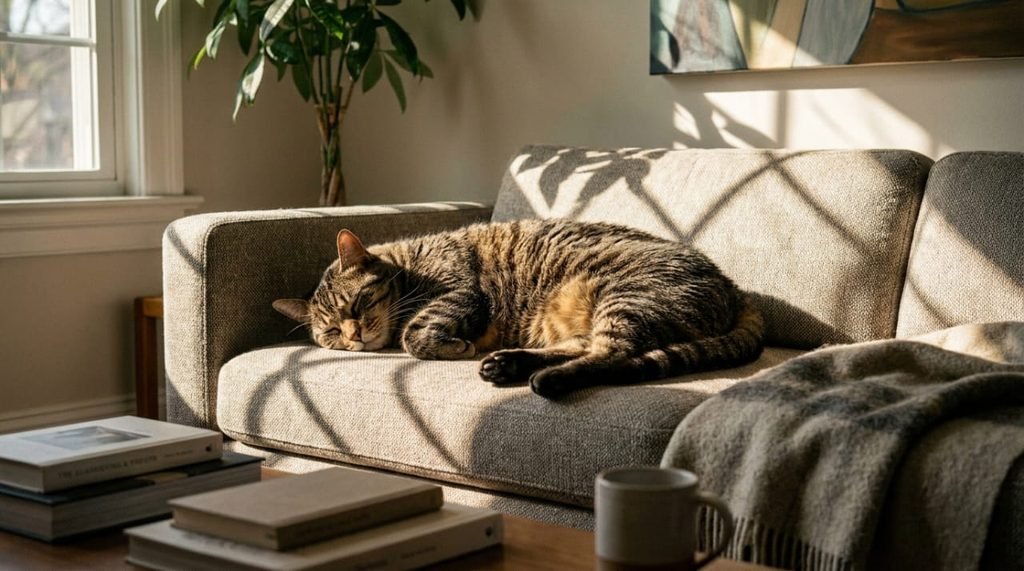
Why Do Cats Sleep So Much? 9 Surprising Reasons Your Cat Sleeps All Day, If you have ever looked at your cat sleeping on the couch in the morning, napping on your bed in the afternoon, and then curling up for another long sleep in the evening, you may have wondered, “Why do cats sleep so much?”
For many cat owners, a sleepy cat is completely normal. Cats are naturally built for periods of intense activity followed by plenty of rest. Their sleeping habits are connected to their instincts, age, personality, daily routine, and environment.
However, there is an important difference between a cat that simply loves sleeping and a cat that suddenly becomes unusually tired.
Understanding your cat’s normal sleeping pattern can help you recognize when everything is fine and when a change deserves closer attention.
In this guide, we will explore 9 surprising reasons cats sleep so much, how many hours cats normally sleep, why kittens and older cats sleep differently, and which warning signs should never be ignored.
How Many Hours Do Cats Sleep Every Day?
Most adult cats sleep or rest for roughly 12 to 16 hours per day, although individual cats can sleep more or less.
Some cats may spend close to 18 hours sleeping or resting during a day, particularly if they are young, elderly, inactive, or simply have a relaxed lifestyle.
Cats also don’t necessarily sleep continuously for several hours. Instead, they often move between:
- Light sleep
- Deep sleep
- Short naps
- Quiet resting
- Brief periods of alertness
This is why it can look like your cat is sleeping almost all day.
Your cat may wake up for food, grooming, playing, exploring, or using the litter box and then quickly return to its favorite sleeping spot.
1. Cats Are Naturally Designed to Rest After Activity
One of the biggest reasons cats sleep so much comes from their natural hunting behavior.
Wild cats don’t spend their entire day running around. Hunting requires short bursts of intense energy. A cat may stalk prey, sprint, jump, climb, and wrestle before eating.
After using that energy, resting becomes important.
Your indoor cat may not need to hunt for dinner, but its body still follows many of those natural patterns.
Even when your cat spends most of its time inside, its instincts haven’t disappeared.
That means sleeping for long periods can be completely normal.
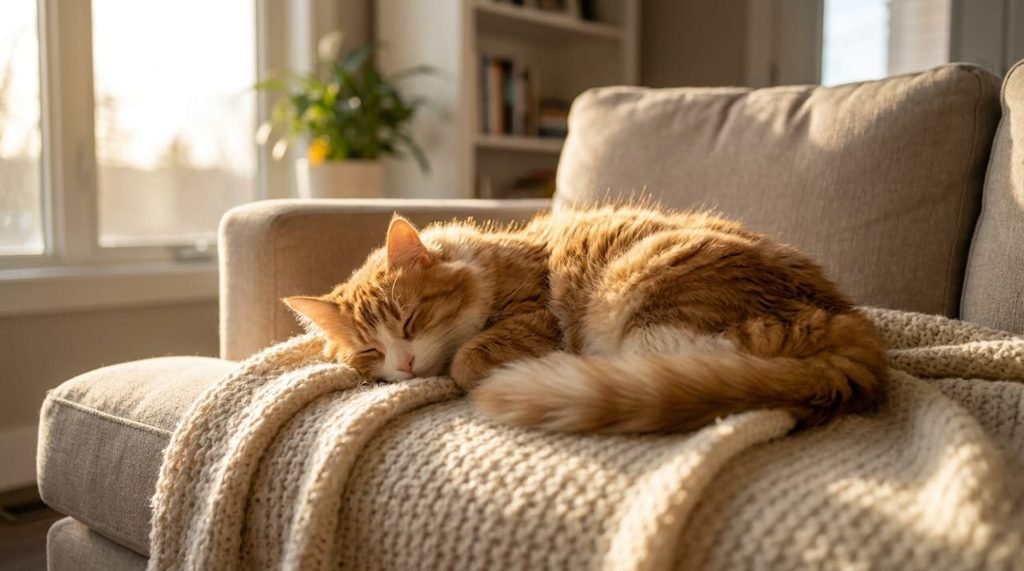
Your cat might have a short burst of energy at 6 a.m., chase a toy around the living room, eat breakfast, and then sleep for several hours.
Later, it may suddenly race through the house before returning to another nap.
This pattern is normal for many cats.
2. Cats Are Most Active Around Dawn and Dusk
Have you ever noticed your cat becoming extremely energetic early in the morning or late in the evening?
There is a reason.
Cats are generally crepuscular, meaning they tend to be naturally active around dawn and dusk.
Their wild ancestors often hunted when light levels were lower. This made it easier to approach prey while avoiding some predators.
Your indoor cat doesn’t need to hunt, but its biological rhythm can still influence its behavior.
This can create an interesting schedule:
Morning: active
Late morning: sleeping
Afternoon: napping
Evening: active again
Night: sleeping or occasional activity
This is also why some cats suddenly run around the house at night.
If your cat sleeps much of the afternoon but becomes playful around sunset, that isn’t necessarily a problem.
You can often work with this natural rhythm by providing interactive play sessions during the times your cat is naturally more alert.
3. Kittens Need More Sleep Than Adult Cats
If you have a kitten, you may notice that it seems to sleep almost constantly.
Don’t panic.
Growing kittens require substantial rest because their bodies are developing rapidly.
Sleep supports important processes involving:
- Physical growth
- Brain development
- Muscle development
- Learning
- Recovery
- Immune function
A kitten may play intensely for a short time and then suddenly fall asleep.
You might even see your kitten go from running around the room to sleeping deeply within minutes.
This is usually normal.
Rather than trying to keep a kitten awake, provide a comfortable, quiet sleeping area where it can rest without being disturbed.
Young cats need plenty of opportunities to sleep between meals and play sessions.
4. Older Cats Often Sleep More
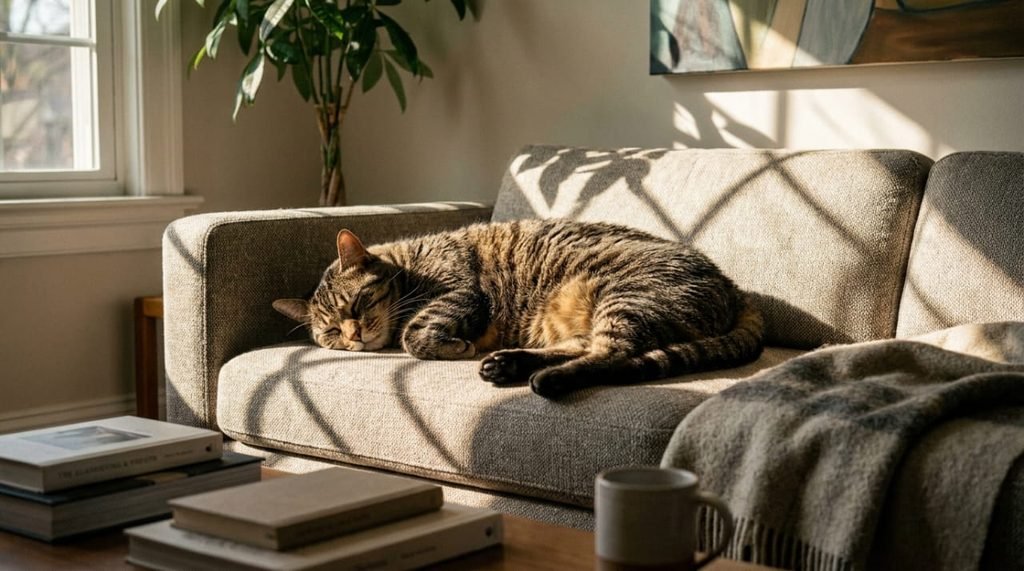
Just as kittens have different sleep needs, senior cats may also spend more time sleeping.
As cats age, they can naturally become less active.
An older cat may spend more time resting because activities that were once easy—such as jumping onto furniture or chasing toys—require more effort.
Senior cats may also change their preferred sleeping locations.
For example, your older cat might prefer:
- A warm blanket
- A quiet bedroom
- A soft cat bed
- A sunny window
- A low piece of furniture
Extra sleep alone isn’t necessarily concerning.
The important thing is to pay attention to changes from your cat’s normal behavior.
If an older cat suddenly becomes extremely lethargic, stops eating, hides more than usual, or struggles to move comfortably, veterinary advice is appropriate.
5. Your Cat May Sleep More Because It Is Bored
Indoor cats have access to food, shelter, warmth, and safety.
That’s wonderful—but it can sometimes mean they don’t receive enough stimulation.
A cat without enough mental or physical activity may spend more time sleeping simply because there isn’t much else happening.
This doesn’t mean every sleeping cat is bored.
Some cats genuinely have calm personalities.
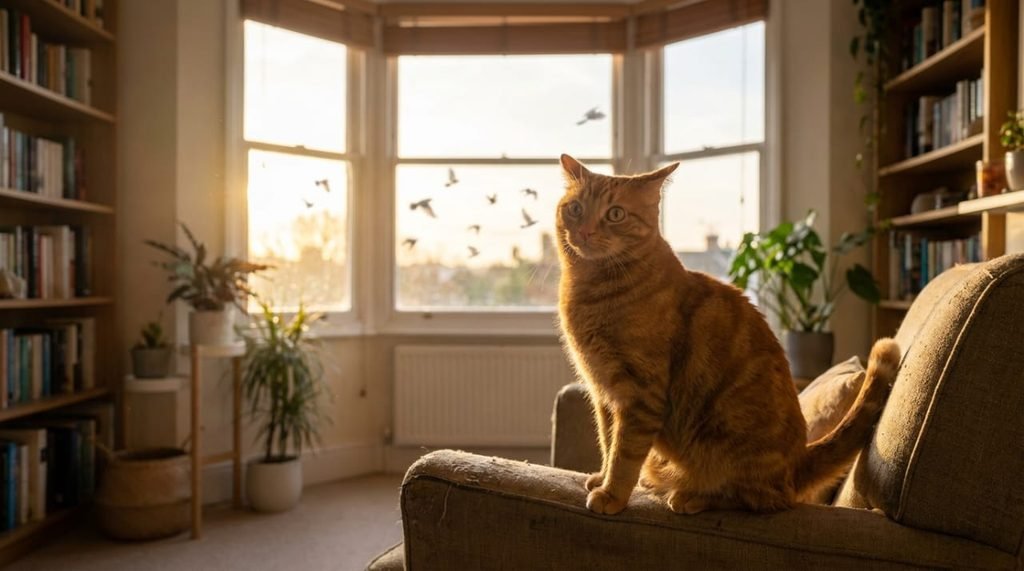
But if your cat sleeps most of the day and rarely plays, explores, watches birds, climbs, or interacts with its environment, enrichment may help.
Try introducing:
Interactive toys
Wand toys can encourage chasing, stalking, and jumping.
Puzzle feeders
These make your cat work for some of its food and provide mental stimulation.
Cat trees
Vertical spaces allow cats to climb, observe, and move around.
Window entertainment
A secure window perch can give your cat something interesting to watch.
Short play sessions
Several short sessions can be more appealing than one long session.
The goal isn’t to stop your cat from sleeping.
The goal is to create a healthy balance between activity, stimulation, eating, grooming, and rest.
6. Weather Can Affect How Much Your Cat Sleeps
Have you noticed that your cat becomes extra sleepy on cold or rainy days?
Environmental conditions can influence activity levels.
When the weather is cold, cats often seek warm, comfortable places and may spend more time curled up sleeping.
Rainy or dark days can also make the environment less stimulating.
During hot weather, cats may reduce their activity to conserve energy and avoid overheating.
You might find your cat sleeping during the hottest part of the day and becoming more active later when temperatures drop.
Make sure your cat always has access to:
- Fresh water
- A comfortable sleeping area
- Appropriate indoor temperatures
- Shade during hot weather
- Warm bedding when necessary
If your cat appears weak, overheated, confused, or unusually difficult to wake, however, don’t assume it’s simply the weather.
Those symptoms require prompt attention.
7. Cats Sleep More When They Feel Safe
A sleeping cat is often a cat that feels comfortable in its environment.
Think about it.
Cats are naturally cautious animals. Sleeping makes them vulnerable, so they need to feel reasonably safe before relaxing deeply.
If your cat comfortably sleeps with its belly exposed, stretches across the sofa, or takes long naps in the middle of the room, it may be a sign that it feels secure.
Cats often choose sleeping locations based on their sense of safety.
You may notice your cat sleeping:
- Near you
- On your bed
- Inside a cat tree
- Under a blanket
- In a quiet corner
- Near a sunny window
Every cat has its own preference.
Providing predictable routines and safe resting areas can help your cat feel comfortable.
8. Food, Routine, and Daily Habits Influence Sleep
Cats are creatures of habit.
If your cat eats at approximately the same times every day, plays at similar times, and follows a predictable household routine, its sleep schedule may develop around those activities.
For example, your cat may learn:
7 a.m. — breakfast
8 a.m. — grooming
9 a.m.–2 p.m. — sleeping
5 p.m. — playtime
6 p.m. — dinner
8 p.m. — another nap
A consistent routine can actually make your cat’s behavior easier to understand.
If you suddenly change feeding times, household activity, sleeping arrangements, or daily interactions, your cat may temporarily adjust its behavior.
Keeping a predictable routine can be particularly helpful for cats that become stressed by changes.
9. Sometimes Excessive Sleeping Can Signal a Health Problem
This is the most important point for cat owners.
Cats naturally sleep a lot, but a sudden change in sleeping behavior can sometimes indicate that something isn’t right.
The key isn’t simply counting the number of hours your cat sleeps.
Instead, look at the entire picture.
A cat that normally sleeps 15 hours but remains playful, eats normally, grooms itself, uses the litter box, and responds to you may simply have normal sleeping habits.
But a cat that suddenly sleeps much more and also shows other behavioral changes deserves attention.
Possible warning signs include:
- Loss of appetite
- Drinking significantly more or less
- Repeated vomiting
- Diarrhea
- Difficulty breathing
- Unusual hiding
- Weakness
- Trouble walking
- Sudden weight loss
- Poor grooming
- Changes in litter-box habits
- Lack of interest in normal activities
- Difficulty waking
- Signs of pain
If your cat’s behavior changes suddenly or you are concerned about its health, contact a veterinarian rather than trying to diagnose the problem at home.
How Can You Tell If Your Cat Is Sleeping Too Much?
There isn’t one magic number that means a cat is sleeping “too much.”
Instead, establish what is normal for your individual cat.
For a few days, pay attention to:
Sleep: How much does your cat normally sleep?
Appetite: Does it eat normally?
Energy: Does it become active during its usual awake periods?
Grooming: Is it maintaining its normal grooming habits?
Social behavior: Does it respond to you normally?
Litter box: Are bathroom habits unchanged?
Movement: Is your cat walking, jumping, and climbing normally?
A change in several of these areas is more meaningful than sleep duration alone.
Why Does My Cat Sleep All Day But Run Around at Night?
This is one of the most common complaints from cat owners.
Your cat may appear lazy during the day and then become extremely energetic at night.
This often happens because cats naturally have activity peaks around dawn and dusk.
You can encourage a more convenient routine by increasing interactive play during the evening.
Try a play session before dinner, followed by feeding and a calm period.
A predictable evening routine may help your cat settle down afterward.
Avoid punishing your cat for normal nighttime behavior. Instead, focus on providing enough stimulation and activity during appropriate parts of the day.
Should You Wake a Sleeping Cat?
Usually, there is no reason to wake a healthy sleeping cat simply because you think it has slept too long.
Sleep is important for cats.
If your cat is sleeping comfortably and has otherwise normal behavior, allowing it to rest is generally appropriate.
There are exceptions.
For example, if a cat is unusually difficult to wake, appears weak when it gets up, refuses food, or behaves very differently from normal, that is not simply a matter of letting it sleep.
A significant behavioral change should be taken seriously.
How to Help Your Cat Get Better Quality Rest
You don’t need to reduce your cat’s sleeping time.
Instead, focus on creating a comfortable environment.
Give your cat a quiet sleeping area
Cats appreciate having somewhere peaceful where they won’t constantly be disturbed.
Provide comfortable bedding
Soft bedding can make a huge difference, especially for older cats.
Keep food and water accessible
Your cat should always have appropriate access to fresh water and its normal diet.
Offer enrichment
Toys, scratching posts, climbing spaces, and safe window views can make indoor life more interesting.
Maintain a routine
Cats often feel more comfortable when feeding, play, and household activities follow predictable patterns.
Respect sleep
Don’t repeatedly wake your cat for attention or play.
A well-rested cat is more likely to enjoy interacting with you when it is naturally awake.
When Should You Contact a Veterinarian?
If you’re wondering whether your cat’s sleepiness is normal, consider whether the change is sudden and accompanied by other symptoms.
Contact your veterinarian if your cat has become unusually lethargic or if excessive sleep occurs alongside concerning changes such as refusing food, vomiting, breathing difficulties, significant weakness, pain, or abnormal bathroom habits.
If your cat appears seriously ill, is struggling to breathe, collapses, cannot stand normally, or is difficult to wake, seek urgent veterinary care.
Your veterinarian can assess your cat’s overall health and determine whether the change in behavior is related to an underlying medical problem.
Frequently Asked Questions
Why do cats sleep so much?
Cats naturally need substantial rest because their bodies and instincts are adapted to periods of activity followed by recovery. Sleeping 12–16 hours per day can be normal for many cats.
Is it normal for my cat to sleep 18 hours a day?
It can be normal for some cats, particularly kittens, seniors, and less-active cats. What matters most is whether your cat’s behavior is normal for its individual routine.
Why does my cat sleep during the day?
Cats often have natural activity peaks around dawn and dusk. As a result, they may sleep for long periods during the daytime.
Do kittens sleep more than adult cats?
Yes. Kittens need considerable rest because their bodies and brains are developing rapidly.
Do older cats sleep more?
Many senior cats become less active and spend more time resting. However, sudden excessive sleepiness or other behavioral changes should be discussed with a veterinarian.
How can I tell if my cat is sick or simply sleepy?
Look at more than sleep. Changes in appetite, grooming, movement, litter-box habits, social behavior, and energy can help indicate whether something unusual is happening.
Final Thoughts
So, why do cats sleep so much?
In most cases, the answer is surprisingly simple: sleep is a normal and important part of being a cat.
Cats have evolved to conserve energy between periods of activity, and their natural rhythms encourage plenty of rest. Kittens may sleep heavily while growing, senior cats may rest more as they age, and indoor cats may nap simply because their environment is safe and comfortable.
The most important thing is to learn your cat’s normal routine.
If your cat has always been a professional napper but still eats, plays, grooms, explores, and interacts normally, there may be nothing to worry about.
But if your cat suddenly becomes much sleepier than usual—or sleeping is accompanied by other changes—don’t ignore it. A veterinarian can help determine what is happening.
Your cat may simply love its naps. After all, for a cat, a sunny spot, a soft blanket, and several peaceful naps can be the perfect day.

hammadniazi6663@gmail.com
Contributor at PetZuoo, publishing practical information for pet owners and animal lovers.
Related guides

Why Do Dog Tilt Their Heads? 9 Fascinating Reason
Why Do Dog Tilt Their Heads? 9 Fascinating Reason Behind This Adorable Behavior. Have you ever spoken to your dog and watched…
Cat Chattering at Birds: 7 Amazing Reasons Explained
Cat Chattering at Birds: 7 Amazing Reasons Explained. Have you ever noticed your cat sitting beside a window, watching birds outside, and…
Why Do Cats Chirp at Birds? 7 Fascinating Reasons
Why Do Cats Chirp at Birds? 7 Fascinating Reasons Behind This Cute Cat Behavior, Have you ever watched your cat sitting beside…