Why Do Cats Knead? 9 Surprising Reasons Behind This Adorable Behavior. Cats have many fascinating habits, but kneading is one of the cutest and most recognizable. You may have seen your cat rhythmically pushing their front paws against a blanket, your lap, a pillow, or even your stomach. This behavior is often called “making biscuits” because the paw movements resemble someone kneading dough.
But why do cats knead?
Kneading is usually a normal feline behavior that can be connected to comfort, kittenhood, affection, relaxation, scent marking, and instinct. Some cats knead frequently, while others may do it only occasionally. Understanding the reason behind this behavior can help cat owners better understand their pets and recognize when something unusual might need attention.
In this guide, we’ll explore 9 common reasons why cats knead, what the behavior means, whether it is a sign that your cat loves you, and what you should do if your cat’s claws make kneading uncomfortable.
1. Kneading Starts in Kittenhood
One of the strongest explanations for kneading comes from a cat’s earliest days of life.
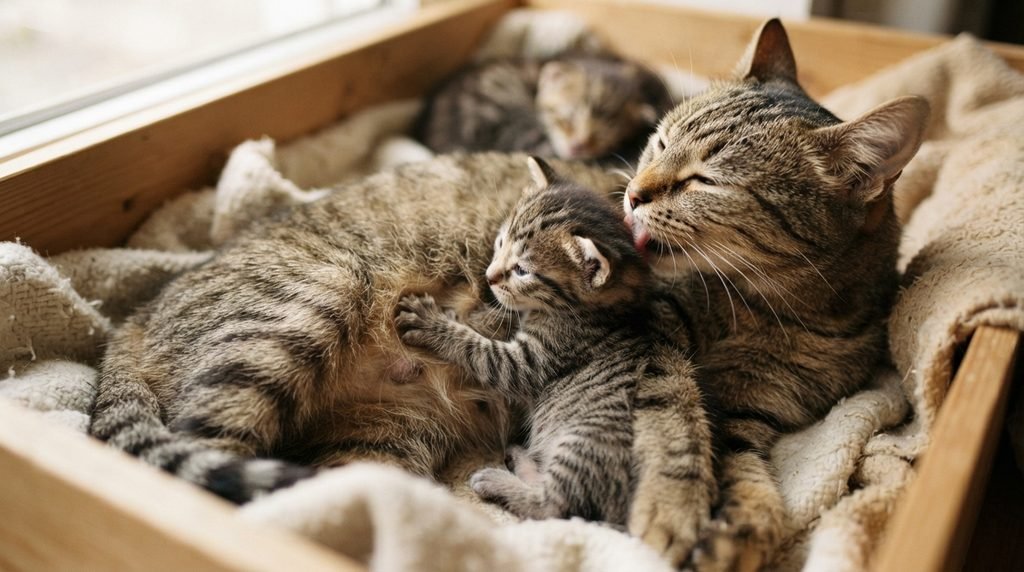
When kittens nurse from their mother, they instinctively press their paws against her belly. This rhythmic movement can help stimulate milk flow while they feed. Because this behavior happens during an important and comforting stage of kittenhood, many cats continue the movement even after they become adults.
Your adult cat may no longer need to nurse, but the familiar paw motion can remain part of their behavioral repertoire.
This is one reason kneading is often associated with feelings of safety and comfort.
A cat curled up on a soft blanket while kneading may be recreating a behavior associated with the warmth and security of kittenhood.

2. Your Cat May Be Feeling Relaxed
Have you ever noticed your cat kneading immediately before settling down for a nap?
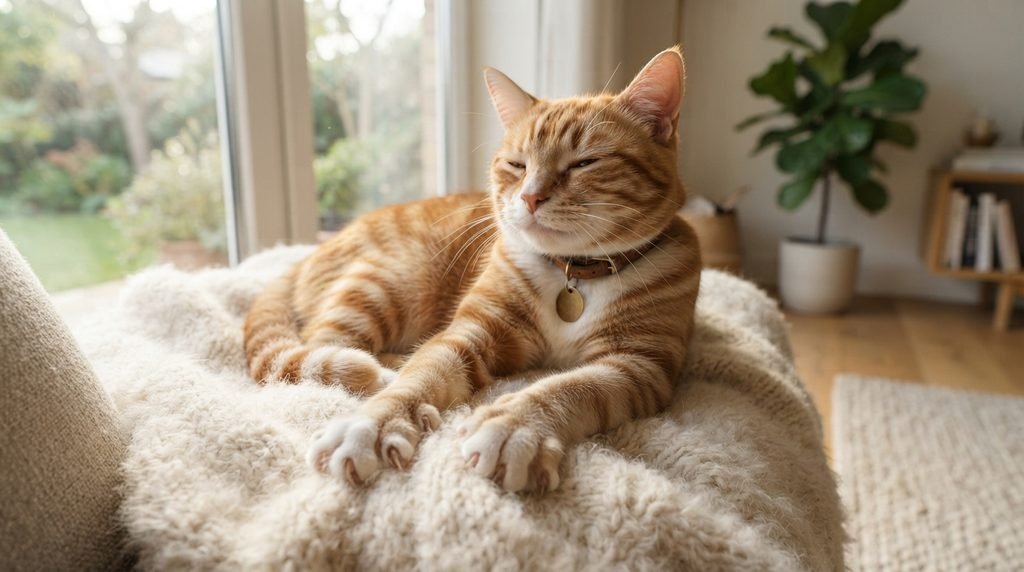
Many cats knead when they are comfortable and relaxed. You might see your cat climb onto a soft blanket, purr loudly, knead for several seconds or minutes, and then curl up to sleep.
The combination of:
- Kneading
- Purring
- Relaxed body posture
- Slow blinking
- Curling up
- Closing the eyes
can indicate that your cat is comfortable in their environment.
For some cats, kneading may become part of their personal bedtime routine.
If your cat regularly kneads before sleeping, there is usually no reason to stop them.
3. Kneading Can Be a Sign of Affection
If your cat climbs onto your lap and starts kneading you, it can feel like a tiny massage.
Although we cannot know exactly what an individual cat is thinking, kneading around a trusted person commonly occurs when a cat is relaxed and comfortable with that person.
Your cat may associate your lap with warmth, security, and attention.
Other affectionate behaviors may occur at the same time, such as:
- Purring
- Rubbing against you
- Sitting close to you
- Head-butting
- Slow blinking
- Relaxed posture
So when your cat settles beside you and starts making biscuits, it can be a lovely sign that they feel comfortable around you.
4. Cats Have Scent Glands in Their Paws
Another interesting reason cats knead is related to scent communication.
Cats have scent glands in various parts of their bodies, including their paws. When a cat repeatedly presses its paws against a surface, scent may be deposited through the paw pads.
This means kneading may have a territorial or communication component.
Your cat may knead:
- Their favorite blanket
- Their bed
- A cushion
- Your clothing
- Your lap
The behavior may help make a familiar place smell more like them.
This doesn’t necessarily mean your cat is aggressively claiming territory. It can simply be part of normal feline scent communication.

5. Your Cat May Be Preparing a Comfortable Sleeping Spot
Cats are natural behavior experts when it comes to finding comfortable places to rest.
Before domestication, wild cats could encounter grass, leaves, soil, or other natural materials when preparing resting areas. Pawing or pressing at the surface could potentially help create a more comfortable place to lie down.
Modern house cats don’t need to prepare a nest in the same way, but instinctive behaviors can remain.
That’s why you may see your cat kneading a blanket repeatedly before lying down.
Your cat may simply be making the sleeping area feel just right.
6. Kneading Can Happen When Cats Feel Safe
Cats are naturally cautious animals. A relaxed cat is more likely to display behaviors associated with comfort and vulnerability.
A cat that kneads while lying beside you may be showing that the environment feels safe enough for them to relax.
Look at the entire body rather than focusing only on the paws.
A comfortable cat may have:
- Soft or partially closed eyes
- Relaxed ears
- Loose muscles
- A calm tail
- Normal breathing
- Purring
- A relaxed sleeping position
In contrast, a stressed cat may show different signals such as flattened ears, a tense body, rapid tail movements, hiding, or attempts to escape.
Kneading by itself is usually not a reliable measure of a cat’s emotional state. The surrounding body language provides important context.

7. Some Cats Knead When They Are Extremely Happy
Some cats become especially enthusiastic when they are enjoying attention.
You might notice your cat kneading when:
- You pet them
- They sit on your lap
- You return home
- They settle into bed
- You give them their favorite blanket
Some cats combine kneading with loud purring or drooling.
Every cat is different, so the intensity and frequency of kneading can vary considerably.
One cat might knead for a few seconds, while another may continue for several minutes.
Neither pattern automatically indicates a problem.
8. Female Cats May Knead During Certain Reproductive Behaviors
Kneading can sometimes occur alongside reproductive or hormonal behaviors.
For example, an unspayed female cat in heat may display a range of unusual behaviors, including increased affection, vocalization, restlessness, rolling, and changes in posture.
However, kneading alone does not mean that a cat is in heat.
If your cat suddenly develops several new behaviors at the same time, it is better to consider the complete picture rather than assuming kneading has one specific meaning.
For cats that are not intended for breeding, discuss spaying with a veterinarian to understand the potential benefits, timing, and individual considerations.
9. Kneading May Simply Be a Habit
Sometimes the simplest explanation is the best one.
Your cat may knead because kneading feels good, familiar, and comforting.
Cats develop individual personalities and routines. One cat might knead every evening. Another may only knead a particular blanket. Some cats barely knead at all.
There is no requirement for cats to knead regularly.
If your cat does not knead, that does not mean they are unhappy or less affectionate.
Likewise, a cat that kneads frequently is not necessarily experiencing a problem.
Why Does My Cat Knead Me Instead of a Blanket?
This is a common question among cat owners.
Your cat may choose your lap because it is:
Warm: Your body provides a comfortable source of warmth.
Soft: A lap can feel similar to other soft resting surfaces.
Familiar: Your scent can make the area comforting.
Safe: Your cat may associate you with food, shelter, protection, and positive experiences.
Comforting: The combination of physical contact and familiar surroundings may encourage relaxation.
Unfortunately, those adorable little claws can sometimes make the experience less enjoyable for you.
If kneading hurts, you don’t need to punish your cat.
Instead, gently place a thick blanket between your cat’s paws and your skin.
This allows your cat to continue the behavior while protecting your legs or stomach from sharp claws.
Why Does My Cat Knead and Purr at the Same Time?
Kneading and purring commonly occur together.
Both behaviors can be associated with relaxation and comfort, although purring itself can occur in different situations and isn’t always proof that a cat is happy.
Look for additional body-language signals.
If your cat is:
- Kneading
- Purring
- Relaxed
- Sitting comfortably
- Showing soft eyes
- Remaining close to you
the overall behavior is generally consistent with a comfortable cat.
Why Does My Cat Knead My Blanket?
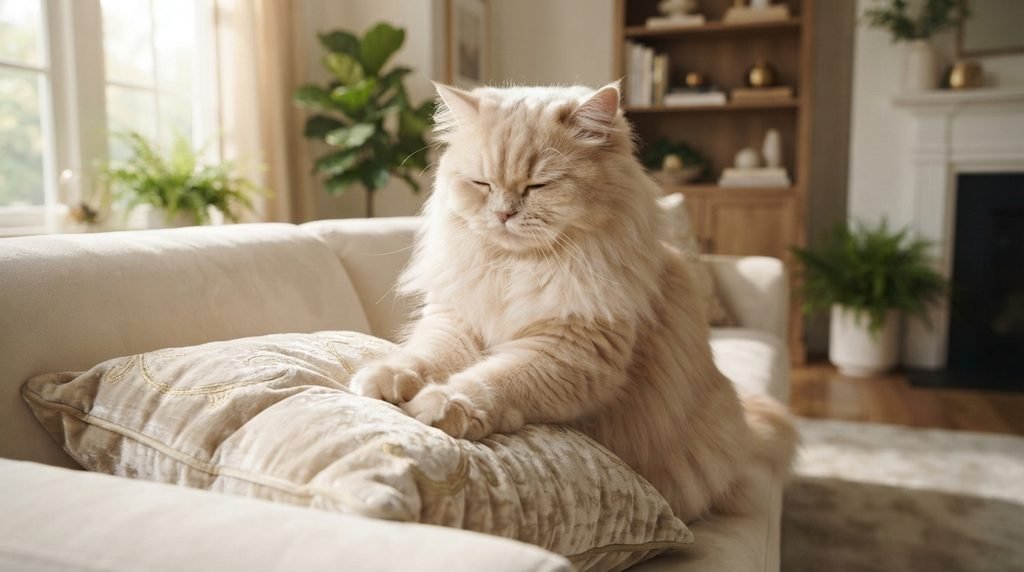
Blankets are particularly attractive kneading surfaces because they are soft and easy for cats to press their paws into.
Your cat may have selected a particular blanket because of:
- Texture
- Warmth
- Familiar smell
- Location
- Comfort
- Personal preference
Some cats develop a strong attachment to one specific blanket.
If your cat repeatedly kneads the same blanket, you can consider it their personal comfort item.
Why Does My Cat Knead My Clothes?
Your clothing carries your scent, which can make it especially familiar to your cat.
A cat that kneads your recently worn shirt may simply enjoy the combination of the fabric’s texture and your familiar scent.
You might notice this behavior particularly when your clothes are left on the bed, sofa, or floor.
Keep potentially dangerous items such as strings, medications, chemicals, or small objects away from areas where your cat spends time.
Is Kneading Always a Good Sign?
Kneading is usually a normal behavior, but context matters.
A cat that calmly kneads a blanket before sleeping is very different from a cat that suddenly begins repeatedly pacing, vocalizing, licking itself excessively, or displaying other unusual behaviors.
If kneading appears alongside signs of illness, pain, anxiety, or a major behavioral change, pay attention to the bigger picture.
Contact your veterinarian if you’re concerned about a sudden or persistent change in your cat’s behavior.
Should You Stop Your Cat From Kneading?
In most cases, there is no reason to stop normal kneading.
Kneading is generally harmless.
However, you may want to redirect your cat if:
- Their claws are hurting you.
- They are damaging delicate furniture.
- They are kneading an unsafe object.
- The behavior is accompanied by concerning symptoms.
Never punish your cat for normal kneading.
Punishment can create fear and may damage the trust between you and your pet.
Instead, calmly redirect them toward a safe and comfortable surface.
How to Make Kneading More Comfortable
If your cat loves kneading your lap but their claws are uncomfortable, try these simple solutions.
Place a Blanket on Your Lap
A thick blanket provides a protective layer between your skin and your cat’s claws.
Keep Claws Properly Trimmed
Regular nail maintenance can reduce accidental scratches. If you’re unsure how to trim your cat’s nails safely, ask your veterinarian or a professional groomer to demonstrate the technique.
Provide a Soft Kneading Bed
A dedicated fleece or plush cat bed can give your cat a comfortable place to knead.
Don’t Suddenly Push Your Cat Away
If your cat is peacefully kneading, gently redirecting them is usually better than suddenly frightening them.
You can slowly move a blanket underneath their paws.
When Should Cat Owners Be Concerned?
Kneading itself is rarely something to worry about.
The more important issue is a sudden change in behavior.
Speak with a veterinarian if kneading is accompanied by signs such as:
- Obvious pain
- Limping
- Excessive vocalization
- Significant appetite changes
- Extreme hiding
- Difficulty moving
- Aggression that is unusual for your cat
- Excessive licking or chewing
- Other sudden behavioral changes
Your veterinarian can help determine whether an underlying medical or behavioral issue needs attention.
Do Male Cats Knead?
Yes.
Both male and female cats can knead.
Kneading is not exclusive to one sex, and it can occur in kittens and adult cats.
The frequency varies from one individual to another.
Some male cats knead frequently, while some females rarely do it. There is no universal rule.
Do All Cats Knead?
No.
Some cats knead frequently, some occasionally, and some rarely or never.
Cats have different personalities and behavioral histories.
A cat that doesn’t knead should not automatically be considered unhappy.
There are many other ways cats communicate comfort and trust.
Final Thoughts
So, why do cats knead?
There isn’t necessarily one single answer.
Kneading can be connected to kittenhood, relaxation, comfort, affection, scent marking, sleeping routines, and instinctive behavior. Your cat may knead your lap because they feel comfortable with you, or they may simply enjoy the soft surface beneath their paws.
The most useful approach is to look at the complete picture.
A cat that kneads while purring, relaxing, and settling down for a nap is often simply enjoying a comfortable moment.
Whether your cat makes biscuits every night or only occasionally, this charming behavior is one of the many fascinating ways cats express themselves.
For cat owners, understanding these small behaviors can make the relationship with a feline companion even more rewarding.

hammadniazi6663@gmail.com
Contributor at PetZuoo, publishing practical information for pet owners and animal lovers.
Related guides

Why Do Dog Tilt Their Heads? 9 Fascinating Reason
Why Do Dog Tilt Their Heads? 9 Fascinating Reason Behind This Adorable Behavior. Have you ever spoken to your dog and watched…
Cat Chattering at Birds: 7 Amazing Reasons Explained
Cat Chattering at Birds: 7 Amazing Reasons Explained. Have you ever noticed your cat sitting beside a window, watching birds outside, and…
Why Do Cats Chirp at Birds? 7 Fascinating Reasons
Why Do Cats Chirp at Birds? 7 Fascinating Reasons Behind This Cute Cat Behavior, Have you ever watched your cat sitting beside…