Why Does Dog Suddenly Follow Me Everywhere? 9 Reasons and Have you noticed that your dog suddenly seems to be your shadow?
You walk into the kitchen, and your dog is right behind you. You move to the living room, and your dog follows. Even a quick trip to the bathroom can turn into a little four-legged escort mission.
For many dog owners, this behavior is adorable. But when a dog that was previously independent suddenly starts following you everywhere, it is natural to wonder what has changed.
Dogs follow their owners for many different reasons. Sometimes it simply means your dog enjoys being around you. Other times, your dog may be looking for attention, feeling bored, reacting to a change in routine, or even trying to tell you that something does not feel right.
The important thing is to look at the whole behavior, rather than assuming that every clingy dog has separation anxiety.
In this guide, we will look at nine common reasons your dog may suddenly be following you everywhere, what the behavior can mean, and when it may be worth paying closer attention.
Why Does My Dog Follow Me Everywhere?
Dogs are social animals, and staying close to their favorite person can be completely normal.
Your dog may follow you because you provide food, affection, play, safety, and companionship. From your dog’s perspective, you are also an important part of the daily routine. If something interesting is happening, your dog naturally wants to know what you are doing.
However, there is an important difference between a dog that has always followed you and a dog that suddenly becomes unusually attached.
A sudden change deserves more attention.
Think about what has happened recently. Have you changed your work schedule? Moved furniture? Started spending more time at home? Added another pet to the household? Changed your dog’s feeding schedule? Have there been unusual noises or stressful events?
Even small changes can affect a dog’s behavior.
Your dog’s body language can also provide useful clues. A relaxed dog following you with a loose body and wagging tail is usually very different from a dog that constantly paces, pants, whines, trembles, or becomes distressed whenever you leave the room.
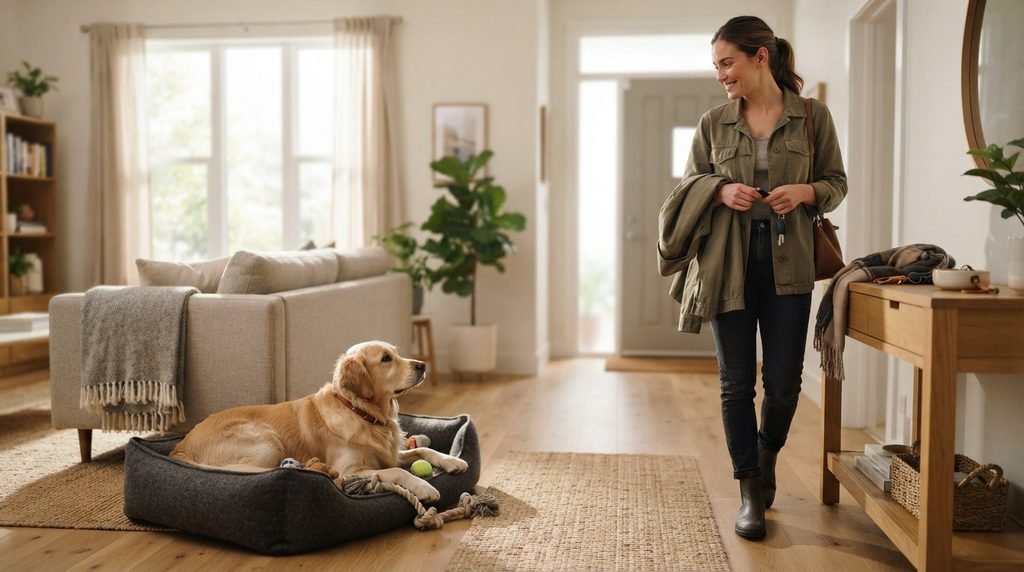
1. Your Dog Wants More Attention
One of the simplest explanations is also one of the most common: your dog wants your attention.
Dogs quickly learn which behaviors get a response from their humans.
If your dog follows you and you immediately pet them, talk to them, give them a treat, or invite them to play, your dog may learn that following you is an excellent way to start an interaction.
This does not mean your dog is being manipulative. Dogs are simply good at making connections between actions and outcomes.
For example, imagine your dog follows you into the kitchen every morning. You reach for the treat jar and give your dog a snack. After a while, your dog may decide that following you into the kitchen is worth doing because something good often happens there.
The same thing can happen with affection.
If your dog has recently been receiving more attention than usual, they may begin seeking that interaction more frequently.
What You Can Do
Try giving your dog attention proactively rather than only when they demand it.
Schedule short periods throughout the day for:
- Play
- Training
- Petting
- Walking
- Mental stimulation
- Quiet time together
You can also reward your dog for calmly relaxing in another part of the room.
This teaches an important lesson: your dog does not have to follow you every second to receive affection.
2. Your Dog Feels Safer Around You
For some dogs, their owner is their safest place.
If your dog is nervous around unfamiliar people, loud noises, thunderstorms, fireworks, construction sounds, or changes in the environment, staying close to you can provide reassurance.
You may notice this especially during stressful situations.
For example, your dog might normally sleep in another room but suddenly follow you around during a thunderstorm. Or perhaps your dog becomes unusually attached during a period when there are loud noises outside.
In these situations, following you may be your dog’s way of saying:
“I feel better when I am near you.”
This is especially common in dogs that are naturally cautious or sensitive.
Instead of forcing your dog away, make sure they have access to a comfortable, quiet place where they can relax. You can remain calm and predictable so your dog has a reassuring presence nearby.
Avoid turning every nervous moment into a dramatic event. Calm behavior from you can help your dog understand that the environment is safe.
3. Something in Your Dog’s Routine Has Changed
Dogs often love predictable routines.
If your daily schedule suddenly changes, your dog may respond by staying closer to you.
Perhaps you have started working from home. Maybe your children have returned to school, you are spending more time outside the house, or your normal walking schedule has changed.
Your dog may not understand why the routine changed. They simply notice that things are different.
Following you can be a way of keeping track of what is happening.
Dogs pay close attention to human habits. They recognize patterns involving meals, walks, bedtime, work, and leaving the house.
Even changes that seem insignificant to you can be noticeable to your dog.
If possible, keep important parts of your dog’s routine consistent.
Regular meal times, walks, exercise, training, and rest can help your dog feel more secure.
4. Your Dog Is Bored
Sometimes a dog follows their owner simply because there is nothing more interesting to do.
If your dog is not receiving enough physical exercise or mental stimulation, you may become the most entertaining thing available.
You stand up — something happens.
You walk into another room — something might happen.
You open a cupboard — perhaps there is food.
You sit down — maybe it is time for attention.
From your dog’s perspective, following you can become an activity in itself.
This is particularly common in energetic dogs that need plenty of daily activity.
Exercise is important, but mental stimulation matters too. A dog can be physically tired and still benefit from activities that make them think.
Try introducing simple enrichment activities such as food puzzles, scent games, short training sessions, safe chew items, or supervised games around the home.
You do not need to entertain your dog every minute of the day. The goal is to create a healthy balance between interaction and independent relaxation.
5. Your Dog Is Looking for Food or Treats
Let’s be honest: dogs remember where the good stuff comes from.
If your dog has learned that following you into certain rooms often leads to food, they may become your personal assistant whenever you get up.
The kitchen is particularly powerful.
Opening the refrigerator, preparing dinner, reaching for a cupboard, or even walking toward the counter can trigger your dog’s curiosity.
If treats are involved, your dog may become even more persistent.
Try to notice whether your dog mainly follows you around meal times or whenever food is being prepared.
If the behavior is primarily food-related, avoid rewarding constant shadowing with unnecessary treats.
Instead, establish predictable feeding and treat routines. You can also provide appropriate enrichment activities away from the kitchen while you prepare meals.
Remember that excessive begging or sudden changes in appetite are different issues. If your dog’s appetite changes significantly or the increased interest in food comes with other unusual symptoms, it is worth discussing the change with a veterinarian.
6. Your Dog May Be Experiencing Separation Anxiety
Following you everywhere does not automatically mean separation anxiety.
However, extreme attachment can sometimes be connected with separation-related distress.
A dog with separation anxiety may become extremely worried when their owner prepares to leave or actually leaves the home.
Look for additional signs such as:
- Persistent barking or whining when left alone
- Destructive behavior around doors or windows
- Attempts to escape
- Excessive drooling
- Pacing
- House-soiling despite being reliably house-trained
- Extreme distress when you prepare to leave
- Inability to settle when separated from you
If your dog simply prefers being in the same room as you but remains relaxed when you leave, that is a different situation.
For suspected separation anxiety, punishment is not the answer. A gradual behavior plan, environmental management, and guidance from a qualified veterinary or behavior professional can be much more helpful.
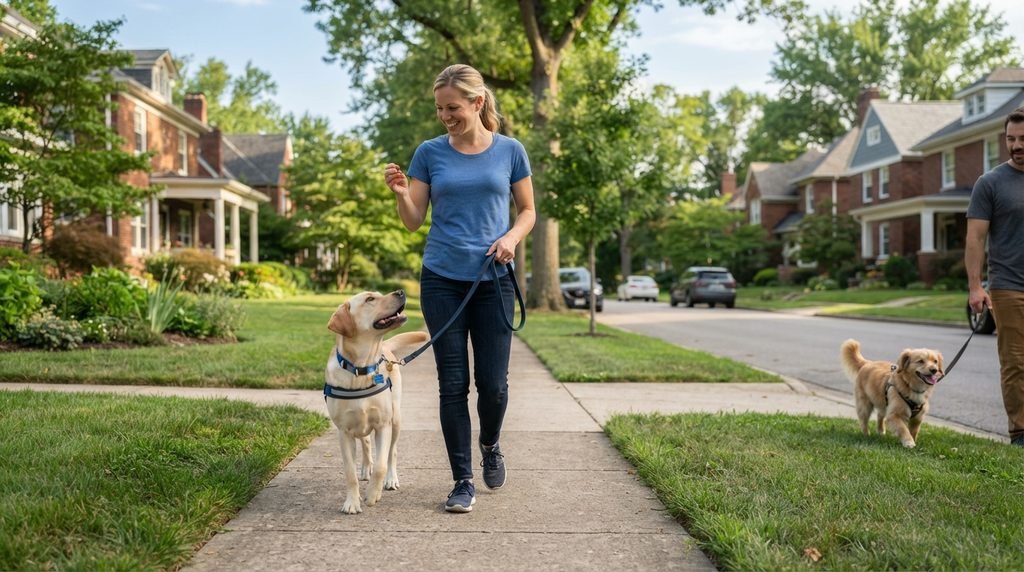
7. Your Dog May Be Feeling Unwell
A sudden change in behavior should never be ignored completely, especially if your dog was previously comfortable spending time alone.
Sometimes dogs become unusually clingy when they are not feeling well.
Your dog cannot tell you, “Something hurts,” so changes in behavior may be one of the ways they communicate that something is wrong.
You may notice your dog staying unusually close to you along with other changes, such as sleeping more than normal, losing interest in play, eating less, drinking more, moving differently, hiding, panting excessively, or seeming restless.
Some dogs become quieter when they feel unwell, while others become more attached to their owners.
This is why context matters.
If your dog’s increased following is accompanied by other unusual behavior, do not assume that it is simply affection.
Pay Attention to Sudden Changes
Ask yourself:
- Did the behavior begin suddenly?
- Is your dog eating normally?
- Is your dog drinking normally?
- Are their bathroom habits unchanged?
- Are they still interested in walks and play?
- Are they sleeping normally?
- Do they seem uncomfortable?
- Have you noticed changes in their movement or body language?
You do not need to panic over every small behavioral change. Dogs can have off days just like people do.
However, persistent or significant changes are worth discussing with your veterinarian, particularly when other symptoms appear.
Your veterinarian can help determine whether there is an underlying health issue or whether the behavior is primarily behavioral.
8. Age Can Change Your Dog’s Behavior
A dog’s needs and behavior can change as they grow older.
Senior dogs may become more dependent on familiar people and familiar surroundings. Changes in hearing, vision, mobility, or cognitive function can make the world feel less predictable.
An older dog that once confidently wandered around the house may begin checking where you are more frequently.
They may also prefer sleeping closer to you or following you from one room to another.
This does not necessarily mean something is seriously wrong. It can simply be part of getting older.
However, behavioral changes in senior dogs deserve attention because some can be associated with medical or cognitive problems.
You may notice additional signs such as nighttime restlessness, confusion, changes in sleep patterns, getting stuck in unusual places, forgetting familiar routines, or appearing disoriented.
If your older dog suddenly becomes much more dependent than before, speak with your veterinarian rather than assuming it is simply old age.
Early attention can make it easier to identify problems and support your dog’s comfort.
9. Your Bond With Your Dog Has Become Stronger
Sometimes the explanation is wonderfully simple.
Your dog may just love being around you.
Dogs form strong relationships with their human families. If you have recently spent more quality time together, your dog may have become even more comfortable and attached to you.
Perhaps you have been taking longer walks, practicing training, playing more games, or simply spending more time relaxing together.
Your dog may have learned that being near you is associated with positive experiences.
Following you can therefore be a normal expression of companionship.
There is nothing inherently wrong with having a dog that wants to stay close.
The goal is not to make your dog independent to the point that they no longer seek you out. A healthy relationship allows your dog to enjoy your company while also feeling comfortable relaxing independently.
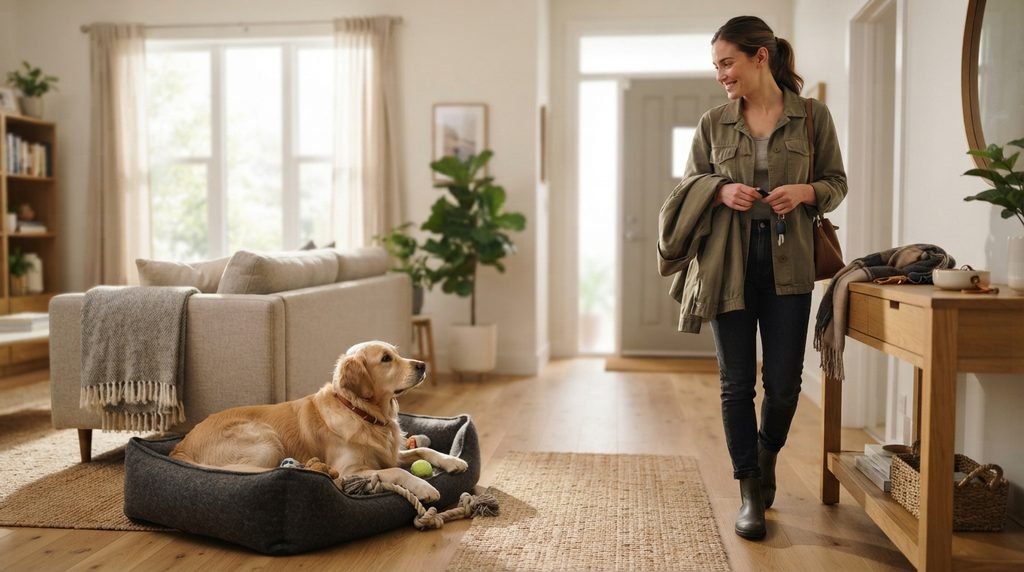
When Should You Be Concerned About Clingy Behaviour?
Not every clingy dog needs professional help.
A dog that follows you around with a relaxed body, settles down easily, eats normally, plays normally, and can remain calm when you leave is usually showing a much different pattern from a dog experiencing severe distress.
The biggest clue is often whether your dog can cope without you.
For example, your dog may follow you from the bedroom to the kitchen but happily sleep on their bed while you work.
That is very different from a dog that becomes frantic whenever you disappear behind a closed door.
Pay particular attention if the behavior is:
- Sudden and persistent
- Getting progressively stronger
- Accompanied by destructive behavior
- Accompanied by excessive vocalization
- Associated with panic when you leave
- Accompanied by changes in eating or drinking
- Associated with unusual bathroom habits
- Accompanied by pain, weakness, confusion, or other physical changes
When behavioral and physical changes appear together, veterinary advice is especially important.
How to Help a Dog That Has Become Too Dependent
If your dog is healthy but has become extremely attached, you can gently encourage more independence.
The key word is gradually.
Do not suddenly shut your dog away for hours and expect them to become comfortable alone.
Instead, begin with small periods of separation while your dog is calm.
For example, ask your dog to settle on a comfortable bed while you sit nearby. Reward calm behavior.
Then gradually increase the distance.
Eventually, you can briefly move into another room and return before your dog becomes distressed.
The goal is to teach your dog that being separated from you for a short period is safe and predictable.
Create a Comfortable Resting Area
Give your dog a dedicated place where they genuinely enjoy relaxing.
This could be a comfortable dog bed, crate if appropriately crate-trained, or quiet area of the house.
Make the area pleasant rather than using it as punishment.
You can occasionally provide an appropriate chew or enrichment activity there so your dog learns that good things can happen even when they are not directly beside you.
Reward Calm Independence
One of the most useful habits is rewarding your dog when they choose to relax independently.
If your dog walks away from you and settles on their own, quietly praise them or offer an appropriate reward.
You do not need to make a huge celebration out of it.
The message is simple:
“Relaxing on your own is a good thing.”
Over time, these small moments can build confidence.
Give Your Dog Enough Exercise and Mental Stimulation
A dog with unused energy may be much more likely to follow you around looking for something to do.
Make sure your dog’s daily routine includes an appropriate combination of physical activity, sniffing, play, training, and mental enrichment.
The right amount depends on your dog’s age, breed, health, and individual personality.
A short training session can sometimes be surprisingly tiring because your dog has to concentrate and make decisions.
Simple activities such as practicing basic cues, searching for hidden treats, or working with a suitable puzzle toy can give your dog something constructive to focus on.
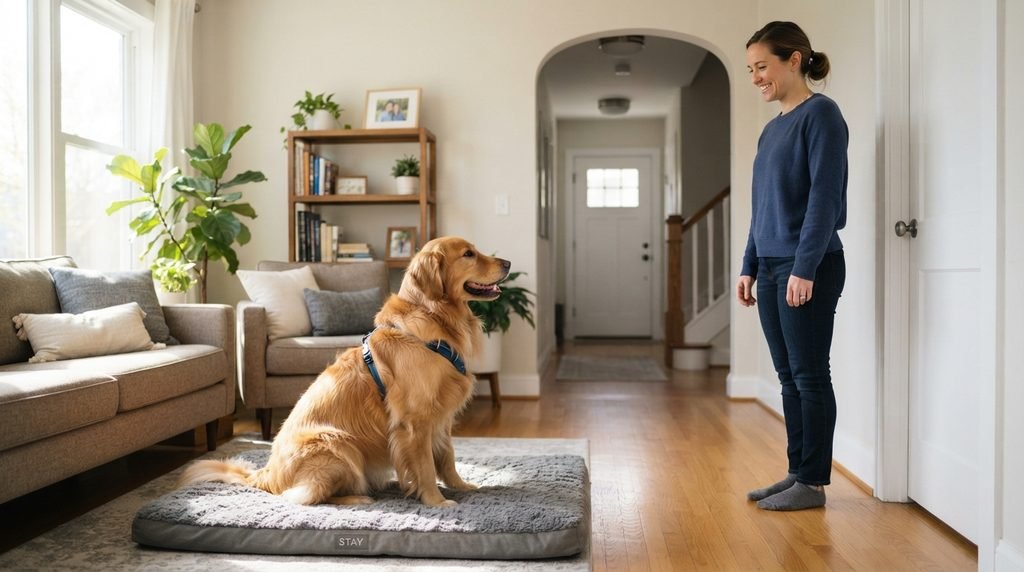
Don’t Punish Your Dog for Following You
It can become frustrating when your dog follows you every few seconds.
You may want some privacy, especially when your dog appears determined to accompany you everywhere.
But punishment usually does not teach the behavior you actually want.
Yelling, pushing your dog away, or deliberately frightening them can create stress without teaching them how to relax independently.
Instead, focus on teaching an alternative behavior.
Ask your dog to settle on their bed.
Reward them for staying there calmly.
Then gradually increase the amount of time they spend relaxing without following you.
This approach gives your dog a skill rather than simply telling them what not to do.
Final Thoughts
So, why does your dog follow you everywhere?
There is no single answer.
Your dog may want attention, feel safer near you, be bored, expect food, react to a change in routine, or simply enjoy your company. In some cases, increased clinginess can be associated with separation-related distress, aging, or an underlying health problem.
The most important thing is to consider what is normal for your individual dog.
If your dog has always been your little shadow and is otherwise relaxed and healthy, their behavior may simply be part of their personality and the bond you share.
But if your dog’s behavior has changed suddenly, especially alongside physical or emotional changes, take the change seriously.
Your dog cannot explain what they are feeling with words. Paying attention to small changes in behavior is one of the best ways you can understand what they may be trying to tell you.
A healthy relationship does not require your dog to be beside you every second. Ideally, your dog should enjoy spending time with you while also developing the confidence to relax peacefully on their own.
And if your dog follows you from room to room simply because they love being wherever you are, well, sometimes having a furry little shadow is just one of the best parts of being a dog owner.

hammadniazi6663@gmail.com
Contributor at PetZuoo, publishing practical information for pet owners and animal lovers.
Related guides
Why Do Dog Tilt Their Heads? 9 Fascinating Reason
Why Do Dog Tilt Their Heads? 9 Fascinating Reason Behind This Adorable Behavior. Have you ever spoken to your dog and watched…
Ultimate Guide to Dog Separation Anxiety
Ultimate Guide to Dog Separation Anxiety. Proven Ways to Help Your Dog Feel Safe Alone, and Leaving your dog at home for…
Proven Ways to Stop Your Dog From Pulling on the Leash
How to Stop Your Dog From Pulling on the Leash and Enjoy Calm Walks and Proven Ways to Stop Your Dog From…