How to Stop Your Dog From Pulling on the Leash and Enjoy Calm Walks and Proven Ways to Stop Your Dog From Pulling on the Leash. Taking your dog for a walk should be one of the best parts of the day. It gives your dog a chance to exercise, explore new smells, spend time with you, and release some of that extra energy. But if your dog constantly pulls, lunges, or races ahead, even a short walk can become frustrating.
Leash pulling is one of the most common problems dog owners face. A dog may pull because something interesting is ahead, because they are excited to explore, because they have learned that pulling gets them where they want to go, or simply because they have never been taught how to walk calmly.
The good news is that leash manners can be taught. You do not need to punish your dog or turn every walk into a battle. With consistency, patience, rewards, and the right training approach, your dog can learn that walking beside you is rewarding.
In this guide, we will explain how to stop a dog from pulling on the leash, why pulling happens, which training methods work best, common mistakes to avoid, and how to make daily walks more enjoyable for both you and your dog.
Why Does Your Dog Pull on the Leash?
Before trying to change your dog’s behaviour, it helps to understand why the behaviour happens.
Dogs experience the world largely through their senses. During a walk, they may smell another dog, notice a squirrel, hear a strange sound, or see someone approaching. All of these things can be extremely exciting.
When your dog pulls toward something, they may accidentally teach themselves that pulling works. For example, imagine your dog sees a tree they want to sniff. They pull forward, you move forward with them, and eventually they reach the tree.
From your dog’s perspective, the lesson can be simple:
“When I pull, I get closer to what I want.”
This is why repeatedly allowing a dog to pull can make the behaviour stronger over time.
Some dogs also pull because they are full of energy. A dog that has been resting inside for several hours may be eager to get outside and explore. Others become excited as soon as the leash comes out because they have learned that the leash means adventure.
The goal of training is not simply to stop your dog from moving forward. Instead, you want to teach your dog a different association:
“Walking calmly beside my person makes good things happen.”
Once your dog understands this, loose-leash walking becomes much easier to build.
Is Leash Pulling Normal?
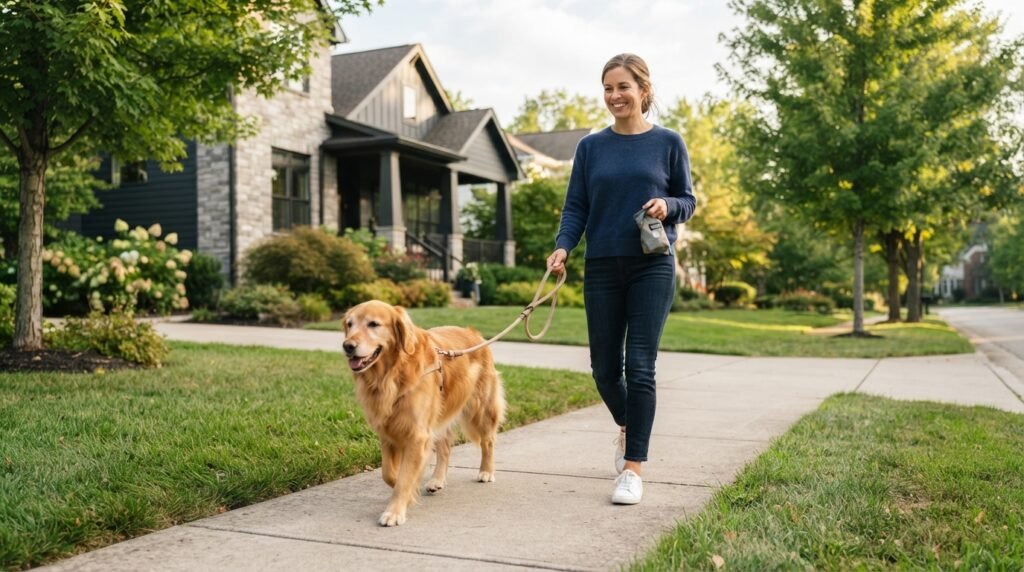
Yes, leash pulling is common, especially in puppies, young dogs, and dogs that have not received structured leash training.
However, common does not mean that you have to accept it permanently.
A dog naturally wants to move, investigate, and follow interesting scents. Walking on a leash requires them to control those natural impulses and pay attention to their human companion. That is a learned skill.
Think about leash walking as a form of training rather than something your dog should automatically understand.
Your dog may already know commands such as “sit” or “stay,” but loose-leash walking is a separate skill. It requires practice in different environments and around different distractions.
Start with simple situations where your dog can succeed. Once your dog understands the basic idea, gradually make the environment more challenging.
Most importantly, remember that progress may not happen in a straight line. Your dog might walk beautifully one day and pull more strongly the next. That does not necessarily mean the training has failed.
Keep practising and focus on gradual improvement.
What Should You Have Before Training?
You do not need a complicated collection of equipment to begin leash training.
A comfortable, properly fitted collar or harness, a suitable leash, and small training treats are usually enough to get started.
Choose treats that your dog genuinely enjoys but that can be given in small amounts. During training, you may reward your dog frequently, so very large treats are unnecessary.
It is also useful to choose a quiet location for the first sessions. A calm area with fewer distractions allows your dog to concentrate on you.
Avoid beginning training in the busiest park or on a crowded street. If your dog is surrounded by exciting distractions before understanding the basic behaviour, learning may become much harder.
Start easy.
Build confidence.
Then increase the challenge gradually.
The Most Important Rule of Leash Training
One of the most useful principles is simple:
Reward the behaviour you want to see.
When your dog walks beside you with a loose leash, reward them. When they check in with you, reward them. When they choose to slow down instead of pulling toward something exciting, reward them.
You are showing your dog which behaviours lead to positive outcomes.
Try to avoid waiting until your dog has been pulling for several seconds before responding. Look for opportunities to reward good behaviour early.
For example, if your dog walks beside you for several steps without pulling, quietly praise them and offer a small treat.
Over time, your dog begins to understand that staying near you has benefits.
The aim is not to bribe your dog for every step forever. Treats are a training tool that can help establish the behaviour. As your dog becomes more reliable, you can gradually reduce the frequency of food rewards while continuing to use praise, play, sniffing opportunities, and other rewards your dog values.
Start Training Inside or in a Quiet Area
If your dog becomes extremely excited the moment you step outside, begin somewhere easier.
You can practise walking a few steps around your home, yard, driveway, or another quiet area where it is safe and permitted.
Ask your dog to stay near you, take a few steps, and reward them for following without pulling.
Keep early sessions short.
Five minutes of focused training can be more useful than a long session in which your dog becomes frustrated or overwhelmed.
Once your dog understands that staying near you earns rewards, slowly introduce more distractions.
The progression might look like this:
Home → quiet outdoor area → quiet street → busier street → park with distractions
Every dog learns at a different pace, so there is no need to rush through these stages.
If your dog starts pulling constantly after moving to a more distracting environment, make the exercise easier again.
Good training is about setting your dog up to succeed.

What If Your Dog Pulls?
When your dog reaches the end of the leash and starts pulling, avoid automatically following them.
Instead, stop moving.
Wait for your dog to reduce the tension or turn their attention back toward you. When the leash becomes loose again, reward your dog and continue walking.
This teaches an important lesson:
Pulling does not make the walk continue, but a loose leash does.
Consistency matters enormously here.
If you stop sometimes but allow your dog to drag you forward at other times, your dog may learn that pulling is still worth trying.
The behaviour may become even more persistent because your dog occasionally gets rewarded for it.
This is why everyone who walks the dog should follow the same basic rules.
Be Patient With the Process
Leash training is not about achieving perfect behaviour in one afternoon.
Your dog is learning a new habit, and habits take repetition.
Some walks may be excellent. Other walks may be messy. Your dog may become distracted by a squirrel, another dog, a cyclist, or an unfamiliar sound.
That is normal.
Instead of measuring success by whether your dog never pulls, look for smaller improvements.
Maybe your dog pulls less often.
Maybe they recover more quickly after seeing another dog.
Maybe they check in with you more frequently.
Maybe they can walk several minutes with a loose leash.
Those small improvements are signs that your training is working.
With regular practice, these moments can become the normal way your dog walks.
The Stop-and-Wait Method
The stop-and-wait method is one of the simplest ways to teach a dog that pulling does not help them move forward.
Start walking normally with your dog. The moment the leash becomes tight because your dog moves ahead, stop walking.
Do not yank the leash backward. Simply stop and give your dog a moment to notice that you are no longer moving.
When your dog turns toward you, comes back slightly, or creates some slack in the leash, praise them. You can then offer a small treat and continue walking.
The important part is consistency.
If your dog pulls and you continue walking anyway, they learn that pulling works. If you consistently stop when the leash becomes tight, your dog eventually starts paying more attention to the leash and your position.
At first, you may have to stop frequently. That is completely normal.
With practice, your dog should begin to understand that a loose leash makes the walk continue.
The Turn-and-Walk Method
Some dogs are extremely determined once they notice something exciting. In these situations, simply stopping may not be enough.
The turn-and-walk method can be useful.
When your dog begins pulling strongly in one direction, calmly change direction and walk the other way.
You do not need to drag your dog or make a sharp correction. Keep the movement controlled and encourage your dog to follow you.
When your dog catches up and walks beside you, praise them.
This exercise teaches your dog to pay attention to where you are going instead of automatically following whatever catches their attention.
You can practise this in a quiet area before trying it somewhere with heavy distractions.
Keep the exercise fun. Randomly changing direction can become a simple game that encourages your dog to watch you.
Reward Your Dog for Checking In
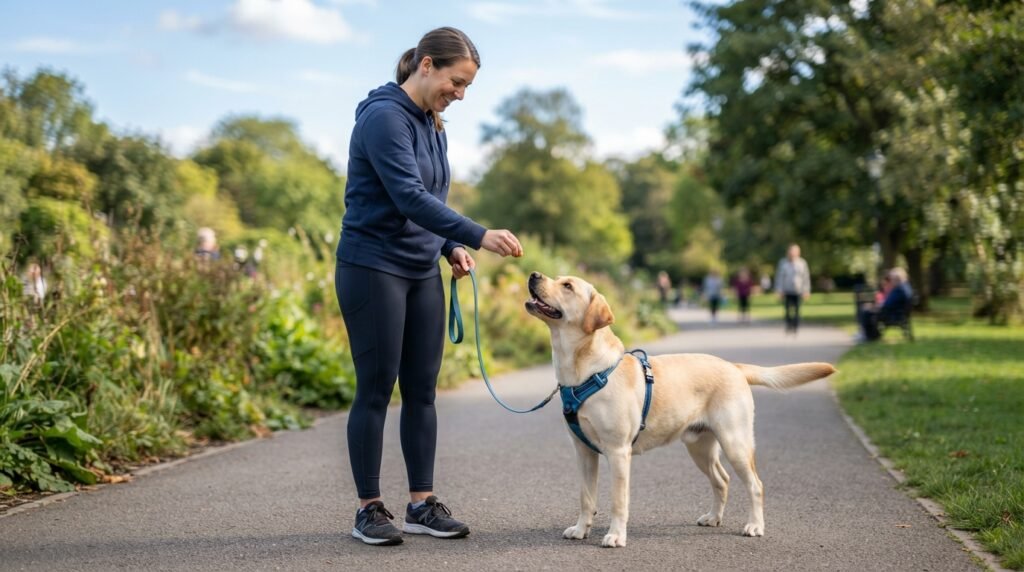
One behaviour that can make leash training much easier is teaching your dog to check in with you.
A “check-in” happens when your dog voluntarily looks at you during a walk.
You do not necessarily need to call their name.
If your dog looks at you on their own, acknowledge it.
Say something like “good” in a calm, happy voice and give them a small reward.
You are teaching your dog that paying attention to you is worthwhile.
Over time, your dog may start looking at you more frequently, especially when they encounter something interesting.
This can be incredibly useful because you can reward your dog before they begin pulling.
For example, imagine you are walking and your dog notices another dog across the street. Instead of immediately rushing toward the distraction, your dog looks back at you.
That is a great training opportunity.
Reward the calm choice and continue walking.
Use Treats Strategically
Treats can be very effective during leash training, but they should be used thoughtfully.
You do not need to hold a treat directly in front of your dog’s nose for the entire walk.
Instead, use treats to reinforce moments when your dog makes the right choice.
Reward your dog when they:
- Walk beside you
- Keep the leash loose
- Look at you
- Stop pulling
- Follow when you change direction
- Ignore a mild distraction
- Return their attention to you
As your dog’s behaviour becomes more reliable, gradually reduce how frequently you give food.
You can replace some treats with verbal praise, a brief game, permission to sniff, or another reward your dog enjoys.
The goal is to create a dog that chooses calm walking even when there is no treat immediately available.
Let Your Dog Sniff
A calm walk does not mean your dog has to march beside you without stopping.
Sniffing is a natural and important part of exploring the environment.
Instead of allowing your dog to pull toward every smell, teach them that calm behaviour can earn opportunities to investigate.
For example, you might walk several steps with a loose leash and then give a cue such as “go sniff.”
Allow your dog a short opportunity to explore the grass or a safe area.
Then invite them to continue walking.
This creates a useful balance between training and natural behaviour.
Your dog learns that they do not have to pull to reach interesting smells.
Keep Training Sessions Short
One common mistake is trying to solve leash pulling during an entire hour-long walk.
For some dogs, that can be exhausting for both the owner and the dog.
Instead, include short training sessions during normal walks.
You might spend five or ten minutes focusing heavily on loose-leash walking and then allow your dog to have a more relaxed sniffing period.
Short sessions can help your dog remain focused.
If your dog becomes frustrated, overly excited, or unable to respond to familiar cues, the environment may simply be too difficult at that moment.
Move somewhere quieter and try again.
What to Do Around Other Dogs
Other dogs can be one of the biggest challenges during leash training.
Your dog may pull because they want to say hello, play, investigate, or because they feel nervous.
Do not wait until your dog is already lunging at another dog before trying to intervene.
Instead, create distance whenever possible.
If you see another dog approaching and your dog is still calm, reward your dog for looking at you and staying near you.
You can also cross the street, move to the side of the path, or change direction if necessary.
Distance can make a major difference.
A dog that can calmly notice another dog from 30 feet away may struggle to remain calm at 5 feet.
Training at a manageable distance gives your dog a better chance to make the right choice.

Avoid Turning the Walk Into a Tug-of-War
When a dog pulls, many owners instinctively pull the leash in the opposite direction.
This can create a constant tugging battle.
Your dog pulls forward.
You pull backward.
Your dog pulls harder.
You respond with more pressure.
Neither side is learning the behaviour you actually want.
Instead of constantly fighting against the leash, focus on teaching your dog what to do.
Reward loose-leash walking.
Stop when pulling begins.
Change direction calmly when appropriate.
Give your dog opportunities to sniff and explore when they are walking politely.
The goal is communication rather than a physical contest.
Give Your Dog Enough Physical and Mental Activity
Some dogs struggle with leash training because they are simply bursting with energy.
A walk should provide exercise, but other forms of enrichment can also help.
Depending on your dog’s age, health, breed, and individual needs, activities such as scent games, puzzle toys, basic obedience practice, and controlled play can provide additional mental stimulation.
A mentally engaged dog may find it easier to focus during training.
However, exercise should not be used as a way to exhaust a dog into obedience.
A tired dog is not automatically a trained dog.
The real goal is teaching your dog how to make appropriate choices while walking.
Practice Before the Real Walk
One helpful technique is to practise leash skills before leaving home.
Put the leash on your dog and spend a few minutes rewarding calm behaviour.
Wait for your dog to settle before opening the door.
If your dog immediately rushes through the doorway, pause.
Ask for calm behaviour and reward it.
Then begin the walk.
This can help prevent the excitement of leaving the house from becoming the beginning of a pulling session.
Remember that the training starts before you reach the sidewalk.
Make Progress Gradually
Every new environment adds distractions.
A quiet backyard is very different from a busy city street.
A quiet neighbourhood is different from a crowded park.
Your dog may perform perfectly at home but pull when they encounter bicycles, children, other dogs, squirrels, or unfamiliar smells.
That does not mean your dog has forgotten everything.
It means the difficulty has increased.
Return to a simpler environment and practise there.
Once your dog succeeds, gradually introduce more distractions.
Think of leash training as building a foundation.
The stronger the foundation, the easier it becomes to handle challenging situations.
Common Mistakes That Can Slow Down Leash Training
Even well-intentioned owners can accidentally reinforce pulling.
One common mistake is allowing the dog to pull sometimes but correcting it at other times.
Another is expecting too much too quickly.
Some owners also train only during difficult walks instead of practising in easy environments first.
Other mistakes include:
- Using excessive leash pressure
- Punishing the dog for every mistake
- Training for too long
- Ignoring good behaviour
- Allowing greetings while the dog is pulling
- Moving too close to major distractions too quickly
- Expecting a puppy to behave like a fully trained adult dog
Training becomes easier when you focus on consistency rather than perfection.
Your dog does not need to be perfect on every walk.
They need repeated opportunities to practise the behaviour you want.

The Most Important Thing: Stay Consistent
Leash training can take time, especially if pulling has been happening for months or years.
Try not to become discouraged by a difficult day.
Your dog is learning a new habit, and your job is to make the correct behaviour clear and rewarding.
Keep sessions manageable.
Reward progress.
Avoid unnecessary conflict.
And remember that every calm step is part of the learning process.
With patience and regular practice, many dogs can make significant improvements in the way they walk on a leash.
Common Leash Training Mistakes to Avoid
Teaching a dog to walk calmly is easier when you know what can accidentally make pulling worse. Many owners make these mistakes without realizing it.
1. Allowing Pulling Sometimes
If your dog pulls toward a tree, another dog, or an interesting smell and you follow them, your dog learns that pulling can get results.
Try to keep your response consistent. When practical and safe, wait for the leash to become loose before continuing toward what your dog wants.
2. Expecting Instant Results
Loose-leash walking is a learned behaviour. A puppy may need many short practice sessions before the behaviour becomes reliable.
Give your dog time to understand what you are asking.
3. Training Only on Difficult Walks
If every training session happens on a busy street surrounded by distractions, your dog may struggle to succeed.
Start in a quiet environment and gradually increase the difficulty.
4. Forgetting to Reward Good Behaviour
It is easy to notice pulling while ignoring the moments when your dog is doing exactly what you want.
Pay attention to the good moments.
When your dog walks calmly beside you, acknowledge it.
5. Using Too Much Leash Pressure
Constantly pulling, jerking, or correcting the leash can create frustration and may make walks unpleasant.
Focus on teaching your dog what behaviour earns rewards rather than simply trying to stop unwanted movement.
How to Teach a Puppy to Walk on a Leash
Puppies are naturally curious, energetic, and easily distracted. That means leash training should begin with realistic expectations.
Start by allowing your puppy to become comfortable wearing appropriate walking equipment.
Before going on longer walks, practise following you around a safe, quiet area.
Take a few steps.
When your puppy follows, reward them.
Repeat.
Keep sessions short enough that your puppy remains interested.
Do not expect a young puppy to maintain perfect attention for a long period.
Instead, build the habit gradually.
As your puppy grows and becomes more comfortable, you can increase the length and difficulty of your walks according to their individual needs.
What If Your Dog Is a Very Strong Puller?
Some dogs are physically powerful and can make leash walking difficult even for experienced owners.
If your dog is extremely strong, safety should come first.
Choose walking equipment that fits correctly and use a leash suitable for your dog’s size and behaviour.
If your dog frequently lunges, escapes equipment, or puts you at risk of being pulled over, consider working with a qualified force-free dog trainer.
A professional can watch your dog’s behaviour and help you develop a training plan that matches the specific problem.
This is especially important when pulling is accompanied by aggressive behaviour, extreme fear, or repeated lunging.
What If Your Dog Pulls Toward Squirrels?
Squirrels can be incredibly exciting for dogs.
If your dog spots one and immediately pulls, do not expect them to suddenly become perfectly focused.
Instead, work on the behaviour before the distraction becomes overwhelming.
When you notice a squirrel in the distance, create enough space for your dog to remain responsive.
Reward your dog for looking at you.
If your dog can calmly return their attention to you, continue walking.
If they become completely fixated, increase the distance.
This is an important training principle:
Work at a level where your dog can still learn.
The closer and more exciting the distraction becomes, the harder it may be for your dog to respond.
What If Your Dog Pulls Toward People?
Some dogs pull because they want to greet everyone they see.
Although friendly behaviour is wonderful, your dog should learn that not every person on the sidewalk is available for a greeting.
Ask people who want to interact with your dog to wait until your dog is calm.
If your dog is pulling toward someone, create some distance and wait for calmer behaviour.
Then decide whether a greeting is appropriate.
This helps your dog understand that pulling does not automatically earn access to people.
What If Your Dog Pulls Because They Are Nervous?
Not all leash pulling comes from excitement.
Some dogs pull away because they are frightened.
A dog may become nervous around unfamiliar people, loud vehicles, bicycles, other dogs, or strange environments.
In this situation, forcing your dog closer to the scary object is not a good solution.
Instead, give your dog more distance and work at a level where they can remain relatively calm.
Reward calm behaviour and allow your dog to move away when appropriate.
If fear is severe or your dog reacts unpredictably, professional guidance from a qualified positive-reinforcement trainer or veterinary behaviour professional can be valuable.
How Long Does Leash Training Take?
There is no single timeline that applies to every dog.
A young dog with little previous leash experience may improve quickly with consistent practice. An older dog that has been pulling for years may need considerably more time.
Your dog’s personality, environment, distractions, previous training, and motivation can all affect progress.
Rather than asking, “How many days will this take?” look for measurable improvements.
For example:
Week 1: Your dog learns that a loose leash earns rewards.
Week 2: Your dog begins checking in with you.
Week 3: Your dog can walk calmly for longer periods.
Later: Your dog becomes more reliable around distractions.
These are only examples, not guarantees. Every dog develops at a different pace.
Make Walking More Interesting for Your Dog
Some dogs pull because the outside world is incredibly stimulating.
Instead of making every walk a strict obedience session, provide appropriate opportunities for exploration.
Let your dog sniff safe areas.
Change your walking route occasionally.
Practise simple training games.
Reward your dog for checking in with you.
You can even practise changing direction and having your dog follow you.
When walking becomes a combination of exercise, exploration, training, and bonding, your dog may become more interested in staying connected with you.
Use the “Look at Me” Game
A simple attention game can help prepare your dog for distractions.
Stand somewhere quiet.
Say your dog’s name.
When they look toward you, reward them.
Repeat several times.
Once your dog understands the game, practise while walking.
Eventually, you can use the behaviour when something mildly distracting appears.
The goal is not to force your dog to stare at you constantly. It is to build a habit of voluntarily checking in with you.
What If Your Dog Starts Pulling Again?
Even after making good progress, dogs can have setbacks.
Your dog may pull more on an exciting new route, after a long break from training, or when they encounter an especially interesting distraction.
Do not assume that you need to start from zero.
Return to the basics.
Reduce distractions.
Reward more frequently.
Use shorter training sessions.
Then gradually build back up.
Training is not always a straight line.
Frequently Asked Questions
Why does my dog pull so hard on walks?
Dogs may pull because they are excited, curious, energetic, distracted, nervous, or because pulling has previously helped them reach something they wanted.
Should I stop walking when my dog pulls?
Stopping when it is safe to do so can help teach your dog that pulling does not make the walk continue. Wait for some slack in the leash, reward calm behaviour, and continue.
Should I use treats for leash training?
Treats can be useful for reinforcing good behaviour. Over time, you can gradually vary the rewards and use praise, play, sniffing opportunities, or other things your dog enjoys.
Can an older dog learn not to pull?
Yes. Older dogs can learn new walking habits. The process may take time, particularly if pulling has become an established habit.
Is a harness better than a collar?
There is no single option that is best for every dog. Fit, design, your dog’s size and behaviour, and how the equipment is used all matter. If you are unsure, ask a qualified professional to help you choose appropriate equipment.
Should I punish my dog for pulling?
Punishment is not necessary for teaching loose-leash walking. Focus on reinforcing the behaviour you want and managing distractions so your dog can succeed.
What should I do if my dog lunges at other dogs?
Create distance, avoid putting your dog in situations where they cannot cope, and work on calm behaviour at a manageable distance. If lunging is intense or dangerous, seek help from a qualified professional.
Final Thoughts
Learning how to stop a dog from pulling on the leash takes patience, consistency, and realistic expectations.
Your dog is not trying to make your walk difficult. Pulling is often a behaviour that has developed because it has worked for them in the past.
Your job is to teach a better alternative.
Reward loose-leash walking. Stop or change direction when appropriate. Practise in quiet environments before tackling major distractions. Give your dog safe opportunities to sniff and explore. Most importantly, keep training positive and consistent.
Do not measure success by one perfect walk.
Measure it by the small improvements you see over time.
A few calm steps today can eventually become an entire enjoyable walk.
And when your dog learns that staying connected with you is rewarding, walks can become much more relaxed, predictable, and enjoyable for both of you.

hammadniazi6663@gmail.com
Contributor at PetZuoo, publishing practical information for pet owners and animal lovers.
Related guides
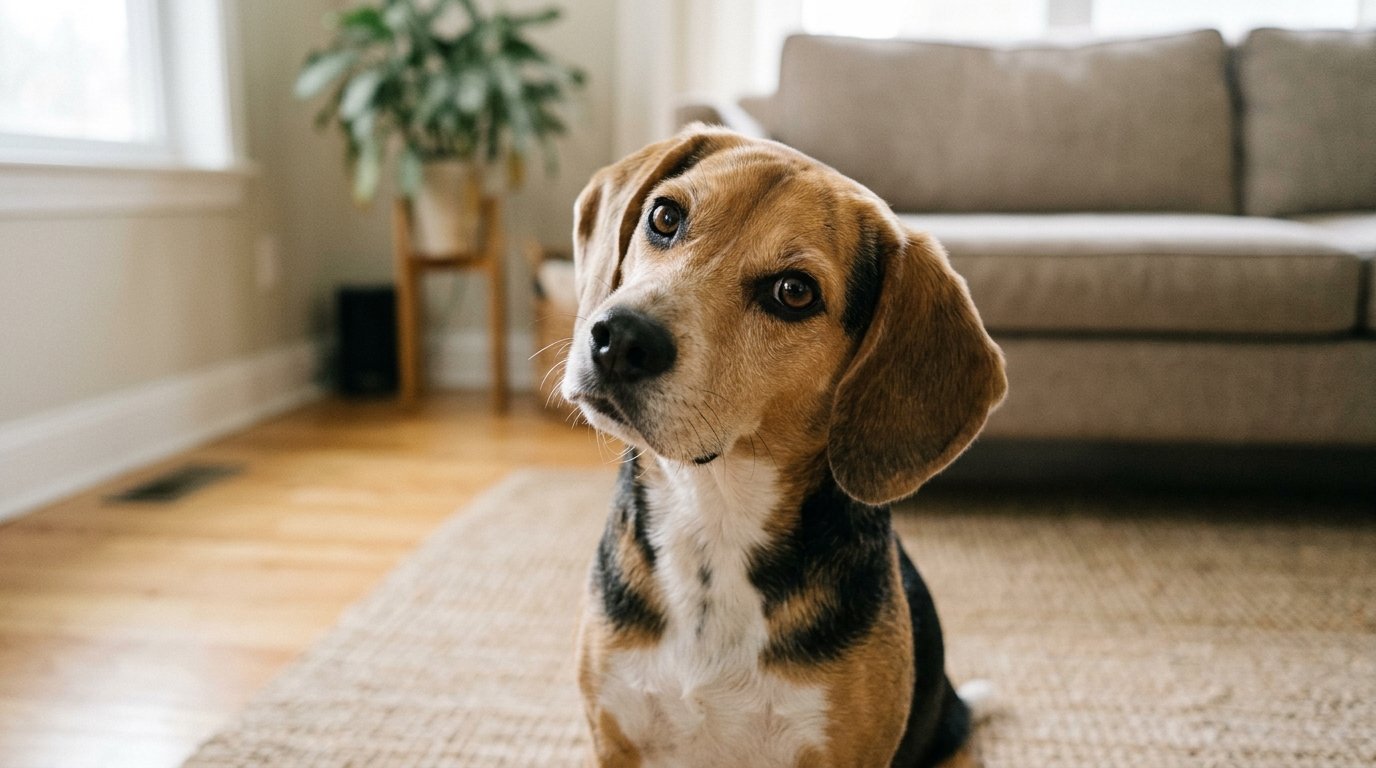
Why Do Dog Tilt Their Heads? 9 Fascinating Reason
Why Do Dog Tilt Their Heads? 9 Fascinating Reason Behind This Adorable Behavior. Have you ever spoken to your dog and watched…
Why Does Dog Suddenly Follow Me Everywhere? 9 Reasons
Why Does Dog Suddenly Follow Me Everywhere? 9 Reasons and Have you noticed that your dog suddenly seems to be your shadow?…
Ultimate Guide to Dog Separation Anxiety
Ultimate Guide to Dog Separation Anxiety. Proven Ways to Help Your Dog Feel Safe Alone, and Leaving your dog at home for…