Why Is My Dog Always Hungry? 11 Surprising Reasons and What to Do, Have you ever finished feeding your dog, only to see those big eyes staring at you as if they have not eaten all day?
If your dog constantly begs for food, follows you into the kitchen, searches through the house for crumbs, or acts hungry immediately after finishing a meal, you may wonder whether something is wrong.
Sometimes, a big appetite is completely normal. Active dogs, growing puppies, and certain breeds can naturally have strong appetites. However, a sudden or dramatic increase in hunger can sometimes be a sign that your dog needs closer attention.
Understanding why your dog is always hungry can help you decide whether you simply need to adjust feeding habits or whether it is time to speak with your veterinarian.
In this guide, we will look at 11 common reasons dogs may seem constantly hungry, practical ways to manage begging and overeating, and warning signs that should never be ignored.
1. Your Dog May Simply Be Very Active
One of the simplest explanations for a hungry dog is an active lifestyle.
Dogs that spend a lot of time running, walking, playing, hiking, training, or participating in activities naturally use more energy than dogs that spend most of the day resting.
For example, a young Border Collie that runs and plays for several hours can have very different nutritional needs from a senior dog that takes two short walks each day.
If your dog has recently become more active, increased hunger may be completely understandable.
However, this does not mean you should automatically increase food portions dramatically.
Instead, consider your dog’s:
- Age
- Breed
- Body size
- Daily activity
- Current body condition
- Type of food being fed
- Veterinary recommendations
A dog can be enthusiastic about food without actually needing more calories.
How to tell if activity is affecting appetite
Look at your dog’s body condition rather than relying only on begging behavior.
If your dog maintains a healthy body weight, has good energy, and shows no other concerning symptoms, increased interest in food may simply be part of their normal personality and lifestyle.
If your dog is becoming unusually thin despite eating more, however, that is different and deserves veterinary attention.
2. Your Dog May Not Be Getting Enough Calories
Another possible reason your dog always seems hungry is that the current diet does not provide enough calories or nutrients for their individual needs.
Not all dog foods contain the same amount of energy per serving. Two bowls of food can look similar while providing very different calorie amounts.
This is especially important when feeding dogs based only on the volume of food rather than the nutritional information on the packaging.
A dog may appear to receive a large meal but still consume fewer calories than expected.
Puppies, highly active dogs, pregnant or nursing dogs, and some working dogs can have particularly different nutritional requirements.
Check the feeding guidelines
Look at the feeding instructions on your dog’s food and compare them with your dog’s weight and lifestyle.
Remember that feeding charts are general recommendations, not personalized medical instructions.
Treats also count toward daily calorie intake. If your dog receives multiple treats throughout the day, simply adding more food because they appear hungry can lead to excessive calorie consumption.
If you are unsure whether your dog is receiving an appropriate amount of food, your veterinarian can help you determine a suitable feeding plan.

3. Your Dog May Have Learned That Begging Works
Sometimes the answer is behavioral rather than nutritional.
Dogs are incredibly good at learning patterns.
Imagine your dog sits beside you while you eat. They stare at you with those irresistible eyes. Eventually, you give them a small piece of chicken.
From your perspective, it may feel like a harmless treat.
From your dog’s perspective, they have just discovered an extremely effective strategy:
Begging = food.
If this happens repeatedly, your dog may begin asking for food even when they are not hungry.
They may bark, paw at your leg, sit beside the kitchen, follow you around, or stare at you whenever you approach food.
How to reduce food begging
Consistency is one of the most important tools.
Try these habits:
- Avoid rewarding begging with table scraps.
- Keep human food out of reach.
- Give treats during planned training sessions instead.
- Feed your dog at consistent times.
- Reward calm behavior rather than demanding behavior.
- Make sure everyone in the household follows the same rules.
If one family member gives food whenever the dog begs, the behavior can continue even if everyone else refuses.
You do not need to stop giving your dog treats completely. Instead, make treats intentional and include them within your dog’s overall daily diet.
Why Understanding the Cause Matters
A hungry dog is not necessarily a sick dog.
Some dogs are simply food motivated. Others have learned that begging gets attention or treats. But if your dog’s appetite has suddenly changed, especially when combined with other physical or behavioral changes, it is important not to dismiss it as simple greed.
4. Your Dog’s Food May Not Be Keeping Them Satisfied
Sometimes a dog appears hungry because their meals simply do not keep them feeling satisfied for very long.
The quality and composition of a diet matter. A food that provides appropriate nutrition but is less filling may leave some dogs looking for their next meal sooner than expected.
Protein, fat, fibre, moisture, and overall calorie density all contribute to how a meal fits into your dog’s nutritional needs.
However, you should not change your dog’s diet simply because they beg for food.
Instead, look at the bigger picture.
Is your dog maintaining a healthy weight? Are their stools normal? Do they have good energy? Is their coat healthy? Has their appetite recently changed?
If everything appears normal, your dog may simply be highly food motivated.
Try making mealtimes more engaging
Instead of increasing portions, you can sometimes make meals more mentally stimulating.
For example, you can use an appropriate puzzle feeder or food-dispensing toy for part of your dog’s regular meal.
Eating more slowly may make mealtime feel longer and can reduce the habit of immediately asking for another meal.
Always supervise your dog when introducing a new feeding device and choose one appropriate for their size and chewing habits.
5. Your Dog’s Routine May Have Changed
Dogs are creatures of habit.
A change in your dog’s daily routine can influence eating behavior.
Maybe you recently started working longer hours. Perhaps your dog is getting more exercise than before. You may have changed their feeding schedule or started giving more treats during training.
Even changes in the household can affect a dog’s behavior.
For example, if your dog previously ate at 8 a.m. and 6 p.m. but now receives breakfast at 6 a.m., they may naturally begin expecting food earlier.
The same applies to evening meals.
Keep feeding times predictable
A consistent routine can help your dog understand when food is coming.
Try to establish regular meal times and avoid feeding your dog every time they appear hungry.
If you need to change the schedule, make the transition gradually when practical.
You should also consider whether increased hunger began at the same time as another lifestyle change.
Keeping a simple food and behavior diary for several days can be surprisingly useful.
Record:
- Meal times
- Approximate food portions
- Treats
- Exercise
- Water consumption
- Bathroom habits
- Begging behavior
- Changes in weight
This information can help you identify patterns.
6. Your Dog May Be Getting Too Many Treats but Still Acting Hungry
This sounds strange, but frequent treats can actually make feeding behavior more complicated.
A dog may receive several treats during training, a dental chew during the afternoon, leftovers from dinner, and another snack before bedtime.
Each individual treat may seem insignificant.
Together, however, they can contribute a substantial number of calories.
At the same time, your dog may continue begging because they have learned that asking for food is rewarding.
This creates a cycle:
Begging → treat → temporary satisfaction → begging again.
Make treats part of the plan
Treats should generally be considered part of your dog’s overall daily food intake.
Instead of randomly adding snacks, measure out the day’s treats in advance.
You can also use a portion of your dog’s regular food as training rewards when appropriate.
Most importantly, avoid using food as the automatic solution for boredom, attention-seeking, or every desired behavior.
Your dog can receive plenty of affection without receiving extra calories.
Try replacing some food rewards with:
- Praise
- Play
- Petting
- A favorite toy
- A short training session
- A walk
This helps your dog learn that attention does not always come in the form of food.
7. Certain Medications Can Increase Appetite
Some medications can affect appetite.
If your dog suddenly becomes much more interested in food after starting a medication, mention the change to your veterinarian.
Do not stop or alter prescribed medication without veterinary guidance.
Instead, keep track of when the appetite change began and whether other changes occurred at the same time.
Depending on the medication, your veterinarian may determine that the appetite increase is an expected effect or may want to investigate further.
Look for changes beyond hunger
Increased appetite becomes more important when it occurs alongside other symptoms.
Pay attention if your dog is also:
- Drinking significantly more water
- Urinating more frequently
- Losing weight
- Vomiting
- Having persistent diarrhea
- Becoming unusually tired
- Developing a swollen or unusual abdomen
- Showing changes in coat or skin
- Experiencing changes in behavior
These signs do not automatically mean your dog has a serious disease, but together they provide useful information for your veterinarian.

When Increased Hunger Deserves More Attention
There is an important difference between a dog that has always loved food and a dog that suddenly seems obsessed with eating.
A lifelong food-loving Labrador that maintains a healthy weight may simply have a strong appetite.
But if your normally satisfied dog suddenly starts raiding the kitchen, begging constantly, losing weight, drinking excessively, or showing other changes, it is worth investigating.
Some medical conditions can cause increased appetite, including certain hormonal or metabolic disorders and problems affecting digestion or nutrient absorption.
Only a veterinarian can determine the underlying cause.
A simple rule for dog owners
Sudden appetite change + other physical symptoms = contact your veterinarian.
You know your dog’s normal behavior better than anyone. When something changes noticeably, your observations can be extremely valuable.
8. Puppies Naturally Need Plenty of Energy
If you have a puppy that seems hungry all the time, don’t immediately assume something is wrong.
Growing puppies have substantial nutritional needs because their bodies are developing rapidly.
They are building muscles, bones, organs, and tissues while also using energy to explore their environment.
A playful puppy may therefore seem ready for another meal shortly after eating.
However, puppies should not simply be fed unlimited amounts of food.
Overfeeding during growth can contribute to unhealthy weight gain and may be particularly problematic for puppies expected to become large dogs.
Feed puppies appropriately for their growth stage
Puppies generally need food formulated for growth rather than simply eating the same diet as an adult dog.
The exact feeding schedule depends on factors such as age, breed, expected adult size, and individual nutritional needs.
If you are unsure whether your puppy is receiving enough food, speak with your veterinarian.
Regular weight checks can also help ensure your puppy is growing appropriately rather than simply getting heavier too quickly.
9. Boredom Can Look Like Hunger
Not every food-seeking dog is actually hungry.
Sometimes your dog is simply bored.
Food is exciting. It smells interesting, tastes good, and often comes with attention from their favorite person.
A dog that has little mental or physical stimulation may discover that visiting the kitchen is an easy way to make something happen.
This can turn into repeated food-seeking behavior.
Give your dog something else to do
Before giving another snack, consider whether your dog needs activity instead.
Depending on your dog’s age, health, and abilities, you might try:
- A sniffing walk
- A short training session
- Interactive play
- A puzzle toy
- Basic obedience practice
- A safe food-dispensing toy
- A supervised game of fetch
Mental stimulation can be particularly useful because dogs need more than physical exercise.
Allowing your dog to sniff and explore during walks can provide valuable enrichment.
If your dog stops begging after receiving attention, play, or a walk, boredom or attention-seeking may have been part of the problem.

10. Some Health Conditions Can Cause Excessive Hunger
One of the most important reasons to take persistent increased appetite seriously is that certain medical conditions can affect appetite.
A dog may eat more because their body is not processing or using nutrients normally, or because a disease is affecting hormonal or metabolic processes.
Conditions that veterinarians may consider include diabetes mellitus, Cushing’s disease, intestinal disorders, and other health problems.
This does not mean that a hungry dog automatically has one of these conditions.
Many perfectly healthy dogs love food.
The concern is greater when increased appetite is:
- Sudden
- Persistent
- Extreme
- Accompanied by weight loss
- Accompanied by increased thirst
- Accompanied by increased urination
- Accompanied by vomiting or diarrhea
- Associated with weakness or unusual tiredness
Increased hunger and weight loss
One particularly important combination is:
Eating more + losing weight.
If your dog is consuming more food but becoming noticeably thinner, don’t simply keep increasing their food without finding out why.
Arrange a veterinary examination.
Your veterinarian may ask questions about your dog’s diet, appetite, drinking, urination, stool, activity level, medications, and weight history.
Depending on the situation, they may recommend diagnostic testing.
11. Your Dog May Have a Strong Food-Driven Personality
Some dogs are simply obsessed with food.
Breed tendencies, individual personality, previous experiences, training history, and household habits can all influence how strongly a dog responds to food.
A dog that happily eats almost anything may behave as though every meal is the best meal of their life.
That does not necessarily mean they are starving.
Food motivation is not always a problem
In fact, food motivation can be useful.
It can make training easier because many dogs are highly interested in food rewards.
The important thing is learning how to manage that motivation.
Rather than rewarding every begging behavior, use your dog’s food interest strategically.
For example, you can reward:
- Sitting calmly
- Coming when called
- Going to their bed
- Walking politely
- Following basic commands
- Staying calm around food
This teaches your dog that good behavior earns rewards.
At the same time, avoid turning every moment of attention into a feeding opportunity.

How to Tell If Your Dog Is Actually Hungry
Dogs cannot tell us directly whether they need more calories, so owners have to look at several clues.
A dog that is genuinely not receiving enough food may show changes in body condition, energy, or weight.
On the other hand, a dog that simply enjoys eating may maintain a healthy body condition while begging frequently.
Consider these questions:
Is your dog’s weight stable?
Regularly monitor your dog’s weight, especially if their appetite changes.
Unexpected weight loss or gain should be discussed with a veterinarian.
Does your dog have normal energy?
A healthy appetite alongside normal energy may be less concerning than increased hunger accompanied by weakness or lethargy.
Has anything else changed?
Think about thirst, urination, stool, vomiting, coat condition, sleep, exercise, and behavior.
One change may be harmless, but several changes together deserve closer attention.
Has the appetite change been sudden?
A sudden increase in appetite is more noteworthy than a dog that has always been enthusiastic about meals.
Keeping track of your dog’s normal habits makes these changes easier to recognize.
The Biggest Mistake: Feeding More Without Finding the Cause
When a dog begs constantly, the easiest response is often to give more food.
But this can create two problems.
First, it may contribute to unhealthy weight gain.
Second, if an underlying health problem is causing the appetite change, simply adding more food does not address the real issue.
Instead, look at the whole picture.
Consider your dog’s body condition, activity, diet, treats, routine, and other symptoms.
If the change is persistent or unusual, veterinary advice is the safest next step.
What Should You Do If Your Dog Is Always Hungry?
Once you notice that your dog is constantly asking for food, avoid immediately assuming that they need larger meals.
The best approach is to look at their complete routine.
Start by reviewing what your dog eats every day, including meals, treats, chews, table scraps, and training rewards.
Then consider their activity level and body condition.
If your dog’s weight is healthy and their appetite has always been strong, the behavior may simply be part of their personality.
However, a sudden change deserves more attention.
1. Measure Your Dog’s Food
Avoid estimating portions with random scoops or handfuls.
Use a consistent measuring method and follow the feeding guidance provided for your dog’s food.
Your veterinarian can help you determine whether the amount is appropriate for your dog’s individual needs.
Remember that feeding recommendations are starting points. Individual dogs can have different energy requirements.

2. Keep Treats Under Control
Treats should not quietly become a second diet.
If your dog receives treats throughout the day, keep track of them.
You can prepare the day’s treats in advance so you know exactly how much your dog has received.
For training, small rewards are often enough.
You can also ask your veterinarian about using part of your dog’s normal food allowance as training rewards.
3. Slow Down Fast Eating
Some dogs finish their entire meal in seconds and then immediately begin looking for more.
If your dog eats extremely quickly, consider discussing appropriate slow-feeding options with your veterinarian or using a suitable puzzle feeder.
Slowing the pace of eating can make meals more engaging.
Always choose feeding equipment that is appropriate for your dog’s size and behavior.
4. Add Healthy Mental Stimulation
A dog that spends most of the day sleeping or waiting for attention may start using food as entertainment.
Give your dog opportunities to use their brain.
Short training sessions can be surprisingly effective.
Teach simple behaviors such as:
- Sit
- Stay
- Come
- Leave it
- Go to bed
- Wait
You can also provide supervised enrichment activities that encourage sniffing, searching, and problem-solving.
5. Maintain a Consistent Feeding Schedule
Dogs often feel more settled when they know when their meals are coming.
Try to maintain predictable meal times.
If your dog begs between meals, avoid automatically rewarding the behavior with food.
Instead, redirect them toward another activity such as play, training, or resting in their bed.
Consistency is important.
If begging works occasionally, your dog may continue trying because they have learned that persistence sometimes produces a reward.
When Should You Call the Veterinarian?
Knowing when to seek professional help is one of the most important parts of dealing with excessive hunger.
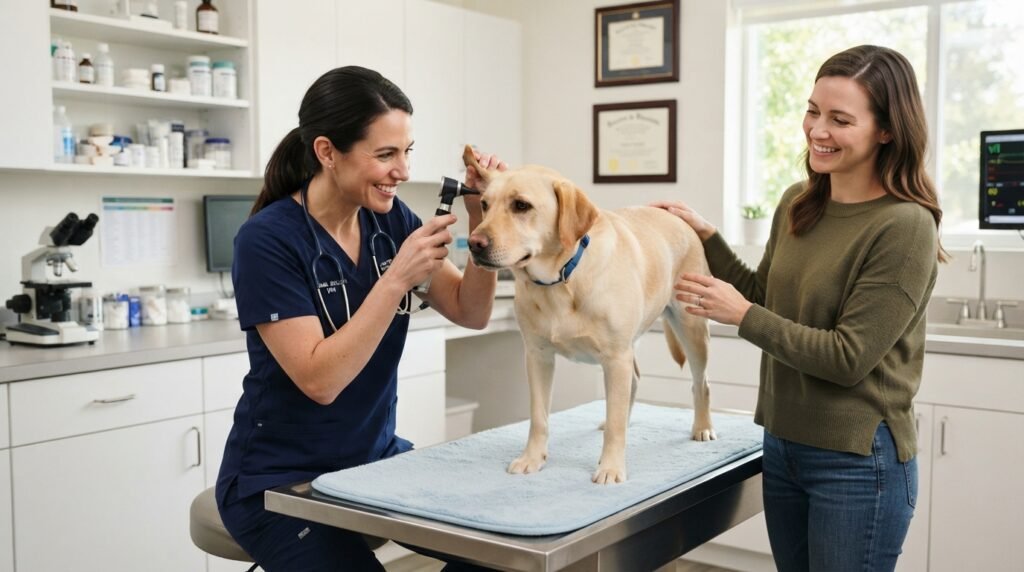
Contact your veterinarian if your dog’s appetite has changed significantly or suddenly, particularly if the change continues.
You should be especially attentive when increased hunger occurs alongside other symptoms.
Watch for these warning signs:
- Unexplained weight loss
- Significant weight gain
- Excessive thirst
- Frequent urination
- Repeated vomiting
- Persistent diarrhea
- Unusual tiredness
- Weakness
- Changes in behavior
- A noticeably swollen abdomen
- Changes in coat or skin
- A sudden and extreme increase in appetite
These signs do not tell you exactly what is wrong.
They simply indicate that your dog may need professional evaluation.
What Will the Veterinarian Want to Know?
Before an appointment, it can help to collect useful information.
Write down when the increased appetite started and whether it has gradually increased or appeared suddenly.
Also record:
Food:
What food your dog eats and approximately how much.
Treats:
How many treats, chews, or table scraps your dog receives.
Water:
Whether your dog is drinking more than usual.
Urination:
Whether bathroom frequency has changed.
Stool:
Any changes in consistency, frequency, or appearance.
Weight:
Any recent weight loss or gain.
Medication:
Any current medications or recent changes.
Activity:
Whether exercise has increased or decreased.
This information can make it easier for your veterinarian to understand the situation.
Don’t Diagnose Your Dog From Appetite Alone
Search engines can provide useful general information, but they cannot diagnose your individual dog.
Increased hunger can have many explanations.
A healthy young dog may simply need a feeding routine appropriate for growth and activity.
Another dog with the same appetite change may need veterinary investigation because of additional symptoms.
The difference is the overall picture.
That’s why it is better to observe your dog carefully rather than immediately assuming the worst.
Healthy Weight Matters More Than a “Full” Bowl
One of the most important lessons for dog owners is that a large meal does not necessarily equal good nutrition.
Your goal should not be to keep your dog completely full at every moment.
The goal is to provide appropriate nutrition while maintaining a healthy body condition.
Dogs naturally have different appetites.
Some seem satisfied after eating and walk away from the bowl.
Others lick the bowl clean and immediately begin searching for another opportunity.
The second dog is not necessarily underfed.
A Simple Daily Routine for a Food-Motivated Dog
If your dog is healthy but constantly begging, a structured routine can help.
Morning
Give the appropriate measured meal.
Follow it with a walk or age-appropriate activity.
Midday
Provide mental stimulation, training, or play instead of automatically offering snacks.
Afternoon
If treats are needed for training, use small portions and account for them within the daily food allowance.
Evening
Give the second planned meal if your dog’s feeding schedule includes two meals.
Afterward, offer play, affection, or quiet time rather than repeated snacks.
Before Bed
Keep the routine calm and predictable.
If your dog begs for food, avoid making bedtime begging part of the normal routine.

Final Thoughts
So, why is your dog always hungry?
There isn’t one answer.
Your dog’s appetite may be influenced by activity level, age, feeding habits, food intake, treats, boredom, personality, medication, or an underlying medical condition.
The most important thing is to notice whether the behavior is normal for your dog or represents a meaningful change.
If your dog has always loved food but maintains a healthy weight and has normal energy, begging may simply be part of their personality.
But if your dog’s appetite suddenly becomes intense, especially alongside weight loss, increased thirst, increased urination, digestive problems, or unusual tiredness, don’t ignore the change.
Keep track of what your dog eats and drinks, monitor their weight and behavior, and speak with your veterinarian when something doesn’t seem right.
A hungry dog is not automatically an unhealthy dog—but a sudden change in appetite is worth paying attention to.
The goal is not simply to feed your dog more.
The goal is to understand what their appetite is telling you and make sure they receive the right nutrition for a healthy, active life.

hammadniazi6663@gmail.com
Contributor at PetZuoo, publishing practical information for pet owners and animal lovers.
Related guides

Why Do Dog Tilt Their Heads? 9 Fascinating Reason
Why Do Dog Tilt Their Heads? 9 Fascinating Reason Behind This Adorable Behavior. Have you ever spoken to your dog and watched…
Why Does Dog Suddenly Follow Me Everywhere? 9 Reasons
Why Does Dog Suddenly Follow Me Everywhere? 9 Reasons and Have you noticed that your dog suddenly seems to be your shadow?…
Ultimate Guide to Dog Separation Anxiety
Ultimate Guide to Dog Separation Anxiety. Proven Ways to Help Your Dog Feel Safe Alone, and Leaving your dog at home for…