Why Is My Cat Suddenly Hiding? 11 Surprising Reasons, If your cat suddenly disappears under the bed, hides inside a closet, or spends much more time in a quiet corner than usual, it is natural to wonder what is wrong. Cats are naturally independent animals, and some hiding is completely normal. But when a cat that usually follows you around suddenly starts avoiding everyone, the change deserves attention.
Why is my cat hiding? There are many possible explanations. Your cat may be stressed by a new environment, frightened by a loud noise, adjusting to a change in routine, or simply looking for a peaceful place to rest. In some cases, however, hiding can be an early sign that a cat is feeling unwell or experiencing pain.
The important thing is not to panic. Instead, look at the situation as a whole. Think about when the hiding started, what changed recently, and whether your cat is eating, drinking, using the litter box, grooming, and behaving normally.
This guide explains the most common reasons cats hide and the practical steps you can take to help your feline friend feel safe again.
Is It Normal for Cats to Hide?
Yes. Hiding is a normal part of feline behavior.
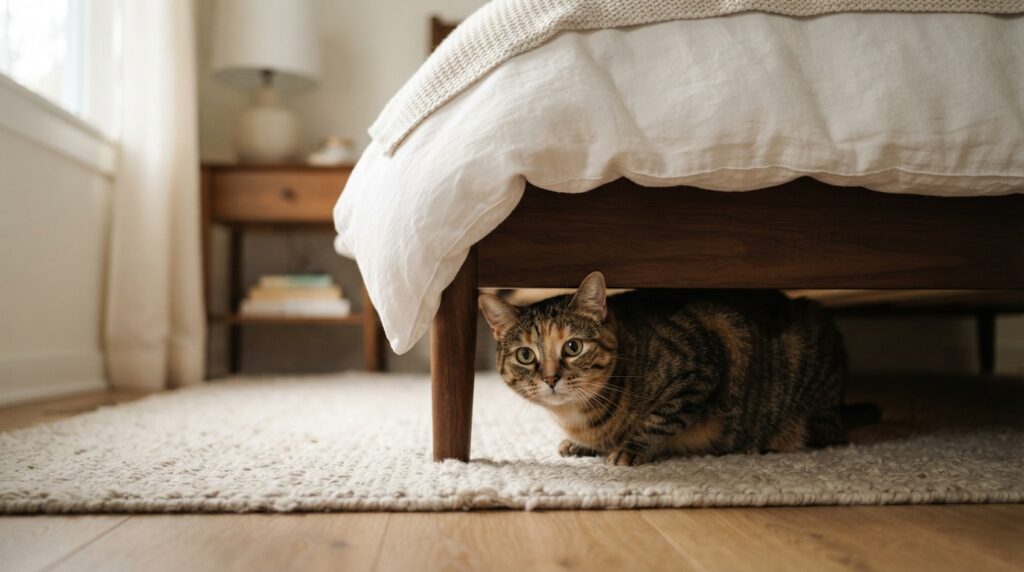
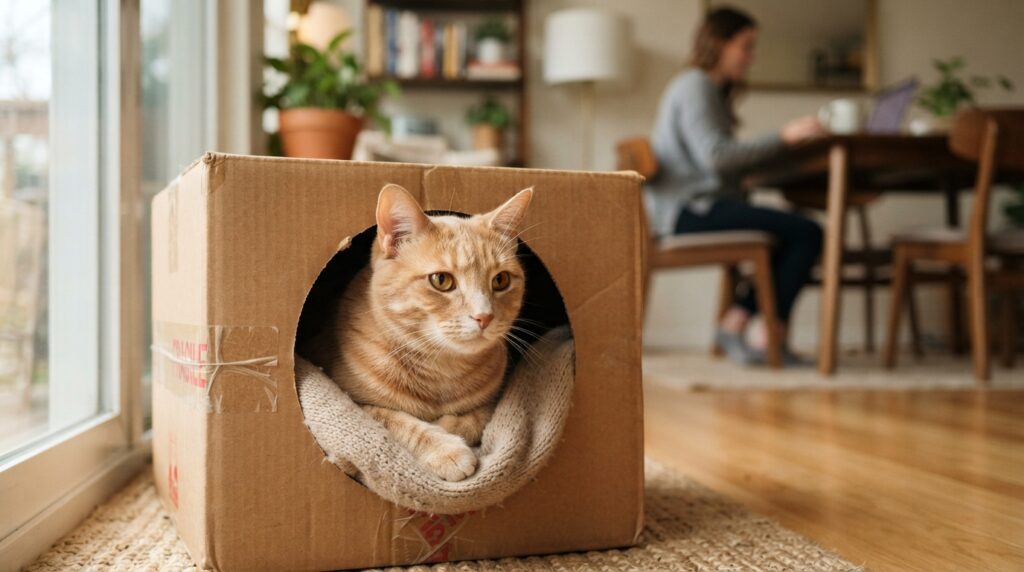
Cats often choose enclosed or quiet spaces because these locations make them feel secure. A cat may sleep beneath a bed, relax behind furniture, or curl up inside a cardboard box simply because it enjoys the privacy.
Wild cats also seek protected resting areas, so the desire for a safe hiding place is deeply connected to normal feline instincts.
The concern begins when your cat’s hiding behavior changes noticeably.
For example, you may want to pay closer attention if your cat:
- Suddenly hides much more than usual
- Stops coming out for meals
- Avoids family members
- Spends almost all day hidden
- Hides while appearing frightened or uncomfortable
- Stops playing
- Changes eating or drinking habits
- Has unusual litter box behavior
- Stops grooming normally
- Seems weak, restless, or unusually quiet
A single afternoon spent under the bed usually isn’t enough to assume something is seriously wrong. A persistent behavioral change is more important.
1. Your Cat May Be Feeling Stressed
One of the most common reasons for sudden hiding is stress.
Cats can be surprisingly sensitive to changes that humans barely notice. Something as simple as moving furniture, bringing home new items, having visitors, or changing your daily schedule can make a cat feel uncertain.
Your cat may respond by finding a quiet hiding place where it feels protected.
Common sources of stress include:
- Moving to a new house
- House guests
- Construction or renovation
- Loud music
- Fireworks
- New furniture
- Changes in feeding times
- A new baby
- A new pet
- Changes in the household
- Travel
- Another cat entering the neighborhood
Some cats recover quickly after a stressful event, while others need more time.
How can you help?
Start by giving your cat a peaceful area where it can retreat without being disturbed.
Don’t repeatedly pull your cat out of its hiding place. Doing this can make the hiding behavior stronger because your cat may begin to associate you or the surrounding area with unwanted pressure.
Instead, keep the environment calm and allow your cat to come out voluntarily.
You can sit quietly nearby, speak gently, and maintain your cat’s normal feeding and play schedule.
Consistency can be extremely helpful.
2. Something Changed Inside Your Home
Cats love familiarity.
Your cat knows where its food bowl is, where it sleeps, where it can escape from household activity, and which areas feel safe. When those familiar surroundings suddenly change, your cat may become cautious.
Even a seemingly positive change can be stressful.
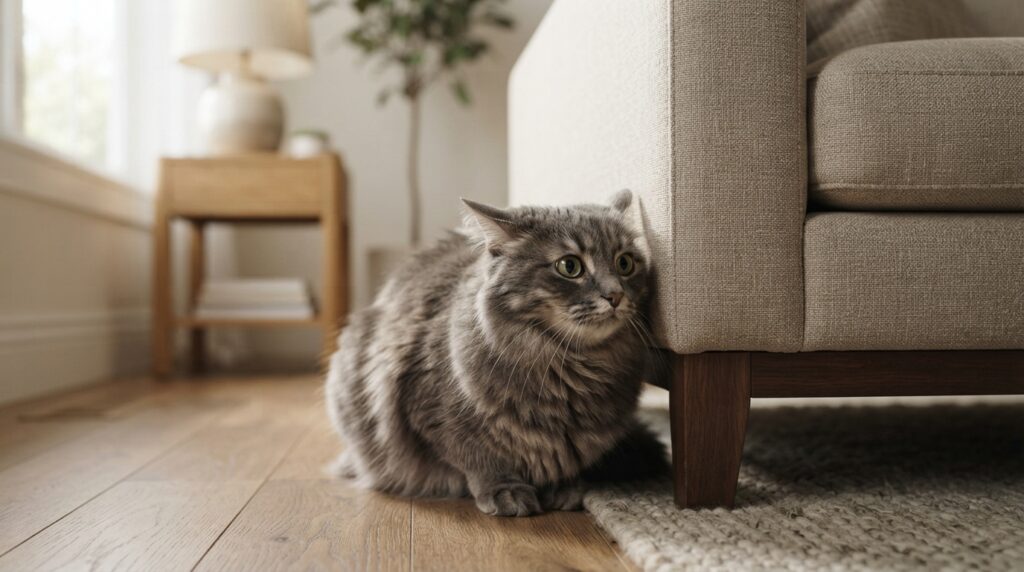
For example, you might buy a new sofa and expect your cat to investigate it immediately. Instead, your cat may disappear for several hours.
Why?
The new object has changed the environment your cat previously understood.
Try to think like your cat.
Imagine walking into your home and suddenly finding that several familiar objects have disappeared and strange new objects have appeared. You would probably investigate carefully too.
If you’ve recently changed your home, give your cat time to adjust.
Keep familiar bedding, toys, scratching posts, and feeding areas available whenever possible. Avoid making several major changes at once if you can.
3. Your Cat May Be Frightened
A frightened cat will often run directly toward the safest hiding location it can find.
A sudden noise can trigger this response.
Thunder, fireworks, vacuum cleaners, barking dogs, dropped objects, or unfamiliar voices can all frighten some cats.
You may notice your cat:
- Running away suddenly
- Flattening its ears
- Keeping its body low
- Widening its eyes
- Hiding for several hours
- Refusing to come out while the frightening sound continues
https://www.pinterest.com/petzuooIf you know what frightened your cat, remove the source if possible.
For example, if you’re vacuuming, give your cat access to a quiet room before starting. During fireworks or thunderstorms, close windows and curtains and provide a comfortable hiding area.
Don’t force your cat to face what scares it.
A safe hiding space can actually help your cat calm down.
4. A New Person or Pet Could Be Making Your Cat Nervous
Cats can take time to accept unfamiliar people and animals.
If someone new has moved into your home, or you’ve recently introduced another pet, your cat may suddenly spend more time hiding.
This doesn’t necessarily mean your cat will never accept the newcomer.
Cats generally benefit from slow introductions rather than being forced into close contact immediately.
If you’ve brought home another cat or dog, give your existing cat places where it can escape and relax without being followed.
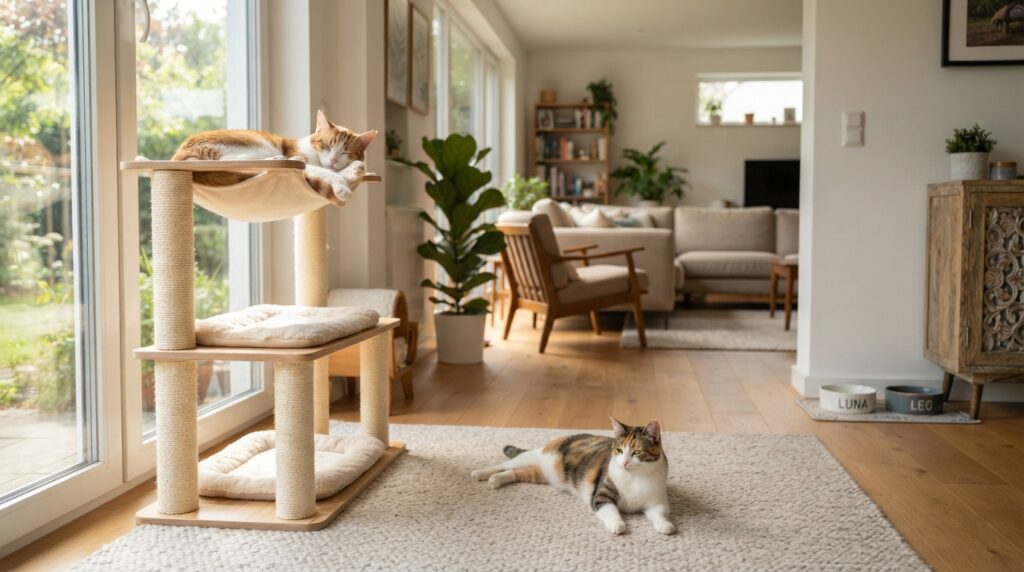
Vertical spaces can also be useful. Cat trees, shelves designed for cats, and other secure elevated areas can provide a sense of safety.
Most importantly, make sure your cat still has access to its essential resources, including food, water, litter boxes, resting areas, and scratching opportunities.
Don’t Force Your Cat Out of Hiding
This is one of the biggest mistakes owners can make.
When your cat hides, your first instinct may be to reach underneath the bed and pull it out.
Try not to do that unless there is an immediate safety reason.
Your cat may be hiding because it feels vulnerable. Removing its safe space can increase fear and make it less likely to trust the environm
5. Loud Noises Can Make Your Cat Hide
Cats have much more sensitive hearing than humans, so noises that seem ordinary to you can be overwhelming for your cat.
A vacuum cleaner, blender, home renovation, loud television, fireworks, thunder, or even children running around the house can cause a cat to retreat.
Sometimes the hiding continues even after the noise has stopped because your cat is still waiting to make sure the environment is safe.
Signs that noise may be the problem
If your cat hides shortly after a loud event, look for other fear-related behaviors such as:
- Ears held flat or sideways
- Crouching close to the floor
- Wide or alert eyes
- Rapid movement toward hiding places
- Refusing to leave its hiding spot
- Avoiding people
- Excessive vigilance
The best response is usually simple: reduce the noise and give your cat space.
Create a quiet room where your cat can retreat. Close windows and curtains if outside noise is contributing to the problem. You can also provide familiar bedding or a favorite toy so the area feels comfortable.
Never punish a cat for hiding because of fear. Your cat isn’t being stubborn or disobedient—it is trying to make itself feel safe.
6. Your Cat May Simply Want a Quiet Place
Not every hiding episode means something is wrong.
Cats sleep for many hours each day, and some cats genuinely prefer private sleeping locations.
You may find your cat hiding inside:
- A cardboard box
- A closet
- Under a bed
- Behind furniture
- Inside a cat tunnel
- Beneath a blanket
- In a quiet corner
If your cat comes out normally for meals, drinks water, uses the litter box, plays, grooms itself, and interacts with you normally, occasional hiding may simply be part of its personality.
Some cats are naturally social, while others are more independent.
Give your cat safe hiding options
Rather than trying to eliminate hiding completely, provide appropriate hiding places.
A covered cat bed, cardboard box, or cat tunnel can give your pet a comfortable retreat.
This is especially useful in busy households.
Your cat should have somewhere it can go when it wants peace without being chased by children, dogs, or other cats.
A hiding place should be safe, comfortable, and easy for you to access if necessary.
7. Your Cat May Be Sick or Experiencing Pain
This is one of the most important reasons to take sudden hiding seriously.
Cats are experts at concealing weakness. In nature, showing signs of illness or injury could make an animal more vulnerable, so cats may become quiet and hide when they don’t feel well.
That’s why a sudden behavioral change can sometimes be an early warning sign of illness.
If your cat suddenly begins hiding and you also notice other changes, don’t simply assume that it is being antisocial.
Watch for symptoms such as:
- Reduced appetite
- Refusing food
- Drinking much more or less than normal
- Vomiting
- Diarrhea
- Difficulty breathing
- Limping
- Trouble jumping
- Excessive vocalization
- Changes in grooming
- Unusual tiredness
- Changes in urination
- Straining in the litter box
- Weight loss
- A noticeably painful or uncomfortable posture
You don’t need to diagnose the problem yourself.
If your cat seems unwell, contact a veterinarian and describe the changes you’ve observed.
Pay particular attention to sudden changes
A cat that has always enjoyed sleeping under the bed is different from a cat that normally sleeps on the sofa but suddenly spends an entire day hidden.
The change from your cat’s normal behavior is often more informative than hiding itself.
If your cat is hiding and refusing food, having difficulty breathing, showing severe weakness, collapsing, repeatedly vomiting, or experiencing difficulty urinating, seek veterinary care promptly.
8. Changes in Routine Can Confuse Your Cat
Cats often thrive on predictable routines.
They may become accustomed to eating at a particular time, seeing family members leave and return from work, playing in the evening, and sleeping in familiar places.
When your schedule changes, your cat may become unsettled.
Perhaps you’ve started:
- Working different hours
- Coming home later
- Waking up earlier
- Traveling frequently
- Spending more time away
- Feeding at different times
- Changing your cat’s usual play schedule
Even though these changes may seem insignificant to you, your cat notices patterns.
How to make the transition easier
Try to keep important parts of your cat’s routine consistent.
Feed meals around the same times each day. Keep the litter box in a familiar location when possible. Continue regular play sessions and provide attention when your cat seeks it.
If your schedule has changed dramatically, don’t expect your cat to adapt instantly.
Give it time.
A predictable environment can help reduce uncertainty and encourage your cat to return to its normal behavior.
What If Your Cat Hides After You Move?
Moving is a major event for a cat.
A new house contains unfamiliar smells, sounds, rooms, people, and objects. Your cat has suddenly lost the familiar territory it understood.
It is therefore completely understandable if your cat hides after moving.
However, giving your cat access to the entire house immediately isn’t always the best approach.
Instead, consider starting with one quiet room.
Place essential resources in the room, such as:
- Food
- Fresh water
- Litter box
- Comfortable bedding
- Scratching post
- Familiar toys
- A safe hiding place
Allow your cat to become comfortable in this smaller space before gradually introducing additional areas.
Keep doors and windows secure, especially during the first days after a move. A frightened cat may attempt to escape from unfamiliar surroundings.
How Long Should You Let a Hiding Cat Stay Hidden?
There isn’t one exact amount of time that applies to every cat.
A confident cat may come out within minutes after a stressful event. A nervous cat may need considerably longer.
Instead of focusing only on the clock, look at your cat’s overall condition.
Ask yourself:
Is my cat eating?
Is my cat using the litter box normally?
Is my cat moving normally?
Does my cat respond to me?
Is my cat showing any signs of pain or illness?
If everything else appears normal and the hiding is connected to an obvious stressful event, giving your cat quiet time may be appropriate.
If the hiding is sudden, persistent, or accompanied by other concerning changes, veterinary advice is the safer choice.

A Simple Rule for Cat Owners
Think of hiding as information, not automatically as a problem.
Your cat may be saying:
“I need somewhere quiet.”
But sometimes the message may be:
“I don’t feel well.”
Your job isn’t to immediately decide which one it is. Your job is to observe the bigger picture.
Notice what changed, monitor your cat’s normal habits, reduce potential stressors, and seek professional advice when something doesn’t seem right.
9. Another Cat May Be Making Your Cat Feel Unsafe
If you have more than one cat, hiding can sometimes be connected to tension between them.
Cats are territorial animals, and they don’t always become best friends immediately. Even cats that previously lived peacefully together can develop conflict after changes in the household.
One cat may begin blocking another cat’s access to food, water, litter boxes, resting areas, or favorite rooms.
The conflict isn’t always obvious.
You might never see an actual fight. Instead, one cat may simply stare at another, chase it occasionally, guard a doorway, or prevent it from comfortably moving around the house.
The more timid cat may respond by spending more time hidden.
Signs of tension between cats
Look for:
- One cat constantly avoiding another
- Chasing or stalking
- Hissing or growling
- Blocking doorways
- Fighting around food
- One cat refusing to enter certain rooms
- Changes in litter box habits
- One cat spending unusually long periods hiding
If you notice this pattern, don’t force the cats to spend more time together.
Instead, make sure each cat has access to important resources.
A useful approach is to provide multiple feeding stations, water locations, resting areas, scratching posts, and litter boxes in different parts of the home.
This reduces competition and gives each cat options.
10. Your Cat May Not Feel Secure Enough
Cats feel safest when they have control over their surroundings.
If your cat cannot easily escape from noise, people, children, or other animals, it may spend more time hiding.
This is particularly important in busy homes.
Imagine a cat trying to sleep while people constantly walk past, a dog follows it, children try to pick it up, and household noises happen throughout the day.
The cat may eventually decide that the safest solution is to disappear.
Create a dedicated safe zone
Your cat doesn’t need an entire room filled with expensive equipment.
A simple quiet corner can work.
Consider providing:
- A comfortable cat bed
- A covered hiding box
- A scratching post
- Fresh water
- Familiar toys
- A raised resting location
- Easy access to the litter box
If possible, choose a location where your cat can observe the room without being directly in the middle of household activity.
Many cats enjoy elevated areas because they can watch what’s happening while remaining out of reach.
11. Your Cat Could Be Reacting to Territorial Changes
Cats use scent to understand their environment.
When something changes the smells around your home, your cat may become uncertain.
This can happen after:
- Deep cleaning
- New furniture
- Moving objects
- Bringing home another animal
- Having visitors
- Renovating a room
- Using strong cleaning products
Your cat may investigate the changes and then retreat.
This doesn’t necessarily mean you should stop cleaning or improving your home. Instead, give your cat familiar areas where its own scent remains.
Keep its bedding and favorite resting places available, and avoid making every room unfamiliar at the same time.
How to Help a Hiding Cat Feel Safe Again
Once you’ve considered why your cat may be hiding, the next step is creating an environment where it feels comfortable coming out.
1. Give your cat space
Don’t repeatedly reach into hiding places.
Allow your cat to decide when it is ready to come out.
2. Keep the household calm
Reduce unnecessary noise and avoid chasing or cornering your cat.
If children live in the home, teach them that a hiding cat should be left alone.
3. Maintain a predictable routine
Try to keep meals, playtime, and bedtime routines relatively consistent.
4. Provide safe hiding places
A cardboard box, covered cat bed, or quiet room can provide valuable security.
5. Use familiar items
Your cat’s favorite blanket or bed can make an unfamiliar area feel more comfortable.
6. Encourage—but don’t force—interaction
You can sit nearby and speak softly.
If your cat comes toward you, offer gentle attention if it wants it.
If it moves away, let it go.
7. Keep essential resources accessible
Your cat should be able to reach food, water, litter boxes, and resting areas without feeling threatened by another animal or household activity.
Should You Give Your Cat Treats When It Comes Out?
A small treat can sometimes help create a positive association with coming out of hiding.
For example, you might place a favorite treat a short distance from the hiding area.
Don’t reach into the hiding spot to feed your cat if doing so makes it uncomfortable.
Instead, gradually allow your cat to approach you.
You can also use play as a positive experience if your cat enjoys interactive toys.
The goal isn’t to bribe your cat into becoming social.
The goal is to help your cat learn:
“Coming out is safe.”

Avoid These Common Mistakes
When a cat hides, worried owners sometimes unintentionally increase its stress.
Don’t punish your cat
Never yell at your cat for hiding.
Fear isn’t bad behavior.
Don’t drag your cat out
Unless there’s an immediate safety concern, let your cat leave its hiding place voluntarily.
Don’t overcrowd the hiding area
If everyone in the household gathers around the cat, it may become even more frightened.
Don’t suddenly change everything
If your cat is already stressed, avoid adding unnecessary changes to its environment.
Don’t ignore other symptoms
Hiding combined with changes in appetite, litter box behavior, movement, breathing, or energy deserves attention.
When Should You Contact a Veterinarian?
Hiding by itself doesn’t always indicate illness. However, a sudden and significant change in behavior should not be ignored, especially when other symptoms appear.
Contact your veterinarian if your cat’s hiding is accompanied by noticeable changes such as:
- Not eating
- Repeated vomiting
- Diarrhea
- Difficulty breathing
- Severe lethargy
- Limping
- Signs of pain
- Significant weight loss
- Trouble urinating
- Straining in the litter box
- Major changes in drinking
- Unusual vocalization
- Sudden weakness
Some conditions can become serious quickly, so don’t rely on internet articles to diagnose your cat.
If you are worried that your cat is sick, a veterinarian can assess your pet and determine whether medical testing or treatment is needed.
The Most Important Thing to Remember
If you’re asking, “Why is my cat hiding?”, don’t focus on the hiding behavior alone.
Look for the reason behind it.
A cat hiding after fireworks may simply be frightened. A cat hiding after moving may need time to adjust. A cat hiding because another pet is blocking its access to resources may need changes to the home environment.
But a cat that suddenly hides while also refusing food, acting weak, showing pain, or developing other unusual symptoms may need veterinary attention.
Your cat can’t tell you what’s wrong with words.
Its behavior is one of the ways it communicates with you.
Learning to notice those changes can help you respond earlier and give your cat the safety and care it needs.
A Simple Step-by-Step Plan When Your Cat Suddenly Hides
Finding your cat under the bed for the first time can be worrying, but the best response is to stay calm and observe.
Use this simple plan.
Step 1: Think About What Changed
Ask yourself what happened shortly before your cat started hiding.
Did you:
- Move furniture?
- Have visitors?
- Bring home another pet?
- Change your schedule?
- Start construction?
- Use a loud appliance?
- Move to a new home?
- Notice unusual behavior from another cat?
Finding a possible trigger can make the situation much easier to understand.
Step 2: Check Your Cat’s Basic Habits
Pay attention to whether your cat is:
- Eating normally
- Drinking normally
- Using the litter box
- Walking normally
- Grooming normally
- Responding to you
- Showing interest in its surroundings
These everyday behaviors can provide useful clues about how your cat is doing.
Step 3: Give Your Cat a Safe Space
Don’t turn the hiding place into a stressful environment.
Keep noise low and allow your cat to retreat.
If the current hiding spot is unsafe—for example, inside a dangerous appliance area—carefully encourage your cat toward a safer location rather than allowing access to a hazardous space.
Step 4: Return to a Familiar Routine
Keep meals, play sessions, and other regular activities as predictable as possible.
Cats often feel more secure when they know what to expect.
Step 5: Let Your Cat Approach You
Sit nearby without forcing interaction.
You can speak softly or place a favorite toy or small treat nearby.
If your cat comes out, allow it to decide how much interaction it wants.

How to Make Your Home More Cat-Friendly
Sometimes the best long-term solution isn’t stopping your cat from hiding.
It’s giving your cat better places to hide.
A cat-friendly home can include several safe retreats.
Covered Hiding Areas
A covered bed or simple cardboard box can give your cat a private space.
Elevated Resting Areas
Many cats enjoy watching their surroundings from above.
A secure cat tree or elevated resting platform can provide both comfort and mental stimulation.
Quiet Sleeping Locations
Place a comfortable bed somewhere away from heavy foot traffic.
Your cat should be able to rest without being repeatedly disturbed.
Multiple Resources for Multi-Cat Homes
If you have multiple cats, spreading resources throughout the home can reduce competition.
Don’t make one location the only place where cats can access everything they need.
How to Tell the Difference Between Normal and Concerning Hiding
One of the easiest ways to understand your cat’s behavior is to compare it with its normal personality.
Normal hiding may look like:
Your cat sleeps in a box during the afternoon but comes out for meals, plays normally, uses the litter box, and interacts with the family.
This may simply be normal feline behavior.
Concerning hiding may look like:
Your normally social cat suddenly disappears, stops eating, avoids interaction, seems unusually tired, or develops other changes in behavior.
That situation deserves more attention.
The key isn’t simply “My cat is hiding.”
The key is:
“My cat is behaving differently from normal.”

Frequently Asked Questions
Why is my cat suddenly hiding under the bed?
Your cat may be hiding under the bed because it feels stressed, frightened, or simply wants a quiet place to rest. Sudden hiding can also occur when the household environment changes. If hiding is accompanied by changes in appetite, energy, litter box habits, movement, or other signs of illness, contact a veterinarian.
Why is my cat hiding and not coming out?
A frightened or stressed cat may remain hidden until it feels safe. Give it a quiet environment and avoid pulling it from its hiding place. Check whether it is eating, drinking, and using the litter box normally.
Should I force my cat out of hiding?
Usually, no. Forcing a frightened cat out can increase stress. Unless your cat is hiding somewhere dangerous or there is an immediate safety concern, allow it to come out voluntarily.
How long can a cat hide because of stress?
There is no universal time limit. Some cats recover quickly while others need longer to adjust. The important thing is to monitor your cat’s overall behavior and health rather than focusing only on the amount of time spent hiding.
Is hiding a sign that my cat is sick?
It can be. Cats may hide when they are experiencing pain or illness. Hiding becomes more concerning when it occurs with symptoms such as poor appetite, vomiting, weakness, breathing difficulties, mobility problems, or changes in urination.
Why does my cat hide when visitors come?
Strangers can make some cats feel threatened or uncertain. Your cat may prefer to observe visitors from a safe location. Give it access to a quiet retreat and never force it to interact with guests.
Why is my cat hiding after moving house?
A new home has unfamiliar smells, sounds, people, and surroundings. Your cat may need time to adjust. Starting with one quiet room containing familiar belongings can help make the transition easier.
Why is my cat hiding from me all of a sudden?
A sudden change in your cat’s relationship with you can have several causes, including fear, stress, changes in the home, or illness. Think about recent changes and watch for other unusual symptoms.
When Hiding Becomes an Emergency
Some situations require more immediate attention.
If your cat is hiding and you notice difficulty breathing, collapse, severe weakness, serious injury, inability to urinate, or another obvious emergency, seek urgent veterinary care.
Don’t wait for your cat to “get over it” when serious symptoms are present.
Cats can hide illness extremely well, which is why significant changes in behavior deserve careful attention.
Final Thoughts: Listen to What Your Cat Is Telling You
So, why is your cat hiding?
The answer could be surprisingly simple.
Your cat may be looking for peace after a noisy day. It may be nervous about a new person or pet. It may be adjusting to a new home or routine. It may simply love sleeping in a quiet, covered space.
But sudden or unusual hiding can sometimes be your cat’s way of showing that something isn’t right.
Instead of immediately pulling your cat out, take a step back.
Observe.
Look at the environment. Think about recent changes. Check eating, drinking, litter box use, movement, grooming, and energy levels. Give your cat a safe place to retreat and allow it to approach you when it feels comfortable.
Most importantly, don’t ignore a major change in behavior—especially when other concerning symptoms appear.
Your cat may not be able to tell you exactly what it needs, but with careful observation, patience, and responsible care, you can learn to understand what its behavior is communicating.
A hiding cat isn’t always a sick cat—but a suddenly hiding cat is always worth paying attention to.