Why Is Dog Scratching So Much?10 Critical Warning Sign ,Why Is My Dog Scratching So Much? 10 Common Causes and What to Do. Watching your dog scratch again and again can be frustrating—and worrying. A few scratches throughout the day are completely normal, but if your dog is constantly scratching, biting at his skin, licking his paws, rubbing his face, or waking up at night because of itching, something may be irritating his skin.
Dog itching can have many different causes. Fleas are an obvious possibility, but they are not the only reason a dog may scratch. Allergies, dry skin, parasites, infections, hot spots, environmental irritants, and other skin conditions can all cause persistent itching.
Sometimes the cause is easy to identify. Other times, your dog may be scratching even though you cannot see anything unusual on his skin.
The important thing is to look at the whole picture.
Where is your dog scratching? When did it start? Does he have redness, hair loss, bumps, odor, or scabs? Is he also licking his paws or shaking his ears?
These details can help you and your veterinarian understand what may be happening.
In this guide, we’ll explore the most common reasons dogs scratch excessively, what you can safely do at home, what you should avoid, and when professional veterinary care is needed.
Is It Normal for Dogs to Scratch?
Yes.
Dogs scratch themselves for many of the same reasons people do. A small itch from dust, a loose hair, dry skin, or a temporary irritation can cause an occasional scratch.
Occasional scratching is generally not a concern when your dog otherwise appears comfortable and healthy.
The problem is persistent or excessive scratching.
If your dog scratches repeatedly throughout the day, constantly licks his skin, chews his paws, rubs against furniture, or damages his skin from scratching, there may be an underlying cause that needs attention.
Excessive scratching can also create a cycle.
Your dog feels itchy, so he scratches.
Scratching damages the skin.
Damaged skin becomes irritated.
Irritation can make the itching worse.
Your dog scratches even more.
This is why identifying the underlying cause is important instead of focusing only on stopping the scratching.

10 Common Reasons Your Dog May Be Scratching So Much
1. Fleas
Fleas are one of the first things dog owners should consider when a dog suddenly becomes very itchy.
You may not always see fleas crawling through your dog’s fur. Some dogs are highly sensitive to flea saliva, so even a small number of bites can trigger significant itching.
A dog with fleas may scratch around the:
- Base of the tail
- Lower back
- Belly
- Inner thighs
- Neck
- Ears
You may also notice tiny dark particles in the coat that resemble dirt.
Regular flea prevention is important, particularly for dogs that spend time outdoors or live with other animals.
If you suspect fleas, talk with your veterinarian about an appropriate flea-control program for your dog and household.
2. Flea Allergy Dermatitis
Some dogs don’t simply react to fleas—they develop an allergic reaction to flea saliva.
This condition is known as flea allergy dermatitis.
A highly sensitive dog can become intensely itchy after being bitten.
Signs may include:
- Severe scratching
- Biting at the skin
- Hair loss
- Redness
- Small scabs
- Irritated skin around the tail and hindquarters
The absence of visible fleas does not automatically rule out flea allergy.
A dog may scratch intensely even when you cannot find a live flea.
This is one reason consistent parasite prevention is so important.
3. Environmental Allergies
Dogs can also react to substances in their environment.
Potential environmental allergens include pollen, dust, mold, and other particles.
Some dogs experience seasonal itching, while others may have symptoms throughout the year.
Environmental allergies can cause itching around the:
- Paws
- Face
- Ears
- Belly
- Armpits
- Groin
You may notice your dog licking his paws, rubbing his face, or scratching his body in addition to the usual scratching behavior.
If your dog’s itching seems to appear at particular times of the year, discuss the pattern with your veterinarian.
Keeping a simple record of when the itching occurs can sometimes provide useful information.

4. Food-Related Allergies or Sensitivities
Food can also be associated with skin problems in some dogs.
Food-related reactions may cause itching, particularly around the paws, ears, face, and body.
Some dogs may also experience gastrointestinal symptoms.
However, it is important not to assume that every itchy dog has a food allergy.
Food allergies are less common than many owners believe, and diagnosing them properly usually requires a structured dietary trial under veterinary guidance.
Simply changing your dog’s food every few days can make it difficult to determine what is actually causing the problem.
If you suspect food is contributing to your dog’s itching, talk with your veterinarian before making major dietary changes.
5. Dry Skin
Dry skin can make a dog itchy.
Environmental conditions can contribute to dry skin, including very dry indoor air, frequent bathing, or the use of inappropriate grooming products.
You may notice:
- Flaking
- Mild dandruff
- Scratching
- Dry-looking skin
- Increased licking
However, don’t automatically assume that visible flakes mean your dog simply needs a moisturizer.
Skin flaking can occur for many reasons.
If dryness is persistent or accompanied by redness, hair loss, odor, sores, or significant itching, a veterinarian should evaluate the problem.
Why Is My Dog Scratching So Much?
we covered some of the most common causes of excessive scratching in dogs, including fleas, flea allergy dermatitis, environmental allergies, food-related reactions, and dry skin.
But there are several other possibilities.
If your dog continues scratching despite regular flea prevention, it is important not to assume that there is no problem simply because you cannot see fleas. Skin parasites, infections, injuries, and environmental irritation can all produce similar symptoms.
Let’s continue with the remaining common causes.
6. Other Parasites
Fleas are not the only parasites that can make a dog itchy.
Other parasites can affect the skin and cause significant irritation.
Depending on the parasite involved, your dog may develop:
- Intense itching
- Red skin
- Crusts
- Scabs
- Hair loss
- Skin irritation
- Restlessness
Some parasitic skin conditions can spread between animals, and certain mites can also cause severe itching.
Because different parasites require different treatments, it is not a good idea to randomly apply several parasite products without veterinary guidance.
If your dog’s itching is severe, suddenly appears, or is accompanied by hair loss and crusting, schedule a veterinary examination.
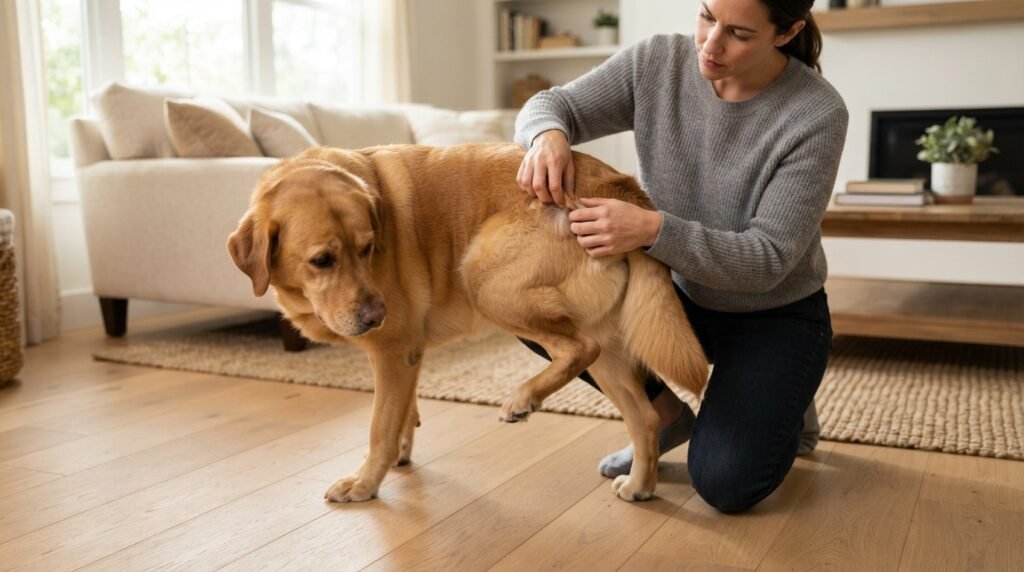
Why You May Not See the Parasites
Many owners expect to see a parasite if it is responsible for their dog’s itching.
Unfortunately, that isn’t always the case.
Some parasites are extremely small and may be difficult to identify without a veterinary examination.
Your veterinarian may examine your dog’s skin and coat and may perform diagnostic tests to determine what is causing the irritation.
This is especially important when your dog has severe itching but no obvious fleas.
7. Bacterial or Yeast-Related Skin Infections
Dogs can develop skin infections that cause itching, redness, odor, and discomfort.
These infections may occur on their own or develop after another problem damages the skin.
For example, allergies can make a dog scratch repeatedly.
The scratching damages the skin barrier.
That damaged skin can become vulnerable to secondary infection.
You may notice:
- Red or inflamed skin
- Unusual odor
- Greasy skin
- Crusts
- Scabs
- Hair loss
- Increased licking
- Persistent scratching
Some infections can become quite uncomfortable.
If your dog’s skin smells unusual or appears increasingly irritated, contact your veterinarian.
Treatment depends on the underlying cause and may require specific medication.
8. Hot Spots
A hot spot is an area of irritated, inflamed skin that can develop quickly.
Dogs may lick, chew, or scratch a particular area repeatedly, causing the skin to become raw and irritated.
Hot spots can sometimes grow surprisingly quickly.
They commonly appear on areas such as the:
- Head
- Neck
- Hips
- Legs
A hot spot may look red, moist, swollen, or painful.
If you notice your dog repeatedly attacking one specific area, check the skin carefully.
Don’t allow him to keep scratching or chewing the area because continued trauma can make the irritation worse.
A veterinarian can determine what triggered the hot spot and recommend appropriate treatment.
9. Contact Irritation
Sometimes something your dog comes into contact with can irritate his skin.
Possible triggers include:
- Certain grooming products
- Cleaning chemicals
- Plants
- Grass
- Fabrics
- Household substances
If the itching began after a new shampoo, detergent, carpet treatment, or outdoor activity, consider whether there is a connection.
However, timing alone doesn’t prove that a specific substance caused the problem.
If the irritation continues, your veterinarian can help determine the most likely cause.

Pay Attention to Where Your Dog Scratches
Location can provide useful clues.
If your dog constantly licks his paws, allergies or irritation may be contributing.
If he scratches around the tail base, fleas are one possibility.
If he repeatedly scratches his ears, an ear problem or allergy may be involved.
If he scratches his belly after lying outdoors, contact irritation could be one possibility.
These patterns are not diagnoses, but they can help you describe your dog’s symptoms to your veterinarian.
10. Underlying Health Problems
Persistent itching isn’t always caused by something obvious on the surface.
Certain underlying health conditions can contribute to skin changes, hair loss, or itching.
If your dog’s itching is chronic, severe, or accompanied by other changes in health, a veterinary examination is important.
Pay attention to additional signs such as:
- Changes in appetite
- Weight changes
- Increased thirst
- Changes in energy
- Repeated skin infections
- Significant hair loss
- Changes in coat quality
- Persistent digestive problems
Your veterinarian can decide whether additional testing is appropriate.
Why Is My Dog Scratching but Has No Fleas?
This is one of the most common questions dog owners ask.
The answer is simple:
Fleas are only one possible cause of itching.
Your dog could be experiencing allergies, dry skin, mites, infection, contact irritation, or another skin problem.
Also, not seeing fleas doesn’t necessarily prove that your dog doesn’t have them.
Fleas can be difficult to spot, especially when a dog has thick or dark fur.
If your dog is scratching excessively despite appropriate flea prevention, speak with your veterinarian about other possible causes.
Why Does My Dog Scratch More at Night?
Some owners notice that their dogs seem itchier at night.
There can be several explanations.
At night, there may be fewer distractions, so you may simply notice the scratching more.
Your dog may also be reacting to something in his sleeping environment.
For example, bedding, laundry products, dust, or other environmental factors could potentially contribute to irritation.
However, severe nighttime scratching can also occur with allergies, parasites, infections, or other skin conditions.
If your dog regularly wakes up because he is scratching, don’t dismiss it as a habit.
Persistent itching can significantly affect your dog’s comfort and sleep.
Can Bathing Help an Itchy Dog?
A bath can sometimes remove dirt, pollen, or other irritants from the coat.
However, bathing isn’t automatically the solution for every itchy dog.
Using the wrong shampoo or bathing too frequently can irritate the skin.
If your veterinarian recommends bathing as part of your dog’s skin-care routine, follow the recommended product and schedule.
Never assume that human shampoo is appropriate for your dog.
Dogs have different skin needs, and products designed for people may not be suitable for them.
Should You Give Your Dog an Anti-Itch Medication?
Don’t give your dog human medication simply because you use it for your own allergies or itching.
Some human medications can be unsafe for dogs, and the appropriate treatment depends on the underlying cause.
For example, itching caused by fleas requires a different approach from itching caused by an infection or another condition.
Always speak with your veterinarian before giving your dog medication.
Safe Things You Can Do at Home
While you’re arranging veterinary care or monitoring mild symptoms, there are several sensible steps you can take.
Check the Skin
Look carefully through your dog’s coat.
Check for:
- Fleas
- Flea dirt
- Redness
- Scabs
- Bumps
- Hair loss
- Moist patches
- Wounds
Don’t aggressively scratch or scrub irritated skin.
Keep Bedding Clean
Wash your dog’s bedding regularly according to the manufacturer’s instructions.
If your dog has suspected parasites or allergies, ask your veterinarian whether additional environmental cleaning is appropriate.
Avoid New Products
If your dog has suddenly become itchy, avoid introducing multiple new grooming or household products at the same time.
Otherwise, it can become difficult to determine what may be contributing to the irritation.
Prevent Excessive Scratching
If your dog is damaging his skin through constant scratching or chewing, speak with your veterinarian about safe ways to prevent further self-trauma.
A protective collar may sometimes be recommended, depending on the situation.
What You Should NOT Do
When your dog is itchy, it can be tempting to try every home remedy you find online.
That can create additional problems.
Avoid:
- Essential oils applied directly to the skin
- Human anti-itch creams without veterinary advice
- Random antibiotics
- Leftover prescription medication
- Strong household chemicals
- Frequent harsh bathing
- Scrubbing irritated skin
- Randomly combining flea products
Natural doesn’t automatically mean safe for dogs.
If your dog has persistent itching, finding the cause is more useful than repeatedly masking the symptom.
When Should You Take Your Dog to the Vet?
A dog that scratches once in a while usually doesn’t need an urgent veterinary visit.
However, persistent scratching deserves attention.
Schedule a veterinary appointment if your dog:
- Scratches repeatedly every day
- Has significant hair loss
- Develops red or inflamed skin
- Has scabs or crusts
- Has a strong skin odor
- Constantly licks his paws
- Chews his skin
- Develops recurring hot spots
- Has repeated ear problems
- Doesn’t sleep comfortably because of itching
Seek prompt veterinary care if your dog has severe skin damage, significant swelling, bleeding, widespread sores, extreme discomfort, or appears unwell.
What Your Veterinarian May Do
Your veterinarian will start by examining your dog’s skin and asking questions about the itching.
You may be asked:
- When did the itching begin?
- Is it seasonal?
- Where does your dog scratch most?
- Does your dog lick his paws?
- What flea prevention do you use?
- Has your dog recently changed food?
- Have you introduced a new shampoo?
- Does your dog have recurring ear problems?
- Are other pets itchy?
Depending on the symptoms, your veterinarian may recommend additional diagnostic tests.
The goal is to identify the underlying cause rather than simply guessing.

Final Thoughts
Constant scratching is not something dog owners should automatically ignore.
Fleas are a common possibility, but dogs can itch for many other reasons, including allergies, parasites, dry skin, infections, hot spots, and contact irritation.
The location, frequency, and severity of the itching can provide useful clues.
If your dog is scratching occasionally and otherwise appears healthy, simple observation may be enough.
But if the scratching is frequent, damaging the skin, affecting sleep, or accompanied by redness, hair loss, odor, sores, or other symptoms, talk with your veterinarian.
The most effective way to help an itchy dog is to discover why the dog is itching in the first place.
Why Is My Dog Scratching So Much?
If your dog is scratching more than usual, the most helpful approach is to look for patterns, protect the skin from further damage, and determine the underlying cause.
In the previous sections, we covered fleas, allergies, parasites, infections, hot spots, contact irritation, dry skin, and other possible reasons for excessive itching.
Now let’s focus on prevention, everyday skin care, common mistakes, and frequently asked questions.
How to Prevent Excessive Itching in Dogs
You cannot prevent every skin problem, but consistent everyday care can reduce some common triggers.
1. Keep Flea Prevention Consistent
Flea prevention is one of the most important parts of routine dog care.
Even dogs that spend most of their time indoors can encounter fleas.
Ask your veterinarian which flea and parasite prevention product is appropriate for your dog’s age, weight, lifestyle, and health.
Follow the recommended schedule rather than waiting until you see fleas.
If your dog has a history of flea allergy dermatitis, consistent prevention becomes particularly important.
2. Check Your Dog’s Skin Regularly
You don’t need a complicated routine.
Spend a few minutes each week looking through your dog’s coat.
Run your hands gently over the body and look for unusual changes.
Pay particular attention to:
- Redness
- Bumps
- Scabs
- Hair loss
- Moist areas
- Unusual odor
- Fleas or flea dirt
- Scratches
- Areas your dog repeatedly licks
Early detection can help you notice a problem before your dog creates significant skin damage through scratching.
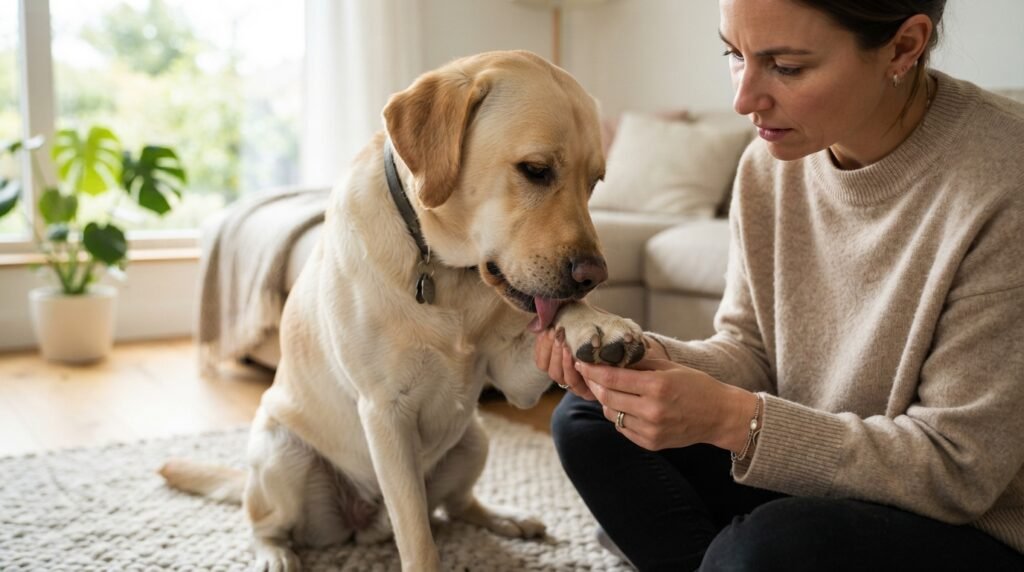
3. Pay Attention to Your Dog’s Paws
The paws can provide important clues.
Some dogs with allergies repeatedly lick or chew their paws.
Check between the toes and around the paw pads for redness, swelling, cuts, or trapped debris.
After outdoor walks, especially during seasons when pollen or other environmental irritants are common, gently cleaning the paws can help remove surface debris.
However, if your dog persistently licks his paws, don’t assume it is simply a grooming habit.
Persistent licking deserves investigation.

4. Choose Grooming Products Carefully
A dog’s skin can react to inappropriate grooming products.
Use products specifically designed for dogs and follow the instructions carefully.
Avoid repeatedly changing shampoos because you may make it harder to determine what is irritating your dog’s skin.
If your veterinarian recommends a medicated shampoo, use it according to the prescribed instructions.
Don’t assume that stronger or more frequent washing will produce better results.
5. Don’t Over-Bathe Your Dog
Bathing can be useful, but excessive bathing may irritate some dogs’ skin.
The ideal bathing frequency depends on factors such as your dog’s coat, lifestyle, skin condition, and veterinarian’s recommendations.
A dog that frequently swims or gets dirty outdoors may have different grooming needs from a dog that spends most of the day indoors.
If your dog develops persistent dryness or itching after bathing, discuss the routine with your veterinarian.
6. Keep Bedding Clean
Your dog spends many hours sleeping.
Regularly wash bedding and blankets according to their care instructions.
This can help keep the sleeping area clean and reduce accumulated dirt, hair, and other debris.
If your dog has diagnosed allergies or parasites, ask your veterinarian whether additional cleaning measures are necessary.
7. Keep Your Home Comfortable
Environmental factors can sometimes contribute to skin irritation.
Dust, cleaning products, fragrances, and other substances may bother sensitive dogs.
Avoid using strong chemicals around areas where your dog sleeps or spends significant amounts of time.
If you introduce a new household product and your dog’s itching suddenly changes, make a note of it.
This information can be useful when discussing the problem with your veterinarian.
8. Maintain a Healthy Diet
Nutrition plays an important role in overall health, including skin and coat condition.
Feed your dog a complete and balanced diet appropriate for his life stage.
Don’t add multiple supplements simply because your dog’s coat looks dry or he is itchy.
Some supplements may not be appropriate for every dog, and excessive supplementation can create problems.
If you suspect a food-related issue, talk with your veterinarian about an appropriate dietary approach.
Create a Simple Dog Skin-Check Routine
A quick weekly check can help you notice changes early.
Step 1: Look at the face
Check around the eyes, muzzle, and ears for redness, swelling, or unusual discharge.
Step 2: Check the ears
Look at the visible outer ear for redness, odor, swelling, or discharge.
Step 3: Run your hands through the coat
Feel for unusual bumps, scabs, or areas of tenderness.
Step 4: Check the belly
Look for redness, irritation, or small bumps.
Step 5: Examine the paws
Check between the toes and around the pads.
Step 6: Check the tail area
Look around the base of the tail, especially if your dog has been scratching there.
Step 7: Observe behavior
Notice whether your dog is licking, biting, scratching, or rubbing one particular area.
This simple routine takes only a few minutes but can help you recognize changes.
Common Mistakes Dog Owners Make When Their Dog Is Itchy
Mistake 1: Assuming Every Itchy Dog Has Fleas
Fleas are common, but they aren’t the only cause.
Allergies, parasites, infections, dry skin, and other conditions can cause similar symptoms.
Mistake 2: Trying Too Many Home Remedies
When a dog is uncomfortable, owners naturally want quick relief.
But applying multiple products at once can irritate the skin further and make it difficult to determine what caused a reaction.
Mistake 3: Using Human Medication
Never assume that a medication safe for humans is automatically safe for dogs.
Some medications can be dangerous for pets.
Always ask your veterinarian before giving your dog medication.
Mistake 4: Waiting Too Long
A small itchy area can become a much larger skin problem if a dog continually scratches, licks, and chews it.
If the condition is worsening, seek veterinary advice.
Mistake 5: Treating Only the Symptom
Stopping the scratching temporarily doesn’t necessarily solve the underlying problem.
If allergies, parasites, or an infection are responsible, the underlying condition needs to be addressed.
Frequently Asked Questions
Why is my dog scratching so much but has no fleas?
Fleas are only one possible cause of itching.
Your dog could have allergies, dry skin, parasites, a skin infection, contact irritation, or another condition.
Also, fleas can be difficult to spot, so their absence from a quick visual check doesn’t necessarily rule them out.
If your dog continues scratching, talk with your veterinarian.
Why is my dog scratching at night?
Nighttime scratching may be more noticeable because there are fewer distractions.
However, dogs can also experience itching from allergies, parasites, infections, or environmental factors around their sleeping area.
If your dog regularly wakes up because of itching, veterinary advice is appropriate.
Can I give my dog an antihistamine for itching?
Don’t give your dog human medication without first speaking with your veterinarian.
The correct medication and dosage depend on your dog’s individual circumstances, and some products contain additional ingredients that may be unsafe for dogs.
Can dry skin make a dog itchy?
Yes, dry or irritated skin can contribute to itching.
However, persistent itching should not automatically be blamed on dry skin, particularly when there are other signs such as redness, hair loss, sores, odor, or repeated infections.
How can I tell if my dog has allergies?
Possible signs include recurring itching, paw licking, skin irritation, ear problems, and seasonal changes in symptoms.
These signs can have other causes too, so a veterinarian may need to investigate before determining whether allergies are responsible.
Should I change my dog’s food if he is itchy?
Don’t repeatedly change foods without a plan.
Food allergies are only one possible cause of itching, and diagnosing them properly generally requires a structured approach.
Speak with your veterinarian before starting a special diet.
Can bathing stop my dog’s itching?
A bath may remove dirt or environmental material from the coat and can sometimes provide temporary relief.
But bathing does not treat every cause of itching.
The wrong product or overly frequent bathing may irritate the skin.
Why does my dog keep licking his paws?
Paw licking can have several causes, including allergies, irritation, injury, infection, or other discomfort.
If your dog constantly licks or chews his paws, inspect them and discuss persistent symptoms with your veterinarian.
When is dog itching an emergency?
Severe itching alone is not always an emergency, but urgent veterinary attention is appropriate when your dog has significant skin damage, bleeding, severe swelling, widespread sores, extreme pain, breathing difficulties, facial swelling, or appears seriously unwell.
A Simple Rule for Dog Owners
When it comes to your dog’s skin, remember three things:
Notice the change.
If your dog suddenly becomes much itchier than normal, pay attention.
Look for additional symptoms.
Redness, hair loss, odor, sores, swelling, discharge, and behavioral changes can provide important clues.
Don’t guess when the problem persists.
If the itching continues or worsens, ask your veterinarian for help identifying the cause.
Final Thoughts
A little scratching is normal for dogs.
Constant scratching is different.
If your dog repeatedly scratches, licks, bites, or rubs his skin, there is a reason behind the behavior—even if you cannot immediately see it.
Fleas are an important possibility, but allergies, parasites, infections, hot spots, dry skin, contact irritation, and other conditions can also cause itching.
The best solution isn’t simply to stop the scratching.
It’s to understand why your dog is scratching.
Regular flea prevention, sensible grooming, clean bedding, routine skin checks, and appropriate veterinary care can all contribute to healthier skin.
Most importantly, don’t ignore persistent symptoms. When your dog is uncomfortable, early attention can help prevent a minor irritation from becoming a much bigger problem.
Your dog can’t tell you, “My skin is itchy.”
But his behavior can.
If the scratching is becoming frequent, damaging the skin, disturbing sleep, or accompanied by other warning signs, take it seriously and speak with your veterinarian.
PetZuoo Tip: Healthy skin starts with observation. A few minutes of regular checking can help you notice changes early and keep your dog more comfortable, happy, and active.

hammadniazi6663@gmail.com
Contributor at PetZuoo, publishing practical information for pet owners and animal lovers.
Related guides

Why Do Dog Tilt Their Heads? 9 Fascinating Reason
Why Do Dog Tilt Their Heads? 9 Fascinating Reason Behind This Adorable Behavior. Have you ever spoken to your dog and watched…
Why Does Dog Suddenly Follow Me Everywhere? 9 Reasons
Why Does Dog Suddenly Follow Me Everywhere? 9 Reasons and Have you noticed that your dog suddenly seems to be your shadow?…
Ultimate Guide to Dog Separation Anxiety
Ultimate Guide to Dog Separation Anxiety. Proven Ways to Help Your Dog Feel Safe Alone, and Leaving your dog at home for…