The Ultimate Guide to Cat Scratching Posts: Benefits, Types, and How to Choose the Best One
Introduction to Ultimate Guide to Cat Scratching,If you’re a cat owner, you’ve probably discovered claw marks on your couch, carpets, curtains, or even wooden furniture. While this behavior can be frustrating, scratching is one of the most natural and essential activities for cats. It isn’t a sign that your cat is being naughty or trying to destroy your home—it’s simply part of being a healthy cat.
A quality cat scratching post gives your feline a safe, appropriate place to satisfy this instinct while protecting your furniture. Whether you have a playful kitten or a senior indoor cat, the right scratching post can improve your pet’s physical health, reduce stress, and enrich their daily life.
Today’s market offers countless scratching solutions, including tall sisal posts, cardboard scratchers, wall-mounted panels, scratching trees, and multi-level cat furniture. Choosing the best option depends on your cat’s size, age, personality, and scratching preferences.
In this complete guide, you’ll learn:
- Why cats scratch
- The benefits of scratching posts
- Different types available
- How to choose the perfect scratching post
- Where to place it
- Tips to encourage your cat to use it
- Common mistakes to avoid
- When it’s time to replace a scratching post
By the end of this guide, you’ll have everything you need to keep your cat happy while protecting your home.
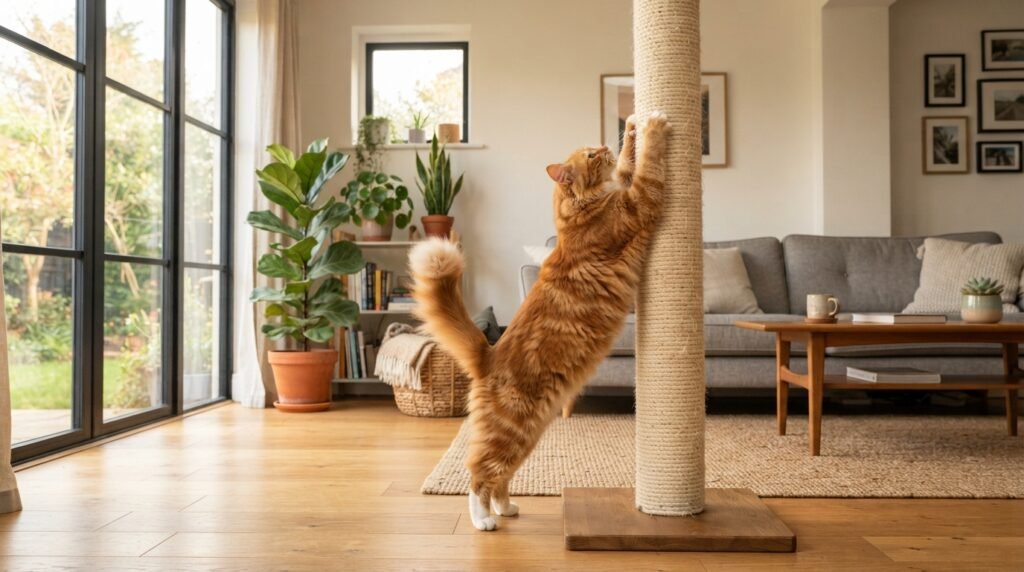
Why Do Cats Scratch?
Many people mistakenly believe cats scratch furniture because they’re angry or misbehaving. In reality, scratching is an instinctive behavior that serves several important purposes.
Understanding why your cat scratches is the first step toward encouraging healthy habits.
1. Scratching Keeps Claws Healthy
Cats naturally shed the outer layer of their claws as new growth develops underneath.
Scratching helps remove these old, worn layers, keeping the claws sharp, clean, and healthy. Without regular scratching, claws may become overgrown or uncomfortable.
A sturdy scratching post provides the resistance cats need to maintain their claws naturally.
2. Stretching the Entire Body
When a cat scratches vertically, they’re doing much more than sharpening their claws.
The movement stretches their:
- Shoulders
- Chest
- Spine
- Legs
- Back muscles
- Paws
Think of it as a full-body workout that helps maintain flexibility and muscle tone.
Indoor cats especially benefit from these daily stretching sessions because they may not get as much exercise as outdoor cats.
3. Marking Territory
Cats have scent glands located between their paw pads.
Every time they scratch a surface, they leave behind both visible claw marks and invisible scent signals.
These scent markers communicate information to other cats, such as:
- This area belongs to me.
- I feel comfortable here.
- This is part of my territory.
Even if you only have one cat, this behavior is completely normal and helps your cat feel secure in their environment.
4. Relieving Stress and Anxiety
Scratching also provides emotional benefits.
Cats often scratch when they feel:
- Excited
- Nervous
- Anxious
- Playful
- Energized
The physical action releases built-up energy and helps reduce stress.
This is one reason many cats scratch immediately after waking up or when their owners return home.
5. Communicating with Other Cats
In homes with multiple cats, scratching serves as a form of communication.
Visible claw marks and scent signals help establish boundaries and reduce conflicts between cats.
Providing multiple scratching posts throughout the home can help each cat feel like they have their own space, leading to a more peaceful household.
6. A Natural Hunting Instinct
Wild cats scratch trees to prepare for climbing, hunting, and defending themselves.
Although indoor cats don’t need to hunt for food, they still retain these instincts.
Scratching allows them to practice the movements their ancestors relied on for survival.
This instinct explains why even well-fed indoor cats continue scratching every day.
7. It’s Simply Enjoyable
Many cats scratch because it feels good.
The resistance of sisal rope, natural wood, or corrugated cardboard provides satisfying feedback for their paws and claws.
After finding a material they enjoy, many cats return to it several times throughout the day.
For this reason, it’s worth experimenting with different scratching surfaces to discover your cat’s favorite.
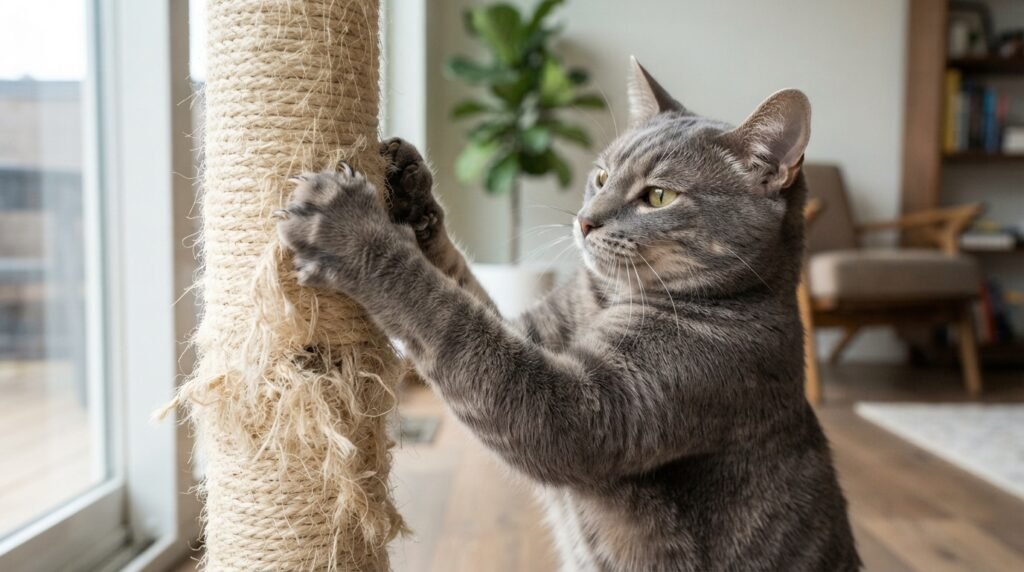
Why You Should Never Punish Scratching
Since scratching is a natural behavior, punishing your cat for scratching can create fear and confusion without solving the problem.
Instead of trying to stop scratching altogether, redirect your cat toward an appropriate scratching post by:
- Placing scratching posts near favorite resting spots
- Rewarding your cat with treats after using the post
- Using catnip to make the post more appealing
- Playing near the scratching post with interactive toys
Positive reinforcement is far more effective than punishment and helps build a stronger bond with your cat.
The Top Benefits of a Cat Scratching Post
A cat scratching post is much more than a piece of pet furniture. It supports your cat’s physical health, mental well-being, and natural instincts while helping you protect your home from unwanted scratching damage.
Here are the biggest benefits of providing a quality scratching post for your feline friend.
1. Protects Your Furniture
One of the most obvious benefits is reducing damage to your furniture.
Without an appropriate scratching surface, many cats will choose:
- Sofas
- Chairs
- Carpets
- Curtains
- Wooden tables
- Door frames
- Mattresses
Cats don’t scratch these items because they dislike them—they simply need a place to satisfy their natural instinct.
By placing sturdy scratching posts near the areas your cat already scratches, you can redirect this behavior and save your furniture from unnecessary wear and tear.
2. Supports Healthy Claws
Cats continuously grow new claw layers throughout their lives.
Regular scratching helps:
- Remove old claw sheaths
- Keep claws sharp
- Prevent overgrown nails
- Reduce discomfort
- Maintain proper claw condition
Healthy claws are essential for climbing, balance, stretching, and everyday movement.
3. Provides Daily Exercise
Indoor cats often spend much of their day sleeping, making regular movement especially important.
Using a scratching post encourages cats to:
- Stretch their bodies
- Strengthen muscles
- Stay active
- Improve flexibility
- Burn excess energy
Even a few scratching sessions each day contribute to better overall fitness.
4. Reduces Stress and Anxiety
Scratching is a natural stress-relief activity.
Cats often scratch after:
- Waking up
- Meeting visitors
- Hearing unfamiliar sounds
- Playing
- Experiencing excitement
The repetitive motion helps release built-up tension and promotes relaxation.
For nervous or shy cats, multiple scratching posts placed around the home can create a greater sense of security.
5. Encourages Natural Behavior
Cats are happiest when they can express their instincts.
A scratching post allows them to:
- Mark territory
- Stretch fully
- Maintain claws
- Explore different textures
- Build confidence
Providing opportunities for natural behaviors helps prevent boredom and frustration.
6. Improves Mental Stimulation
A scratching post can become part of your cat’s daily enrichment routine.
Many modern designs include features such as:
- Hanging toys
- Climbing platforms
- Hideaways
- Perches
- Interactive elements
These additions encourage exploration and help keep indoor cats mentally engaged.
7. Helps Multi-Cat Households
In homes with more than one cat, scratching posts can reduce competition and territorial disputes.
Each cat can establish its own preferred scratching area, which may help lower stress levels and encourage peaceful coexistence.
A good rule of thumb is to provide at least one scratching post per cat, plus one extra if possible.
8. Promotes Better Indoor Living
Indoor cats rely on their environment to meet their physical and emotional needs.
A scratching post adds valuable enrichment by giving your cat a dedicated place to:
- Stretch
- Scratch
- Play
- Relax
- Feel secure
Combined with climbing trees, window perches, and interactive toys, scratching posts help create a more stimulating indoor environment.
9. Saves Money Over Time
Replacing damaged furniture can be expensive.
Investing in a durable scratching post is often far more affordable than repairing or replacing:
- Upholstered sofas
- Carpets
- Wooden furniture
- Curtains
- Decorative items
Quality scratching posts are designed to withstand regular use and can last for years with proper care.
10. Strengthens the Bond Between You and Your Cat
When your cat has appropriate outlets for natural behaviors, daily life becomes more enjoyable for both of you.
Instead of constantly discouraging unwanted scratching, you can reward positive behavior with treats, praise, or playtime. This positive reinforcement builds trust and creates a happier relationship between you and your feline companion.
Key Takeaways
A quality scratching post offers benefits that go far beyond protecting your furniture. It helps maintain healthy claws, supports physical exercise, reduces stress, encourages natural behaviors, and enriches your cat’s indoor lifestyle.
Choosing the right scratching post and placing it in the right location can make a significant difference in your cat’s overall well-being.
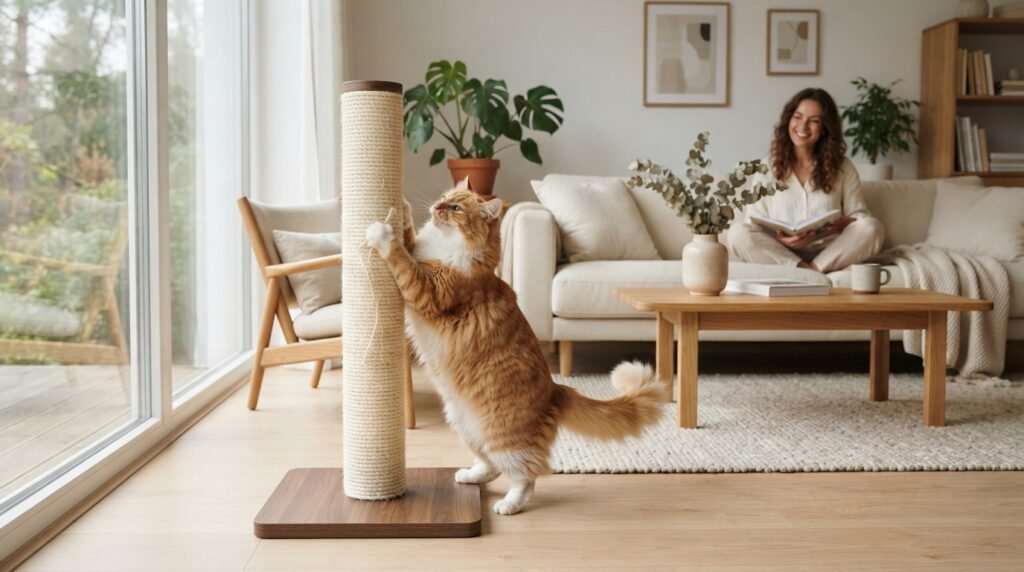
Different Types of Cat Scratching Posts
Choosing the right scratching post is just as important as providing one. Cats have individual preferences based on their age, size, personality, and scratching habits. Some love to stretch upward on tall vertical posts, while others prefer scratching flat surfaces on the floor.
Understanding the different types of scratching posts will help you find the perfect match for your feline friend.
1. Vertical Scratching Posts
Vertical scratching posts are the most popular choice among cat owners. They allow cats to stretch their bodies fully while scratching, closely mimicking how wild cats scratch tree trunks.
Best For:
- Adult cats
- Large breeds
- Cats that scratch furniture or walls
- Cats that enjoy full-body stretching
Benefits
- Encourages natural stretching
- Promotes healthy claw maintenance
- Takes up little floor space
- Available in many sizes and materials
Tip: Choose a post that is taller than your cat when standing on its hind legs. This allows for a complete stretch during scratching.
2. Horizontal Scratching Pads
Some cats naturally prefer scratching flat surfaces rather than standing upright. Horizontal scratchers are placed directly on the floor and are often made from corrugated cardboard.
Best For:
- Kittens
- Senior cats
- Cats that scratch carpets or rugs
Benefits
- Easy to access
- Lightweight and portable
- Affordable
- Great for cats with limited mobility
These scratchers can also double as comfortable lounging spots for many cats.
3. Inclined Scratching Boards
Inclined scratchers combine the benefits of both vertical and horizontal designs by offering a slanted scratching surface.
Best For:
- Cats that enjoy variety
- Small living spaces
- Cats transitioning from carpet scratching
Benefits
- Comfortable scratching angle
- Encourages natural movement
- Often made with durable cardboard or sisal
- Suitable for cats of all ages
4. Sisal Rope Scratching Posts
Sisal rope is one of the most durable and cat-friendly scratching materials available. It provides excellent resistance, allowing cats to dig in their claws comfortably.
Benefits
- Extremely durable
- Excellent grip for claws
- Long-lasting
- Preferred by many cats
If you’re buying your first scratching post, a sisal-wrapped model is often the safest choice.
5. Cardboard Scratchers
Corrugated cardboard scratchers are inexpensive, lightweight, and highly attractive to many cats.
Pros
- Budget-friendly
- Replaceable
- Lightweight
- Cats often love the texture
Cons
- Wear out faster
- Create cardboard debris around the house
- Less durable than sisal
Despite these drawbacks, cardboard scratchers remain one of the most popular options for indoor cats.
6. Carpet Scratching Posts
Some scratching posts are covered with carpet material.
Advantages
- Soft texture
- Familiar surface for some cats
- Comfortable for kittens
Disadvantages
- May encourage carpet scratching elsewhere in the home
- Less durable than sisal
- Can snag claws if worn
Many behavior experts recommend sisal instead of carpet to avoid confusing your cat about which carpeted surfaces are appropriate to scratch.
7. Wooden Scratching Posts
Natural wood scratching posts closely resemble tree bark, making them appealing to cats that enjoy a more natural texture.
Benefits
- Attractive appearance
- Durable construction
- Natural scratching feel
- Minimal maintenance
Wooden posts fit well in homes with modern or rustic décor while providing an excellent scratching surface.
8. Wall-Mounted Scratchers
Wall-mounted scratching panels are attached to walls, furniture, or corners to save floor space.
Best For:
- Apartments
- Small homes
- Active climbers
- Multi-cat households
Benefits
- Space-saving
- Stable and secure
- Easy to position where your cat already scratches
They are especially useful for redirecting cats away from scratching walls or furniture corners.
9. Cat Trees with Built-In Scratching Posts
Many cat trees include one or more scratching posts wrapped in sisal rope.
Benefits
- Combines climbing, scratching, and resting
- Excellent for active indoor cats
- Encourages exercise
- Saves space by offering multiple functions
These are a great choice if you’re looking for an all-in-one enrichment solution.
10. Corner Scratchers
Corner scratchers are designed to fit around the edges of walls or furniture, protecting high-traffic scratching areas.
Advantages
- Protects furniture corners
- Easy to install
- Great for habitual corner scratchers
- Compact design
They are especially helpful if your cat consistently scratches the same corners of your sofa or walls.
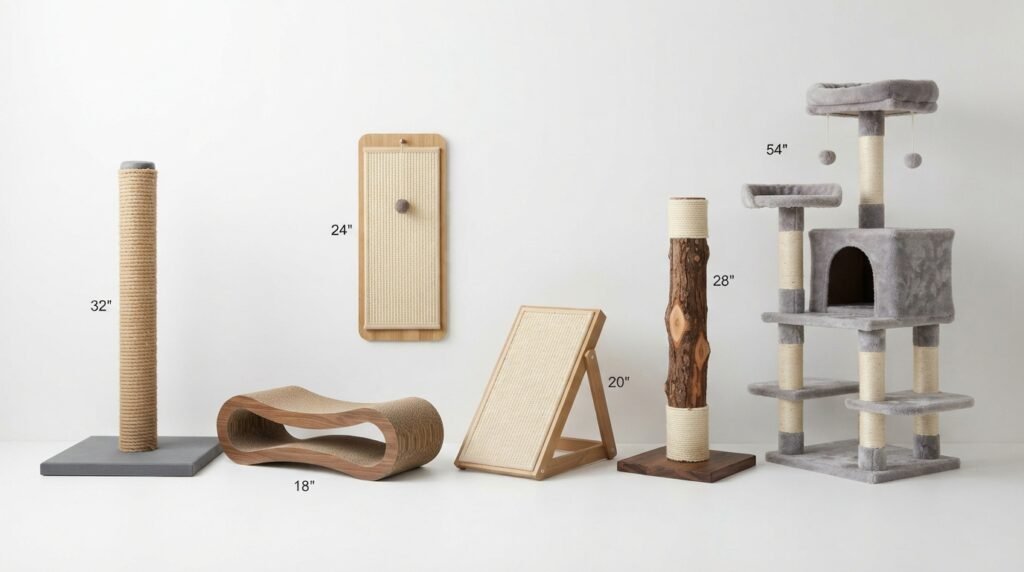
Which Type Is Best for Your Cat?
There is no single “best” scratching post for every cat. The ideal choice depends on your cat’s individual preferences and habits.
Here are some general recommendations:
- Large cats: Tall, sturdy sisal posts
- Kittens: Small cardboard or low vertical posts
- Senior cats: Horizontal or inclined scratchers
- Active climbers: Cat trees with built-in scratching posts
- Small apartments: Wall-mounted or corner scratchers
- Multi-cat homes: Multiple scratching surfaces in different styles
Many cats enjoy having more than one type of scratching surface, so offering a variety can help keep them engaged and satisfied.
Key Takeaways
With so many scratching post options available, it’s important to consider your cat’s natural behavior and preferences. A combination of vertical, horizontal, and textured scratching surfaces often provides the best experience and helps prevent unwanted scratching around the home.
How to Choose the Best Cat Scratching Post, Placement Tips, and Common Mistakes
Selecting the right scratching post can make the difference between a cat that happily uses it every day and one that continues scratching your furniture. By considering your cat’s size, preferences, and habits, you can choose a scratching post they’ll actually enjoy.
How to Choose the Best Cat Scratching Post
1. Choose the Right Height
Height is one of the most important factors.
Most cats love stretching their entire body while scratching. A post that’s too short won’t allow for a full stretch, making it less appealing.
General Guidelines
- Kittens: At least 18–24 inches (45–60 cm)
- Adult cats: At least 30–36 inches (75–90 cm)
- Large breeds: 36 inches (90 cm) or taller
The taller the post, the more natural the scratching experience.
2. Make Sure It’s Stable
Cats dislike wobbly scratching posts.
If a post tips over while your cat is using it, they may avoid it completely.
Look for:
- Heavy base
- Strong construction
- Non-slip bottom
- Solid materials
A stable scratching post builds your cat’s confidence and encourages regular use.
3. Pick the Right Material
Cats have different texture preferences.
Sisal Rope
✔ Extremely durable
✔ Excellent claw resistance
✔ Most recommended
Corrugated Cardboard
✔ Budget-friendly
✔ Great for many indoor cats
✔ Easy to replace
Natural Wood
✔ Long-lasting
✔ Mimics tree bark
Offering more than one texture can help you discover your cat’s favorite.
4. Consider Your Cat’s Personality
Every cat is unique.
Active Cats
Choose:
- Tall scratching posts
- Cat trees
- Multi-level furniture
Senior Cats
Choose:
- Horizontal scratchers
- Inclined boards
- Easy-to-reach designs
Large Cats
Choose:
- Thick posts
- Wide bases
- Heavy-duty construction
5. Think About Your Available Space
You don’t need a huge house to provide a great scratching experience.
Small Apartments
- Wall-mounted scratchers
- Corner scratchers
- Slim vertical posts
Larger Homes
Place scratching posts in several rooms so your cat always has a nearby option.
Where Should You Place a Scratching Post?
Location is just as important as the scratching post itself.
Even the best scratching post may be ignored if it’s placed in the wrong spot.
Near Sleeping Areas
Cats often scratch immediately after waking up.
Placing a scratching post close to your cat’s favorite sleeping spot encourages this natural behavior.
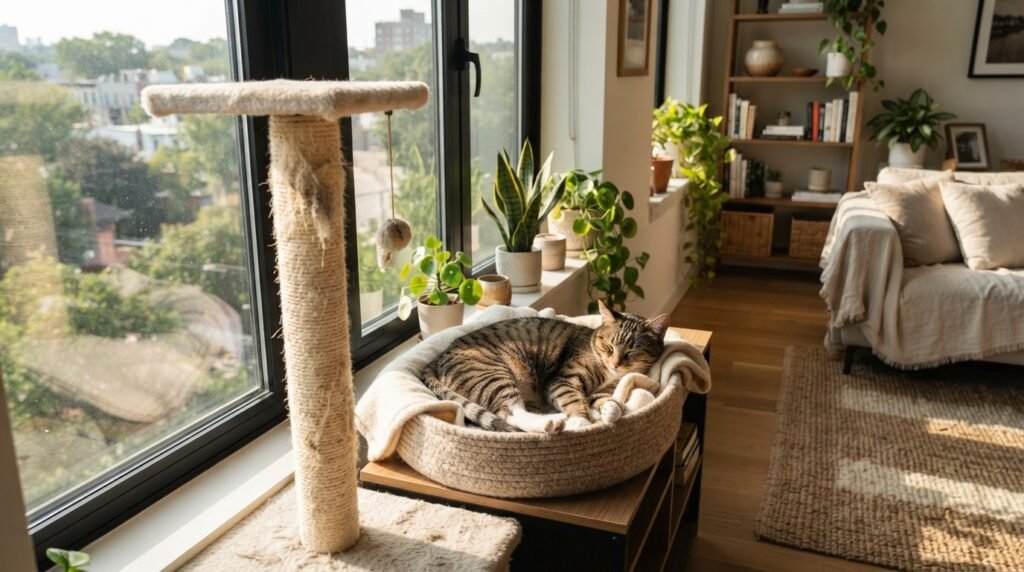
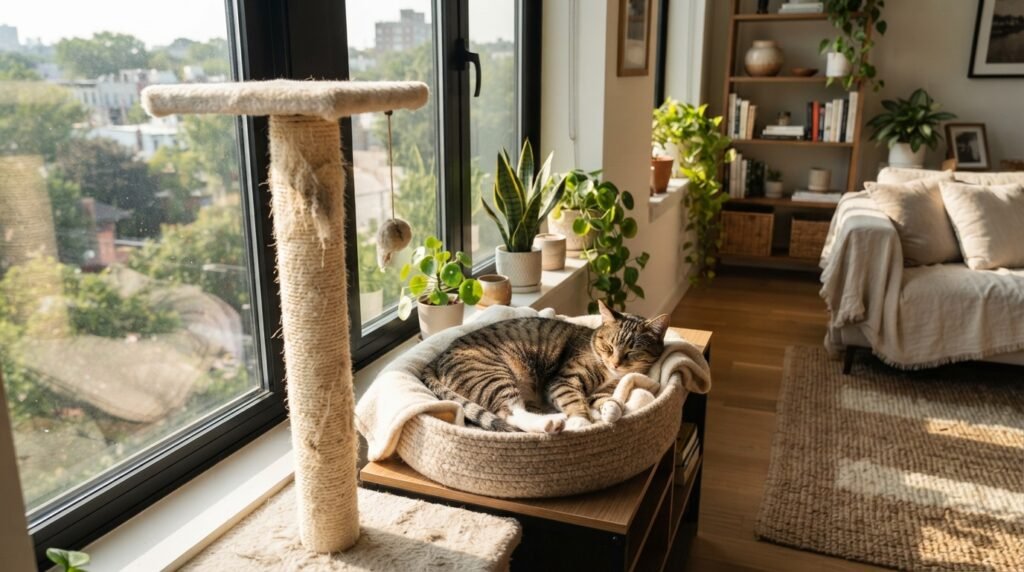
Near Favorite Windows
Many indoor cats spend hours watching birds, squirrels, or people through windows.
A scratching post nearby gives them a place to stretch before or after enjoying the view.
Next to Furniture They Already Scratch
If your cat scratches your couch, don’t move the scratching post to another room.
Instead, place it directly beside the furniture.
Once your cat consistently uses the post, you can gradually move it to a more convenient location if needed.
In High-Traffic Areas
Cats enjoy being where the family spends time.
Living rooms, hallways, and family rooms are often better locations than quiet, isolated corners.
Provide Multiple Scratching Stations
If you have a larger home or multiple cats, placing scratching posts in different areas ensures easy access throughout the day.
How to Encourage Your Cat to Use a Scratching Post
Some cats use a new scratching post immediately, while others need a little encouragement.
Here are proven methods to help.
Use Catnip
Sprinkling dried catnip or using a catnip spray can make the scratching post more attractive to many cats.
Reward Good Behavior
Whenever your cat uses the scratching post:
- Offer a treat
- Give gentle praise
- Pet them if they enjoy affection
Positive reinforcement helps build the habit.
Play Around the Post
Use feather wands or string toys near the scratching post.
Cats often scratch after play sessions, making this a great opportunity to introduce the new surface.
Be Patient
Some cats need several days—or even weeks—to accept a new scratching post.
Avoid forcing your cat. Instead, let curiosity and positive experiences encourage them naturally.
Common Mistakes to Avoid
Buying a Post That’s Too Short
Cats want room to stretch. A taller post is almost always a better investment.
Choosing an Unstable Design
If the post shakes or falls over, many cats will refuse to use it.
Hiding the Scratching Post
Don’t place it in an unused room or tucked away in a corner.
Keep it where your cat spends time.
Expecting One Post for Multiple Cats
In multi-cat households, competition can discourage use.
Provide several scratching options in different locations.
Punishing Scratching Behavior
Never yell at or punish your cat for scratching.
Instead, calmly redirect them to the scratching post and reward them when they use it correctly.
When Should You Replace a Scratching Post?
Even high-quality scratching posts wear out over time.
Signs it’s time for a replacement include:
- Loose or frayed sisal rope
- Wobbly or unstable base
- Torn cardboard surfaces
- Broken wooden parts
- Exposed nails or screws
- Reduced interest because the surface is completely worn
Replacing a worn scratching post keeps your cat safe and encourages continued use.
Conclusion
A well-chosen scratching post is one of the best investments you can make for your cat’s health and happiness. It satisfies natural instincts, keeps claws healthy, provides daily exercise, and helps protect your furniture from damage.
By selecting a sturdy post, placing it in the right location, and using positive reinforcement, you can create healthy scratching habits that last a lifetime.
Whether you choose a tall sisal post, a cardboard scratcher, a wall-mounted panel, or a full cat tree, the most important thing is finding a solution that matches your cat’s unique preferences. A happy cat with the right scratching outlet is more confident, active, and comfortable in its home.

hammadniazi6663@gmail.com
Contributor at PetZuoo, publishing practical information for pet owners and animal lovers.
Related guides

Why Do Dog Tilt Their Heads? 9 Fascinating Reason
Why Do Dog Tilt Their Heads? 9 Fascinating Reason Behind This Adorable Behavior. Have you ever spoken to your dog and watched…
Cat Chattering at Birds: 7 Amazing Reasons Explained
Cat Chattering at Birds: 7 Amazing Reasons Explained. Have you ever noticed your cat sitting beside a window, watching birds outside, and…
Why Do Cats Chirp at Birds? 7 Fascinating Reasons
Why Do Cats Chirp at Birds? 7 Fascinating Reasons Behind This Cute Cat Behavior, Have you ever watched your cat sitting beside…