Can dogs eat watermelon safely? Learn the benefits, risks, serving sizes, seeds, rind dangers, and veterinarian-approved feeding tips. Watermelon is one of the most refreshing fruits of summer, and if you’ve ever enjoyed a juicy slice while your dog watched with hopeful eyes, you’ve probably wondered: Can dogs eat watermelon?
Watermelon is one of the most refreshing fruits of summer, and if you’ve ever enjoyed a juicy slice while your dog watched with hopeful eyes, you’ve probably wondered: Can dogs eat watermelon?
The good news is yes—dogs can safely eat watermelon when it’s prepared correctly. This naturally sweet fruit is low in calories, packed with water, and contains several vitamins that can support your dog’s overall health. Because it’s over 90% water, watermelon can also be an excellent cooling snack during hot weather.
However, not every part of a watermelon is safe. The rind can be difficult to digest, and the seeds may cause digestive problems or even intestinal blockages in some dogs. Feeding too much watermelon at once can also lead to an upset stomach due to its natural sugar and fiber content.
In this complete guide, you’ll learn:
- Whether watermelon is safe for dogs
- Health benefits of watermelon
- Which parts dogs should never eat
- Safe serving sizes for every dog size
- How to prepare watermelon correctly
- Homemade frozen watermelon dog treats
- Answers to the most common questions dog owners ask
By the end of this guide, you’ll know exactly how to share watermelon with your furry friend safely and confidently.

Is Watermelon Safe for Dogs?
Yes, plain, ripe watermelon is generally safe for most healthy dogs when served in moderation.
Veterinarians often recommend watermelon as an occasional treat because it contains:
- More than 90% water for hydration
- Vitamin A for healthy vision and skin
- Vitamin C to support the immune system
- Vitamin B6 for brain and nerve function
- Potassium to help muscles and nerves work properly
- Natural fiber that supports healthy digestion
Unlike many processed dog treats, fresh watermelon contains no artificial flavors, preservatives, or unhealthy fats. This makes it a healthier option for rewarding your dog, especially during warm weather.
Why Dogs Love Watermelon
Many dogs enjoy watermelon because it is:
- Naturally sweet
- Soft and easy to chew
- Cool and refreshing
- Juicy and hydrating
For dogs that don’t drink enough water during the summer, small pieces of watermelon can help increase fluid intake alongside their regular drinking water.
Watermelon Should Be a Treat, Not a Meal
Even though watermelon is nutritious, it should only make up a small portion of your dog’s diet. Experts recommend that treats—including fruits—should account for no more than 10% of a dog’s daily calorie intake, while the remaining 90% should come from a complete and balanced dog food.
Too much watermelon can cause:
- Loose stools
- Diarrhea
- Gas
- Stomach discomfort
- Excess sugar intake
Offering a few bite-sized pieces once or twice a week is enough for most dogs to enjoy the benefits without overdoing it.
Dogs That Should Avoid Watermelon
Although watermelon is safe for most dogs, some may need to avoid it or eat only very small amounts. Speak with your veterinarian before offering watermelon if your dog:
- Has diabetes or needs a low-sugar diet
- Has chronic digestive issues
- Has food allergies or sensitivities
- Is recovering from stomach illness
- Is on a prescription veterinary diet

Health Benefits of Watermelon for Dogs
Watermelon is much more than a refreshing summer snack. When served correctly and in moderation, it provides several nutrients that can support your dog’s overall health. While it should never replace a balanced dog diet, it can be a healthy occasional treat that offers hydration and essential vitamins.
Let’s take a closer look at why watermelon can be a nutritious addition to your dog’s treat rotation.
1. Excellent Source of Hydration
One of watermelon’s biggest advantages is its exceptionally high water content. The fruit is made up of more than 90% water, making it one of the most hydrating fruits available.
During hot summer months, dogs can become dehydrated more quickly, especially after outdoor walks, playtime, or exercise. Offering a few chilled watermelon cubes can help your dog stay refreshed while still encouraging them to drink fresh water.
Hydration supports many important body functions, including:
- Regulating body temperature
- Supporting kidney function
- Maintaining healthy digestion
- Lubricating joints
- Transporting nutrients throughout the body
Although watermelon helps increase water intake, it should never replace access to clean drinking water.
2. Rich in Vitamin A
Watermelon contains Vitamin A, an essential nutrient that contributes to several aspects of your dog’s health.
Vitamin A supports:
- Healthy eyesight
- Proper immune function
- Healthy skin
- A shiny coat
- Normal cell growth
Dogs that receive adequate Vitamin A through a balanced diet generally maintain healthier skin and stronger immune defenses. Watermelon provides a small natural boost alongside their regular food.
3. Provides Vitamin C
Unlike humans, dogs naturally produce Vitamin C in their bodies. However, small amounts from fresh fruits like watermelon can still provide antioxidant support.
Vitamin C may help:
- Protect cells from oxidative stress
- Support healthy immune function
- Promote tissue repair
- Assist collagen production
- Reduce inflammation caused by normal daily activity
Although watermelon shouldn’t be relied on as a Vitamin C supplement, it contributes to an overall nutrient-rich diet.
4. Contains Vitamin B6
Vitamin B6 plays an important role in keeping your dog’s body functioning properly.
This vitamin helps support:
- Brain development
- Nervous system function
- Protein metabolism
- Hormone regulation
- Red blood cell production
Healthy nerve and brain function are especially important for active dogs and growing puppies.
5. Good Source of Potassium
Potassium is an essential mineral that helps many organs work efficiently.
It supports:
- Healthy muscles
- Proper nerve signaling
- Heart function
- Fluid balance
- Healthy metabolism
Potassium works together with other minerals to help maintain normal muscle contractions and overall body function.

6. Contains Dietary Fiber
Watermelon provides a small amount of natural fiber.
Fiber helps support healthy digestion by:
- Promoting regular bowel movements
- Supporting beneficial gut bacteria
- Helping food move through the digestive tract
- Improving stool consistency
However, too much fiber can have the opposite effect. Feeding excessive amounts of watermelon may lead to loose stools or diarrhea, which is why moderation is important.
7. Packed with Antioxidants
Watermelon contains several antioxidants that help protect the body’s cells from damage caused by free radicals.
Antioxidants may contribute to:
- Healthy aging
- Strong immune defenses
- Reduced cellular damage
- Better overall wellness
A diet containing a variety of antioxidant-rich foods may support your dog’s long-term health when combined with balanced nutrition.
8. Natural Source of Lycopene
Watermelon gets its vibrant red color from lycopene, a powerful antioxidant also found in tomatoes.
Lycopene has been studied for its potential role in supporting:
- Cellular health
- Healthy aging
- Immune function
- Protection against oxidative stress
While more research is needed to fully understand its effects in dogs, lycopene is considered a beneficial plant compound and adds to watermelon’s nutritional value.
Nutritional Summary
Watermelon is a healthy occasional treat because it is:
- Low in calories
- Fat-free
- Cholesterol-free
- Highly hydrating
- Rich in vitamins and antioxidants
- Naturally sweet without added sugar

Can Puppies Eat Watermelon?
Yes, puppies can eat watermelon, but only in small amounts and after it has been prepared safely. While watermelon is not toxic to puppies, their digestive systems are more sensitive than those of adult dogs, so introducing any new food should be done carefully.
Fresh, ripe watermelon can be a refreshing treat on warm days, but it should never replace a complete and balanced puppy food. Puppies need nutrient-dense meals to support their rapid growth, and treats—including fruit—should only make up a small portion of their daily diet.
How to Feed Watermelon to a Puppy
Before offering watermelon to your puppy:
- Remove all seeds.
- Cut away the entire rind.
- Slice the flesh into tiny, bite-sized pieces.
- Introduce only one or two small pieces the first time.
- Watch for any signs of digestive upset over the next 24 hours.
If your puppy tolerates watermelon well, you can occasionally offer a few small pieces as a reward or cooling snack.
Benefits for Puppies
When fed in moderation, watermelon may provide:
- Extra hydration during hot weather
- Small amounts of vitamins A, C, and B6
- Potassium for normal muscle function
- A low-calorie alternative to processed treats
Because puppies have small stomachs, even healthy treats should be offered sparingly.
Can Dogs Eat Watermelon Seeds?
It’s best to remove all watermelon seeds before feeding the fruit to your dog.
While swallowing one or two small white seeds is unlikely to cause a problem for most healthy dogs, black mature seeds can present a risk—especially for puppies and small breeds.
Why Are Seeds a Concern?
Watermelon seeds are difficult to digest and may cause:
- Stomach discomfort
- Vomiting
- Constipation
- Intestinal blockage (in rare cases)
A blockage is more likely if a dog eats a large number of seeds at once or if the dog is very small.
Signs of a Possible Intestinal Blockage
Contact your veterinarian promptly if your dog develops any of the following after eating watermelon seeds:
- Repeated vomiting
- Loss of appetite
- Lethargy
- Abdominal pain
- Constipation
- Difficulty passing stool
- Swollen abdomen
An intestinal blockage is a medical emergency and should not be ignored.
Are White Seeds Safe?
The small white seeds found in some watermelons are immature and softer than black seeds. While they are generally less concerning, it’s still safest to remove them whenever possible to reduce the chance of digestive issues.
Seedless Watermelon Is the Best Choice
For the safest experience:
- Choose seedless watermelon whenever available.
- Check each slice for any remaining seeds.
- Remove all visible seeds before serving.
This simple step greatly reduces the risk of choking or digestive complications.
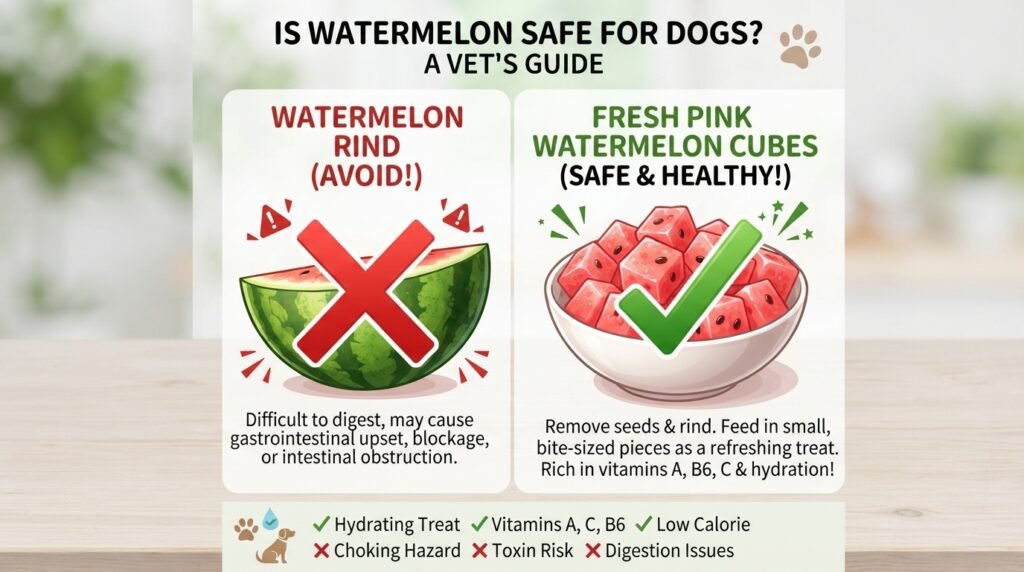
Can Dogs Eat Watermelon Rind?
No. Dogs should not eat watermelon rind.
Although the rind is not considered toxic, it is tough, fibrous, and difficult for dogs to digest. Eating the rind can lead to digestive problems and may even cause an intestinal obstruction in some cases.
Risks of Feeding Watermelon Rind
The rind may cause:
- Choking
- Vomiting
- Diarrhea
- Constipation
- Stomach pain
- Intestinal blockage
Large pieces are especially dangerous for small dogs and puppies because they can become lodged in the digestive tract.
What If My Dog Ate Watermelon Rind?
If your dog eats a small piece of rind, monitor them closely for the next 24–48 hours. Many dogs will pass a small amount without complications.
However, contact your veterinarian immediately if you notice:
- Repeated vomiting
- Refusing food
- Lethargy
- Signs of abdominal pain
- Straining to defecate
- Bloated abdomen
If your dog swallowed a large piece of rind or is showing any of these symptoms, seek veterinary care as soon as possible.
The Safest Way to Prepare Watermelon
Before serving watermelon to your dog:
- Wash the outside of the fruit.
- Cut away the green rind and the white layer beneath it.
- Remove every visible seed.
- Slice the pink flesh into bite-sized cubes.
- Serve plain, without sugar, salt, or seasonings.
Prepared this way, watermelon is a safe and enjoyable treat for most healthy dogs.
Day 7 — Part 4: How Much Watermelon Can Dogs Eat?
How Much Watermelon Can Dogs Eat?
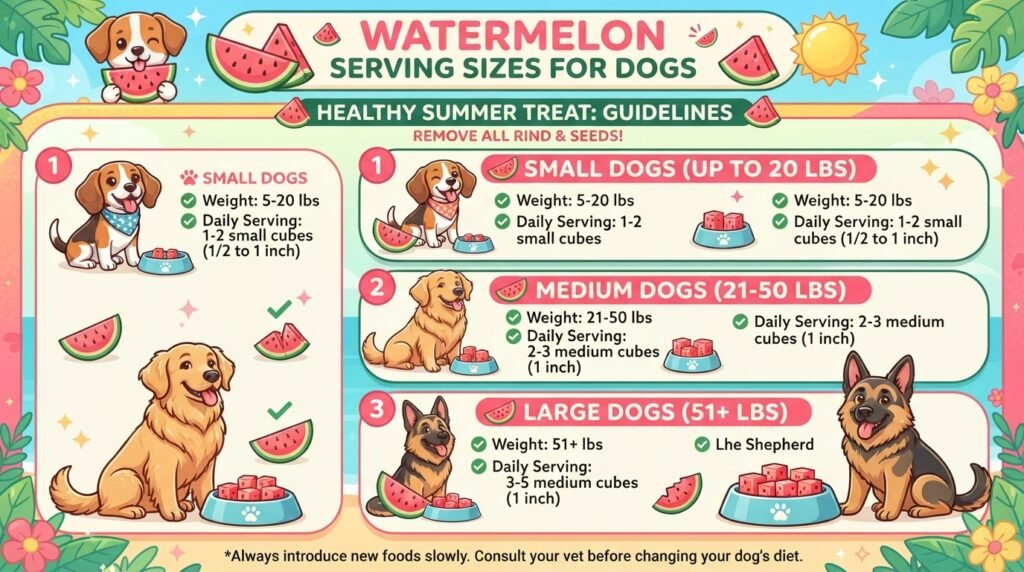
Even though watermelon is a healthy fruit, moderation is the key to keeping your dog safe. Too much watermelon can upset your dog’s stomach because it contains natural sugars and fiber. As with all treats, watermelon should make up no more than 10% of your dog’s daily calorie intake, while the remaining 90% should come from a complete and balanced dog food.
The exact amount your dog can enjoy depends on their size, age, activity level, and overall health.
Serving Size for Small Dogs (Under 20 lbs / 9 kg)
Small breeds have tiny stomachs, so a little watermelon goes a long way.
Examples include:
- Chihuahua
- Yorkshire Terrier
- Pomeranian
- Maltese
- Shih Tzu
- Toy Poodle
Recommended serving:
- 1–3 small bite-sized cubes
- Once or twice per week
Always cut the watermelon into pieces that are easy to chew to reduce the risk of choking.

Serving Size for Medium Dogs (20–50 lbs / 9–23 kg)
Medium-sized dogs can safely enjoy a slightly larger portion.
Examples include:
- Beagle
- Border Collie
- Cocker Spaniel
- Australian Shepherd
- Bulldog
Recommended serving:
- 4–6 bite-sized cubes
- Once or twice per week
If your dog has never eaten watermelon before, start with a smaller amount to make sure it agrees with their digestive system.
Serving Size for Large Dogs (Over 50 lbs / 23 kg)
Large breeds generally tolerate a larger serving, but watermelon should still be considered an occasional treat.
Examples include:
- Labrador Retriever
- Golden Retriever
- German Shepherd
- Rottweiler
- Great Dane
Recommended serving:
- 7–10 bite-sized cubes
- Once or twice per week
Avoid giving an entire slice of watermelon, even to very large dogs.
Introduce Watermelon Slowly
Whenever you introduce a new food, start with a very small amount. This allows you to watch for any signs of food intolerance or digestive upset.
After feeding watermelon for the first time, monitor your dog for:
- Vomiting
- Diarrhea
- Excessive gas
- Loss of appetite
- Itching or facial swelling (rare allergic reaction)
If your dog experiences any of these symptoms, stop feeding watermelon and contact your veterinarian if the symptoms are severe or persistent.
Signs Your Dog Ate Too Much Watermelon
While watermelon is safe in moderation, overeating can lead to digestive discomfort.
Common signs include:
- Loose stools
- Diarrhea
- Vomiting
- Stomach pain
- Gas or bloating
- Reduced appetite
These symptoms are usually mild and improve after your dog’s digestive system settles. Make sure your dog has access to fresh water and avoid offering additional treats until they recover.
If vomiting, severe diarrhea, or lethargy continues, consult your veterinarian.
Can Too Much Watermelon Cause Weight Gain?
Although watermelon is relatively low in calories, it still contains natural sugars. Feeding large amounts regularly can contribute to excess calorie intake, which may lead to weight gain over time.
To help keep your dog at a healthy weight:
- Use watermelon as an occasional reward.
- Measure portions instead of guessing.
- Reduce other treats on days you offer fruit.
- Encourage regular exercise and play.
When Dogs Should NOT Eat Watermelon
Watermelon isn’t the right choice for every dog. Some health conditions require extra caution or avoiding sugary fruits altogether.
You should speak with your veterinarian before feeding watermelon if your dog has:
Diabetes
Because watermelon contains natural sugar, dogs with diabetes may require a carefully controlled diet. Your veterinarian can advise whether small amounts are appropriate.
Obesity
If your dog is overweight, even healthy treats should be limited to avoid adding unnecessary calories.
Sensitive Stomach
Dogs that frequently experience digestive issues may develop diarrhea or vomiting after eating fruit.
Chronic Digestive Disease
Conditions affecting the stomach or intestines may make it harder for dogs to tolerate watermelon.
Kidney Disease
Some dogs with kidney problems require specialized diets that carefully control minerals and fluid intake. Always follow your veterinarian’s recommendations.
Prescription Diets
If your dog eats a veterinary prescription diet, check with your veterinarian before adding any new treats, including fruit.
Dogs That Should Always Avoid Watermelon Parts
Regardless of your dog’s health, never allow them to eat:
- Watermelon rind
- Large black seeds
- Watermelon with added sugar
- Watermelon flavored with artificial sweeteners
- Watermelon desserts containing chocolate, xylitol, grapes, or raisins
Plain, fresh watermelon flesh is the safest option.
How to Prepare Watermelon Safely for Dogs
Preparing watermelon correctly is just as important as choosing a ripe fruit. A few minutes of preparation can greatly reduce the risk of choking, digestive upset, and intestinal blockage.
Follow these simple steps before serving watermelon to your dog:
1. Wash the Watermelon
Rinse the outside thoroughly under running water to remove dirt, bacteria, and pesticide residue. Even though your dog won’t eat the rind, the knife can transfer contaminants to the edible flesh while cutting.
2. Remove the Rind Completely
Cut away the green outer rind and the thick white layer beneath it.
The pink flesh is the only part that should be offered to your dog.
3. Remove All Seeds
Inspect every slice carefully.
Remove:
- Black seeds
- Brown seeds
- White seeds whenever possible
Seedless watermelon is the safest and easiest choice.
4. Cut Into Bite-Sized Pieces
Small cubes are easier to chew and reduce the risk of choking.
A good rule is to make pieces appropriate for your dog’s size:
- Small dogs: pea-sized cubes
- Medium dogs: 1-inch cubes
- Large dogs: 1–2 inch cubes
5. Serve Plain
Never add:
- Sugar
- Salt
- Honey
- Chocolate
- Syrups
- Artificial sweeteners
- Whipped cream
Fresh watermelon is naturally sweet and doesn’t need any extras.

Frozen Watermelon Dog Treat Recipe
Looking for a fun summer snack? Frozen watermelon bites are simple to make and can help cool your dog on hot days.
Ingredients
- 2 cups seedless watermelon cubes
- ½ cup plain, unsweetened Greek yogurt (optional)
- Fresh water if needed for blending
Instructions
- Remove every seed and the rind.
- Blend the watermelon into a smooth puree.
- Mix in plain Greek yogurt if desired.
- Pour the mixture into silicone ice cube trays or dog treat molds.
- Freeze for 3–4 hours, or until solid.
- Serve one frozen cube as an occasional treat.
Store the treats in an airtight container in the freezer for up to one month.
Veterinarian Tips
Keep these expert tips in mind whenever you share watermelon with your dog:
- Introduce new foods gradually.
- Always remove the rind and seeds.
- Feed watermelon only as an occasional treat.
- Monitor your dog after trying watermelon for the first time.
- Avoid feeding watermelon if your veterinarian has recommended a special diet.
- Keep plenty of fresh drinking water available at all times.
- Contact your veterinarian if your dog shows persistent vomiting, diarrhea, or signs of abdominal pain after eating watermelon.
When in doubt, your veterinarian is the best source of advice based on your dog’s age, breed, medical history, and nutritional needs.

Frequently Asked Questions
Can dogs eat watermelon every day?
It’s better to offer watermelon only occasionally. Daily feeding may provide too much natural sugar and fiber, which can upset your dog’s digestive system.
Can dogs eat seedless watermelon?
Yes. Seedless watermelon is the safest option because it greatly reduces the risk of digestive problems caused by mature seeds.
Is watermelon good for dogs in hot weather?
Yes. Because watermelon contains over 90% water, it can be a refreshing treat during warm weather when served in moderation.
Can diabetic dogs eat watermelon?
Some diabetic dogs may be able to eat small amounts, but you should always ask your veterinarian first because watermelon contains natural sugars.
Can dogs eat watermelon-flavored candy?
No. Candy often contains added sugar, artificial sweeteners, or ingredients that are unsafe for dogs.
Can dogs eat dried watermelon?
Plain dried watermelon without added sugar is generally safer than sweetened varieties, but fresh watermelon is usually the better choice because it contains more water and fewer concentrated sugars.
My dog accidentally ate watermelon seeds. What should I do?
If your dog swallowed only one or two seeds, monitor them for any signs of digestive upset. If they ate a large number of seeds or begin vomiting, refusing food, or showing abdominal pain, contact your veterinarian promptly.
Can dogs eat watermelon with the rind attached?
No. The rind is difficult to digest and may increase the risk of choking or intestinal blockage.
Is frozen watermelon safe for dogs?
Yes. Frozen watermelon cubes can make a refreshing summer treat, but they should still be served in moderation and in pieces appropriate for your dog’s size.
What fruits are safe for dogs besides watermelon?
Many dogs can enjoy fruits such as apples (without seeds), bananas, blueberries, strawberries, and cantaloupe in moderation. Always introduce new fruits gradually and remove any parts that may be harmful.

Conclusion
So, can dogs eat watermelon? The answer is yes—when it’s prepared properly and offered in moderation.
Fresh, seedless watermelon can be a healthy, hydrating treat that provides vitamins, antioxidants, and a refreshing change from traditional dog snacks. The key is to remove the rind and seeds, serve only the pink flesh, and keep portions appropriate for your dog’s size.
Remember that watermelon is a treat—not a complete meal. A balanced, high-quality dog food should always remain the foundation of your dog’s diet.
By following the safety tips in this guide, you can confidently share this summertime favorite with your furry companion while helping them stay cool, hydrated, and happy.

hammadniazi6663@gmail.com
Contributor at PetZuoo, publishing practical information for pet owners and animal lovers.
Related guides

Why Do Dog Tilt Their Heads? 9 Fascinating Reason
Why Do Dog Tilt Their Heads? 9 Fascinating Reason Behind This Adorable Behavior. Have you ever spoken to your dog and watched…
Why Does Dog Suddenly Follow Me Everywhere? 9 Reasons
Why Does Dog Suddenly Follow Me Everywhere? 9 Reasons and Have you noticed that your dog suddenly seems to be your shadow?…
Ultimate Guide to Dog Separation Anxiety
Ultimate Guide to Dog Separation Anxiety. Proven Ways to Help Your Dog Feel Safe Alone, and Leaving your dog at home for…