Best Cat Water Fountains 2026: Benefits & Buying Guide and Every cat owner wants their furry companion to live a long, happy, and healthy life. While choosing nutritious food and scheduling regular veterinary checkups are essential, one important aspect of feline care is often overlooked—proper hydration.
Cats are naturally low-thirst animals. Unlike dogs, they rarely drink large amounts of water on their own because their ancestors evolved in dry desert environments, where they got most of their moisture from prey. Modern indoor cats have inherited this instinct, which means many don’t drink enough water from a traditional bowl.
Insufficient water intake can contribute to dehydration and may increase the risk of urinary tract problems, bladder stones, and kidney disease over time. A cat water fountain offers a simple way to encourage healthy drinking habits by providing continuously flowing, filtered water that many cats find more appealing than still water.
Whether you’re caring for a playful kitten, an active adult cat, or a senior feline, investing in a quality water fountain can support your pet’s overall health while making fresh water available throughout the day.
Why Hydration Is Essential for Cats
Water is involved in nearly every function of your cat’s body. It helps transport nutrients, regulate body temperature, support healthy digestion, lubricate joints, and remove waste products through the kidneys.
When cats don’t drink enough, their urine becomes more concentrated. Over time, this can increase the risk of several health concerns, including:
- Urinary tract infections (UTIs)
- Bladder crystals
- Kidney disease
- Constipation
- Dehydration
- Reduced energy levels
Helping your cat stay hydrated is one of the simplest ways to support long-term wellness.
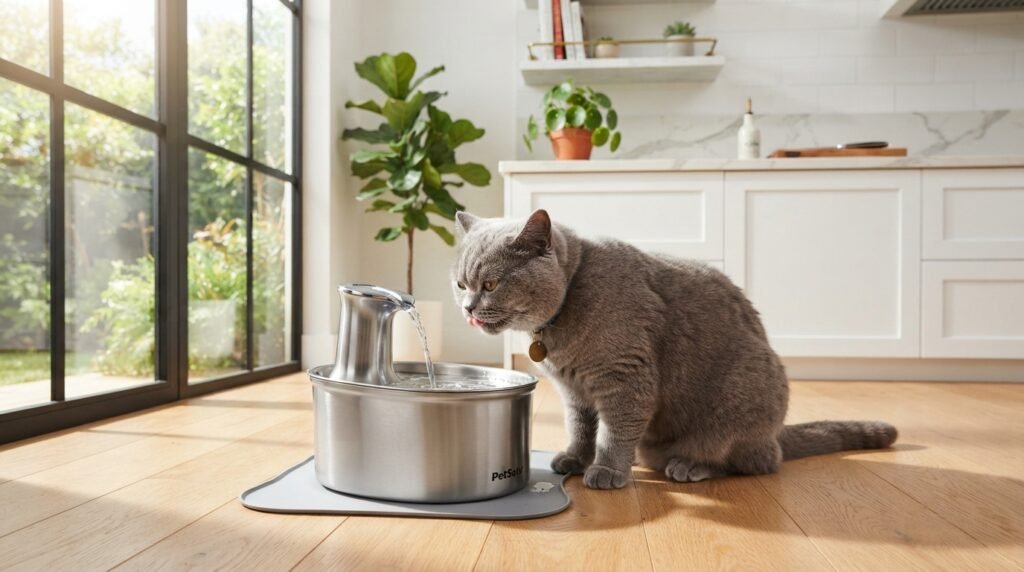
Why Cats Prefer Running Water
Many cat owners have noticed their cat drinking from a dripping faucet instead of the water bowl. This behavior isn’t unusual—it comes from instinct.
In the wild, moving water is generally cleaner and safer than stagnant water. Even though indoor cats live in a safe environment, they still retain this preference for flowing water.
A water fountain recreates that natural movement, encouraging many cats to drink more often.
Common behaviors include:
- Drinking from running taps
- Pawing at moving water
- Ignoring stale water left in bowls
- Visiting a fountain more frequently than a traditional dish
Benefits of a Cat Water Fountain
1. Encourages Better Hydration
Flowing water naturally attracts many cats, helping them drink more throughout the day. Increased water intake supports healthy kidney function and urinary health.
2. Provides Cleaner, Fresher Water
Most fountains include filtration systems that help remove:
- Hair
- Dust
- Food particles
- Dirt
- Unpleasant odors
This keeps the water cleaner and more appealing.
3. Improves Water Taste
Continuous circulation helps keep water fresh and oxygenated. Many cats seem to prefer the taste of moving water compared to water that has been sitting in a bowl for hours.
4. Convenient for Busy Pet Owners
Large-capacity fountains hold more water than standard bowls, reducing how often you need to refill them. Many models can provide fresh water for several days, depending on the number of pets in your home.
5. Supports Multi-Cat Households
If you have two or more cats, a fountain offers a shared source of fresh water that can better meet the needs of multiple pets throughout the day.
Signs Your Cat May Not Be Drinking Enough Water
Watch for these signs of possible dehydration:
- Dry or sticky gums
- Reduced appetite
- Low energy
- Constipation
- Dark yellow urine
- Skin that doesn’t quickly return to place when gently lifted (reduced skin elasticity)
If you notice persistent signs of dehydration, contact your veterinarian promptly.
Who Benefits Most from a Cat Water Fountain?
While nearly all cats can benefit from better hydration, fountains are especially useful for:
- Indoor cats
- Senior cats
- Cats that eat mostly dry food
- Multi-cat households
- Cats with a history of urinary or kidney issues (follow your veterinarian’s guidance)
- Picky drinkers who ignore traditional water bowls
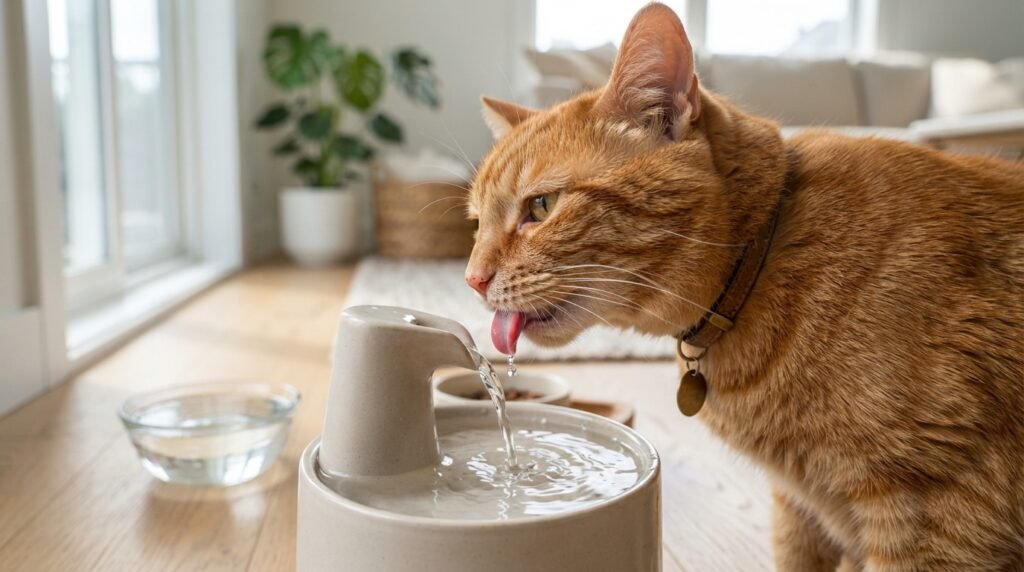
What You’ll Learn in This Guide
In the rest of this guide, we’ll cover:
- Different types of cat water fountains
- Plastic vs. stainless steel vs. ceramic fountains
- Features to consider before buying
- Placement tips for encouraging use
- Cleaning and maintenance
- Common mistakes to avoid
- Frequently asked questions
- Final buying recommendations
This comprehensive guide will help you choose the best cat water fountain for your pet while making it easier to support healthy hydration every day.
Types of Cat Water Fountains & How to Choose the Right One
Now that you understand why hydration is so important, it’s time to explore the different types of cat water fountains available. Each type has unique advantages, and choosing the right one depends on your cat’s personality, your household, and your budget.
Types of Cat Water Fountains
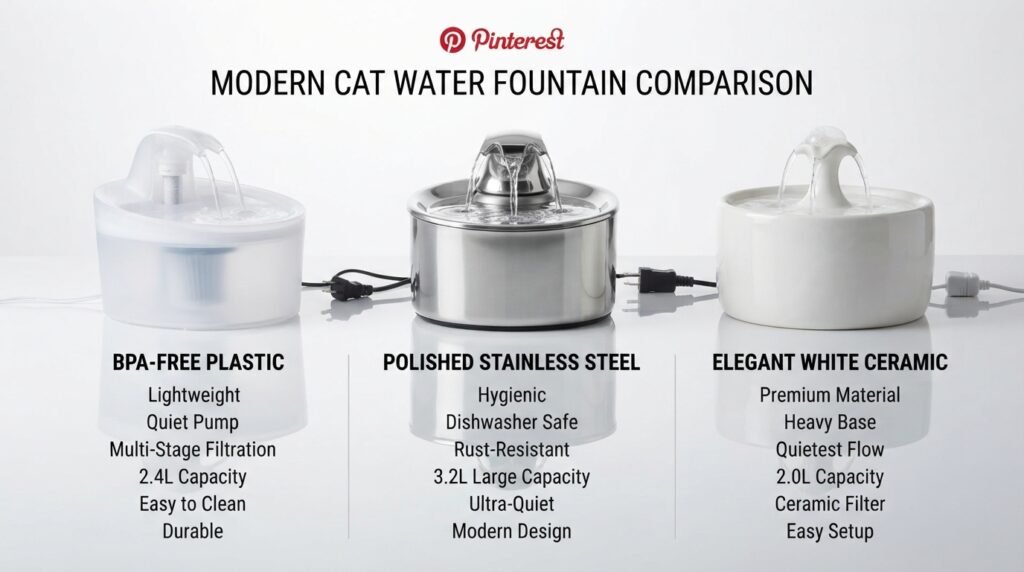
1. Plastic Cat Water Fountains
Plastic fountains are the most common and budget-friendly option. They come in many shapes, sizes, and colors, making them popular among first-time pet owners.
Pros
- Affordable
- Lightweight
- Wide variety of designs
- Easy to move around the house
- Suitable for kittens and single-cat homes
Cons
- Can develop scratches over time
- Scratches may trap bacteria if not cleaned properly
- Lower-quality plastic may stain or absorb odors
- Less durable than metal or ceramic models
Best For: Budget-conscious pet owners or those trying a fountain for the first time.
2. Stainless Steel Cat Water Fountains
Stainless steel fountains are often considered the best choice because they are durable, hygienic, and easy to maintain.
Pros
- Highly durable
- Rust-resistant
- Doesn’t absorb odors
- Easy to sanitize
- Smooth surface discourages bacterial buildup
- Modern and attractive appearance
Cons
- Higher upfront cost
- Slightly heavier than plastic
Best For: Long-term use, multi-cat households, and owners who want a low-maintenance option.
3. Ceramic Cat Water Fountains
Ceramic fountains combine functionality with style. Many feature decorative finishes that blend well with home décor.
Pros
- Elegant appearance
- Heavy and stable
- Easy to clean
- Doesn’t retain odors
- Naturally cool surface helps keep water fresh
Cons
- More expensive
- Can chip or crack if dropped
- Heavier to move
Best For: Owners looking for a stylish, durable fountain that complements their living space.
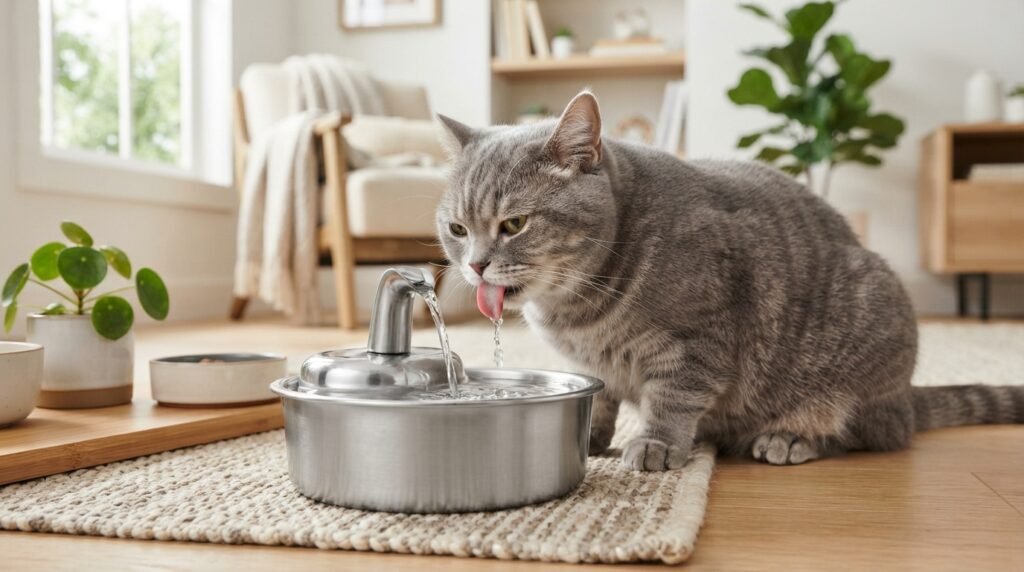
Different Water Flow Styles
Cats have different preferences, so the style of water flow can influence whether they enjoy the fountain.
Bubbling Fountain
Water gently bubbles from the center.
Ideal for:
- Curious kittens
- Cats that enjoy playing with water
- Small households
Free-Falling Waterfall
Water flows like a miniature waterfall.
Benefits include:
- Mimics a running tap
- Encourages reluctant drinkers
- Easy for cats to see and hear
Multiple Water Streams
Some fountains provide several streams of water at once.
Great for:
- Multi-cat homes
- Cats with different drinking preferences
- Busy households
Filter Types
A quality filter keeps your cat’s drinking water cleaner and fresher.
Activated Carbon Filters
These help remove:
- Odors
- Bad tastes
- Small impurities
Foam Filters
Foam filters trap:
- Hair
- Dust
- Food particles
- Larger debris
They also help protect the pump from clogging.
Multi-Layer Filtration
Premium fountains often combine several filter layers for improved water quality and cleaner operation.
Important Features to Look For
1. Water Capacity
Choose a size that matches your household.
General recommendations:
- 1 Cat: 1–2 liters
- 2–3 Cats: 2–3 liters
- 4+ Cats: 3 liters or more
A larger capacity means fewer refills and a more consistent water supply.
2. Quiet Pump
A noisy fountain may scare some cats or become distracting in your home.
Look for pumps described as:
- Ultra-quiet
- Whisper-quiet
- Low-noise
These are especially useful if the fountain will be placed in a bedroom or office.
3. Easy-to-Clean Design
Choose a fountain with:
- Removable parts
- Smooth surfaces
- Minimal small crevices
- Dishwasher-safe components (if available)
The easier it is to clean, the more likely you’ll keep it maintained regularly.
4. Energy Efficiency
Most modern fountains use very little electricity and can operate continuously without significantly increasing your energy bill.
Energy-efficient pumps are also quieter and often last longer.
5. Stable Base
Cats can be playful, so a stable fountain helps prevent spills.
A sturdy design is particularly important for:
- Large cats
- Curious kittens
- Multi-pet households
How to Choose the Best Fountain for Your Cat
Before making a purchase, ask yourself these questions:
- How many cats will use it?
- Does my cat prefer moving water?
- How much space do I have?
- How often can I clean the fountain?
- Which material best suits my needs?
- Is replacement filter availability important?
Taking a few minutes to consider these factors will help you choose a fountain that fits both your lifestyle and your cat’s needs.
Placement Tips, Cleaning Guide & Common Mistakes to Avoid
A high-quality cat water fountain is only effective if your cat uses it regularly. Proper placement, routine maintenance, and avoiding common mistakes will help ensure your cat stays hydrated and healthy.
Where Should You Place a Cat Water Fountain?
The location of your cat’s water fountain can have a big impact on how often your cat drinks.
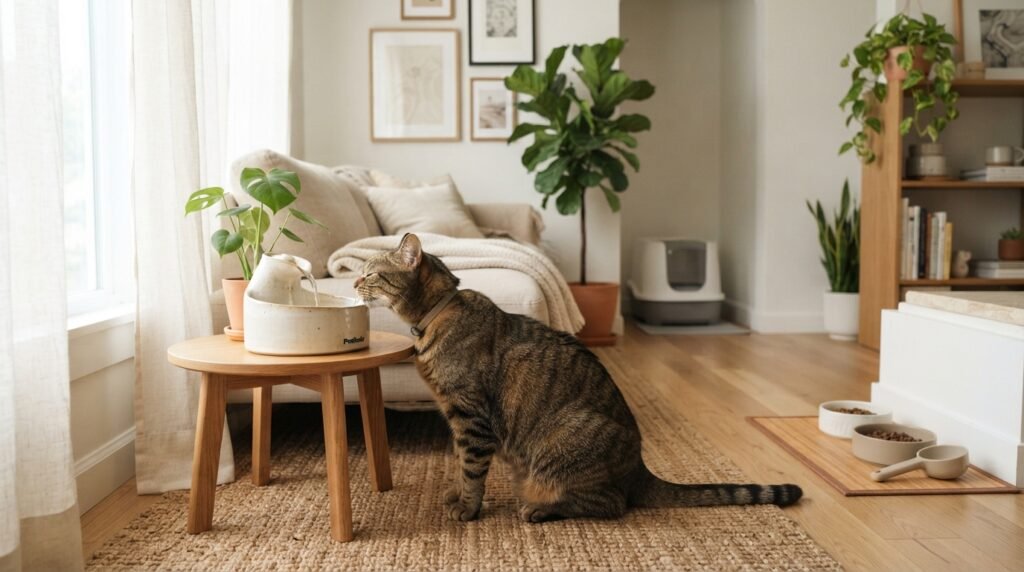
1. Keep It Away from Food
Many cats instinctively prefer to drink water away from where they eat. In nature, water sources near prey could become contaminated, so this behavior has carried over to domestic cats.
Tip: Place the fountain at least 3–6 feet (1–2 meters) away from your cat’s food bowl.
2. Keep It Away from the Litter Box
Cats are very clean animals. If their water is too close to the litter box, they may avoid drinking from it.
Choose a clean, fresh-smelling area that is separate from your cat’s bathroom space.
3. Pick a Quiet Location
Cats feel safest drinking in peaceful areas where they won’t be startled.
Good locations include:
- Living room corners
- Bedrooms
- Home offices
- Quiet hallways
Avoid placing the fountain:
- Next to washing machines
- Near loud TVs or speakers
- Beside busy doors
- In high-traffic areas
4. Make It Easy to Reach
Senior cats, kittens, and cats with mobility issues should be able to access water easily.
If you live in a multi-story home, consider placing a fountain on each floor so your cat always has convenient access to fresh water.
How to Introduce Your Cat to a Water Fountain
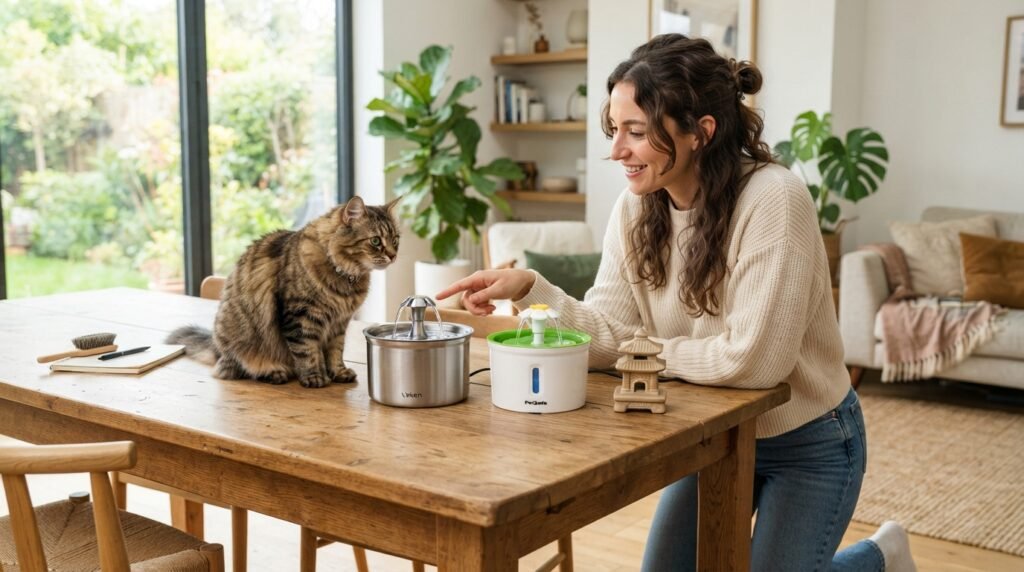
Some cats love a new fountain immediately, while others may take several days to adjust.
Let Your Cat Explore Naturally
Place the fountain in its permanent location and allow your cat to investigate at their own pace. Avoid forcing them to drink from it.
Keep the Old Water Bowl
For the first week, leave your cat’s regular water bowl nearby. This helps make the transition less stressful.
Encourage Curiosity
When your cat approaches or drinks from the fountain, reward them with:
- Gentle praise
- Petting
- A favorite treat
Positive reinforcement helps create a good association.
Be Patient
Some cats begin using a fountain within hours, while others may need a week or two. Every cat adjusts differently.
Cleaning Your Cat Water Fountain
A clean fountain provides fresh, healthy water and helps the pump last longer.
Daily Tasks
Every day:
- Check the water level.
- Remove visible hair or debris.
- Refill with fresh water if necessary.
Keeping the fountain full prevents unnecessary strain on the pump.
Weekly Cleaning
At least once a week:
- Unplug the fountain.
- Empty the remaining water.
- Take apart all removable pieces.
- Wash with warm water and mild dish soap.
- Rinse thoroughly to remove soap residue.
- Dry all parts before reassembling.
Never use harsh chemicals, bleach, or strongly scented cleaners.
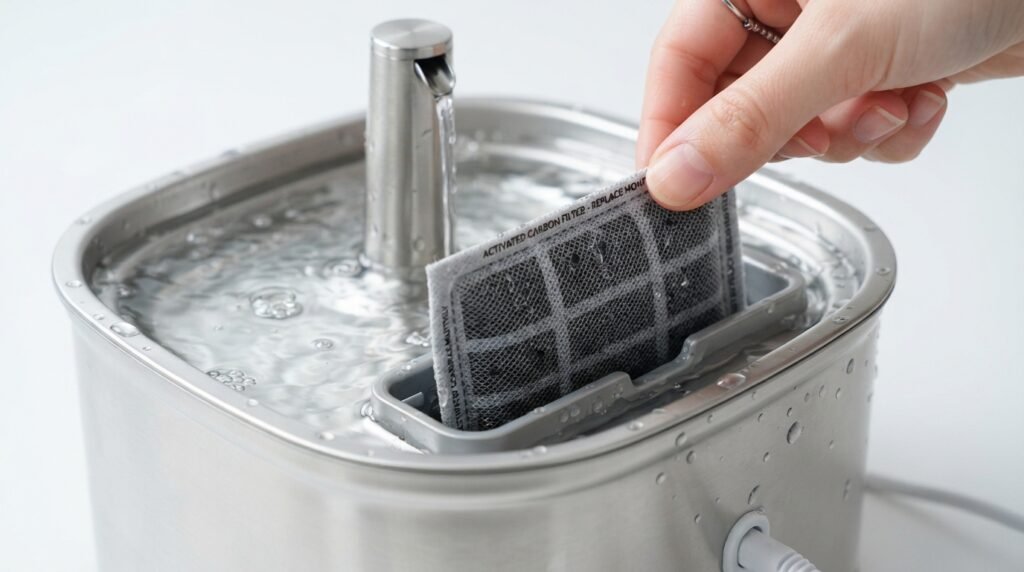
Replace Filters Regularly
Most manufacturers recommend replacing filters every 2–4 weeks, depending on:
- Number of cats
- Water quality
- Amount of hair and debris
- Manufacturer recommendations
A fresh filter helps remove:
- Dirt
- Hair
- Food particles
- Odors
- Small impurities
Clean the Pump
The pump is the heart of the fountain.
Once a month:
- Open the pump housing.
- Remove trapped hair.
- Clean the impeller.
- Rinse thoroughly.
- Reassemble carefully.
A clean pump:
- Runs quietly
- Improves water flow
- Extends the fountain’s lifespan
Common Mistakes Cat Owners Make
1. Forgetting to Clean the Fountain
Dirty fountains can develop slime, bacteria, and mineral buildup, making the water less appealing.
Regular cleaning keeps the water fresh and safe.
2. Ignoring the Water Level
Allowing the water level to become too low may damage the pump and reduce its lifespan.
Check the water level every day.
3. Not Replacing Filters
Old filters lose effectiveness over time and may reduce water quality.
Set a reminder to replace filters according to the manufacturer’s schedule.
4. Buying a Fountain That’s Too Small
A small fountain may be enough for one kitten but isn’t ideal for multiple adult cats.
Choose a capacity that suits the number of pets in your household.
5. Choosing Price Over Quality
The cheapest fountain isn’t always the best value.
Look for features such as:
- Durable construction
- Quiet operation
- Easy cleaning
- Readily available replacement filters
- Safe, pet-friendly materials
Investing in a reliable fountain can save money over time and encourage better hydration for your cat.
FAQs, Expert Buying Tips & Final Recommendations
Frequently Asked Questions (FAQs)
1. Are cat water fountains worth it?
Yes. Many cats prefer running water over still water, which can encourage them to drink more. Better hydration supports urinary tract health, kidney function, and overall well-being. While every cat is different, many owners notice their cats drink more after switching to a water fountain.
2. How often should I clean a cat water fountain?
For the best hygiene:
- Check and refill water daily.
- Wash the fountain thoroughly at least once a week.
- Clean the pump every month.
- Replace the filter every 2–4 weeks, following the manufacturer’s recommendations.
Regular maintenance keeps the water fresh and helps the fountain last longer.
3. Can kittens use a water fountain?
Absolutely. Most kittens can safely use a cat water fountain once they are eating solid food and drinking water independently. Choose a fountain with a gentle water flow so it doesn’t intimidate young cats.
4. Are water fountains safe for cats?
Yes, when they are made from pet-safe materials and cleaned regularly. Always use the fountain according to the manufacturer’s instructions and inspect the power cord and pump for wear.
5. Which material is best?
Each material has its advantages:
- Plastic: Affordable and lightweight.
- Stainless Steel: Durable, hygienic, and easy to clean.
- Ceramic: Stylish, stable, and resistant to odors.
For many households, stainless steel offers the best balance of durability, cleanliness, and long-term value.
6. How long do cat water fountains last?
A well-maintained fountain can last for several years. Cleaning it regularly, replacing filters on time, and keeping the pump free of debris will help extend its lifespan.
Expert Buying Tips
Before purchasing a cat water fountain, keep these tips in mind:
Choose the Right Size
Select a fountain based on the number of cats in your home. Larger capacities require fewer refills and are better suited for multi-cat households.
Prioritize Quiet Operation
Cats can be sensitive to noise. A quiet pump creates a more relaxing drinking experience and is less likely to discourage timid pets.
Check Filter Availability
Replacement filters should be easy to find and reasonably priced. Ongoing maintenance is easier when replacement parts are readily available.
Consider Ease of Cleaning
Choose a fountain with removable parts and a simple design. The easier it is to clean, the more likely you’ll maintain it regularly.
Pick Safe Materials
Look for BPA-free plastic, food-grade stainless steel, or high-quality ceramic. These materials are durable and safe for daily use.
Signs Your Cat Is Drinking Enough Water
After introducing a fountain, you may notice positive changes such as:
- More frequent visits to the fountain
- Normal, pale yellow urine
- Healthy skin and coat
- Good energy levels
- Healthy appetite
- Regular bathroom habits
If your cat suddenly stops drinking or shows signs of dehydration, contact your veterinarian promptly.
Final Thoughts
A cat water fountain is more than just a convenient accessory—it’s an investment in your cat’s health and comfort. By encouraging better hydration, providing cleaner water, and making fresh water available throughout the day, a quality fountain can help support your cat’s well-being for years to come.
Whether you choose a plastic, stainless steel, or ceramic model, the most important factors are keeping the fountain clean, replacing filters regularly, and placing it where your cat feels comfortable drinking.
Every cat has unique preferences, so don’t be discouraged if your pet needs a little time to adjust. With patience and proper care, a water fountain can become an essential part of your cat’s daily routine.
Key Takeaways
- Running water encourages many cats to drink more.
- Proper hydration supports kidney and urinary health.
- Stainless steel fountains are durable and easy to clean.
- Clean the fountain weekly and replace filters regularly.
- Place the fountain away from food and litter boxes.
- Choose a size and design that fits your cat’s needs.
- Regular maintenance keeps the water fresh and the fountain working efficiently.

hammadniazi6663@gmail.com
Contributor at PetZuoo, publishing practical information for pet owners and animal lovers.
Related guides

Why Do Dog Tilt Their Heads? 9 Fascinating Reason
Why Do Dog Tilt Their Heads? 9 Fascinating Reason Behind This Adorable Behavior. Have you ever spoken to your dog and watched…
Cat Chattering at Birds: 7 Amazing Reasons Explained
Cat Chattering at Birds: 7 Amazing Reasons Explained. Have you ever noticed your cat sitting beside a window, watching birds outside, and…
Why Do Cats Chirp at Birds? 7 Fascinating Reasons
Why Do Cats Chirp at Birds? 7 Fascinating Reasons Behind This Cute Cat Behavior, Have you ever watched your cat sitting beside…