Why Does My Cat Knead Me? 9 Surprising Reasons Behind and Cats knead by rhythmically pushing their front paws against a soft surface, often alternating one paw and then the other. Although it may look like a simple habit, kneading can have several different meanings depending on the cat, the situation, and what happens around the behavior.
Cats knead by rhythmically pushing their front paws against a soft surface, often alternating one paw and then the other. Although it may look like a simple habit, kneading can have several different meanings depending on the cat, the situation, and what happens around the behavior.
Cats knead by rhythmically pushing their front paws against a soft surface, often alternating one paw and then the other. Although it may look like a simple habit, kneading can have several different meanings depending on the cat, the situation, and what happens around the behavior.
Cats knead by rhythmically pushing their front paws against a soft surface, often alternating one paw and then the other. Although it may look like a simple habit, kneading can have several different meanings depending on the cat, the situation, and what happens around the behavior.
Cats knead by rhythmically pushing their front paws against a soft surface, often alternating one paw and then the other. Although it may look like a simple habit, kneading can have several different meanings depending on the cat, the situation, and what happens around the behavior.
One of the strongest explanations comes from kittenhood. Kittens knead their mother’s belly while nursing, which is associated with feeding and comfort. Some cats continue this movement into adulthood because it remains connected with feelings of safety and relaxation.
When a cat climbs onto your lap, starts kneading your clothing, and settles down beside you, it may simply be saying that it feels comfortable and secure around you.
1. Your Cat Feels Safe With You
A relaxed cat may knead when it is completely comfortable. Your lap may feel warm, soft, and familiar, making it an ideal place for this behavior.
2. Kneading Can Be a Comforting Habit
Some cats knead blankets, cushions, beds, or their owner’s clothing before settling down. The repetitive movement may help them relax, especially when they are preparing to sleep.
3. Your Cat May Be Showing Affection
Kneading is often seen alongside purring, relaxed body language, slow blinking, and cuddling. When these behaviors occur together, kneading can be part of a positive social interaction.
However, every cat is different. Kneading by itself doesn’t prove exactly what a cat is thinking.
4. Cats May Knead to Prepare a Resting Spot
Wild cats and their ancestors may have pressed down vegetation or soft material before resting. Modern house cats sometimes retain similar behaviors, kneading blankets or bedding before lying down.

Why Does My Cat Knead Me Instead of a Blanket?
Your body provides warmth, softness, and a familiar scent. If your cat repeatedly chooses your lap or chest instead of another surface, it may simply prefer the comfort you provide.
If the claws make kneading uncomfortable, don’t punish or push your cat away aggressively. Instead, place a thick blanket between you and your cat or gently redirect the paws toward a soft cushion.
Important: Avoid trimming claws too aggressively or using punishment to stop normal behavior. Kneading is generally harmless and is often a normal part of feline behavior.
9 Surprising Reasons Cats Knead
1. 🐾 It Reminds Them of Kittenhood
One of the most commonly discussed explanations for kneading is that the movement begins during nursing. Kittens press their paws against their mother’s belly while feeding. The behavior can become associated with warmth, comfort, and security.
Even after becoming adults, some cats continue kneading when they feel especially relaxed.
2. ❤️ Your Cat May Be Showing Affection
If your cat climbs onto your lap, kneads you, purrs, and settles down, it may be expressing comfort and affection.
Cats don’t always show attachment in obvious ways. Kneading can be one of those subtle behaviors that appears when your cat feels safe around you.
3. 😴 It Helps Your Cat Relax
You may notice kneading shortly before your cat takes a nap. The repetitive paw movement can become part of a calming routine.
Some cats knead a blanket for several minutes before curling up and sleeping.
4. 🛏️ Your Cat May Be Preparing Its Sleeping Area
Cats often investigate and adjust their resting areas before settling down. Kneading a blanket, cushion, or bed can be part of this natural preparation behavior.
If your cat kneads its bed every night before sleeping, there’s usually no reason to worry.
5. 👃 Your Cat Could Be Leaving Its Scent
Cats have scent glands in several areas of their bodies, including their paws. Kneading may help leave a familiar scent on a favorite resting place.
This can contribute to making a particular blanket, bed, or even your lap feel familiar and secure.
6. 🧘 Your Cat Is Feeling Particularly Comfortable
Look at the rest of your cat’s body language. Relaxed muscles, soft eyes, purring, a relaxed tail, and slow blinking can all accompany a comfortable state.
Kneading combined with these signals is usually nothing unusual.
7. 🧸 Soft Materials Encourage Kneading
Some cats have very specific preferences. One may knead a fluffy blanket, while another prefers a pillow, fleece bed, or piece of clothing.
The texture can trigger the behavior because soft surfaces are particularly pleasant for many cats.
8. 🐱 It May Simply Be an Individual Habit
Not every cat kneads frequently. Some do it every day, while others rarely do it.
Your cat’s personality and individual history can influence how often the behavior appears.
9. 🥰 Kneading Can Become Part of Your Bond
When your cat repeatedly chooses to knead beside you or on your lap, it can become a familiar part of your shared routine.
Instead of immediately trying to stop it, consider what your cat is communicating through its overall body language. If the cat appears relaxed and healthy, kneading is generally just another interesting part of feline behavior.

Why Does My Cat Knead and Purr?
If your cat climbs onto your lap, begins kneading with its front paws, and starts purring, you may wonder what this adorable combination means. In most situations, these behaviors appear when a cat is feeling comfortable, relaxed, and secure.
Why Do Cats Knead While Purring?
Kneading and purring can occur together because both behaviors are commonly associated with positive or calming situations.
Your cat may knead and purr when:
- It is settling down for a nap.
- It is enjoying your attention.
- It feels safe on your lap.
- It is relaxing after eating or playing.
- It is enjoying a warm, comfortable blanket.
- It is seeking closeness with you.
Pay attention to your cat’s complete body language rather than focusing on kneading alone.
Why Does My Cat Knead Me Before Sleeping?
Some cats have a predictable bedtime routine. They may walk around, choose a soft spot, knead for a few minutes, purr, and then curl up to sleep.
Your cat may be making the area comfortable before resting. Your warmth and familiar scent can also make your lap an attractive sleeping location.
If this happens regularly and your cat otherwise behaves normally, it is generally not something you need to stop.
Why Does My Cat Knead Me With Its Claws?
This is one of the less enjoyable parts of kneading!
Cats naturally extend and retract their claws during the movement. If your cat has sharp claws, you may feel tiny scratches even though the cat isn’t trying to hurt you.
Instead of punishing your cat, try placing a soft blanket or cushion between your skin and its paws.
Regular, appropriate claw care can also make the experience more comfortable.
Why Does My Cat Knead and Then Suddenly Leave?
Cats can change activities quickly. Your cat might knead for several minutes, decide it has had enough attention, and walk away.
That doesn’t necessarily mean something is wrong.
Cats are independent animals, and their social interactions can be brief. Your cat may simply have finished its relaxation routine.
When Should You Pay More Attention?
Kneading itself is usually a normal behavior. However, a sudden major change in your cat’s behavior deserves attention, particularly if it occurs alongside other unusual signs such as hiding, reduced appetite, aggression, vocalization, or changes in normal activity.
In those situations, don’t assume the behavior is simply a personality change. Consider speaking with a veterinarian.
The Bottom Line
When your cat kneads your lap while purring and looking relaxed, it is usually a reassuring behavior. It can be connected with comfort, relaxation, early-life behavior, or social bonding.
So the next time your cat starts making biscuits on your lap, you may have been chosen as the
Why Does My Cat Knead Me Then Bite?
Sometimes a cat can go from peacefully kneading your lap to giving you a quick little bite. This can be confusing, but the two behaviors don’t necessarily mean your cat suddenly became angry.
1. Your Cat May Become Overstimulated
Cats have different tolerance levels for physical contact. A cat may enjoy sitting with you but eventually become overwhelmed by petting or touching.
Watch for warning signs such as:
- Tail flicking or thumping
- Ears moving backward
- Skin twitching
- Sudden body tension
- Trying to move away
- Dilated pupils
When you notice these signals, give your cat some space.
2. The Bite May Be a Playful Reaction
Some cats use their mouths during play. A gentle nibble may be part of playful behavior rather than an attempt to hurt you.
Still, avoid encouraging your cat to bite hands or fingers. Redirect playful biting toward an appropriate toy instead.
3. Your Cat May Simply Be Finished With the Interaction
Kneading doesn’t mean your cat wants unlimited attention. Your cat may enjoy several minutes of cuddling and then decide it is time to leave.
Respecting that boundary can help build trust.
4. Don’t Punish Your Cat
Yelling, hitting, or physically pushing your cat away can make it frightened and may damage your relationship.
Instead, calmly stop interacting and allow your cat to move away.
When Is Biting More Concerning?
A sudden increase in biting—especially if your cat normally doesn’t bite—can sometimes accompany fear, stress, or discomfort. If the behavior is persistent or appears alongside other unusual changes, discussing it with a veterinarian is a sensible step.
Remember: kneading followed by a gentle nibble doesn’t automatically mean your cat dislikes you. Look at the entire situation and your cat’s body language to understand what is happening.
When Cat Kneading Could Mean Something Else
Kneading is usually a normal feline behavior, but context matters. If your cat has always kneaded blankets, beds, or your lap and otherwise behaves normally, there is usually little reason for concern.
However, a sudden change in kneading or other behavior deserves attention.
A Sudden Change in Behavior
If your cat suddenly starts kneading much more frequently—or stops a behavior it has performed regularly—look at what else has changed.
Possible factors can include:
- A change in the household
- Moving furniture or changing routines
- A new pet or person
- Increased stress
- Changes in sleeping areas
- Changes in daily interaction
Cats can be sensitive to changes in their environment, so unusual behavior should be considered alongside the circumstances around it.
Kneading With Other Unusual Signs
Kneading becomes more worth investigating when it appears alongside signs such as reduced appetite, hiding, unusual vocalization, aggression, changes in activity, or other noticeable changes in normal behavior.
Don’t diagnose the cause from kneading alone. If several unusual signs appear together or persist, a veterinarian can help determine whether there is an underlying problem.
What If Kneading Hurts?
You don’t have to tolerate painful claws just because your cat is comfortable.
Try placing a thick blanket between your cat and your skin. You can also provide a soft cat bed or fleece blanket specifically for kneading.
Avoid punishing the cat. The goal is to redirect the behavior rather than make your cat afraid of kneading.
Should You Stop Your Cat From Kneading?
In most cases, no.
If your cat is relaxed, healthy, and simply enjoying a favorite blanket or your lap, kneading is generally nothing you need to eliminate.
Instead, enjoy it as one of the many unusual behaviors that make cats such fascinating companions. 🐾
Quick Takeaway
Normal kneading + relaxed body language = usually nothing to worry about.
New kneading + other significant behavior changes = worth paying closer attention to.
The key is not the kneading itself but the overall pattern of your cat’s behavior.
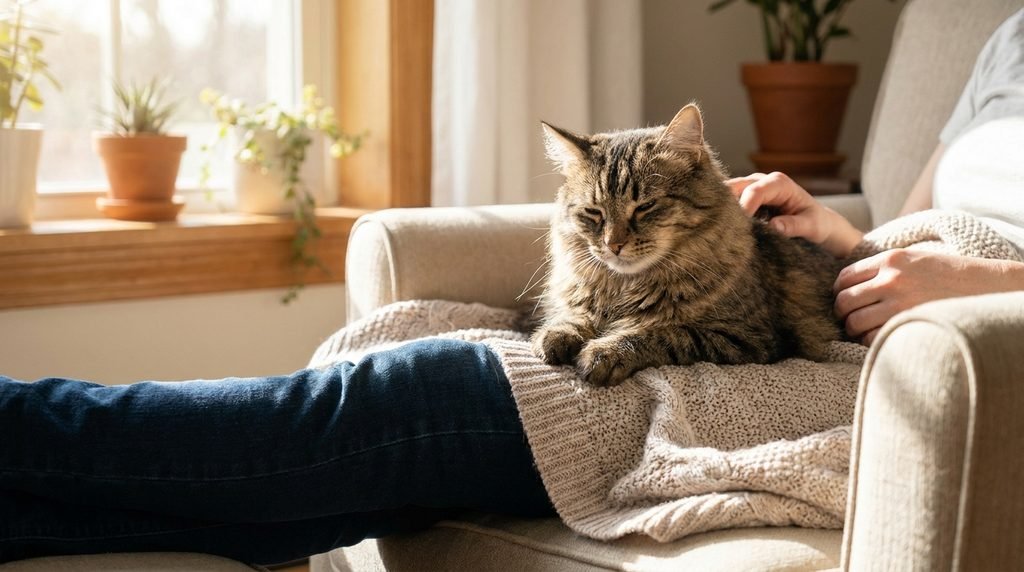
How to Handle Cat Kneading Without Getting Scratched
If your cat loves kneading but those sharp little claws make the experience uncomfortable, you don’t need to stop the behavior completely. Instead, make the interaction more comfortable for both of you.
Put a Blanket Between You and Your Cat
A thick, soft blanket can protect your skin while giving your cat a comfortable surface to knead. Choose a blanket with a texture your cat already enjoys.
Redirect Kneading to a Cat Bed
If your cat regularly kneads your lap, gently place a soft cushion or cat bed nearby. Over time, your cat may begin choosing that surface instead.
Keep Claws Properly Maintained
Regular claw care can reduce accidental scratches. If you’re unsure how to trim your cat’s claws safely, ask a veterinarian or professional groomer to demonstrate the appropriate technique.
Don’t Push Your Cat Away Suddenly
If your cat is relaxed and enjoying the interaction, suddenly pushing it away can frighten or confuse it.
Instead, gently place a blanket under its paws or slowly move the cat toward a comfortable alternative.
Learn Your Cat’s Signals
The easiest way to make kneading enjoyable is to understand when your cat wants interaction and when it wants space.
A relaxed cat may have:
- Soft, relaxed eyes
- Loose body posture
- Gentle purring
- Ears in a natural position
- Slow blinking
- Calm, rhythmic kneading
If your cat becomes tense, starts flicking its tail, flattens its ears, or tries to leave, give it some space.
Final Thought
Your cat doesn’t need to knead perfectly—or knead you at all—for it to have a strong bond with you. Every cat has its own personality and way of showing comfort.
If your cat chooses your lap as its favorite place to make biscuits, consider it one of the sweetest little compliments a cat can give. 🐱❤️

Frequently Asked Questions About Cat Kneading
Is cat kneading a sign of love?
It can be. When kneading happens alongside relaxed body language, purring, cuddling, or choosing to stay close to you, it may be part of a positive interaction. However, kneading has several possible explanations, so it shouldn’t be interpreted as a guaranteed sign of affection by itself.
Why does my cat knead my stomach or chest?
Your body is warm, soft, and carries your familiar scent. These qualities can make your lap, stomach, or chest a comfortable place for your cat to settle and knead.
Why does my cat knead my blanket?
Soft blankets can remind cats of comfortable resting surfaces. Your cat may also have developed a personal routine of kneading the blanket before sleeping.
Why does my cat knead and purr?
Kneading and purring often occur when cats are relaxed and comfortable. If your cat has loose body language and appears content, the combination is generally a normal part of its behavior.
Why does my cat knead me with its claws?
Cats naturally extend and retract their claws while kneading. It doesn’t necessarily mean they are trying to scratch you. If it hurts, place a thick blanket between your cat’s paws and your skin.
Why does my cat knead me and then bite?
A cat may become overstimulated, become playful, or simply decide that it has had enough interaction. Pay attention to signals such as tail flicking, flattened ears, tense muscles, or attempts to move away.
Should I stop my cat from kneading?
Usually, there is no need to stop normal kneading. If it hurts, redirect your cat toward a soft blanket or bed rather than punishing it.
Is excessive kneading a problem?
Kneading frequency varies between cats. If the behavior suddenly changes or occurs together with other significant changes in appetite, activity, hiding, vocalization, or general behavior, consider discussing it with a veterinarian.
Can kittens and adult cats both knead?
Yes. Kneading is commonly observed in kittens and can continue into adulthood. Some adult cats knead frequently, while others rarely do it.

What does it mean when my cat kneads before sleeping?
It may be part of your cat’s relaxation or bedtime routine. Many cats knead a comfortable surface before settling down to rest.
The most important thing is to consider the whole picture. Your cat’s posture, facial expression, tail, ears, vocalization, and overall behavior provide much more information than kneading alone.
Final Thoughts: What Your Cat’s Kneading Really Means
Cat kneading is one of those small behaviors that can tell you a lot about your feline companion. Whether your cat kneads your lap, a fluffy blanket, its bed, or the sofa, the behavior is often connected with comfort, relaxation, instinct, or familiarity.
There isn’t always one single explanation. Your cat may knead because the behavior began during kittenhood, because a particular surface feels comfortable, or simply because kneading has become part of its personal routine.
If your cat climbs onto your lap, starts making biscuits, purrs, and settles down beside you, there’s usually no reason to interrupt a perfectly peaceful moment.
Give Your Cat a Comfortable Alternative
If the claws are painful, provide a soft blanket or dedicated cat bed. This allows your cat to continue its natural behavior without making your skin uncomfortable.
Pay Attention to the Whole Cat
The most useful way to understand kneading is to consider it alongside other behaviors.
A relaxed cat that is eating normally, playing, grooming, sleeping comfortably, and interacting normally is very different from a cat that suddenly changes behavior and also shows other concerning signs.
When to Ask a Veterinarian
If kneading changes suddenly and you notice other unusual behaviors, don’t rely on online explanations alone. A veterinarian can assess your cat and help identify possible causes.
The Sweetest Explanation
Sometimes the simplest answer is also the nicest one: your cat feels comfortable enough around you to relax completely.
So when those little paws start making biscuits on your lap, grab a blanket if necessary, enjoy the purring, and appreciate one of the wonderfully strange habits that make living with a cat so entertaining. 🐾❤️

hammadniazi6663@gmail.com
Contributor at PetZuoo, publishing practical information for pet owners and animal lovers.
Related guides

Why Do Dog Tilt Their Heads? 9 Fascinating Reason
Why Do Dog Tilt Their Heads? 9 Fascinating Reason Behind This Adorable Behavior. Have you ever spoken to your dog and watched…
Cat Chattering at Birds: 7 Amazing Reasons Explained
Cat Chattering at Birds: 7 Amazing Reasons Explained. Have you ever noticed your cat sitting beside a window, watching birds outside, and…
Why Do Cats Chirp at Birds? 7 Fascinating Reasons
Why Do Cats Chirp at Birds? 7 Fascinating Reasons Behind This Cute Cat Behavior, Have you ever watched your cat sitting beside…