Dog Ear Mites: 9 Powerful Signs, Causes & Proven Treatment Tips,If your dog is constantly scratching their ears, shaking their head, rubbing their face, or showing unusual irritation around the ears, you may wonder what is causing the problem. One possible cause is dog ear mites.
Ear mites are tiny parasites that can live inside a dog’s ear canal and cause significant irritation. They are especially common in puppies and dogs that have close contact with other animals. Although ear mites are treatable, ignoring the problem can allow inflammation, secondary infections, and discomfort to become worse.
The good news is that dog ear mites can usually be diagnosed and treated effectively with the right veterinary care. Understanding the warning signs can help you recognize a potential problem early.
In this guide, we’ll explain the most common signs of ear mites in dogs, what causes them, how veterinarians diagnose them, treatment options, safe ear-cleaning practices, and ways to reduce the risk of reinfection.
What Are Dog Ear Mites?
Dog ear mites are microscopic parasites that commonly live in the external ear canal. One of the best-known species associated with ear mites in dogs is Otodectes cynotis.
These parasites feed on material found in the ear and can trigger intense irritation. Affected dogs may scratch their ears repeatedly because the mites and resulting inflammation make the ear extremely uncomfortable.
Ear mites can spread through close contact between animals. Dogs that live with cats or other pets may also be exposed because the parasites can move between susceptible animals.
However, not every itchy or dirty-looking dog ear has ear mites. Allergies, bacterial infections, yeast overgrowth, foreign objects, and other ear problems can produce similar symptoms.
That is why identifying the actual cause is important before beginning treatment.

9 Warning Signs of Ear Mites in Dogs
Recognizing the early symptoms can help you seek appropriate veterinary advice sooner.
1. Excessive Ear Scratching
One of the most noticeable signs is frequent scratching around the ears.
Your dog may scratch much more often than usual or become particularly irritated after touching the affected ear.
2. Frequent Head Shaking
Dogs with irritated ears often shake their heads repeatedly.
Occasional head shaking can be normal, but persistent or intense shaking may indicate an underlying ear problem that deserves attention.
3. Dark, Crumbly Ear Discharge
A dog with ear mites may develop a dark discharge inside the ear.
Owners sometimes describe it as resembling coffee grounds because of its dark, crumbly appearance. However, similar discharge can occur with other ear conditions, so appearance alone cannot confirm ear mites.
4. Red or Inflamed Ears
Look at the visible part of your dog’s ear without inserting anything into the ear canal.
Redness, swelling, or irritation can indicate inflammation.
5. Rubbing the Ears or Face
Some dogs rub their ears against carpets, furniture, bedding, or the floor because scratching doesn’t provide enough relief.
This behavior can sometimes cause additional irritation or small injuries.
6. Unpleasant Ear Odor
A strong or unusual smell may develop when the ear is inflamed or when a secondary bacterial or yeast infection is present.
An odor does not automatically mean your dog has ear mites.
7. Sensitive or Painful Ears
Your dog may pull away, whine, or become uncomfortable when you touch around the affected ear.
If the ear appears very painful, avoid repeatedly handling it and contact your veterinarian.
8. Hair Loss or Skin Irritation Around the Ears
Persistent scratching can damage the skin around the ears.
You may notice redness, small scratches, scabs, or areas where fur has become thinner.
9. Irritability or Restlessness
Constant ear discomfort can affect your dog’s normal behavior.
A normally relaxed dog may become restless, sleep poorly, or seem unusually irritated.
Important: These signs are not unique to ear mites. A veterinarian may need to examine the ear and test a sample to determine the actual cause.

Why Early Attention Matters
Ear problems can become increasingly uncomfortable when they are left untreated.
Repeated scratching can damage the delicate skin around the ear. Persistent head shaking may also contribute to additional ear trauma. In some cases, an untreated ear problem can lead to a deeper infection or other complications.
For that reason, don’t assume that every itchy ear is simply a minor problem.
If your dog has persistent scratching, repeated head shaking, significant redness, discharge, swelling, bleeding, severe pain, or changes in balance, veterinary evaluation is especially important.
Causes, Spread & Diagnosis
What Causes Dog Ear Mites?
Dog ear mites are caused by microscopic parasitic mites, most commonly Otodectes cynotis. Unlike bacterial or yeast ear infections, ear mites are parasites that live on the surface of the ear canal.
They are highly contagious between susceptible animals, which means your dog can potentially become exposed through close contact with an infected pet.
Ear mites are more commonly seen in puppies, kittens, and animals that have frequent contact with other animals, although adult dogs can also become infected.
How Do Dogs Get Ear Mites?
The most common route is direct contact with an infected animal.
For example, transmission can occur when dogs:
- Play closely with an infected animal
- Sleep together
- Groom one another
- Spend time in shelters or multi-pet households
- Have regular contact with an infected cat
Because ear mites can spread between animals, it is important to tell your veterinarian if your household includes other dogs or cats.
If one pet is diagnosed with ear mites, your veterinarian may recommend checking or treating other susceptible animals in the household.
Can Ear Mites Spread From Dogs to Cats?
Yes. Ear mites can affect both dogs and cats, and transmission between them is possible.
This is particularly important for households where dogs and cats regularly share sleeping areas, toys, or spend a lot of time together.
If your dog has confirmed ear mites and you also have a cat, don’t assume the cat is unaffected simply because it isn’t scratching. Ask your veterinarian whether the other pet should be examined.
Ear Mites vs. Ear Infection: What’s the Difference?
This is one of the most important things dog owners should understand.
Ear mites and ear infections are not the same condition.
Ear mites are caused by parasites, while ear infections can involve organisms such as bacteria or yeast. However, the symptoms can overlap considerably.
| Sign | Ear Mites | Ear Infection |
|---|---|---|
| Scratching | Common | Common |
| Head shaking | Common | Common |
| Redness | Possible | Common |
| Dark discharge | Often possible | Possible |
| Bad smell | Possible, especially with secondary infection | Common |
| Pain | Possible | Often possible |
| Contagious to other pets | Yes | Depends on cause |
| Requires diagnosis | Yes | Yes |
Because the symptoms overlap, you should not diagnose ear mites simply by looking at the ear discharge.
A dog with dark ear debris may have mites, yeast, bacteria, or a combination of problems.
How Are Dog Ear Mites Diagnosed?
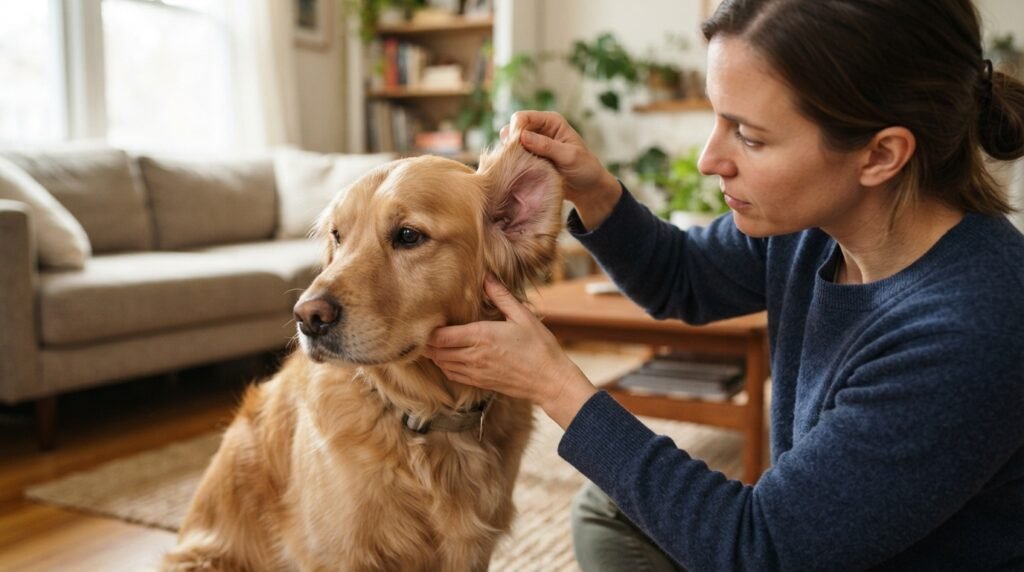
A veterinarian may begin by examining your dog’s ears and asking questions about their symptoms and recent contact with other animals.
They may then collect a small sample of material from the ear and examine it under a microscope.
This can help identify mites or other organisms that may be contributing to the problem.
A proper diagnosis matters because treatment for parasites is different from treatment for bacterial or yeast infections.
Why You Shouldn’t Guess the Cause
It’s tempting to see your dog scratching and immediately search for an ear-mite treatment.
But using the wrong treatment can delay appropriate care.
For example, a dog with allergies or a yeast infection may show many of the same symptoms as a dog with ear mites. Treating only for mites won’t solve the underlying problem.
A veterinarian can determine whether mites are present and whether another condition is affecting the ear at the same time.
What Happens If Ear Mites Are Ignored?
Untreated ear irritation can cause your dog to scratch repeatedly.
That scratching can damage the skin and create additional inflammation. Persistent head shaking and scratching may also contribute to an aural hematoma, where blood collects within the ear flap.
Secondary bacterial or yeast infections can also develop when the ear’s normal environment becomes disturbed.
This is why persistent symptoms deserve attention rather than simply waiting for them to disappear.
When Should You Contact a Veterinarian?
Make a veterinary appointment if your dog has:
- Persistent ear scratching
- Frequent head shaking
- Dark or unusual ear discharge
- Strong ear odor
- Redness or swelling
- Pain when the ear is touched
- Bleeding or open sores
- Repeated ear problems
- Loss of balance or unusual head positioning
Severe pain, bleeding, significant swelling, or balance problems should be treated as reasons for prompt veterinary attention.
Key Takeaway
Dog ear mites are tiny parasites, but the discomfort they cause can be significant. Because their symptoms can look similar to other ear conditions, proper diagnosis is more reliable than trying to identify the problem from appearance alone.
How Dog Ear Mites Are Treated
Once a veterinarian confirms that your dog has ear mites, the next step is choosing an appropriate treatment. The exact treatment depends on your dog’s age, health, the severity of the infestation, and whether another ear problem is present.
How Are Dog Ear Mites Treated?
Veterinarians may recommend an approved antiparasitic medication designed to kill ear mites. Depending on the product and your dog’s situation, treatment may be applied directly to the ears or administered through another appropriate route.
Some modern parasite-control medications can also be effective against ear mites, but the correct product and dose should be chosen with veterinary guidance.
Never use a medication intended for another animal unless your veterinarian specifically tells you to do so.
Why Ear Cleaning May Be Recommended
A veterinarian may recommend cleaning the ears before or during treatment.
Cleaning can help remove accumulated wax, debris, and discharge, allowing medication to work more effectively when the product instructions call for a clean ear.
However, an irritated ear should be handled gently.
If your dog has severe pain, swelling, bleeding, or a suspected damaged eardrum, don’t attempt aggressive cleaning at home. Let your veterinarian decide the safest approach.
Should You Treat Both Ears?
If ear mites are confirmed, both ears may need attention because mites can affect both sides even when one ear appears worse.
Follow the treatment instructions provided by your veterinarian or the medication label exactly.
Do not assume that treating only the ear that looks dirty is enough.
What About Other Pets?
This is an important part of controlling an ear-mite infestation.
Because ear mites can spread between animals, your veterinarian may recommend examining or treating other dogs and cats that have been exposed.
Treating only one pet while another infected animal remains untreated can increase the chance of reinfestation.
If you have several pets, tell your veterinarian about all of them, even if some appear completely healthy.
Can Dog Ear Mites Go Away Without Treatment?
It is better not to rely on the infestation disappearing by itself.
Ear mites can continue irritating the ear, leading to persistent scratching and inflammation. Secondary infections may also develop.
If you suspect ear mites, getting an accurate diagnosis and following an appropriate treatment plan is the safest approach.

Are Home Remedies Safe for Dog Ear Mites?
You may find online recommendations for oils, vinegar mixtures, alcohol, hydrogen peroxide, or other homemade solutions.
Be cautious.
Putting irritating substances into an already inflamed ear can make the problem worse. Some products may also be unsafe if the eardrum is damaged.
Avoid putting homemade mixtures or unapproved substances into your dog’s ear unless your veterinarian has specifically recommended them.
Natural does not automatically mean safe for an inflamed ear.
Don’t Use Human Ear Medicine
Human ear medications are not automatically appropriate for dogs.
A dog’s ear anatomy and medical needs are different, and some products may be unsuitable or dangerous.
Always check with your veterinarian before using medication that was not specifically prescribed or recommended for your dog.
How Long Does Treatment Take?
The length of treatment depends on the medication used and the individual dog’s condition.
Some products require a single application, while others require repeated treatment. Your veterinarian or the product label should provide the correct schedule.
Don’t stop treatment early simply because your dog seems better.
Following the full recommended treatment plan helps reduce the risk of persistent infestation or complications.
What If Your Dog Keeps Scratching After Treatment?
Some irritation may continue temporarily while the ear recovers, but persistent or worsening symptoms should not be ignored.
If your dog continues scratching intensely, shaking their head, developing discharge, or showing pain after treatment, contact your veterinarian.
The original problem may not have been ear mites, or your dog could have developed a secondary bacterial or yeast infection.
Keep the Environment Clean
Although treatment should focus on the animals and veterinary recommendations, maintaining a clean living environment can also be sensible.
Wash your dog’s bedding regularly and clean commonly used sleeping areas.
If several pets live together, follow your veterinarian’s advice about managing potential exposure among them.
The Most Important Rule
The safest approach to suspected dog ear mites is simple:
Get the condition properly identified, use an appropriate veterinary-approved treatment, and follow the treatment instructions carefully.
Avoid experimenting with strong household chemicals or homemade ear remedies.

Safe Ear Cleaning & Prevention
How to Clean Your Dog’s Ears Safely
If your veterinarian recommends cleaning your dog’s ears, use a dog-specific ear-cleaning solution and follow the product instructions.
Ear cleaning should be gentle. The goal is to remove accessible debris without damaging the delicate tissues inside the ear.
A basic approach is:
- Keep your dog calm in a comfortable area.
- Use only a veterinary-approved ear-cleaning solution.
- Apply the recommended amount to the ear.
- Gently massage the base of the ear for several seconds.
- Allow your dog to shake their head.
- Wipe away loosened debris from the visible outer portion of the ear with clean cotton or gauze.
- Stop if your dog appears painful or extremely uncomfortable.
Never Push Cotton Swabs Deep Into the Ear
One of the most common ear-cleaning mistakes is inserting cotton swabs deep into the ear canal.
This can push debris farther inside and potentially injure delicate structures.
Use cotton or gauze only to clean areas that you can safely see.
Don’t Over-Clean Your Dog’s Ears
More cleaning does not necessarily mean healthier ears.
Excessive cleaning can irritate the ear canal and disturb its natural environment.
Your dog’s cleaning schedule should depend on their individual needs and your veterinarian’s recommendations.
Some dogs need regular cleaning, while others rarely need it.
Watch for Signs of a Bigger Problem
Ear cleaning should not replace veterinary care.
Stop and contact your veterinarian if you notice:
- Severe redness
- Significant swelling
- Bleeding
- Pus-like discharge
- Strong persistent odor
- Severe pain
- Loss of balance
- Persistent head tilting
- Symptoms that keep returning
These signs may indicate a more serious ear condition.
How to Prevent Dog Ear Mites
You cannot eliminate every possible exposure, but several habits can reduce the risk of ear-mite problems.
1. Monitor Your Dog’s Ears
Regularly look at the visible parts of your dog’s ears.
You’re checking for unusual redness, discharge, odor, swelling, or excessive scratching—not trying to diagnose a condition yourself.
2. Pay Attention to Changes in Behavior
Your dog may communicate discomfort through behavior.
Repeated head shaking, ear scratching, face rubbing, or reluctance to have their ears touched can be signs that something is wrong.
3. Check Other Pets
If one pet is diagnosed with ear mites, tell your veterinarian about other dogs and cats in the household.
Because ear mites can spread through close contact, other exposed pets may also need examination or treatment.
4. Keep Bedding Clean
Wash your dog’s bedding regularly and keep sleeping areas clean.
This is a useful part of general pet hygiene, especially in homes with multiple animals.
5. Keep Routine Veterinary Care
Regular veterinary examinations can help identify ear problems before they become severe.
This is particularly useful for dogs that have a history of recurring ear problems.
Can Ear Mites Return?
Yes. A dog can potentially become reinfested after successful treatment if they are exposed to an infected animal again.
That’s why identifying possible sources of exposure is important.
If your dog repeatedly develops ear-mite symptoms, discuss the situation with your veterinarian rather than repeatedly treating the ears on your own.

Final Takeaway
Dog ear mites are uncomfortable but generally treatable parasites.
The most recognizable warning signs include persistent scratching, frequent head shaking, dark ear debris, redness, irritation, and discomfort.
However, these symptoms can also occur with allergies, yeast infections, bacterial infections, and other ear conditions.
The smartest approach is to avoid guessing. If your dog’s ear symptoms persist, become severe, or keep returning, have the ears examined by a veterinarian.
With proper diagnosis, appropriate treatment, gentle ear care, and attention to other exposed pets, you can help your dog get back to comfortable, healthy ears.
Frequently Asked Questions
Can humans get ear mites from dogs?
Human infestation from dog ear mites is considered uncommon. If you develop unusual symptoms after handling an affected animal, speak with a healthcare professional.
Can ear mites cause a dog to lose hearing?
Severe or untreated ear disease can affect hearing, but hearing problems are not something to ignore. Contact a veterinarian if your dog doesn’t respond normally to sounds.
Are ear mites the same as a dog ear infection?
No. Ear mites are parasites, while ear infections can involve bacteria, yeast, or other causes. A dog can also have more than one problem at the same time.
Is dark ear wax always a sign of ear mites?
No. Dark discharge can occur with several ear conditions. Veterinary examination is the best way to determine the cause.
Can puppies get ear mites?
Yes. Puppies can develop ear mites, particularly after close contact with infected animals. Persistent scratching or unusual ear discharge should be checked by a veterinarian.

hammadniazi6663@gmail.com
Contributor at PetZuoo, publishing practical information for pet owners and animal lovers.
Related guides

Why Do Dog Tilt Their Heads? 9 Fascinating Reason
Why Do Dog Tilt Their Heads? 9 Fascinating Reason Behind This Adorable Behavior. Have you ever spoken to your dog and watched…
Why Does Dog Suddenly Follow Me Everywhere? 9 Reasons
Why Does Dog Suddenly Follow Me Everywhere? 9 Reasons and Have you noticed that your dog suddenly seems to be your shadow?…
Ultimate Guide to Dog Separation Anxiety
Ultimate Guide to Dog Separation Anxiety. Proven Ways to Help Your Dog Feel Safe Alone, and Leaving your dog at home for…