Dog Anxiety at Home:11 Proven Ways to Calm Dog Anxiety at Home
A dog can look perfectly healthy on the outside while feeling stressed, frightened, or overwhelmed on the inside. Anxiety is relatively common in dogs, and it can appear in many different ways—from excessive barking and pacing to hiding, destructive behavior, trembling, or constantly following their owner.
For pet parents, seeing a beloved dog struggle with anxiety can be difficult. The good news is that many dogs can become more comfortable with the right environment, routine, training, enrichment, and professional guidance.
In this guide, we’ll explore practical ways to recognize anxiety and create a calmer home environment for your dog.
What Is Dog Anxiety?
Dog anxiety is a state of fear, stress, or nervousness that occurs when a dog feels threatened, uncertain, or unable to cope with a situation.
Anxiety can be triggered by many things. Some dogs become anxious when left alone, while others react to thunderstorms, fireworks, unfamiliar visitors, travel, loud noises, or changes in their daily routine.
Sometimes the cause is obvious. Other times, anxiety develops gradually and can be difficult for owners to identify.
The important thing is to pay attention to changes in your dog’s normal behavior.
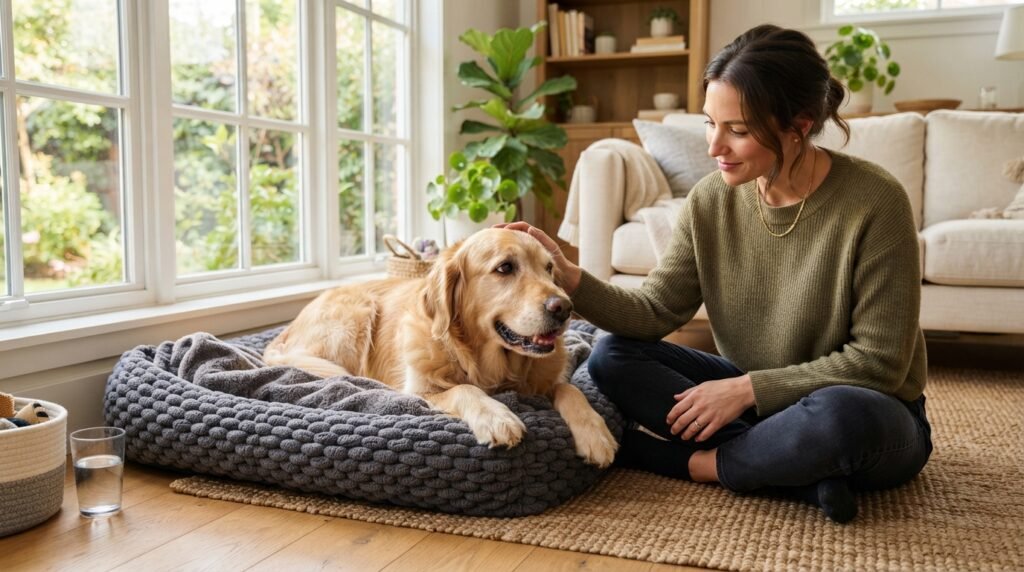
Common Signs of Anxiety in Dogs
Every dog is different, so anxiety doesn’t always look the same.
Some common signs include:
- Excessive barking or whining
- Pacing around the house
- Trembling or shaking
- Hiding behind furniture
- Excessive panting when the weather isn’t hot
- Destructive chewing
- Scratching doors or windows
- Excessive licking
- Trying to escape
- Loss of appetite
- Restlessness
- Excessive attachment to their owner
- Accidents inside the house despite being house-trained
One isolated behavior doesn’t necessarily mean your dog has an anxiety disorder. However, sudden or persistent behavioral changes deserve attention, particularly when they occur alongside physical symptoms.
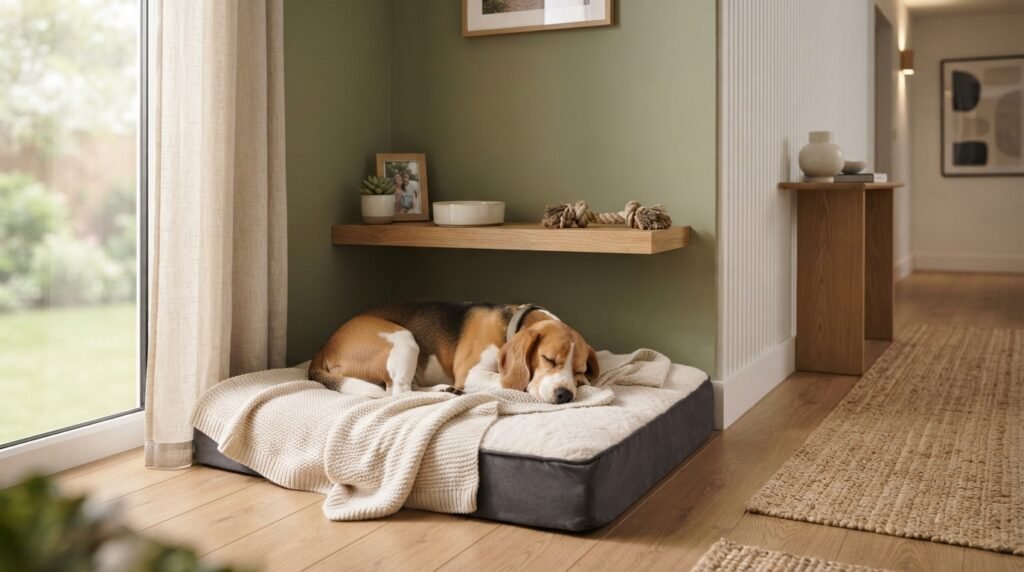
1. Create a Safe and Quiet Space
One of the simplest ways to help an anxious dog is to give them a place where they can retreat when they feel overwhelmed.
This doesn’t need to be an expensive setup. A quiet corner of your home can work well.
Place your dog’s bed or crate in an area away from heavy household traffic. Add a familiar blanket or favorite toy so the area smells and feels familiar.
The goal is not to force your dog into this space. Instead, allow your dog to choose it when they need some quiet time.
Make the Space Comfortable
A good calming area might include:
- A comfortable dog bed
- A familiar blanket
- A favorite safe toy
- Fresh water nearby
- Reduced noise and foot traffic
- Soft, predictable lighting
For dogs that become nervous during storms or fireworks, this safe area can become particularly valuable.
2. Keep a Consistent Daily Routine
Dogs often feel more secure when they know what to expect.
A predictable routine can include regular times for:
Morning:
Breakfast → bathroom break → walk or play
Afternoon:
Rest → enrichment → short training session
Evening:
Dinner → gentle activity → quiet family time → bedtime
The schedule doesn’t have to be perfect every day. The idea is to establish predictable patterns.
Sudden changes can sometimes make an anxious dog more unsettled. If you know a major change is coming—such as moving furniture, moving homes, or introducing a new schedule—gradually prepare your dog whenever possible.
3. Give Your Dog Enough Physical Exercise
Exercise isn’t a cure for every form of anxiety, but appropriate physical activity can support overall well-being.
Dogs have different exercise needs depending on factors such as age, breed, size, fitness, and individual personality.
A healthy exercise routine might involve:
- Walking
- Playing fetch
- Gentle running
- Interactive games
- Exploring safe outdoor areas
- Age-appropriate activities
Don’t assume that simply exhausting a dog will eliminate anxiety. An anxious dog may need mental stimulation and behavior support in addition to physical exercise.
The goal is balanced activity rather than forcing your dog into intense exercise.
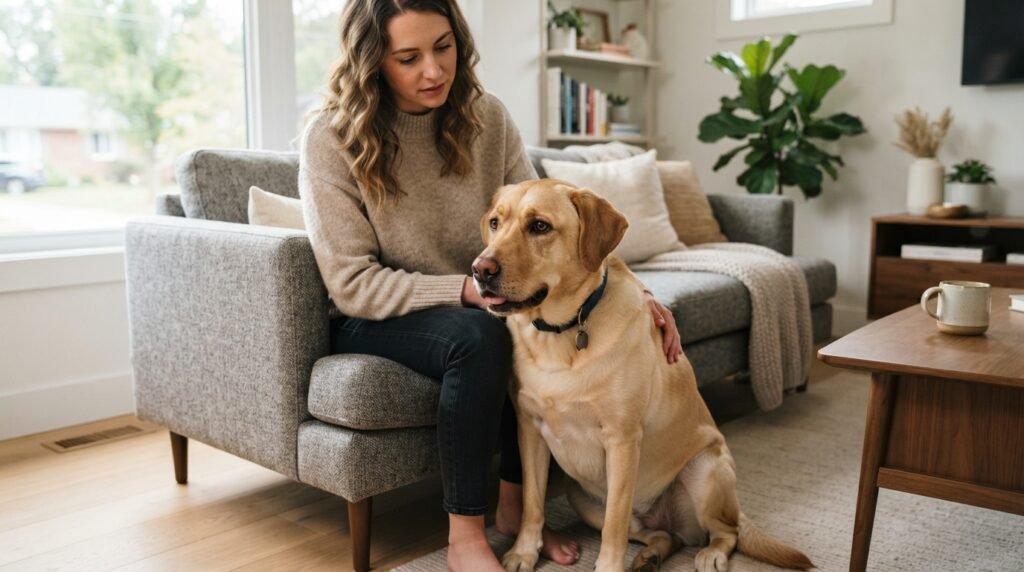
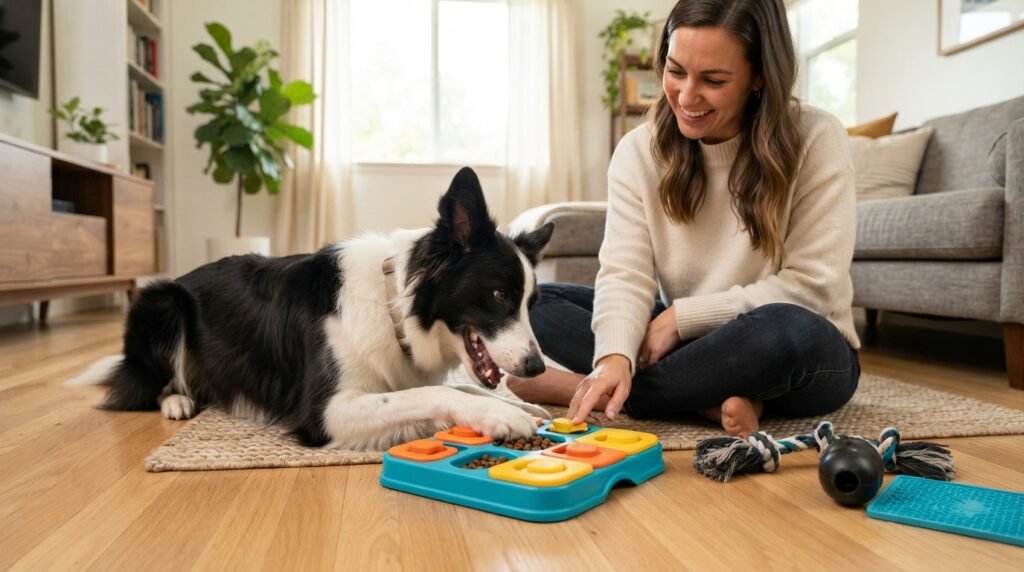
4. Give Your Dog Mental Enrichment
Physical exercise is important, but dogs also need opportunities to use their brains.
Boredom and under-stimulation can contribute to unwanted behaviors, while appropriate enrichment can give your dog something positive to focus on.
Try activities such as:
- Puzzle feeders
- Treat-dispensing toys
- Sniffing games
- Hide-and-seek with treats
- Basic obedience training
- Finding a favorite toy
- Supervised chewing activities
Try a Simple Sniffing Game
Hide a few small treats around an easy-to-access area of your home and encourage your dog to find them.
Start with obvious hiding places. As your dog understands the game, gradually make the hiding spots more challenging.
Sniffing and searching can provide a useful form of mental stimulation while giving your dog a positive activity to concentrate on.
Always consider your dog’s dietary needs and daily calorie intake when using treats for enrichment.
5. Help Your Dog With Separation Anxiety
Some dogs become particularly distressed when their owners leave the house.
Signs can include barking, whining, destructive behavior, pacing, escape attempts, or accidents that occur primarily when the dog is alone.
If your dog becomes anxious when you leave, avoid assuming that the behavior is simply disobedience.
Instead, work on building independence gradually.
Encourage Calm Independence
You can begin by rewarding your dog for calmly relaxing on their bed while you’re nearby.
Over time, practice very short periods where you move into another room and return before your dog becomes highly distressed.
The exact approach should be adjusted to your dog’s response. If even brief separation causes intense distress, working with a qualified veterinary behavior professional or experienced positive-reinforcement trainer can be especially helpful.
Avoid punishment after you return home. Your dog may associate the punishment with your arrival rather than understanding what you believe they did wrong.
6. Use Calm, Positive Training
Training can give anxious dogs structure and help them learn what behaviors earn rewards.
Instead of punishing fearful behavior, focus on reinforcing calm responses.
For example, if your dog sees something that normally causes mild nervousness but remains calm, reward that calm behavior with something your dog values.
Basic skills such as:
- Sit
- Stay
- Come
- Leave it
- Go to bed
- Relax
can also provide useful communication between you and your dog.
Keep training sessions short and positive.
A five-minute session that ends successfully can be more productive than a long session that leaves your dog frustrated.
7. Reduce Exposure to Known Triggers
If you know what makes your dog anxious, managing the environment can make a major difference.
For example, a dog frightened by loud outdoor noises may be more comfortable in an interior room with windows closed.
A dog who becomes overwhelmed by visitors may benefit from having a quiet retreat where they can move away from the activity.
Common triggers include:
- Thunderstorms
- Fireworks
- Construction noise
- Vacuum cleaners
- Large groups of people
- Other animals
- Car rides
- Being left alone
Avoid forcing your dog to remain close to something that frightens them.
Instead, create distance and use gradual, controlled exposure when appropriate.
8. Stay Calm Yourself
Dogs can be highly responsive to changes in their environment and interactions with their owners.
When your dog becomes nervous, try to remain calm and predictable.
Speak normally, avoid sudden movements, and give your dog space when they seek it.
You don’t need to ignore your dog completely. Quiet reassurance and allowing them to stay near you can be appropriate, depending on the situation.
The key is to avoid creating additional excitement around an already stressful event.
For example, if fireworks start outside, calmly move with your dog to their comfortable area and provide a familiar activity rather than reacting dramatically to every loud sound.
A Simple Evening Routine for an Anxious Dog
A predictable evening routine might look like this:
6:00 PM: Dinner
6:30 PM: Gentle walk
7:00 PM: Quiet enrichment activity
7:30 PM: Relaxation on their bed
8:30 PM: Calm family time
10:00 PM: Final bathroom break and bedtime
Your dog’s actual schedule should be based on their age, health, exercise needs, and household routine.
The goal isn’t to follow these exact times. The goal is consistency.
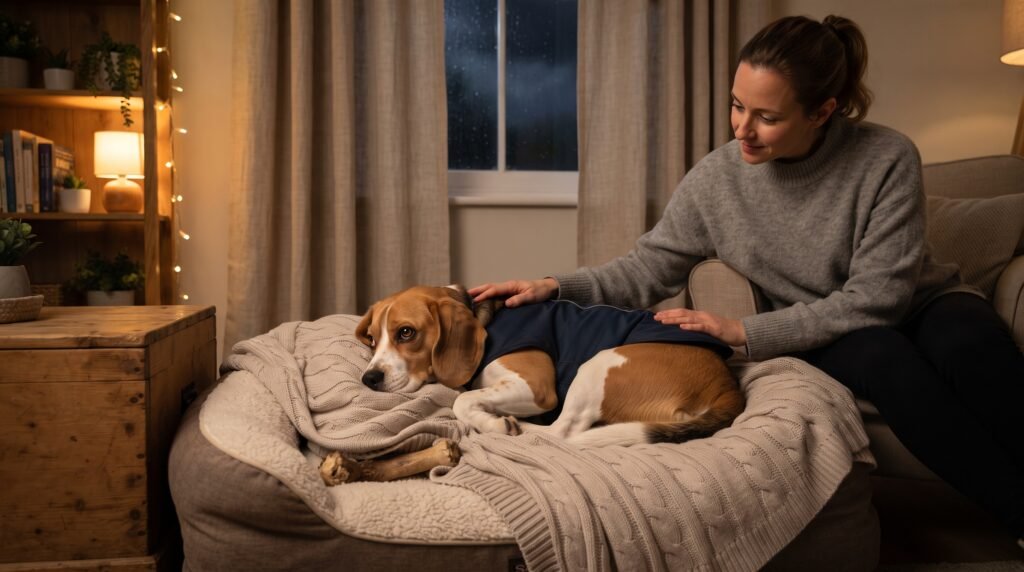
9. Help Your Dog During Thunderstorms and Fireworks
Loud noises can be extremely frightening for some dogs. Thunderstorms and fireworks may cause trembling, panting, pacing, hiding, barking, or attempts to escape.
Preparation is easier than trying to solve the problem once your dog is already extremely frightened.
Before the Noise Begins
If you know a storm or fireworks event is expected:
- Take your dog outside earlier for a bathroom break.
- Close windows and curtains.
- Secure doors and gates.
- Set up your dog’s safe area.
- Put familiar bedding and toys nearby.
- Keep your dog indoors.
- Use gentle background sound if it helps mask sudden noises.
Never leave an anxious dog outside during fireworks or severe storms. A frightened dog may attempt to escape a yard, jump a fence, or run into dangerous areas.
During the Event
Stay as calm and predictable as possible.
Allow your dog to choose their preferred safe location. Some dogs want to stay beside their owners, while others prefer hiding in a quiet corner.
Don’t force your dog to interact or come out of hiding.
If your dog enjoys food during stressful situations, a food puzzle or long-lasting appropriate chew may provide a positive distraction.
However, if your dog is too frightened to eat, don’t force food.
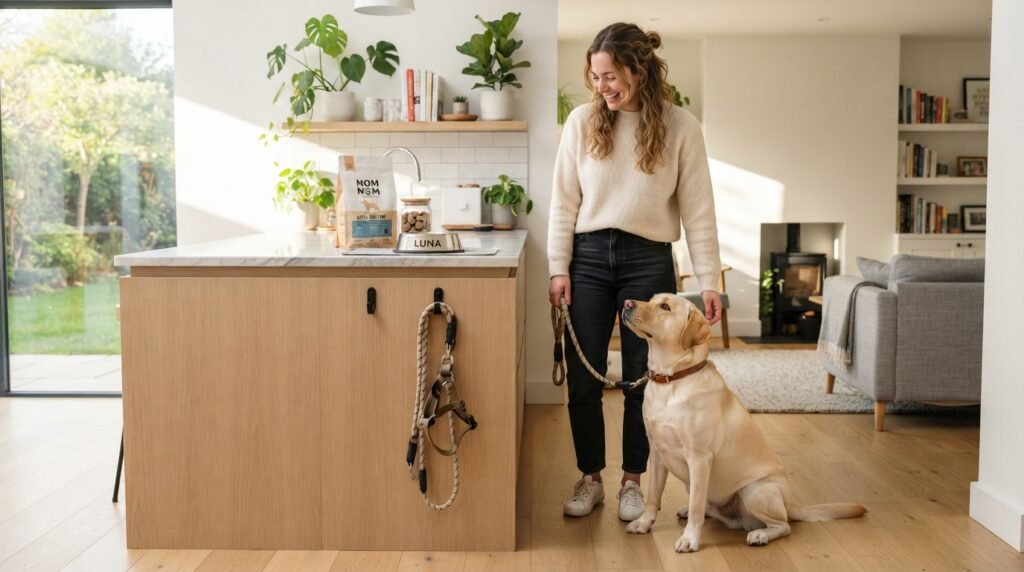
10. Make Your Home More Anxiety-Friendly
Your dog’s surroundings can influence how secure they feel.
A calmer home doesn’t have to be completely silent. Instead, focus on creating predictable spaces and reducing unnecessary stress.
Consider Your Dog’s Environment
Ask yourself:
- Does my dog have somewhere quiet to rest?
- Can my dog move away from visitors?
- Is their sleeping area comfortable?
- Are food and water easily accessible?
- Are loud noises frequent?
- Does my dog get enough appropriate exercise?
- Does my dog have daily mental stimulation?
- Are household routines reasonably predictable?
Small environmental changes can sometimes make a surprisingly noticeable difference.
Don’t Overlook Rest
Dogs need plenty of sleep and downtime.
An anxious dog may have difficulty relaxing because they’re constantly monitoring their surroundings.
Give your dog opportunities to rest without being repeatedly disturbed.
If children are in the household, teach them that a dog lying in their bed or designated resting area should be left alone.
This helps create a predictable space where your dog can relax safely.
11. Know When to Contact Your Veterinarian
Not every behavior problem is caused by anxiety.
Pain, illness, neurological problems, hormonal conditions, age-related changes, and other medical issues can sometimes cause changes in behavior.
That’s why a sudden behavioral change should not automatically be treated as a training problem.
Contact your veterinarian if your dog’s anxiety:
- Appears suddenly
- Becomes significantly worse
- Interferes with eating or sleeping
- Causes repeated escape attempts
- Leads to self-injury
- Is accompanied by other concerning physical symptoms
- Makes normal daily activities difficult
Your veterinarian can help determine whether an underlying medical issue could be contributing to the behavior.
For dogs with significant anxiety, a veterinarian may also discuss a structured behavior plan and, when appropriate, medication as part of treatment.
What NOT to Do When Your Dog Is Anxious
Good intentions can sometimes make anxiety worse.
Don’t Punish Fear
Punishing trembling, barking, hiding, or destructive behavior caused by fear can increase stress.
Your dog isn’t choosing to feel frightened.
Don’t Force Your Dog Toward the Trigger
Forcing a fearful dog to approach something scary can overwhelm them.
Behavior modification should be gradual and carefully managed.
Don’t Expect Instant Results
Anxiety usually doesn’t disappear after one training session.
Progress may happen slowly, and setbacks can occur.
Celebrate small improvements.
A dog that previously couldn’t relax for five minutes but can now calmly rest for fifteen minutes has made meaningful progress.
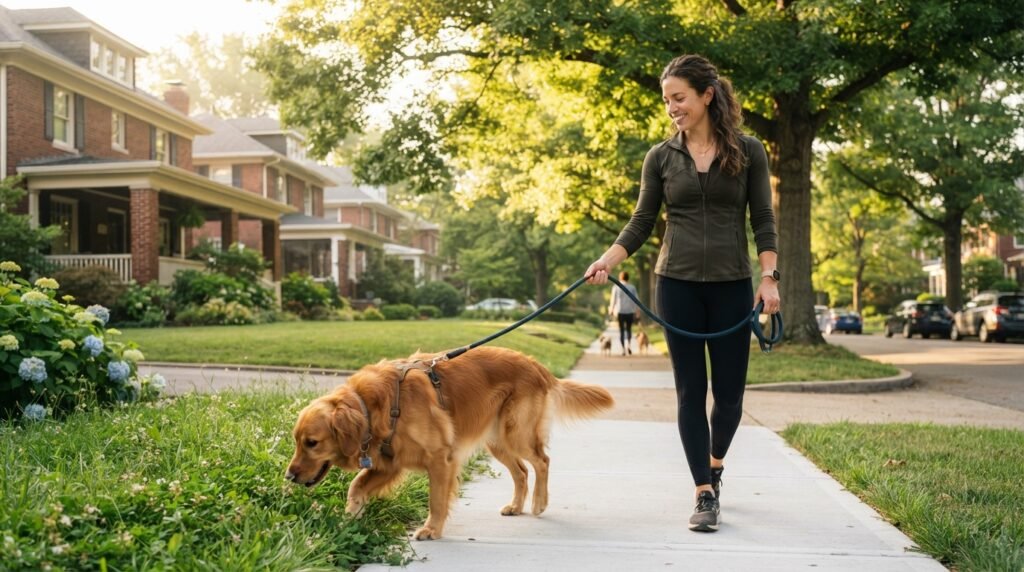
A Simple Daily Anxiety-Management Plan
Here’s an easy framework you can adapt to your dog:
Morning:
A bathroom break, appropriate exercise, breakfast, and a short training session.
Midday:
Rest plus a safe enrichment activity.
Afternoon:
Another opportunity for movement, sniffing, or interactive play.
Evening:
A calm walk, dinner, quiet enrichment, and relaxation time.
Bedtime:
A predictable final bathroom break followed by access to a comfortable sleeping area.
The exact routine should be customized to your dog’s age, health, personality, and lifestyle.
Final Thoughts
Helping an anxious dog isn’t about finding one magical solution. It’s about creating a collection of small, positive experiences that help your dog feel safer.
A predictable routine, appropriate exercise, mental enrichment, positive training, environmental management, and professional guidance when necessary can all play important roles.
Most importantly, pay attention to your individual dog. What calms one dog may not work for another.
If anxiety is severe, sudden, worsening, or interfering with your dog’s quality of life, speak with your veterinarian rather than trying to manage the problem entirely on your own.
Practical Guide & Conclusion
A 7-Day Plan to Help an Anxious Dog Feel Safer
If your dog struggles with anxiety, you don’t have to change everything at once. A gradual approach is often easier for both you and your dog.
Day 1: Identify the Triggers
Start by observing your dog.
Write down when anxiety appears and what happens immediately beforehand.
For example:
- Loud noises
- Visitors
- Being left alone
- Other dogs
- Car rides
- Changes in routine
- Certain rooms or environments
Understanding the trigger is the first step toward managing it.
Day 2: Create a Safe Space
Choose a quiet area of your home and make it comfortable.
Add your dog’s bed, familiar blanket, and a favorite safe toy.
Allow your dog to enter and leave the area freely.
Day 3: Establish a Routine
Try to keep meals, walks, playtime, training, and bedtime reasonably consistent.
Predictability can help your dog understand what to expect throughout the day.
Day 4: Add Mental Enrichment
Introduce one simple enrichment activity.
A puzzle feeder, sniffing game, or short training session can give your dog something positive to focus on.
Don’t overwhelm your dog with too many new activities at once.
Day 5: Practice Calm Behavior
Reward your dog when they voluntarily relax.
For example, if your dog lies quietly on their bed, calmly reinforce that behavior.
The goal is to teach your dog that calm behavior leads to positive experiences.
Day 6: Work on Independence
If your dog becomes anxious when you leave, practice very short periods of separation that remain below your dog’s distress threshold.
Return calmly and gradually increase the duration only when your dog is coping comfortably.
If your dog experiences severe separation anxiety, seek professional guidance rather than attempting difficult separation exercises without support.
Day 7: Review Your Dog’s Progress
Look back at the previous six days.
Ask:
- Is my dog relaxing more easily?
- Are certain triggers becoming easier?
- Is my dog sleeping better?
- Is destructive behavior decreasing?
- Is my dog engaging more with toys or enrichment?
- Are there situations that still cause significant distress?
Progress doesn’t have to be dramatic.
Even small improvements can provide useful information about what helps your dog.
How Long Does It Take to Reduce Dog Anxiety?
There isn’t one timeline that works for every dog.
Some dogs respond to environmental changes and training relatively quickly. Others need weeks or months of consistent behavior work.
The cause and severity of anxiety matter.
A dog with mild situational nervousness may improve with management and gradual training, while a dog with severe separation anxiety may require a more comprehensive treatment plan.
Avoid comparing your dog’s progress with another dog.
Instead, look for gradual improvement in your own dog’s ability to cope.
When Professional Help Is the Best Choice
Sometimes home strategies aren’t enough.
A veterinarian should be involved when anxiety is severe, sudden, worsening, or affecting your dog’s health or safety.
A qualified behavior professional can also help identify triggers and develop a structured behavior-modification program.
Professional support is particularly important when a dog:
- Attempts to escape
- Injures themselves
- Shows serious aggression
- Cannot settle when alone
- Stops eating during stressful events
- Experiences frequent severe panic
- Has anxiety that significantly affects daily life
Getting help isn’t a failure as a pet owner.
It means you’re taking your dog’s well-being seriously.
Frequently Asked Questions
Can I comfort my dog when they are scared?
Yes. You can calmly stay near your dog and provide a safe, reassuring environment. Avoid forcing interaction if your dog wants space.
Should I punish my dog for destructive behavior caused by anxiety?
No. Punishment can increase fear and stress. Focus on identifying the cause and preventing situations in which the behavior occurs.
Can exercise help an anxious dog?
Appropriate exercise can support physical and mental well-being, but exercise alone isn’t a complete treatment for every type of anxiety.
Is dog anxiety treatable?
Many dogs can improve significantly with appropriate management, behavior modification, environmental changes, and professional support when needed.
Can anxiety suddenly appear in an older dog?
Yes. A new behavior change in an older dog deserves veterinary attention because medical or age-related factors can sometimes contribute to anxiety-like behavior.
Final Takeaway
A calm dog isn’t necessarily a dog that never feels afraid.
The real goal is to help your dog feel safe enough to cope with everyday situations.
Start with the basics: identify triggers, provide a safe environment, maintain a predictable routine, offer appropriate physical and mental activity, reinforce calm behavior, and avoid punishment.
Most importantly, be patient.
Your dog may need time to build confidence, and progress can happen in small steps. With consistent support and, when necessary, professional veterinary or behavioral guidance, many anxious dogs can learn better ways to cope.
A calmer dog starts with a calmer, more understanding environment.

hammadniazi6663@gmail.com
Contributor at PetZuoo, publishing practical information for pet owners and animal lovers.
Related guides
Why Do Dog Tilt Their Heads? 9 Fascinating Reason
Why Do Dog Tilt Their Heads? 9 Fascinating Reason Behind This Adorable Behavior. Have you ever spoken to your dog and watched…
Why Does Dog Suddenly Follow Me Everywhere? 9 Reasons
Why Does Dog Suddenly Follow Me Everywhere? 9 Reasons and Have you noticed that your dog suddenly seems to be your shadow?…
Ultimate Guide to Dog Separation Anxiety
Ultimate Guide to Dog Separation Anxiety. Proven Ways to Help Your Dog Feel Safe Alone, and Leaving your dog at home for…