The Ultimate Guide to Cat Water Fountains and Why Every Cat Needs Proper Hydration
Cats are known for being independent, playful, and curious, but they are also notorious for not drinking enough water. Unlike dogs, cats evolved from desert-dwelling ancestors, which means they naturally have a low thirst drive. While this adaptation helped wild cats survive in arid environments, it can become a problem for modern indoor cats that eat primarily dry food.
One of the simplest ways to encourage better hydration is by using a cat water fountain. These devices keep water moving, fresh, and oxygenated, making it far more appealing than a stagnant bowl. Many veterinarians recommend water fountains because they help cats drink more, reducing the risk of dehydration and supporting long-term health.
In this guide, you’ll discover why cat water fountains are becoming an essential accessory for pet owners, how they benefit your feline friend, and what features you should look for before buying one.
Why Hydration Matters for Cats
Water plays a vital role in nearly every function of your cat’s body. It helps regulate body temperature, transports nutrients, supports healthy digestion, lubricates joints, and flushes toxins through the kidneys.
When a cat doesn’t drink enough water, it may become mildly dehydrated without showing obvious symptoms. Over time, chronic dehydration can contribute to serious health problems, including:
- Urinary tract infections
- Kidney disease
- Bladder stones
- Constipation
- Reduced energy levels
- Poor coat quality
Because cats naturally drink small amounts throughout the day, even a slight increase in daily water intake can make a meaningful difference to their overall health.
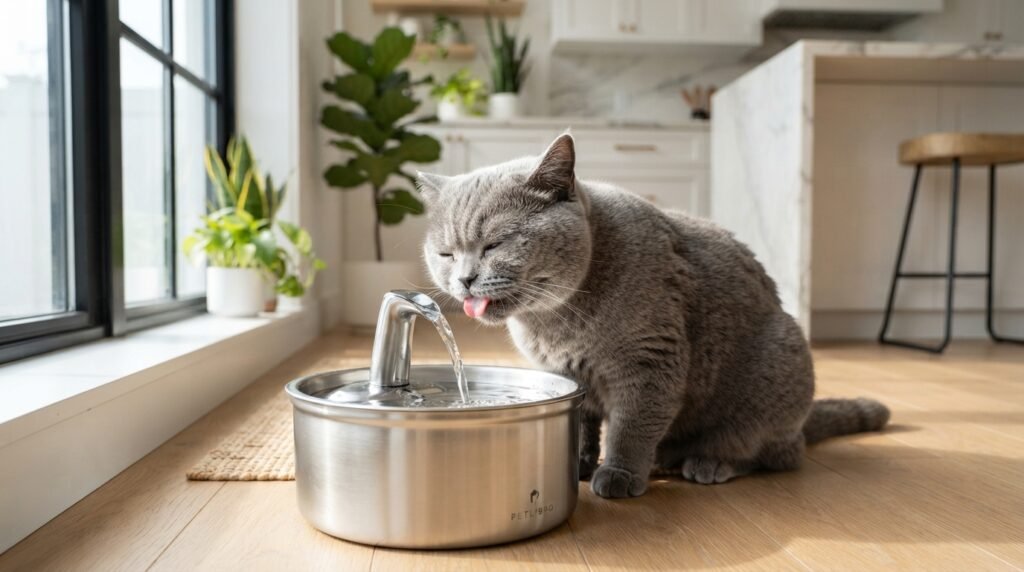
Why Cats Prefer Running Water
Have you ever noticed your cat drinking from a dripping faucet instead of its water bowl?
This behavior isn’t unusual. In the wild, flowing water is generally cleaner and safer than stagnant water. Many domestic cats still retain this instinct, preferring moving water because it seems fresher.
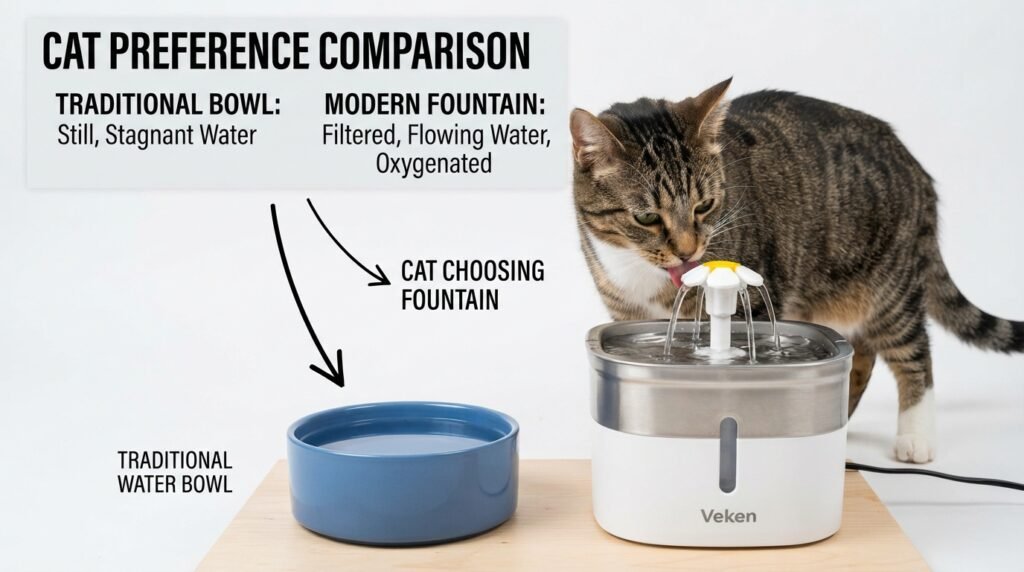
A cat water fountain recreates this natural experience by continuously circulating water. The movement attracts your cat’s attention, encouraging it to drink more often.
Some additional reasons cats love running water include:
- It tastes fresher due to continuous circulation.
- It contains more oxygen than still water.
- The gentle sound can attract curious cats.
- It remains cooler for longer.
- It is less likely to collect dust and debris.
This combination of visual movement, sound, and freshness makes drinking water much more appealing.
Signs Your Cat May Not Be Drinking Enough
Many owners don’t realize their cat is dehydrated until noticeable symptoms appear. Knowing the warning signs can help you act early.
Common signs include:
- Dry or sticky gums
- Sunken eyes
- Lethargy or unusual tiredness
- Loss of appetite
- Constipation
- Dark yellow urine
- Reduced skin elasticity
- Spending less time near the water bowl
If your cat consistently drinks very little or shows signs of dehydration, consult your veterinarian promptly.
Cats Eating Dry Food Need More Water
Dry kibble typically contains only about 8–10% moisture, while wet cat food contains around 70–80% water. Cats that primarily eat dry food need to compensate by drinking more water throughout the day.
Unfortunately, many cats don’t naturally increase their water intake enough.
A water fountain can bridge this gap by encouraging frequent drinking sessions, helping maintain healthy hydration levels and supporting kidney and urinary tract health.
Indoor Cats Are Especially at Risk
Indoor cats often have a comfortable lifestyle with less physical activity, controlled temperatures, and fewer natural water sources. While this sounds ideal, it can actually reduce their motivation to drink.
Providing multiple clean water stations around your home—and especially a high-quality water fountain—can encourage better hydration throughout the day.
Benefits of Cat Water Fountains & Types to Consider
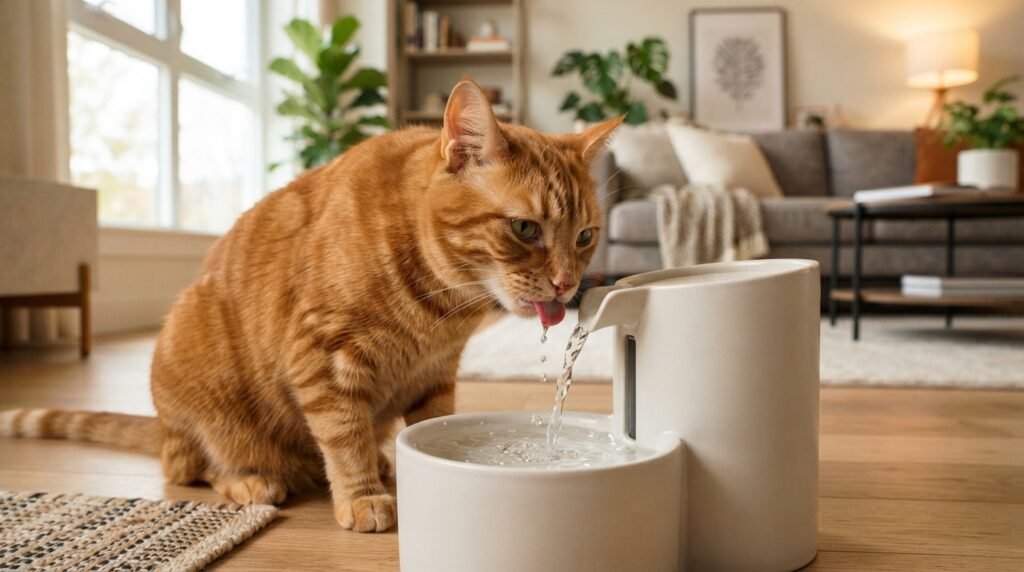
A cat water fountain is more than just a stylish pet accessory—it’s a practical investment in your cat’s long-term health. By keeping water fresh, filtered, and continuously moving, these fountains encourage cats to drink more and stay hydrated.
Let’s take a closer look at the biggest benefits and the different types available.
Top Benefits of Using a Cat Water Fountain
1. Encourages More Water Intake
The biggest advantage of a water fountain is that it encourages cats to drink more frequently. Flowing water naturally attracts a cat’s attention, making hydration more appealing than a still bowl.
Better hydration supports:
- Healthy kidneys
- Proper digestion
- Improved circulation
- Better energy levels
- Overall wellness
For cats that rarely drink from traditional bowls, a fountain can make a significant difference.
2. Supports Urinary Tract Health
Urinary tract problems are common in cats, especially males. Drinking more water helps dilute urine, reducing the risk of:
- Urinary crystals
- Bladder stones
- Urinary tract infections (UTIs)
- Painful blockages
A well-hydrated cat is generally less likely to develop these issues.
3. Helps Protect Kidney Function
Kidney disease is one of the most common health concerns in older cats. While a water fountain cannot prevent kidney disease, encouraging regular hydration helps support healthy kidney function and may reduce stress on the kidneys over time.
This is especially important for senior cats or breeds that may be more prone to kidney-related conditions.
4. Keeps Water Fresher for Longer
Unlike a regular water bowl, a fountain continuously circulates water through a filter. This process helps remove:
- Hair
- Dust
- Food particles
- Dirt
- Unpleasant odors
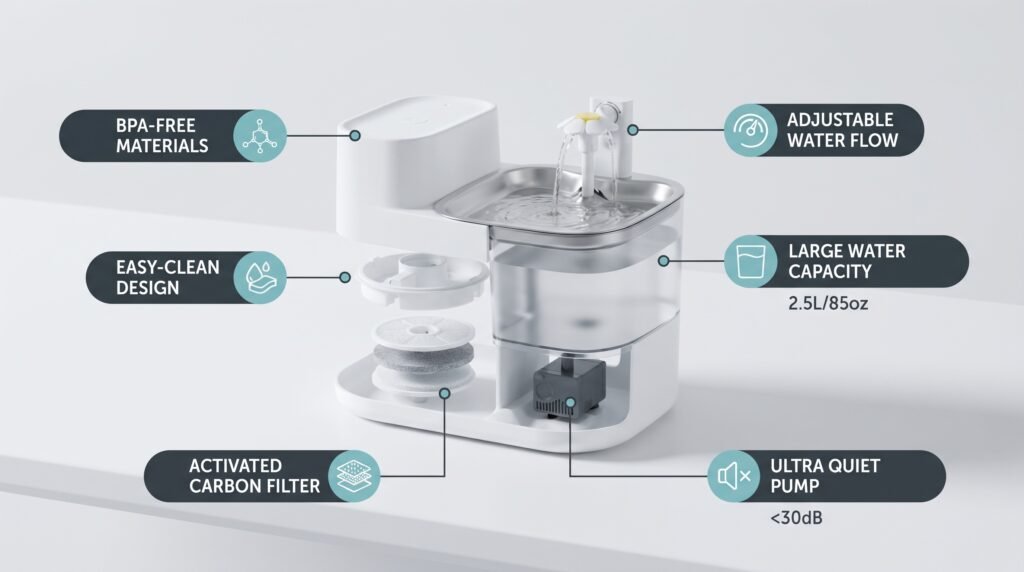
Many fountains also include activated carbon filters, improving both the taste and smell of the water.
5. Reduces Bacteria Build-Up
Standing water can quickly collect bacteria, particularly if your cat drops food into the bowl.
Because fountains keep water moving and filtered, they generally stay cleaner between washes. However, they still require regular cleaning to remain hygienic.
6. Makes Drinking More Fun
Cats are naturally curious animals. Many enjoy watching moving water and interacting with it using their paws before taking a drink.
The gentle stream or bubbling effect often encourages playful exploration, making hydration feel more like an activity than a chore.
Types of Cat Water Fountains
Choosing the right material is just as important as choosing the right design.
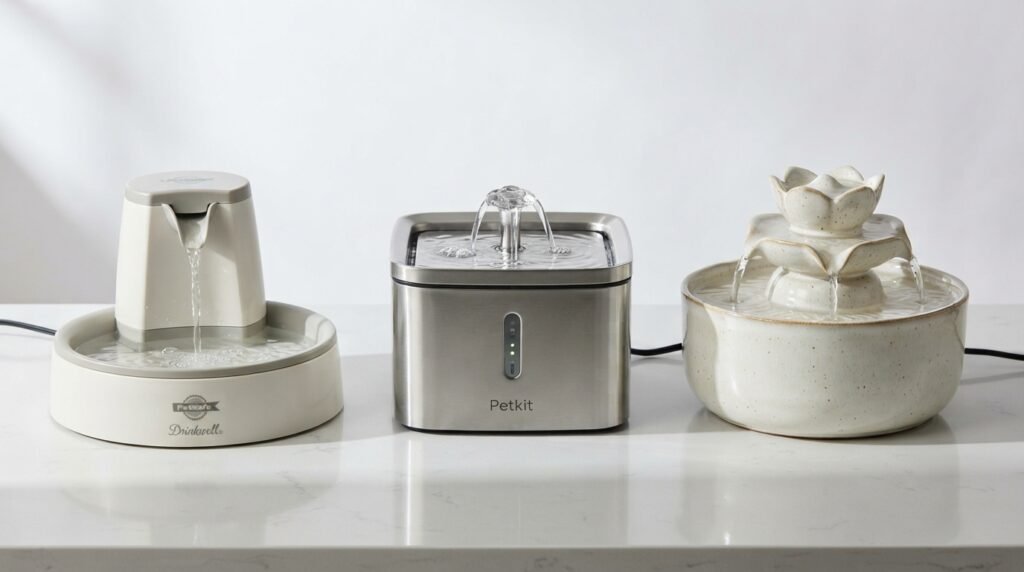
Plastic Cat Water Fountains
Plastic fountains are affordable and lightweight, making them a popular choice for first-time buyers.
Pros
- Budget-friendly
- Lightweight
- Wide variety of designs
- Easy to move
Cons
- Can scratch easily
- Scratches may trap bacteria
- Some cats develop chin acne from certain plastics
- May absorb odors over time
Choose a BPA-free plastic fountain if you decide on this option.
Stainless Steel Cat Water Fountains
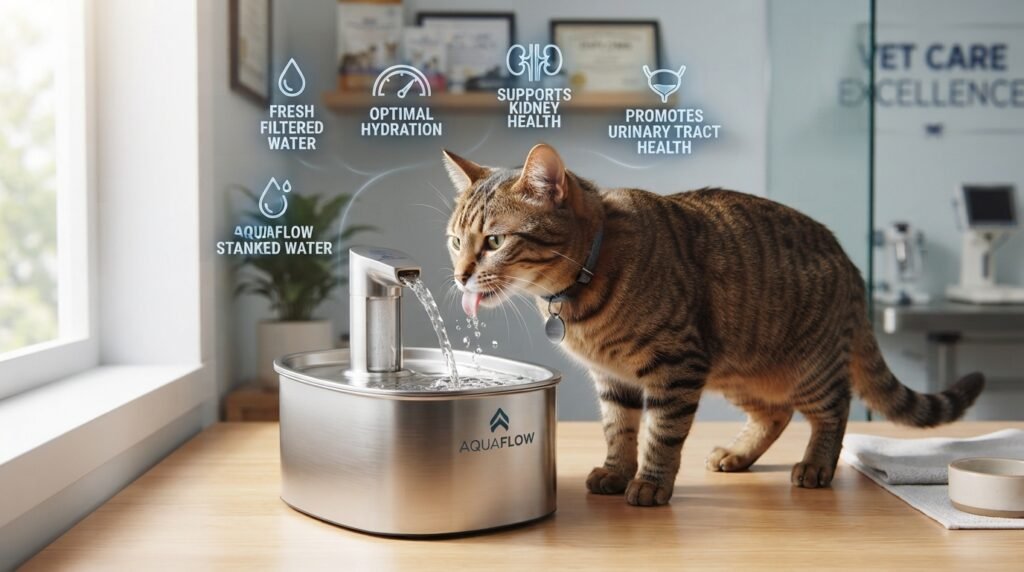
Stainless steel fountains are widely recommended by veterinarians because they are durable and hygienic.
Pros
- Easy to clean
- Resistant to bacteria
- Doesn’t absorb odors
- Long-lasting
- Modern appearance
Cons
- Higher price
- Slightly heavier than plastic
For most households, stainless steel offers the best balance of durability, cleanliness, and value.
Ceramic Cat Water Fountains
Ceramic fountains combine functionality with an elegant appearance.
Pros
- Naturally cool surface
- Attractive design
- Easy to sanitize
- Doesn’t retain odors
Cons
- Heavy
- Can crack if dropped
- Usually more expensive
Ceramic fountains work well for pet owners who value aesthetics and don’t mind the extra weight.
Important Features to Look For
Not all water fountains are created equal. Consider these features before buying:
Quiet Pump
A low-noise pump is ideal for nervous cats and quiet homes. Many modern fountains operate almost silently.
Large Water Capacity
If you have multiple cats or are away during the day, choose a fountain with a larger reservoir to reduce refilling frequency.
Multi-Layer Filtration
A quality filter should remove:
- Hair
- Dust
- Debris
- Bad odors
- Small impurities
Some premium models also include foam pre-filters for extra protection.
Easy Cleaning
Choose a fountain that comes apart easily. Dishwasher-safe components can save time and make regular maintenance much simpler.
Adjustable Water Flow
Some cats prefer a gentle stream, while others enjoy a bubbling surface. Adjustable flow settings let you customize the experience for your pet.
Is a Water Fountain Worth It?
For most cat owners, the answer is yes. A quality water fountain can:
- Encourage healthier drinking habits
- Improve hydration
- Support urinary and kidney health
- Keep water cleaner and fresher
- Make drinking more enjoyable for your cat
When combined with regular cleaning and fresh filters, a water fountain is one of the most beneficial upgrades you can make for your cat’s daily routine.
How to Choose the Best Cat Water Fountain + Maintenance Tips
Choosing the right cat water fountain isn’t just about appearance. The best fountain should match your cat’s personality, your household, and your maintenance routine. Below are the most important factors to consider before making a purchase.
How to Choose the Best Cat Water Fountain
1. Consider Your Cat’s Personality
Every cat has different preferences. Some enjoy drinking from a gentle stream, while others prefer calm, bubbling water.
For example:
- Shy cats often like quiet fountains with a slow flow.
- Playful cats may enjoy fountains with multiple water streams.
- Senior cats benefit from fountains that are easy to access without bending too low.
- Long-haired cats need fountains with effective filters to catch loose fur.
Watching how your cat drinks from its current bowl can help you choose the right style.
2. Choose the Right Size
Water fountains come in different capacities.
Small Capacity (1–2 Liters)
Best for:
- One cat
- Small apartments
- Daily refilling
Medium Capacity (2–3 Liters)
Best for:
- Two cats
- Average households
Large Capacity (3–5 Liters)
Best for:
- Multiple cats
- Busy owners
- Homes where pets drink frequently
Larger reservoirs require fewer refills but should still be cleaned regularly.
3. Check Filter Availability
Filters are essential because they remove:
- Hair
- Dust
- Food particles
- Bad odors
- Small debris
Before buying a fountain, make sure replacement filters are affordable and easy to find. A great fountain becomes less useful if replacement parts are difficult to purchase.
4. Look for Energy Efficiency
Most modern cat fountains use very little electricity. Energy-efficient pumps can run 24/7 while adding only a small amount to your electricity bill.
Many newer models also feature automatic shut-off protection when water levels become too low, helping extend the pump’s lifespan.
5. Prioritize Safety
Always choose fountains made from pet-safe materials such as:
- BPA-free plastic
- Food-grade stainless steel
- High-quality ceramic
Avoid products with sharp edges, unstable bases, or exposed electrical components.
Where Should You Place a Cat Water Fountain?
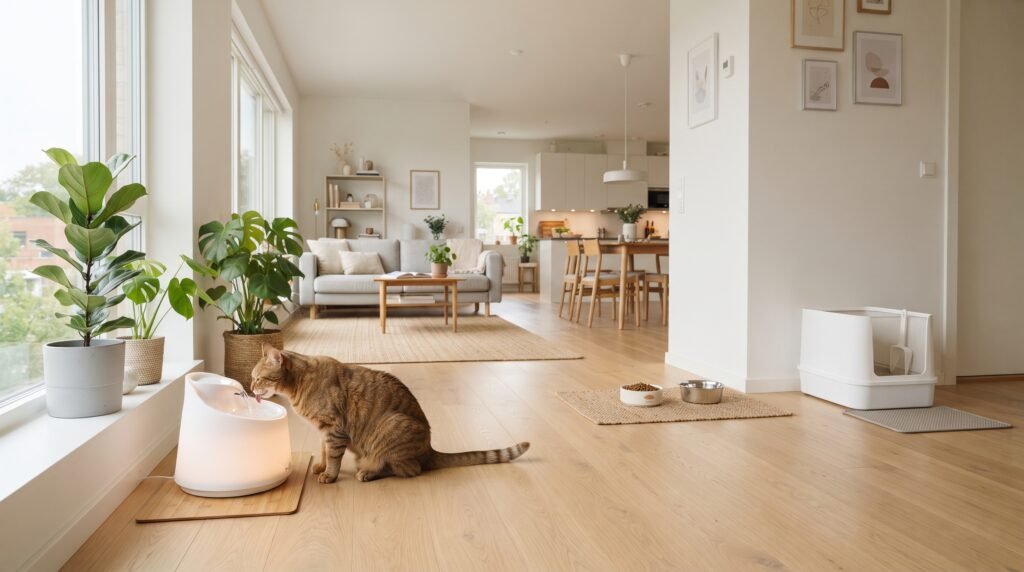
Placement can influence how much your cat drinks.
Ideal Locations
- Quiet rooms
- Away from noisy appliances
- Easily accessible areas
- Places your cat already enjoys spending time
Many owners place fountains near living rooms or bedrooms where cats feel comfortable.
Keep It Away from the Food Bowl
Interestingly, many cats prefer their water source away from their food.
In nature, food near water can contaminate it. Domestic cats often retain this instinct.
Placing the fountain several feet away from food bowls may encourage your cat to drink more often.
Avoid the Litter Box Area
Never place a water fountain close to the litter box.
Cats naturally dislike drinking near areas they associate with waste, and this placement may discourage hydration.
How Often Should You Clean a Cat Water Fountain?
Even the best fountain needs regular maintenance.
Daily
- Check the water level.
- Remove floating hair or debris.
- Refill with fresh water if needed.
Every 3–4 Days
- Rinse the bowl.
- Wipe away slime or residue.
- Clean around the pump.
Weekly
- Disassemble the fountain.
- Wash all removable parts with warm water and mild dish soap.
- Rinse thoroughly.
- Clean the pump according to the manufacturer’s instructions.
Monthly
Replace the filter unless the manufacturer recommends a different schedule.
Common Mistakes Cat Owners Make
Avoid these common errors to keep your fountain working properly and your cat healthy.
Not Cleaning the Pump
The pump collects hair, dirt, and mineral buildup. Ignoring it can reduce water flow and eventually damage the motor.
Letting the Water Run Too Low
Running the pump without enough water may cause overheating and shorten its lifespan.
Forgetting to Replace Filters
Old filters stop removing debris effectively and may develop unpleasant odors.
Using Harsh Cleaning Chemicals
Avoid bleach, strong disinfectants, or heavily scented cleaners. Mild dish soap and warm water are usually sufficient.
Ignoring Your Cat’s Preferences
Some cats dislike strong streams or noisy pumps. If your cat avoids the fountain, try adjusting the water flow or moving it to a quieter location.
Tips to Encourage Your Cat to Use a New Fountain
Some cats start using a fountain immediately, while others need time to adjust.
Try these tips:
- Leave the old water bowl nearby for a few days.
- Place the fountain in your cat’s favorite room.
- Keep fresh water in the fountain at all times.
- Reward your cat with praise or treats when it drinks.
- Be patient—some cats need a week or two to adapt.
With a little encouragement, most cats learn to enjoy the sound and movement of flowing water.
Frequently Asked Questions, Buyer’s Checklist & Final Thoughts
Choosing a cat water fountain is one of the easiest ways to improve your pet’s daily routine. Before making a purchase, it’s helpful to answer some common questions and review the key features that matter most.
Frequently Asked Questions (FAQs)
1. Are cat water fountains really worth it?
Yes. Many cats naturally prefer moving water over still water. A quality water fountain encourages regular drinking, helping support healthy kidneys, urinary tract function, and overall hydration.
2. How often should I change the water?
Even though the fountain circulates water continuously, it’s best to add fresh water daily and completely replace it every few days, depending on the number of cats using it.
3. How often should I replace the filter?
Most manufacturers recommend replacing the filter every 2–4 weeks. If you have multiple cats or notice slower water flow or odors, you may need to replace it more frequently.
4. Are stainless steel fountains better than plastic?
For most cat owners, yes.
Stainless steel fountains are:
- More hygienic
- Easier to clean
- More durable
- Less likely to harbor bacteria
- Better for cats with sensitive skin or feline acne
However, BPA-free plastic fountains can still be a good budget-friendly option.
5. Can kittens use a water fountain?
Absolutely. Once kittens are drinking water on their own, they can safely use a fountain. Choose one with a gentle water flow that’s easy for them to access.
6. Do water fountains use a lot of electricity?
No. Most pet water fountains use low-voltage pumps and consume very little electricity, making them economical to run 24/7.
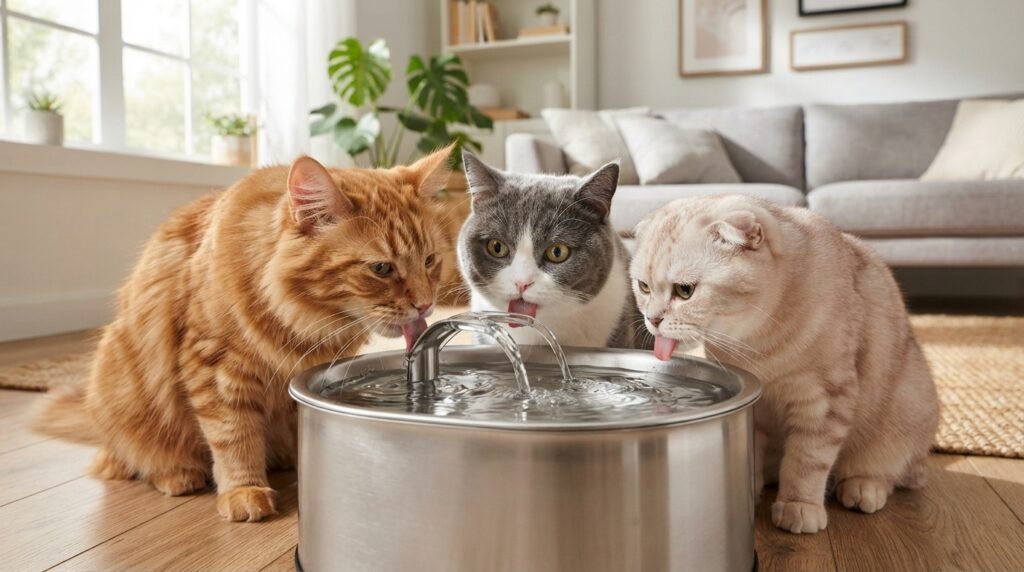
7. Can multiple cats share one fountain?
Yes. If you have two or more cats, choose a larger-capacity fountain (3 liters or more) to ensure there’s always enough fresh water available.
Cat Water Fountain Buyer’s Checklist
Before you buy, make sure your fountain includes these important features:
✅ Food-grade stainless steel, ceramic, or BPA-free plastic
✅ Quiet, energy-efficient pump
✅ Replaceable activated carbon filter
✅ Large water capacity
✅ Easy-to-clean design
✅ Stable, non-slip base
✅ Adjustable water flow
✅ Readily available replacement filters
✅ Safe electrical design
✅ Positive customer reviews
Using this checklist will help you choose a fountain that provides long-term value for both you and your cat.
Expert Tips for Keeping Your Cat Hydrated
In addition to using a water fountain, try these simple strategies:
- Place multiple water stations around your home.
- Wash water bowls regularly.
- Offer wet food occasionally to increase moisture intake.
- Keep water away from litter boxes.
- Use clean, cool, fresh water every day.
- Monitor your cat’s drinking habits, especially during hot weather.
Small daily habits can make a significant difference to your cat’s health over time.
Final Thoughts
A cat water fountain is more than just a convenient gadget—it’s an investment in your cat’s long-term health and happiness. By encouraging your cat to drink more water, a fountain can help support healthy kidneys, reduce the risk of urinary issues, and make hydration a natural part of your pet’s daily routine.
Whether you have a playful kitten, an active adult cat, or a senior companion, choosing the right fountain can improve their quality of life. Look for durable materials, effective filtration, quiet operation, and easy maintenance to get the best value.
With proper cleaning and regular filter replacement, a high-quality cat water fountain can provide your feline friend with fresh, appealing water every day.
Key Takeaways
- Cats naturally prefer fresh, moving water.
- Proper hydration supports kidney and urinary health.
- Stainless steel fountains are generally the most hygienic option.
- Clean the fountain weekly and replace filters every 2–4 weeks.
- Choose a fountain with quiet operation, quality filtration, and the right capacity for your household.
- A well-maintained water fountain encourages healthy drinking habits and contributes to your cat’s overall well-being.

hammadniazi6663@gmail.com
Contributor at PetZuoo, publishing practical information for pet owners and animal lovers.
Related guides

Why Do Dog Tilt Their Heads? 9 Fascinating Reason
Why Do Dog Tilt Their Heads? 9 Fascinating Reason Behind This Adorable Behavior. Have you ever spoken to your dog and watched…
Cat Chattering at Birds: 7 Amazing Reasons Explained
Cat Chattering at Birds: 7 Amazing Reasons Explained. Have you ever noticed your cat sitting beside a window, watching birds outside, and…
Why Do Cats Chirp at Birds? 7 Fascinating Reasons
Why Do Cats Chirp at Birds? 7 Fascinating Reasons Behind This Cute Cat Behavior, Have you ever watched your cat sitting beside…