Introduction is that 15 Safe Summer Foods for Dogs That Keep Them Cool & HealthyWhen temperatures rise, your dog feels the heat just as much as you do. Dogs don’t sweat the way humans do—they primarily cool themselves by panting and through their paw pads. During hot summer months, dehydration and overheating can become serious concerns.
One of the easiest ways to help your furry friend stay comfortable is by offering fresh water alongside healthy, hydrating foods. Many fruits and vegetables contain high amounts of water, vitamins, minerals, and antioxidants that support your dog’s overall health while providing a refreshing snack.
In this guide, you’ll discover 15 vet-approved summer foods for dogs, learn how to serve them safely, and find out which foods should never be shared.
Why Summer Nutrition Matters
A dog’s nutritional needs don’t completely change during summer, but the season does increase the importance of hydration and cooling foods.
Benefits of a summer-friendly diet include:
- Better hydration
- Improved digestion
- Extra vitamins and antioxidants
- Support for healthy skin and coat
- Reduced risk of heat-related illness
- Healthy low-calorie treats
Always introduce new foods gradually and remember that treats should make up no more than 10% of your dog’s daily calories.
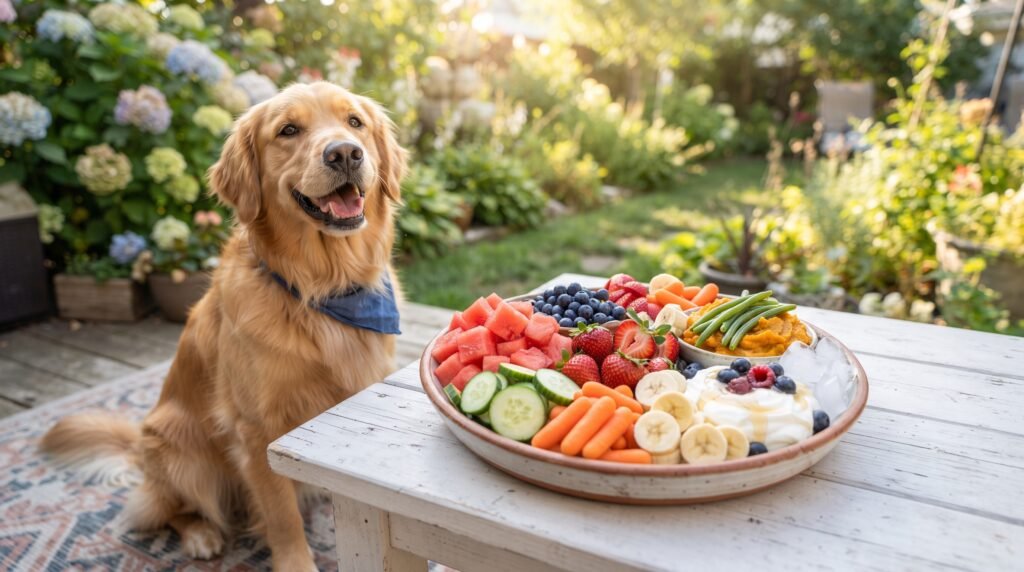
1. Watermelon
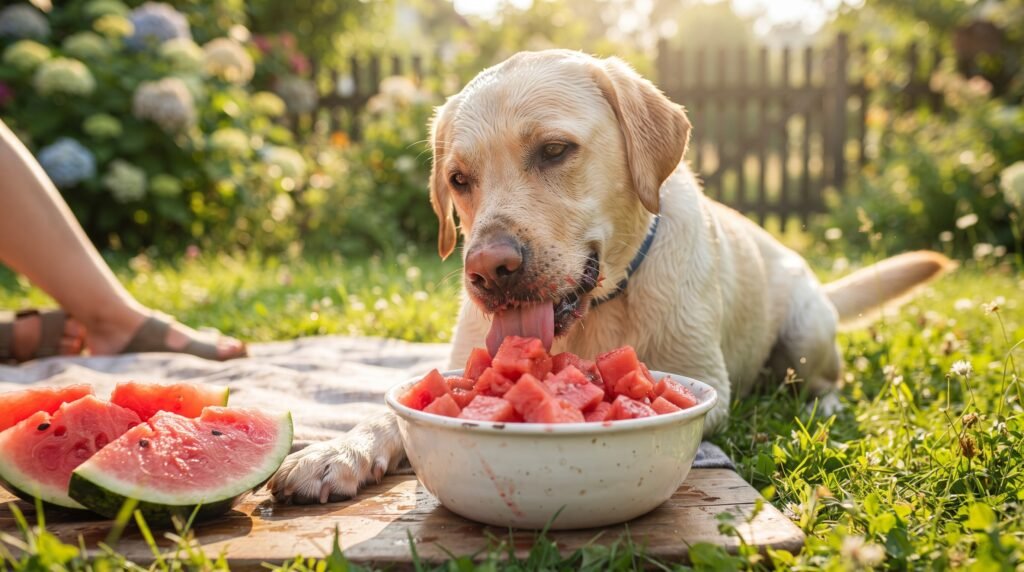
Watermelon is one of the best summer fruits for dogs because it’s made of over 90% water.
Benefits
- Keeps dogs hydrated
- Rich in Vitamins A, B6, and C
- Contains antioxidants like lycopene
- Low in calories
How to Serve
- Remove all seeds.
- Remove the rind completely.
- Cut into bite-sized cubes.
- Serve fresh or frozen.
Avoid
Never let dogs chew the rind, as it can cause digestive blockages.
2. Blueberries
These tiny berries are considered a superfood for both humans and dogs.
Benefits
- High in antioxidants
- Rich in Vitamin C
- Supports brain health
- Low-calorie treat
- Great for senior dogs
Serving Tips
Offer a small handful fresh or freeze them for a crunchy summer snack.
3. Strawberries
Strawberries are naturally sweet and packed with nutrients.
Benefits
- Vitamin C
- Fiber
- Antioxidants
- Supports immune health
Serving Tips
Wash thoroughly, remove the stem, and slice into small pieces for easier chewing.
4. Apples (Without Seeds)
Apples are a crunchy, refreshing snack that many dogs enjoy. They are naturally low in fat and provide several important nutrients.
Benefits
- Rich in fiber for healthy digestion
- Contains Vitamins A and C
- Supports immune health
- Helps clean teeth while chewing
- Low-calorie treat
How to Serve
- Wash the apple thoroughly.
- Remove the core, stem, and all seeds.
- Cut into small bite-sized pieces.
- Serve fresh or chilled.
Avoid
Apple seeds contain small amounts of cyanide and should never be fed to dogs.
5. Cucumbers
Cucumbers are one of the most hydrating vegetables for dogs because they contain around 95% water.
Benefits
- Excellent source of hydration
- Very low in calories
- Contains Vitamins K and C
- Helps dogs stay cool during hot weather
How to Serve
- Wash well.
- Slice into thin rounds or small cubes.
- Serve fresh or refrigerated.
Pro Tip
Chilled cucumber slices make a perfect afternoon snack after a summer walk.
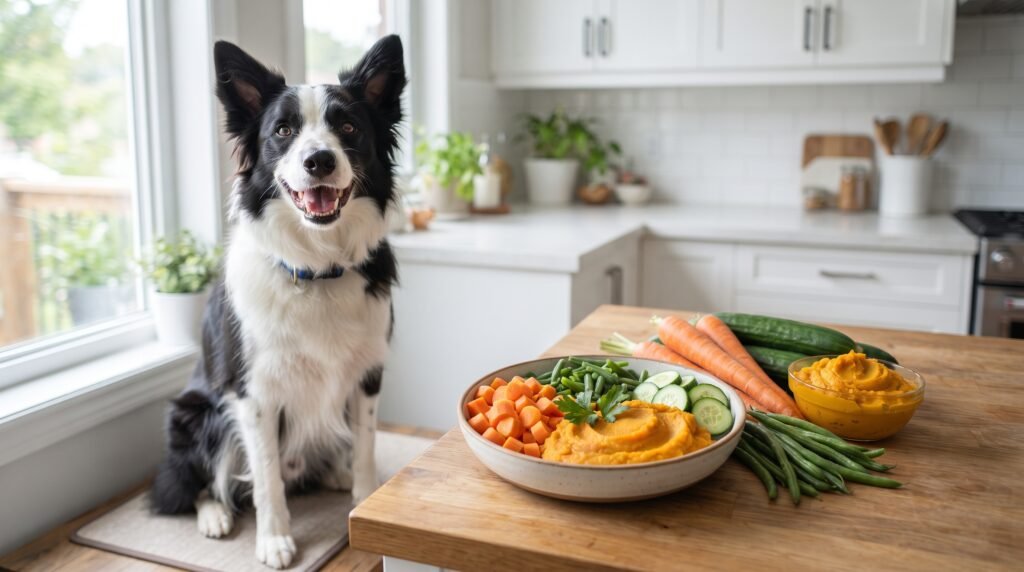
6. Carrots
Carrots are nutritious, crunchy, and loved by most dogs.
Benefits
- High in beta-carotene
- Supports eye health
- Good source of fiber
- Helps reduce plaque buildup on teeth
- Low in calories
How to Serve
- Slice into thin pieces for small dogs.
- Larger dogs can enjoy whole carrots under supervision.
- Refrigerate before serving for an extra cooling effect.
Frozen Option
Frozen carrots are an excellent natural chew toy during summer.
7. Bananas
Bananas are naturally sweet and provide a quick energy boost.
Benefits
- Rich in potassium
- Contains Vitamin B6
- Provides magnesium
- Supports healthy muscles and nerves
How to Serve
- Peel completely.
- Slice into small pieces.
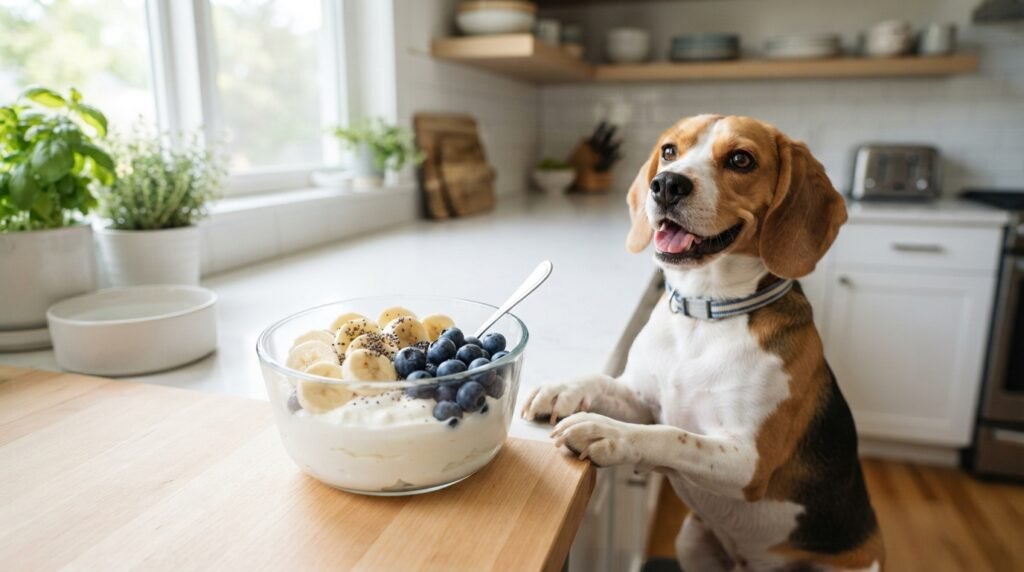
- Mash into plain yogurt.
- Freeze banana slices for a refreshing treat.
Serve in Moderation
Because bananas contain natural sugars, they should be offered as an occasional treat rather than a daily snack.
8. Pumpkin
Pumpkin isn’t just a fall favorite—it can also be a healthy addition to your dog’s summer diet.
Benefits
- High in fiber
- Supports healthy digestion
- Rich in Vitamin A
- Contains potassium and antioxidants
- Helps with mild digestive upset
How to Serve
- Use plain cooked or canned pumpkin with no added sugar or spices.
- Mix a spoonful into your dog’s regular food.
- Freeze pumpkin puree into small cubes for a cooling snack.
Avoid
Never feed pumpkin pie filling, as it often contains sugar, spices, or artificial sweeteners that are unsafe for dogs.
9. Green Beans
Green beans are a healthy, crunchy vegetable that makes an excellent low-calorie snack for dogs.
Benefits
- High in fiber
- Rich in Vitamins A, C, and K
- Contains iron and calcium
- Helps dogs feel full without adding many calories
How to Serve
- Wash thoroughly.
- Steam or serve fresh.
- Cut into bite-sized pieces.
- Serve plain without butter, garlic, or seasoning.
10. Coconut Water (In Small Amounts)
Plain, unsweetened coconut water can provide a refreshing treat on especially hot days.
Benefits
- Contains natural electrolytes
- Supports hydration
- Rich in potassium
- Low in fat
How to Serve
- Offer only a few tablespoons occasionally.
- Choose unsweetened coconut water with no added sugar or flavors.
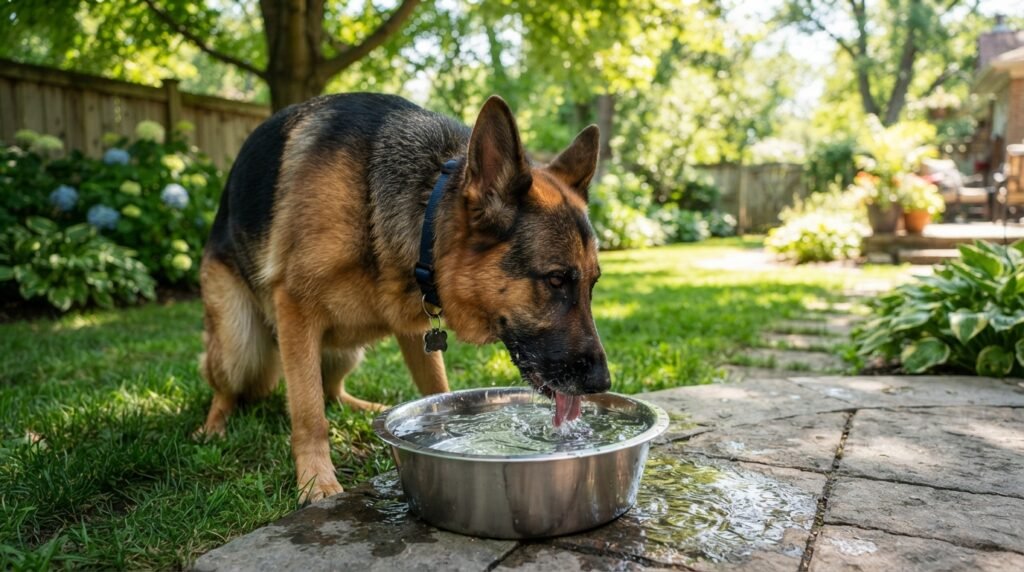
- Always provide fresh drinking water as the primary source of hydration.
Avoid
Do not give flavored coconut water or products containing artificial sweeteners such as xylitol.
11. Plain Yogurt
Plain yogurt can be a tasty treat for dogs that tolerate dairy.
Benefits
- Contains calcium
- Provides protein
- Includes probiotics that may support digestive health
How to Serve
- Choose plain, unsweetened yogurt.
- Mix a small spoonful with fruit like blueberries or bananas.
- Freeze into silicone molds for a cool summer snack.
Avoid
Never feed yogurt containing xylitol, chocolate, or added sugars.
Simple ice cubes can help your dog cool down when offered safely.
12. Ice Cubes
Benefits
- Helps lower body temperature gradually
- Encourages hydration
- Easy and inexpensive cooling treat
Serving Tips
- Offer a few cubes for dogs that enjoy chewing them.
- Add ice cubes to the water bowl on hot days.
- Supervise dogs that tend to gulp large pieces.
13. Frozen Bone Broth Cubes
Frozen bone broth cubes are packed with flavor and can encourage dogs to drink more fluids.
Benefits
- Helps support hydration
- Contains minerals and collagen
- Great for picky eaters
- Refreshing on hot afternoons
How to Serve
- Use low-sodium bone broth made specifically for dogs or homemade broth without onions, garlic, or excessive salt.
- Freeze in ice cube trays.
- Offer one or two cubes as an occasional treat.
14. Frozen Pumpkin Cubes
Frozen pumpkin cubes combine hydration with digestive support.
Benefits
- Cooling snack
- High in fiber
- Supports healthy digestion
- Easy to prepare
How to Serve
- Spoon plain pumpkin puree into silicone molds or an ice cube tray.
- Freeze until solid.
- Serve one or two cubes depending on your dog’s size.

15. Homemade Frozen Dog Treats
Homemade frozen treats let you combine several dog-safe ingredients into one healthy snack.
Easy Recipe
Ingredients
- Plain yogurt
- Watermelon (seedless)
- Blueberries
- Pumpkin puree
Instructions
- Blend the ingredients until smooth.
- Pour into silicone paw-shaped molds.
- Freeze for 4–6 hours.
- Serve one treat as a refreshing reward.
Tips for Serving Summer Foods Safely
- Introduce new foods one at a time.
- Wash all fruits and vegetables before serving.
- Remove seeds, pits, stems, and tough rinds.
- Keep portions small to avoid stomach upset.
- Fresh water should always be available.
- Treats should make up no more than 10% of your dog’s daily diet.
Foods Dogs Should Never Eat During Summer
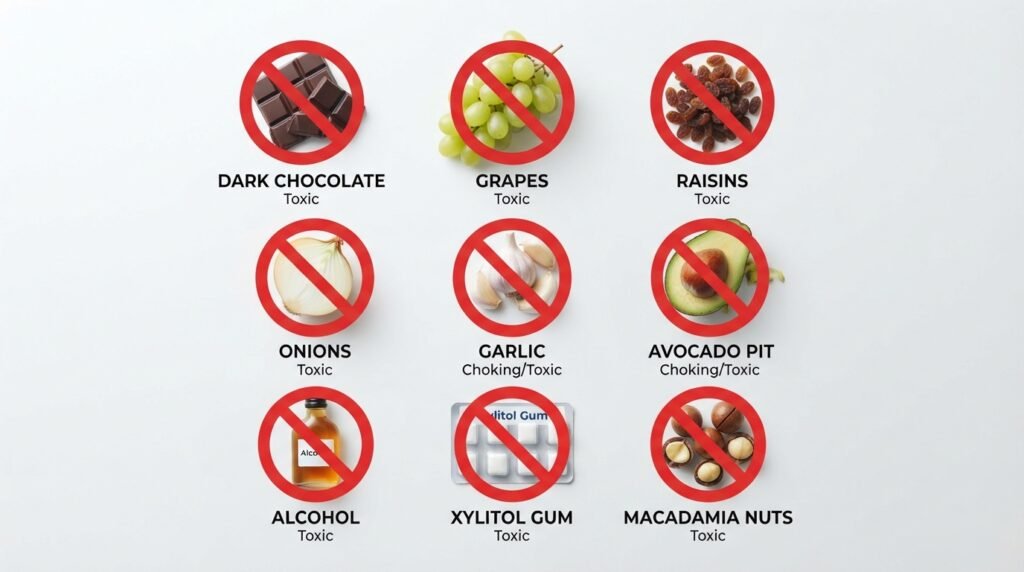
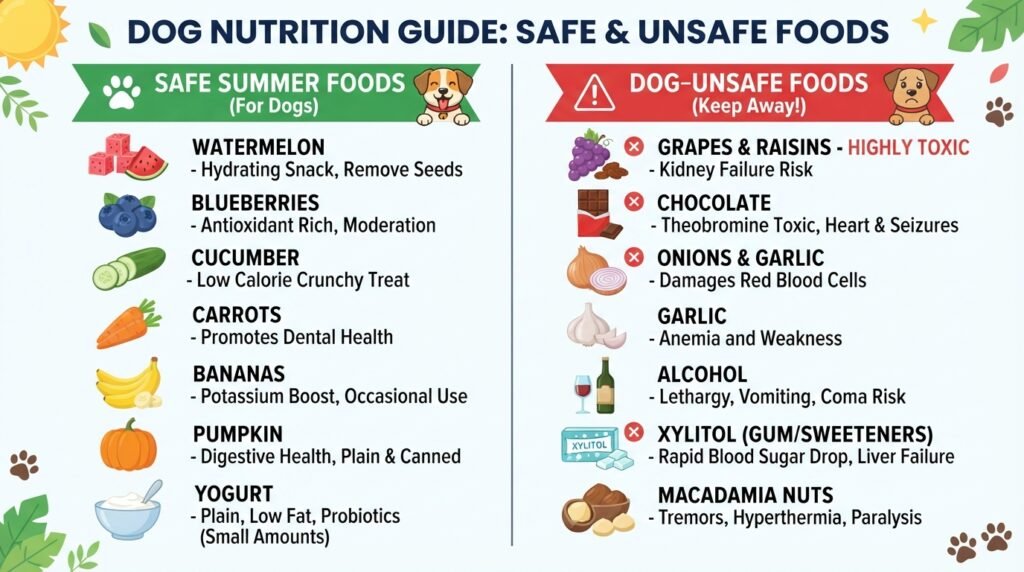
While many fruits and vegetables are healthy for dogs, some popular summer foods can be dangerous or even life-threatening.
Grapes and Raisins
Even a small amount can cause sudden kidney failure in some dogs. Never offer grapes or raisins as a treat.
Onions and Garlic
These contain compounds that damage a dog’s red blood cells and may lead to anemia. Avoid them in both raw and cooked forms.
Chocolate
Chocolate contains theobromine and caffeine, which are toxic to dogs. Dark chocolate and baking chocolate are especially dangerous.
Avocado Pits and Skin
Although the flesh is less concerning in small amounts, the pit is a serious choking hazard and can block the intestines. The skin is difficult to digest.
Alcohol
Alcohol can quickly lead to vomiting, breathing problems, seizures, coma, or worse. Keep all alcoholic drinks out of your dog’s reach.
Xylitol
This artificial sweetener is found in sugar-free gum, candies, peanut butter, and some baked goods. Even tiny amounts can cause a dangerous drop in blood sugar and liver failure.
Macadamia Nuts
Macadamia nuts are toxic to dogs and may cause weakness, vomiting, tremors, fever, and difficulty walking.
Hydration Tips for Dogs During Summer
Keeping your dog hydrated is just as important as feeding healthy foods.
Here are a few simple ways to help:
- Always provide clean, fresh water.
- Place multiple water bowls around your home.
- Carry a portable water bottle and collapsible bowl during walks.
- Avoid outdoor exercise during the hottest hours of the day.
- Walk your dog early in the morning or later in the evening.
- Provide plenty of shade if your dog spends time outdoors.
- Watch for signs of dehydration, including excessive panting, dry gums, tiredness, and sunken eyes.
If your dog shows signs of heatstroke—such as collapse, confusion, vomiting, or difficulty breathing—seek emergency veterinary care immediately.
Frequently Asked Questions
Can dogs eat watermelon every day?
Yes, but only in moderation. Always remove the seeds and rind, and serve small portions as an occasional treat.
Can puppies eat frozen treats?
Yes, puppies can enjoy frozen treats in small amounts if they are made with dog-safe ingredients and are an appropriate size to prevent choking. Introduce them gradually and supervise while they eat.
Is plain yogurt safe for dogs?
Plain, unsweetened yogurt is safe for many dogs and may provide beneficial probiotics. However, some dogs are lactose intolerant, so start with a small amount and watch for digestive upset.
Are bananas healthy for dogs?
Yes. Bananas provide potassium, fiber, and vitamins, but because they are naturally high in sugar, they should be fed in moderation.
Can dogs chew on ice cubes?
Most dogs can safely enjoy ice cubes in moderation. Offer appropriately sized cubes and supervise dogs that tend to swallow food quickly.
Conclusion
Summer is the perfect time to treat your dog to fresh, healthy, and hydrating snacks. Foods like watermelon, blueberries, cucumbers, carrots, and pumpkin can help your furry friend stay cool while providing valuable nutrients.
Remember that every dog is different. Introduce new foods slowly, serve appropriate portions, and always avoid toxic ingredients. Combined with plenty of fresh water, shade, and sensible exercise, these simple dietary choices can help your dog enjoy a safe and comfortable summer.
By choosing nutritious, dog-safe foods, you’re giving your companion another reason to wag their tail all season long.

hammadniazi6663@gmail.com
Contributor at PetZuoo, publishing practical information for pet owners and animal lovers.
Related guides

Why Do Dog Tilt Their Heads? 9 Fascinating Reason
Why Do Dog Tilt Their Heads? 9 Fascinating Reason Behind This Adorable Behavior. Have you ever spoken to your dog and watched…
Why Does Dog Suddenly Follow Me Everywhere? 9 Reasons
Why Does Dog Suddenly Follow Me Everywhere? 9 Reasons and Have you noticed that your dog suddenly seems to be your shadow?…
Ultimate Guide to Dog Separation Anxiety
Ultimate Guide to Dog Separation Anxiety. Proven Ways to Help Your Dog Feel Safe Alone, and Leaving your dog at home for…