25 Amazing DIY Cat Toys You Can Make at Home (Easy, Safe & Budget-Friendly)Cats may spend hours napping, but they also need daily physical activity and mental stimulation to stay healthy and happy. Without enough enrichment, indoor cats can become bored, stressed, or develop destructive habits like scratching furniture or overeating.
The good news is that you don’t have to spend a fortune on store-bought toys. Many of the best cat toys can be made at home using simple household items such as cardboard boxes, toilet paper rolls, old socks, felt fabric, paper bags, and ping pong balls. These DIY cat toys are inexpensive, easy to make, and provide endless entertainment for curious felines.
Whether you have a playful kitten or a relaxed senior cat, homemade toys can encourage natural hunting instincts, provide exercise, reduce boredom, and strengthen the bond between you and your pet. Most projects require only a few minutes and materials you likely already have around the house.
In this guide, you’ll discover 25 easy DIY cat toys that are safe, affordable, and fun. From interactive puzzle feeders to catnip-filled toys and cardboard creations, there’s something for every cat personality and skill level.
Why DIY Cat Toys Are Great for Indoor Cats
Indoor cats rely on their owners to provide opportunities for exercise and enrichment. In the wild, cats spend much of their day stalking, chasing, climbing, and hunting prey. Without similar activities at home, they can become inactive and bored.
Making your own cat toys helps recreate these natural behaviors while saving money. Rotating different homemade toys also keeps playtime exciting, preventing your cat from losing interest in the same toy after a few days.
Some of the biggest benefits of DIY cat toys include:
- Encourage daily exercise
- Stimulate natural hunting instincts
- Reduce boredom and anxiety
- Help prevent obesity
- Improve mental stimulation
- Strengthen the bond between owner and cat
- Cost much less than commercial toys
- Allow you to customize toys based on your cat’s preferences
Many cats actually prefer simple homemade toys over expensive electronic gadgets because they mimic the unpredictable movement of real prey.
Safety Tips Before Making DIY Cat Toys
Before creating toys for your feline friend, keep these important safety tips in mind.
Use Pet-Safe Materials
Choose clean materials that are free from chemicals, sharp edges, toxic paint, or strong adhesives. Soft cotton, felt, cardboard, paper, cork, and untreated wood are excellent options.
Avoid Small Choking Hazards
Buttons, beads, bells, tiny plastic pieces, and loose decorations can become choking hazards if swallowed. Keep toys simple and sturdy.
Supervise String Toys
Cats love ribbons and strings, but these toys should only be used during supervised play. Never leave long strings unattended because they may be swallowed.
Inspect Toys Regularly
Even homemade toys wear out over time. Check them every few days for loose parts, tears, or damaged pieces that could become dangerous.
Skip Toxic Materials
Avoid using:
- Rubber bands
- Plastic wrap
- Aluminum foil with sharp edges
- Staples
- Wire
- Toxic glue
- Painted wood with unknown finishes
Taking a few extra precautions helps ensure every DIY toy remains fun and safe for your cat.
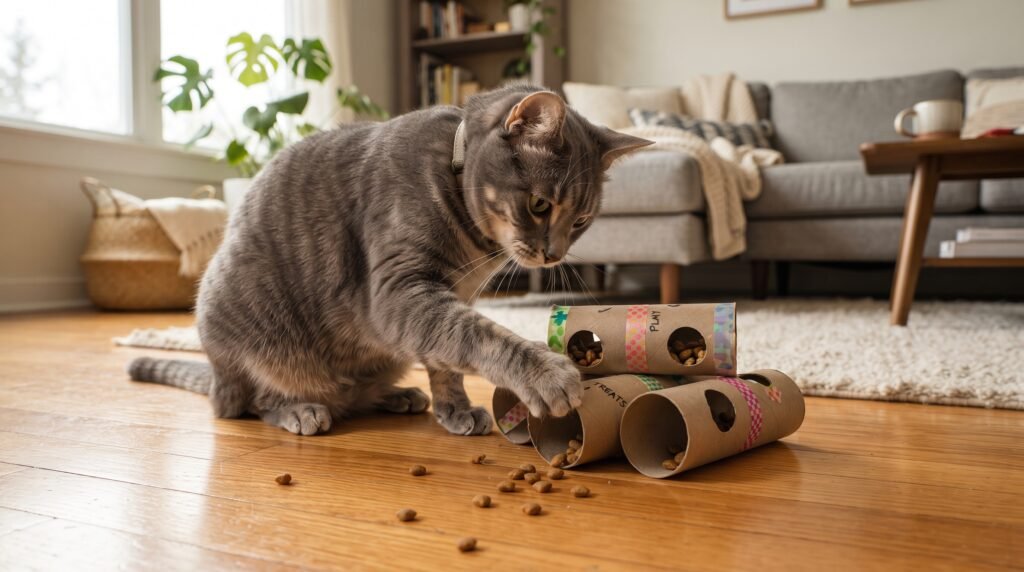
1. Toilet Paper Roll Treat Puzzle
One of the easiest enrichment toys you can make is a toilet paper roll treat puzzle. It encourages your cat to think, paw, and hunt for food instead of eating treats immediately.
Materials
- Empty toilet paper roll
- Small cat treats or dry kibble
- Scissors
How to Make It
- Fold one end of the roll closed.
- Add a few treats inside.
- Fold the opposite end closed.
- Cut several small holes around the roll.
- Let your cat roll and bat the tube until the treats fall out.
Difficulty: ★☆☆☆☆ (Very Easy)
Cost: Free
Best For: Food-motivated cats and curious kittens.
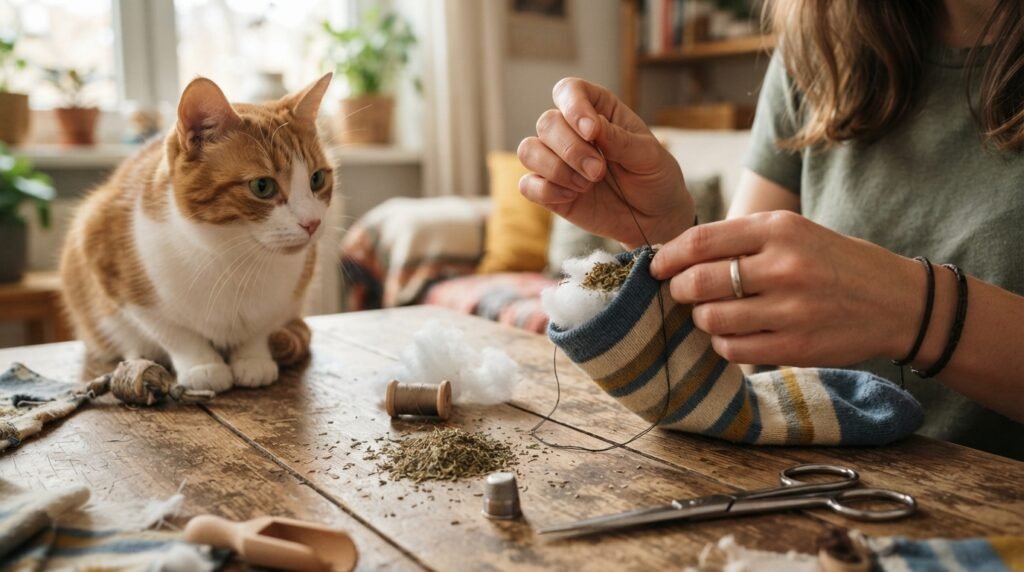
2. Sock Catnip Toy
Instead of throwing away an old sock, transform it into a soft toy your cat will love.
Materials
- Clean old sock
- Dried catnip
- Cotton stuffing or fabric scraps
- Needle and thread (or fabric glue)
How to Make It
- Fill the toe of the sock with stuffing.
- Add one or two teaspoons of dried catnip.
- Tie a knot or sew the open end shut.
- Toss it across the room for your cat to chase.
Difficulty: ★☆☆☆☆
Cost: Less than $2
Best For: Cats that enjoy kicking, hugging, and wrestling toys.
3. Feather Wand Toy
Interactive wand toys strengthen the bond between you and your cat while encouraging plenty of exercise.
Materials
- Wooden dowel or stick
- Cotton string
- Craft feathers
- Non-toxic glue
How to Make It
- Tie the string securely to one end of the stick.
- Attach several feathers to the opposite end of the string.
- Allow the glue to dry completely.
- Move the wand slowly across the floor to mimic prey.
Difficulty: ★★☆☆☆
Cost: Around $3–5
Best For: Active cats that enjoy chasing birds and insects.
Safety Tip: Never leave feather wand toys with your cat unsupervised because strings can become hazardous.
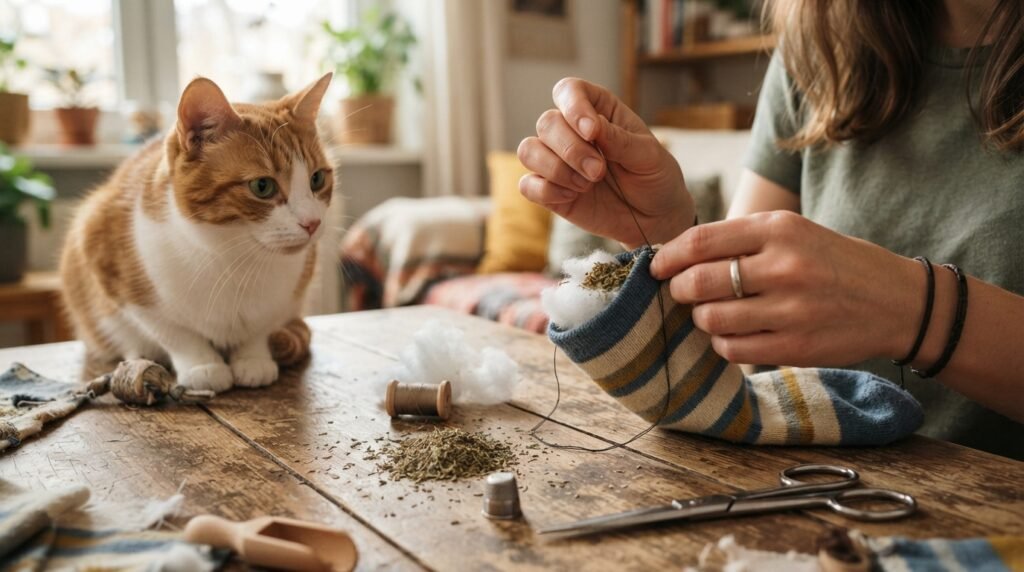
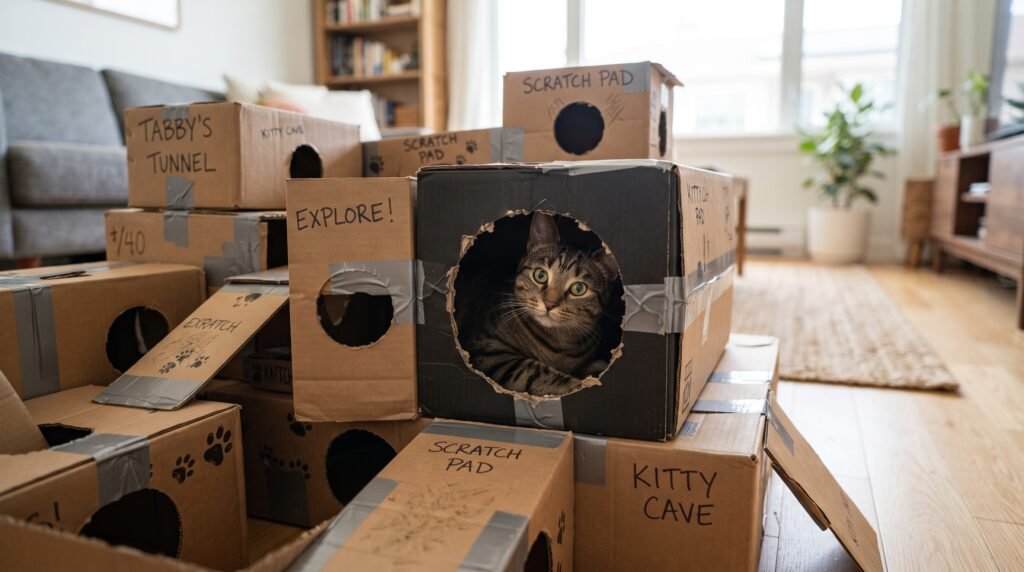
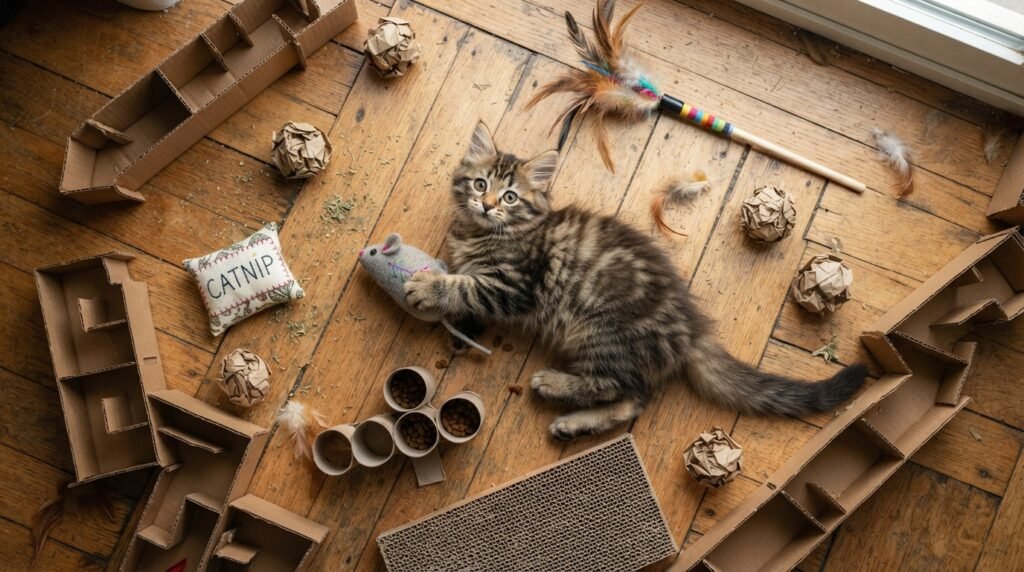
4. Cardboard Box Maze
Cats naturally enjoy hiding, climbing, and exploring enclosed spaces. A cardboard maze provides hours of inexpensive entertainment.
Materials
- Several cardboard boxes
- Utility knife
- Packing tape
How to Make It
- Cut entrances and exits in each box.
- Tape the boxes together to create tunnels.
- Place toys or treats inside different sections.
- Rearrange the maze occasionally to keep it interesting.
Difficulty: ★★☆☆☆
Cost: Free if using recycled boxes
Best For: Indoor cats needing extra exercise.
5. Paper Ball Chase Toy
Sometimes the simplest toys are the most entertaining.
Materials
- Plain sheet of paper
How to Make It
- Crumple the paper tightly into a ball.
- Toss it gently across a smooth floor.
- Let your cat chase, bat, and pounce on it.
For extra excitement, hide treats around the paper balls for your cat to discover.
Difficulty: ★☆☆☆☆
Cost: Free
Best For: Kittens and energetic adult cats.
6. Pom-Pom Chase Toy
Soft pom-poms are lightweight, colorful, and easy for cats to bat around.
Materials
- Large pet-safe pom-poms
- Small storage basket
How to Make It
- Scatter several pom-poms around the room.
- Roll them gently across the floor.
- Allow your cat to chase and collect them.
- Store them in a basket between play sessions.
Difficulty: ★☆☆☆☆
Cost: About $2–4
Best For: Cats that enjoy fast-moving toys.
7. Bottle Cap Spinner
Turn a clean plastic bottle cap into a simple spinning toy.
Materials
- Large plastic bottle cap
- Flat floor surface
How to Make It
- Wash the bottle cap thoroughly.
- Spin it gently across the floor.
- Let your cat chase the unpredictable movement.
Always supervise play and replace the cap if it becomes cracked or damaged.
Difficulty: ★☆☆☆☆
Cost: Free
Best For: Cats with strong hunting instincts.
8. DIY Treat Puzzle Box
Puzzle toys encourage problem-solving while slowing down fast eaters.
Materials
- Small cardboard box
- Scissors
- Cat treats
How to Make It
- Cut several holes in the top of the box.
- Place treats inside.
- Close the lid securely.
- Let your cat reach through the holes to retrieve the treats.
You can increase the challenge by making smaller holes or adding cardboard dividers inside the box.
Difficulty: ★★☆☆☆
Cost: Free
Best For: Intelligent cats that enjoy food puzzles.
9. DIY Cat Tent
A cozy hideaway gives your cat a quiet place to relax while satisfying their instinct to seek enclosed spaces.
Materials
- Old T-shirt
- Two wire hangers
- Cardboard
- Tape
- Safety pins
How to Make It
- Straighten the wire hangers and bend them into arches.
- Attach the arches to the cardboard base using tape.
- Pull the T-shirt over the frame.
- Position the neck opening as the entrance.
- Secure the fabric with safety pins underneath.
Difficulty: ★★★☆☆
Cost: Around $5 or less
Best For: Shy cats and kittens that enjoy hiding.
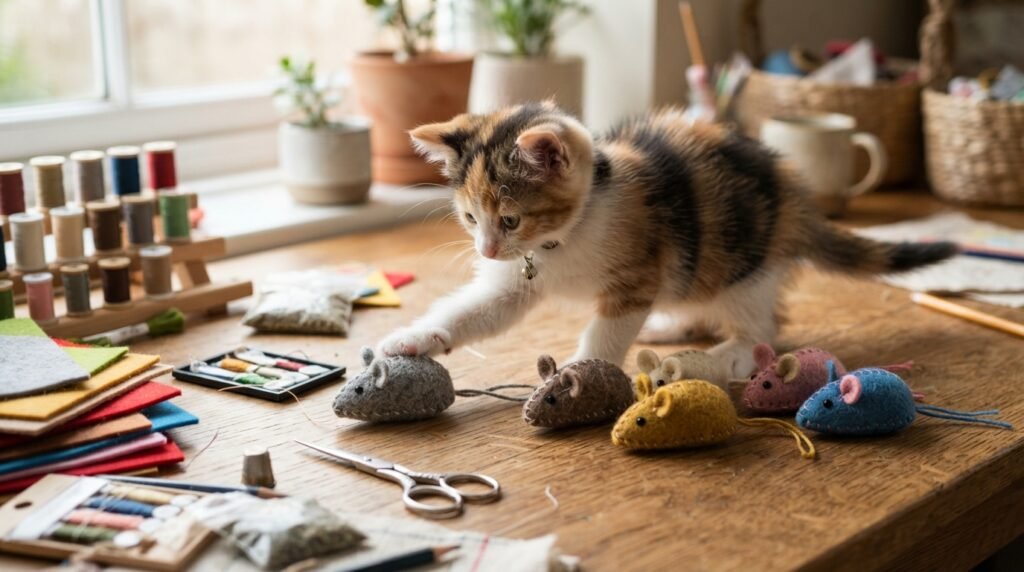
10. Felt Mouse Toy
This classic toy is perfect for cats that love batting, chasing, and carrying their “prey.”
Materials
- Felt fabric
- Cotton stuffing
- Needle and thread
- Catnip (optional)
How to Make It
- Cut two mouse-shaped pieces from felt.
- Sew around the edges, leaving a small opening.
- Add stuffing and a pinch of catnip.
- Sew the opening closed.
- Attach a short felt strip as the tail.
Difficulty: ★★☆☆☆
Cost: Around $2
Best For: Cats that enjoy hunting-style play.
11. Crinkle Paper Toy
Many cats are attracted to the crinkling sound of paper.
Materials
- Brown packing paper
- Tissue paper
- Felt or cotton fabric
How to Make It
- Crumple the paper into a loose ball.
- Wrap it with fabric.
- Sew or glue the edges securely.
- Toss it across the room.
The crackling sound encourages your cat to pounce and chase.
Difficulty: ★☆☆☆☆
Cost: Less than $2
Best For: Curious indoor cats.
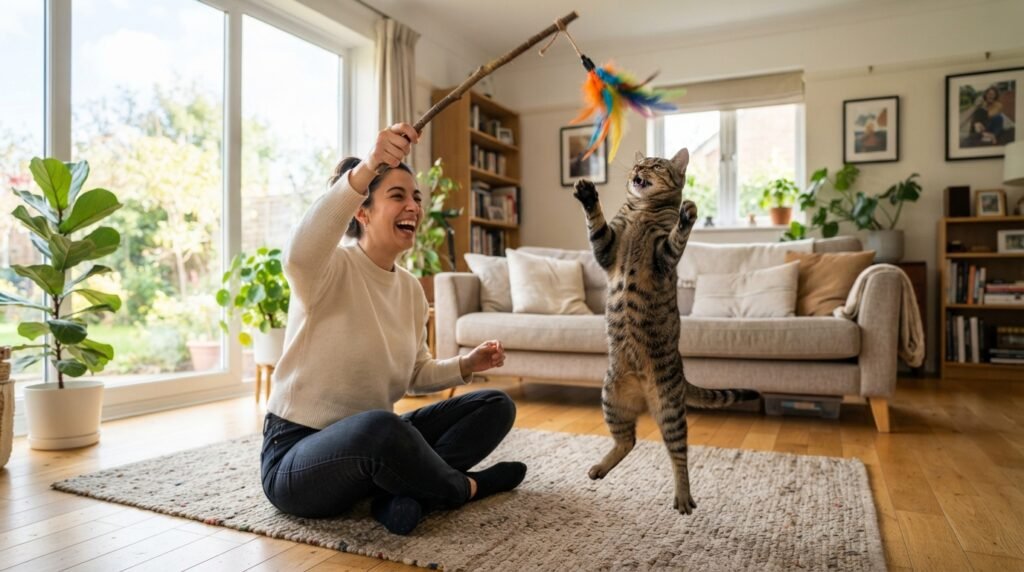
12. Ribbon Stick Toy
This interactive toy mimics the movement of birds and insects.
Materials
- Wooden dowel
- Wide ribbon
- Strong knot or pet-safe glue
How to Make It
- Tie the ribbon securely to one end of the stick.
- Wave the ribbon across the floor.
- Change direction often to imitate prey.
Always supervise play and store the toy safely after use.
Difficulty: ★☆☆☆☆
Cost: About $3
Best For: Energetic kittens and young adult cats.
13. Hanging Door Toy
This toy keeps cats entertained while you’re busy nearby.
Materials
- Elastic cord
- Soft plush toy
- Door hook
How to Make It
- Attach the plush toy to the elastic cord.
- Secure the cord to a removable door hook.
- Adjust the height so your cat can jump and swat it.
- Monitor play to ensure the cord stays secure.
Difficulty: ★★☆☆☆
Cost: Around $5
Best For: Active indoor cats that love jumping.
14. Ping Pong Ball Chase Game
A lightweight ping pong ball can provide endless fun.
Materials
- Ping pong balls
- Hallway or smooth floor
How to Make It
- Roll or bounce the ball gently.
- Let your cat chase and bat it around.
- Add multiple balls for extra excitement.
For more variety, place a few balls inside a cardboard box so they bounce unpredictably.
Difficulty: ★☆☆☆☆
Cost: Around $2
Best For: Highly energetic cats.
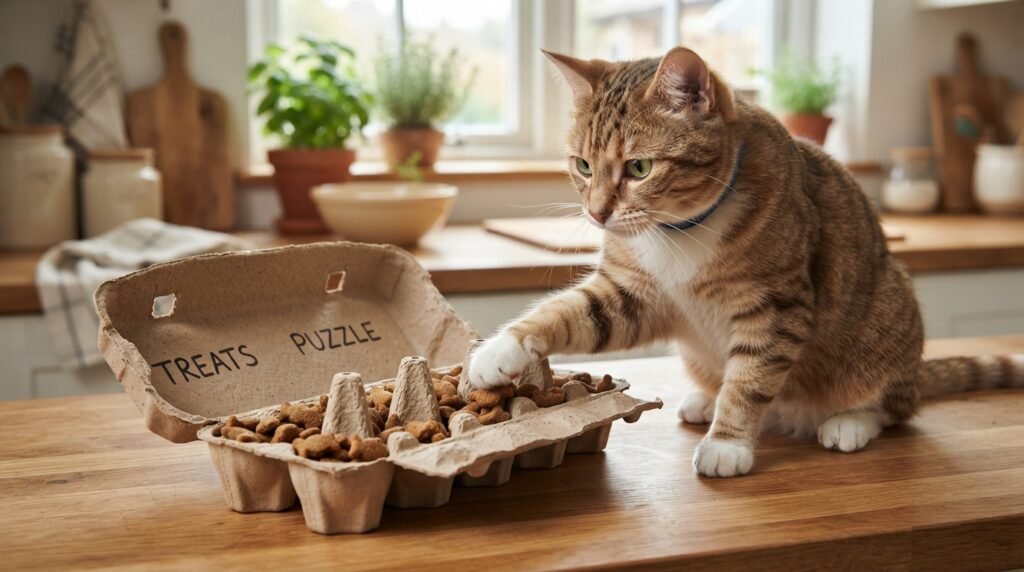
15. Egg Carton Treat Puzzle
This simple enrichment activity encourages your cat to work for treats.
Materials
- Empty cardboard egg carton
- Cat treats
How to Make It
- Place treats in several egg compartments.
- Close the lid.
- Leave one or two sections slightly open.
- Allow your cat to figure out how to reach the treats.
You can increase the difficulty by fully closing the carton once your cat understands the game.
Difficulty: ★★☆☆☆
Cost: Free
Best For: Intelligent and food-motivated cats.
16. Frozen Ice Cube Cat Treat
Perfect for warm summer days.
Materials
- Ice cube tray
- Water or low-sodium chicken broth
- Small cat treats
How to Make It
- Place a treat into each ice cube compartment.
- Fill with water or pet-safe broth.
- Freeze for several hours.
- Serve one cube at a time on a washable surface.
This toy provides both hydration and mental stimulation as your cat works to reach the treat.
Difficulty: ★☆☆☆☆
Cost: Less than $1
Best For: Cats during hot weather and curious kittens.
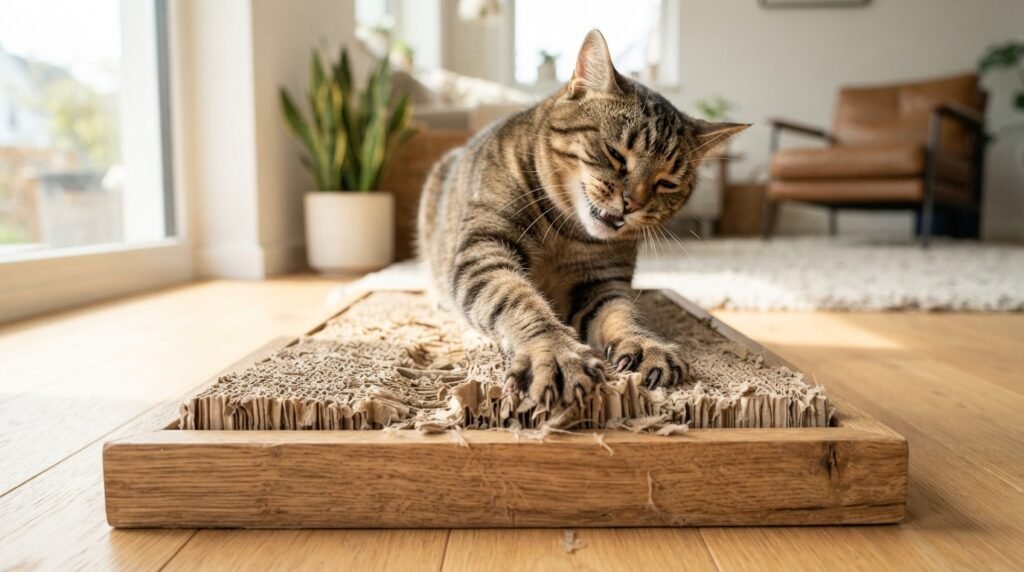
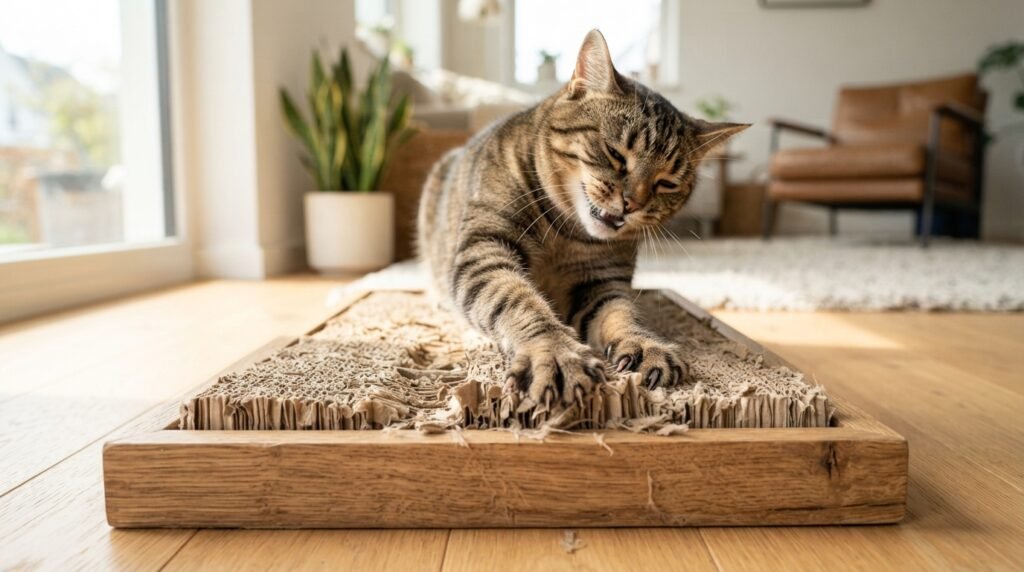
17. Cardboard Scratching Pad
Scratching is a natural behavior that helps cats stretch, mark territory, and keep their claws healthy. A homemade scratching pad is an affordable alternative to store-bought options.
Materials
- Corrugated cardboard
- Utility knife
- Non-toxic glue
- Small cardboard box
How to Make It
- Cut the cardboard into strips about 2 inches wide.
- Roll or stack the strips tightly inside the box.
- Secure them with pet-safe glue.
- Allow the glue to dry completely before use.
Difficulty: ★★★☆☆
Cost: Around $3
Best For: Cats that scratch furniture or carpets.
18. Paper Bag Tunnel
A simple paper bag can become an exciting tunnel for exploring and hiding.
Materials
- Large paper shopping bag
- Scissors
How to Make It
- Remove any handles from the bag.
- Lay the bag on its side.
- Cut one or two extra openings for exits.
- Hide a toy or treat inside to encourage exploration.
Never use plastic bags, as they can pose a suffocation risk.
Difficulty: ★☆☆☆☆
Cost: Free
Best For: Curious and playful cats.
19. Fabric Snake Toy
Long toys are perfect for kicking, wrestling, and carrying around the house.
Materials
- Cotton fabric
- Stuffing
- Catnip
- Needle and thread
How to Make It
- Cut a long strip of fabric.
- Fold it in half and sew along the edges.
- Turn it right side out.
- Fill with stuffing and a small amount of catnip.
- Sew the opening closed.
Difficulty: ★★☆☆☆
Cost: Around $3
Best For: Cats that enjoy bunny-kicking toys.
20. PVC Ball Track
This interactive toy keeps cats entertained even when you’re busy.
Materials
- PVC pipe
- Plastic practice golf balls or ping pong balls
- Drill
How to Make It
- Drill several holes along the PVC pipe.
- Place the balls inside.
- Seal both ends with PVC end caps.
- Let your cat bat the balls through the openings.
The rolling movement keeps cats engaged for long periods.
Difficulty: ★★★★☆
Cost: Around $10–15
Best For: Energetic indoor cats.
21. Cat Grass Box
Growing cat grass provides enrichment while giving your cat a safe plant to nibble.
Materials
- Small tray or shallow container
- Potting soil
- Cat grass seeds
- Water
How to Make It
- Fill the tray with soil.
- Sprinkle the seeds evenly.
- Cover lightly with more soil.
- Water gently and place in sunlight.
- Allow the grass to grow for about a week before offering it to your cat.
Difficulty: ★★☆☆☆
Cost: Around $5
Best For: Indoor cats that enjoy chewing fresh greens.
22. Wool Ball Toy
Soft wool balls are lightweight and fun for chasing.
Materials
- 100% wool yarn
- Warm water
- Mild soap
How to Make It
- Wrap the wool tightly into a ball.
- Wet it with warm soapy water.
- Roll it gently between your hands until it felts.
- Rinse and let it dry completely.
Make sure the ball is large enough that it cannot be swallowed.
Difficulty: ★★★☆☆
Cost: Around $2
Best For: Cats that love batting lightweight toys.
23. DIY Laser Alternative Toy
Instead of a laser pointer, create a toy that gives your cat something physical to catch.
Materials
- Feather toy
- Wand
- Small plush mouse
How to Make It
- Attach the feather or mouse to the wand.
- Drag it across the floor in unpredictable patterns.
- Occasionally let your cat catch it to prevent frustration.
This mimics hunting while providing a satisfying reward.
Difficulty: ★☆☆☆☆
Cost: Around $4
Best For: Cats with high prey drive.
24. Hide-and-Seek Box
Turn a cardboard box into a fun puzzle game.
Materials
- Medium cardboard box
- Scissors
- Cat toys
- Treats
How to Make It
- Cut several hand-sized holes in the sides.
- Place toys or treats inside.
- Let your cat reach through the openings to retrieve them.
You can rearrange the contents regularly to keep the game fresh.
Difficulty: ★★☆☆☆
Cost: Free
Best For: Intelligent and curious cats.
25. Catnip Pillow
A soft catnip pillow is perfect for cuddling, rolling, and bunny-kicking.
Materials
- Cotton fabric
- Stuffing
- Dried catnip
- Needle and thread
How to Make It
- Cut two small rectangles of fabric.
- Sew three sides together.
- Fill with stuffing and catnip.
- Sew the final side closed securely.
Store unused catnip pillows in an airtight container to help preserve their scent.
Difficulty: ★★☆☆☆
Cost: Around $2
Best For: Adult cats that enjoy catnip.
Frequently Asked Questions
Are DIY cat toys safe?
Yes, as long as they are made with pet-safe materials and checked regularly for damage. Always supervise play with toys that include strings, ribbons, or feathers.
What is the easiest homemade cat toy?
A crumpled paper ball or a toilet paper roll treat puzzle are among the quickest and easiest DIY cat toys to make.
Can kittens use homemade toys?
Yes. Just make sure the toys are appropriately sized and do not contain small parts that could become choking hazards.
How often should I replace homemade cat toys?
Inspect toys weekly and replace them if they become torn, damaged, or have loose pieces. Rotating toys every few days also helps keep your cat interested.
Is catnip safe for all cats?
Most adult cats respond safely to catnip, but kittens under a few months old may show little or no reaction. Use catnip in moderation.
Conclusion
DIY cat toys are an easy and affordable way to keep your cat active, entertained, and mentally stimulated. From simple paper ball toys to interactive puzzle boxes and cozy catnip pillows, homemade creations can provide hours of fun while encouraging healthy exercise and natural hunting behaviors.
The best part is that you don’t need expensive supplies to create engaging toys. Many projects use recycled household items, helping you save money while reducing waste. Remember to inspect toys regularly, supervise play when strings or ribbons are involved, and rotate different toys to keep your cat interested.
With these 25 DIY cat toy ideas, you can create a stimulating indoor environment that supports your cat’s physical and mental well-being. Start with one or two easy projects today, observe which toys your cat enjoys most, and continue adding new enrichment activities to keep playtime exciting.

hammadniazi6663@gmail.com
Contributor at PetZuoo, publishing practical information for pet owners and animal lovers.
Related guides

Why Do Dog Tilt Their Heads? 9 Fascinating Reason
Why Do Dog Tilt Their Heads? 9 Fascinating Reason Behind This Adorable Behavior. Have you ever spoken to your dog and watched…
Cat Chattering at Birds: 7 Amazing Reasons Explained
Cat Chattering at Birds: 7 Amazing Reasons Explained. Have you ever noticed your cat sitting beside a window, watching birds outside, and…
Why Do Cats Chirp at Birds? 7 Fascinating Reasons
Why Do Cats Chirp at Birds? 7 Fascinating Reasons Behind This Cute Cat Behavior, Have you ever watched your cat sitting beside…