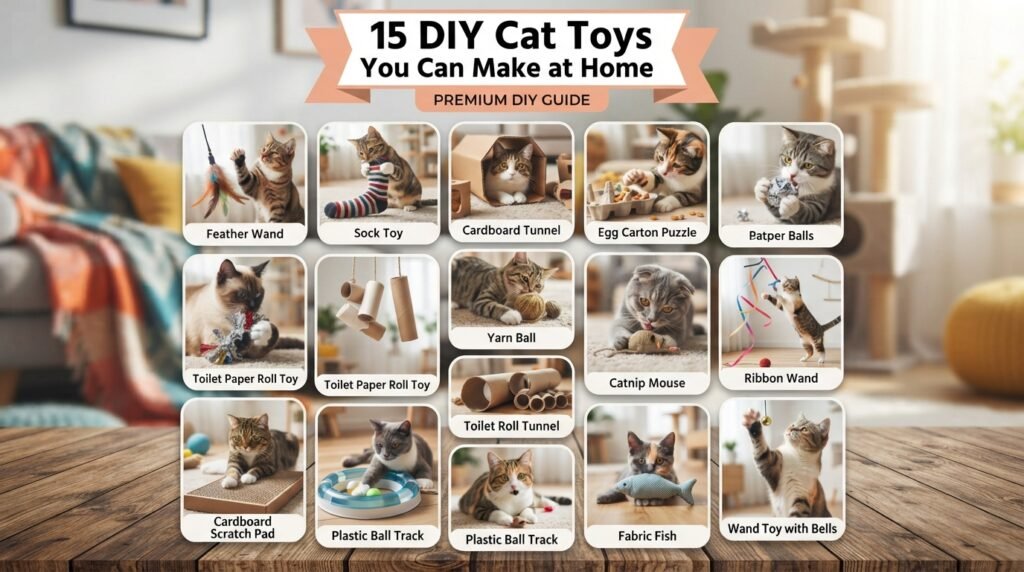
15 DIY Cat Toys You Can Make at Home (Easy, Cheap & Safe)
If your cat spends most of its time indoors, chances are it gets bored from time to time. Cats are natural hunters that need daily mental and physical stimulation. Without enough enrichment, boredom can lead to scratching furniture, overeating, excessive sleeping, or unwanted behaviors.
The good news is that you don’t need to spend a fortune on expensive pet toys. Many of the best cat toys can be made at home using everyday household items. DIY cat toys are inexpensive, easy to customize, and can provide hours of entertainment while encouraging your cat to exercise its natural hunting instincts.
Whether you have a playful kitten or a relaxed senior cat, these homemade toys can help keep your feline active, curious, and mentally engaged.
In this guide, you’ll discover 15 easy DIY cat toys that are simple to make, safe for most cats, and budget-friendly.
Why Cats Need Daily Play
Playing isn’t just about having fun. It helps support your cat’s overall health.
Daily interactive play can help:
- Burn excess energy
- Prevent obesity
- Reduce boredom
- Improve confidence
- Encourage natural hunting behaviors
- Lower stress and anxiety
- Strengthen the bond between you and your cat
- Keep indoor cats mentally stimulated
Experts recommend providing a variety of toys and rotating them regularly to keep cats interested.
Safety Before You Start
Before making any homemade toy, keep these important safety tips in mind.
Always:
- Supervise your cat when introducing a new toy.
- Remove broken or damaged toys immediately.
- Avoid strings or ribbons unless you’re actively playing with your cat.
- Never use toxic glue, paint, or chemicals.
- Make sure all pieces are securely attached.
- Choose materials that cannot easily be swallowed.
If your cat is an aggressive chewer, inspect homemade toys after every play session.
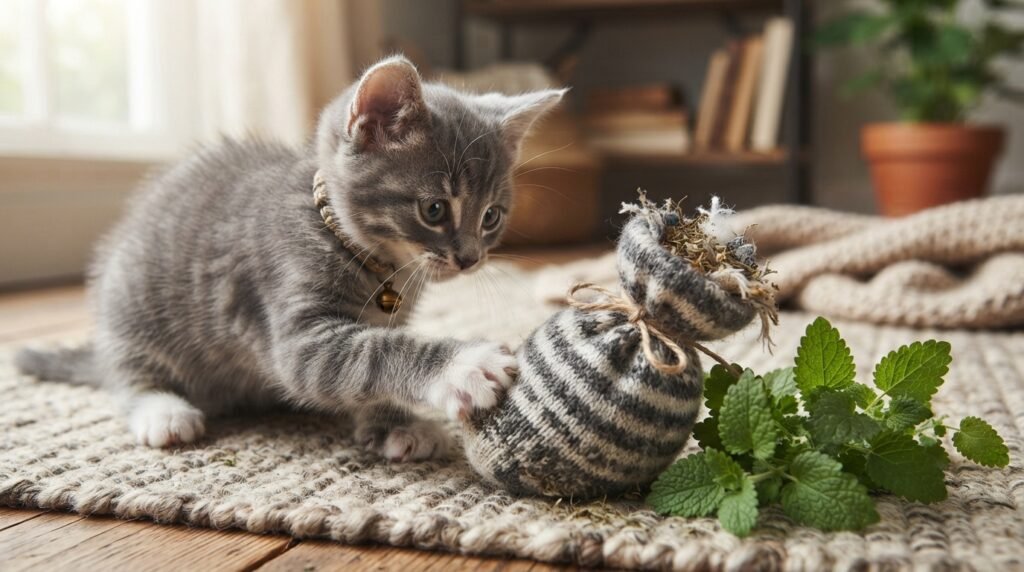
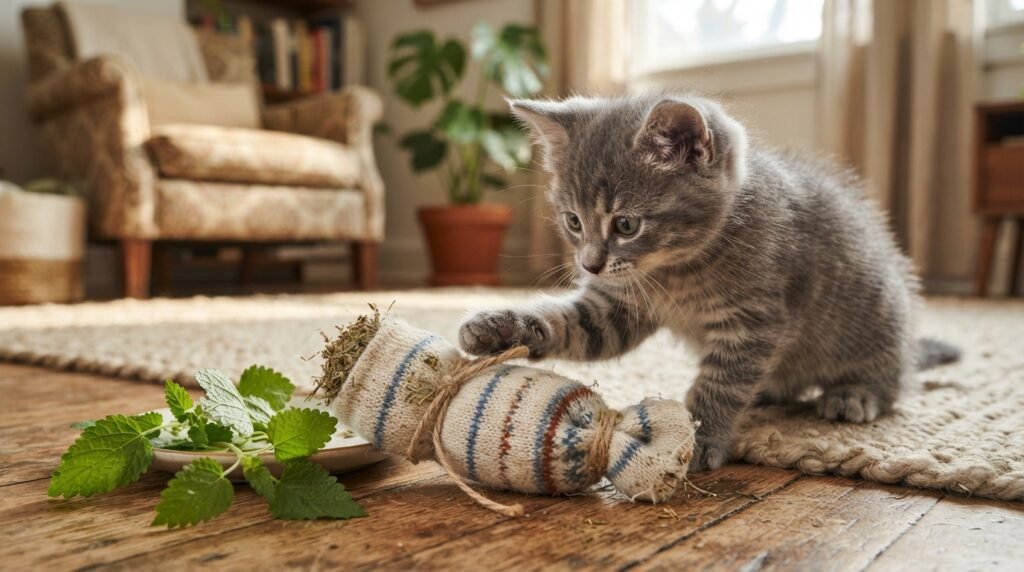
1. Sock Catnip Toy
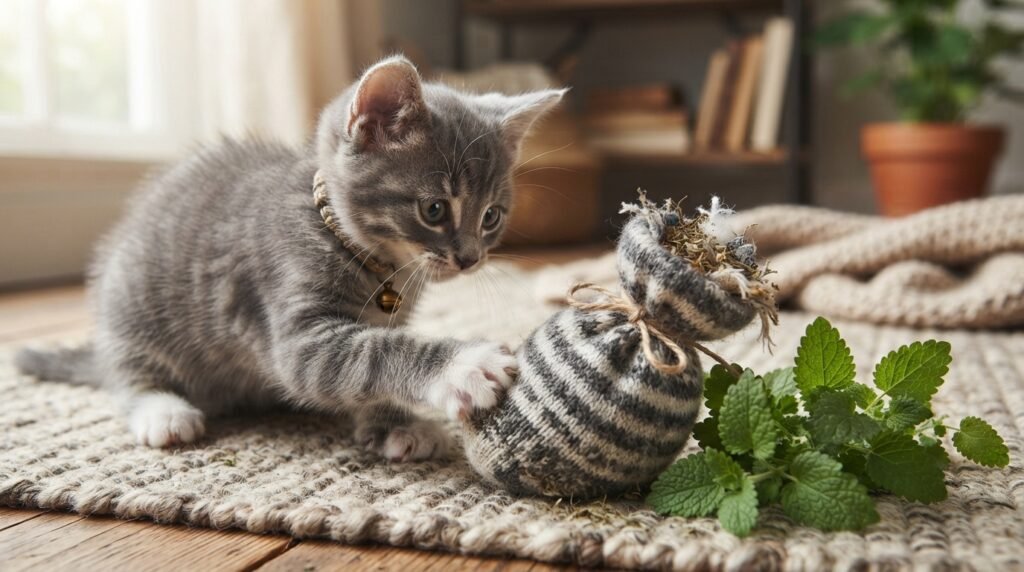
One of the easiest DIY cat toys you can make is a soft catnip-filled sock. Many cats love the smell of catnip, making this toy an instant favorite.
Materials
- Clean baby sock
- Dried catnip
- Cotton stuffing
- Needle and thread (or strong fabric glue)
Instructions
- Fill the sock halfway with stuffing.
- Add a generous pinch of dried catnip.
- Add more stuffing until the sock is firm.
- Sew the open end closed securely.
- Let your cat sniff and play.
Why Cats Love It
The soft texture is perfect for kicking, wrestling, carrying, and chewing.
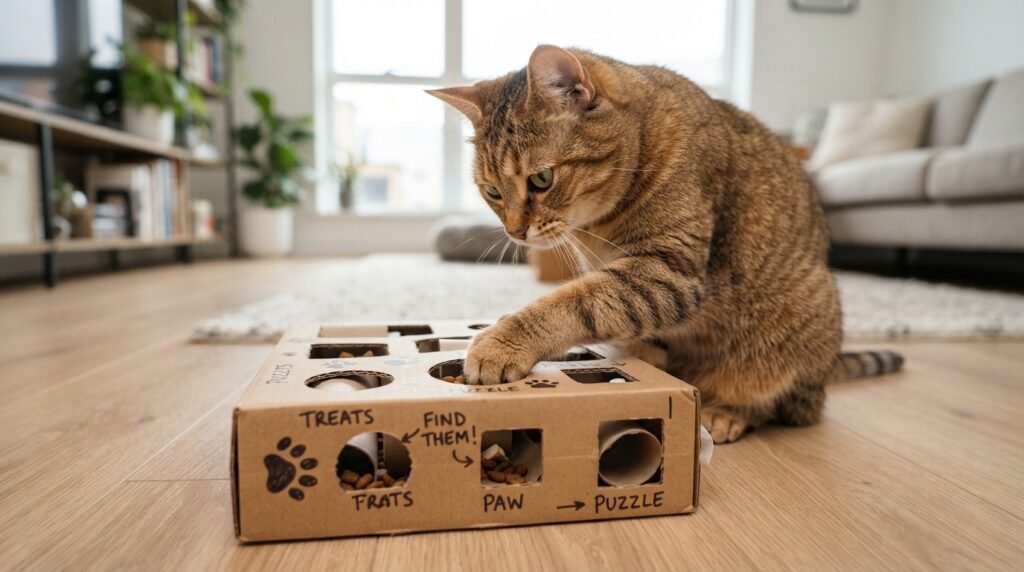
2. Cardboard Puzzle Box
Cats enjoy solving simple puzzles to earn treats.
Materials
- Small cardboard box
- Utility knife
- Dry treats
- Small toys
Instructions
- Cut several round holes across the top.
- Place treats inside.
- Add a few lightweight balls.
- Let your cat reach inside to retrieve the rewards.
Benefits
- Mental stimulation
- Slow feeding
- Encourages problem-solving
- Reduces boredom
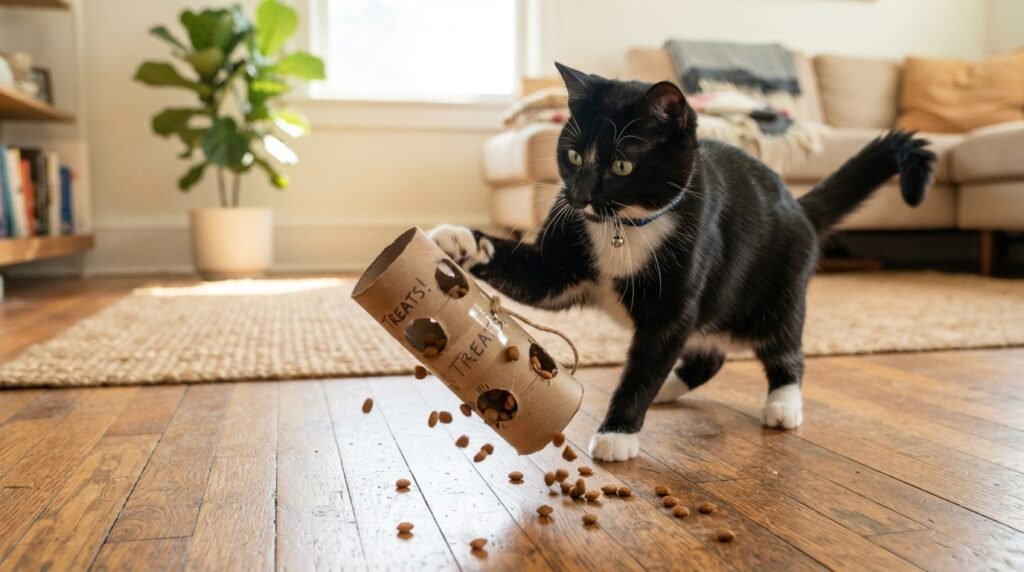
3. Toilet Paper Roll Treat Toy
Don’t throw away empty toilet paper rolls—they make excellent treat dispensers.
Materials
- Empty cardboard tube
- Dry treats
- Scissors
Instructions
- Fold one end closed.
- Fill the tube with treats.
- Fold the other end.
- Cut a few small holes in the sides.
- Allow your cat to roll it around until treats fall out.
Why It Works
Rolling the tube mimics prey movement and rewards your cat for staying active.
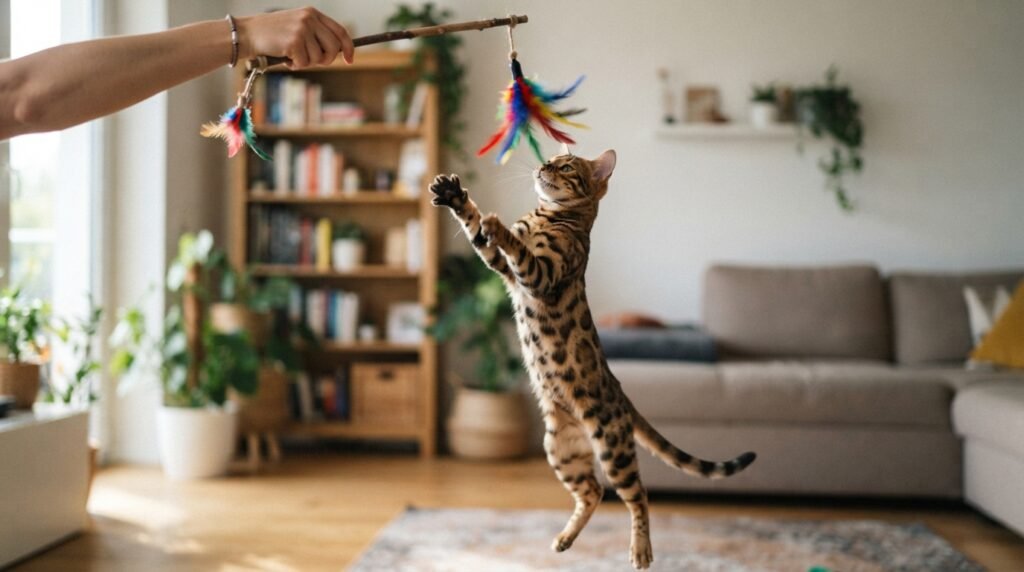
4. Feather Wand Toy
Interactive wand toys encourage exercise and strengthen your bond with your cat.
Materials
- Wooden dowel
- Cotton string
- Craft feathers
- Small bell (optional)
Instructions
- Tie the string securely to the stick.
- Attach feathers to the other end.
- Add a small bell if desired.
- Swing the toy across the floor or through the air..
.
5. Paper Ball Toy
Sometimes the simplest toys become a cat’s favorite. A crumpled paper ball mimics the unpredictable movement of prey and encourages your cat to chase, pounce, and bat it around the room.
Materials
- One sheet of plain paper
Instructions
- Crumple the paper into a tight ball.
- Roll it across the floor.
- Let your cat chase it.
- Make several balls to keep playtime exciting.
Pro Tip
Use plain printer paper instead of glossy paper with heavy ink.
Benefits
- Free to make
- Encourages exercise
- Great for kittens
- Easy to replace
6. Pom-Pom Chase Toy
Soft pom-poms are lightweight and bounce unpredictably, making them irresistible to many cats.
Materials
- Large soft pom-poms
- Pet-safe glue (optional)
Instructions
- Use oversized pom-poms that cannot be swallowed.
- Toss them gently across the floor.
- Hide a few around the house for your cat to discover.
Safety Tip
Avoid very small pom-poms that could become a choking hazard.
Benefits
- Encourages chasing
- Safe for indoor play
- Quiet on hardwood floors
- Easy to clean
7. Braided T-Shirt Rope Toy
Instead of throwing away old T-shirts, recycle them into a durable cat toy.
Materials
- Old cotton T-shirt
- Scissors
Instructions
- Cut three long strips of fabric.
- Tie one end together.
- Braid the strips tightly.
- Tie the opposite end securely.
You can drag it across the floor or let your cat wrestle with it.
Benefits
- Durable
- Washable
- Eco-friendly
- Perfect for kicking and biting
8. Bottle Cap Spinner
Bottle caps can become fun interactive toys when attached securely to a sturdy base.
Materials
- Plastic bottle caps
- Wooden dowel
- Strong glue
- Small piece of cardboard
Instructions
- Glue the dowel vertically onto the cardboard.
- Attach bottle caps so they spin freely around the dowel.
- Allow the glue to dry completely.
- Let your cat bat the spinning caps.
Benefits
- Encourages curiosity
- Interactive play
- Improves paw coordination
9. Egg Carton Puzzle Feeder
Turn an empty egg carton into a simple enrichment game.
Materials
- Clean cardboard egg carton
- Dry treats
- Small toy balls (optional)
Instructions
- Place treats inside several compartments.
- Close the lid halfway.
- Let your cat figure out how to reach the treats.
Increase the difficulty by adding lightweight balls over the treats.
Benefits
- Mental stimulation
- Slows eating
- Prevents boredom
- Great for food-motivated cats
10. Crinkle Paper Ball
Many cats love the sound of crinkling paper because it resembles rustling leaves or small prey.
Materials
- Brown packing paper
- Tissue paper
- Plain paper
Instructions
- Layer the papers together.
- Crumple them into a ball.
- Roll it across the room.
- Replace when worn out.
Why Cats Love It
The crinkling sound keeps cats engaged and encourages repeated play.
Benefits
- Stimulates hunting instincts
- Lightweight
- Inexpensive
- Provides sensory enrichment
Tips for Keeping DIY Toys Interesting
Even the best toy can lose its appeal if it’s always available. Keep your cat engaged by rotating toys every few days.
Here are a few simple ways to maintain your cat’s interest:
- Store some toys out of sight and swap them weekly.
- Introduce only two or three toys at a time.
- Sprinkle a small amount of catnip on fabric toys occasionally.
- Combine toys with treats for extra motivation.
- Join in with interactive play sessions to strengthen your bond.
Regularly changing your cat’s play options helps mimic the variety they would naturally experience while hunting, keeping them mentally stimulated and eager to explore.
11. DIY Fishing Pole Cat Toy
Interactive toys are a great way to bond with your cat while encouraging healthy exercise.
Materials
- Wooden dowel
- Cotton string
- Soft fabric strip or feather
- Small bell (optional)
Instructions
- Tie the string securely to one end of the dowel.
- Attach a fabric strip or feather to the other end of the string.
- Move the toy slowly across the floor or through the air to imitate prey.
- Let your cat catch the toy occasionally to keep the game rewarding.
Benefits
- Encourages jumping and running
- Builds trust between you and your cat
- Provides excellent daily exercise
- Stimulates natural hunting instincts
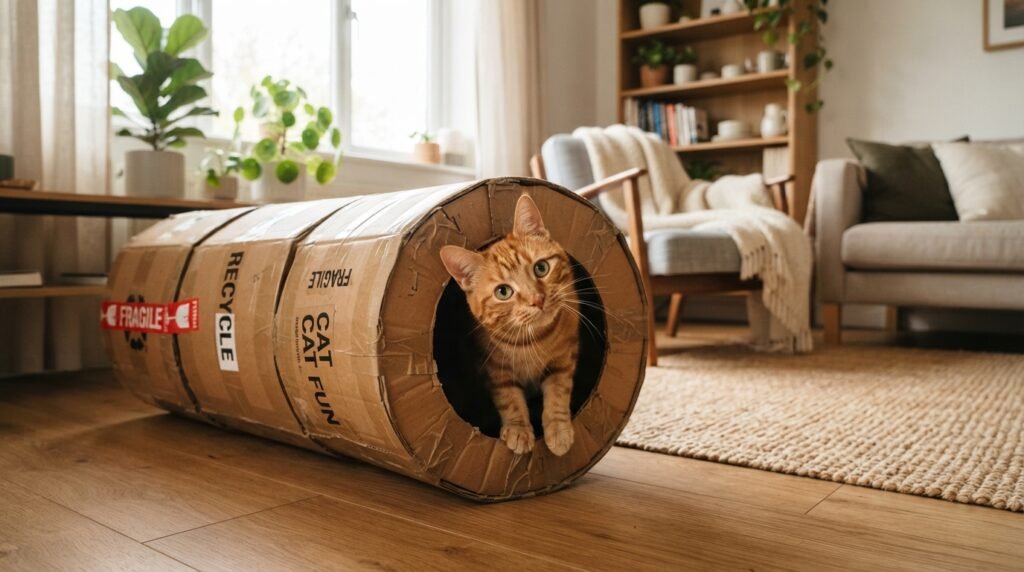
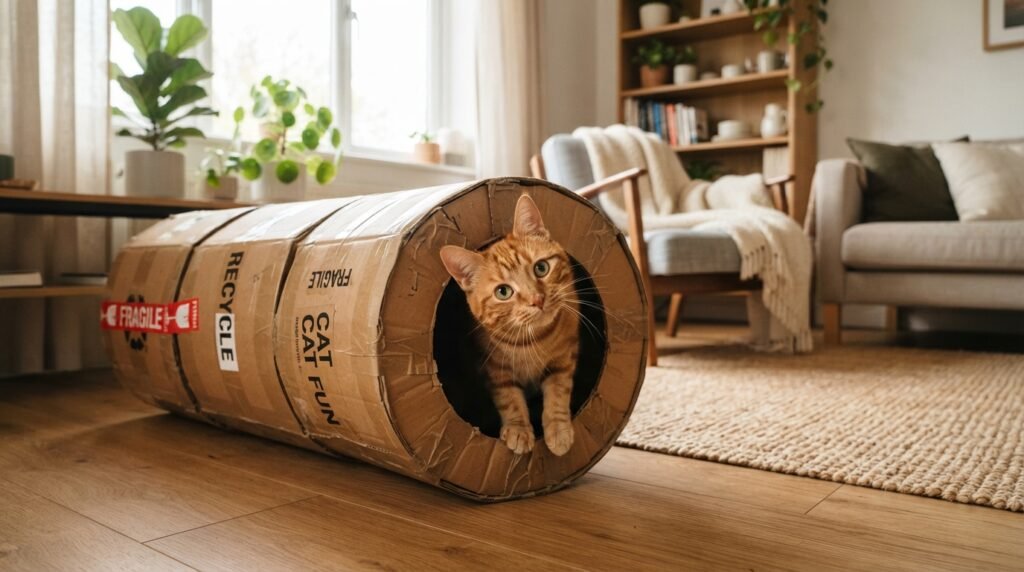
12. Cardboard Box Cat Tunnel
Cats naturally enjoy hiding, exploring, and ambushing. A cardboard tunnel satisfies all three instincts.
Materials
- Two or three cardboard boxes
- Packing tape
- Scissors or utility knife
Instructions
- Remove the tops and bottoms of the boxes.
- Tape the boxes together to form a tunnel.
- Cut extra windows along the sides.
- Place a toy or treats inside to encourage exploration.
Bonus Idea
Arrange several tunnels together to create a mini cat playground.
Benefits
- Provides exercise
- Encourages exploration
- Offers a safe hiding place
- Great for multi-cat households
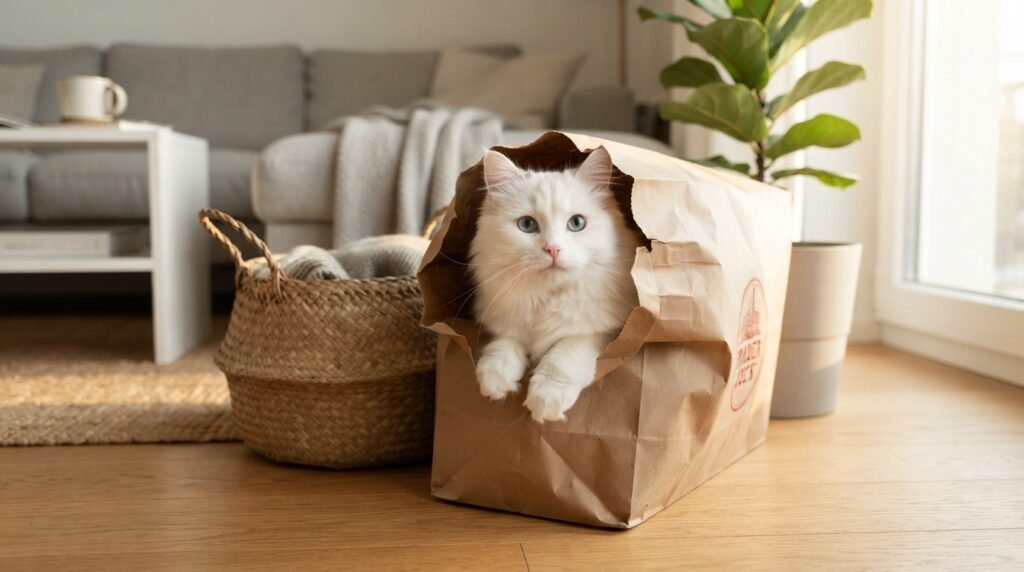
13. Paper Bag Hideout
A simple paper grocery bag can become an exciting adventure zone.
Materials
- Large paper shopping bag
- Scissors
Instructions
- Remove all handles from the bag.
- Cut one or two extra exit holes.
- Place the bag on its side.
- Toss a toy inside and let your cat investigate.
Safety Tip
Never use plastic bags, as they can pose a suffocation risk.
Benefits
- Encourages curiosity
- Perfect for hide-and-seek
- Inexpensive enrichment
- Easy to replace
14. Tennis Ball Treat Toy
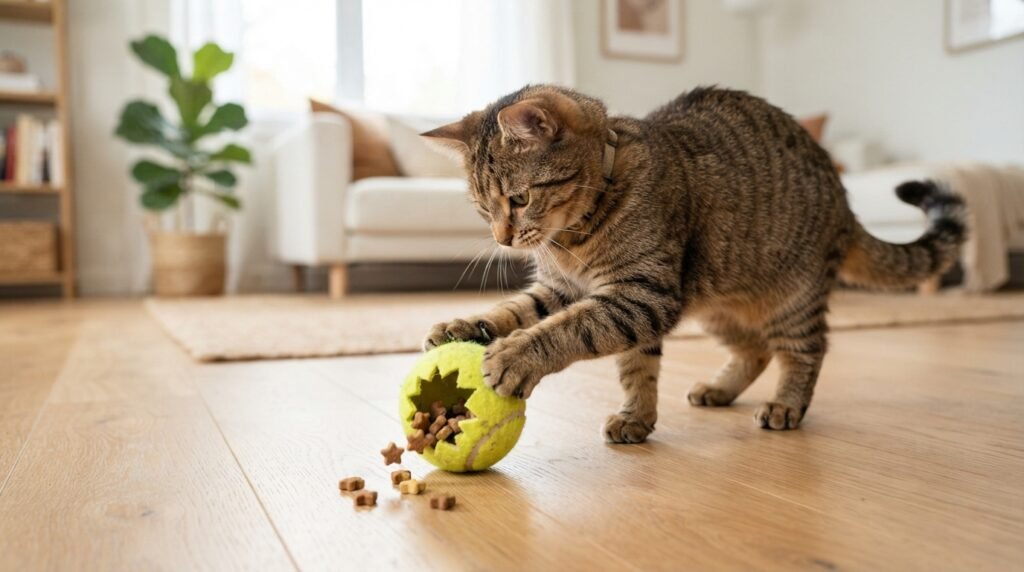
Turn a tennis ball into a fun treat dispenser that keeps your cat entertained while rewarding problem-solving.
Materials
- Clean tennis ball
- Craft knife
- Dry cat treats
Instructions
- Carefully cut a small slit in the tennis ball.
- Place a few treats inside.
- Roll the ball across the floor.
- Your cat will bat and chase it until treats fall out.
Benefits
- Mental stimulation
- Encourages movement
- Slow-feeding activity
- Keeps cats occupied
15. Frozen Ice Cube Cat Treat
Perfect for warm weather, this simple toy combines playtime with a refreshing reward.
Materials
- Ice cube tray
- Water
- Small cat treats or a little tuna water
Instructions
- Place a tiny treat or a few drops of tuna water into each section of the tray.
- Fill with water.
- Freeze until solid.
- Offer one cube on a washable floor or mat.
Benefits
- Cooling enrichment
- Encourages play
- Great for summer
- Provides a new sensory experience
Benefits of DIY Cat Toys
Homemade toys offer more than just entertainment. They can improve your cat’s physical and mental well-being while helping you save money.
Some key benefits include:
- Affordable and budget-friendly
- Easy to customize for your cat’s preferences
- Reduces boredom and destructive behavior
- Encourages healthy exercise
- Supports mental stimulation
- Promotes natural hunting behaviors
- Strengthens the bond between you and your cat
- Recycles household materials, reducing waste
DIY Cat Toy Safety Tips
To keep playtime safe and enjoyable:
- Always supervise your cat with new toys.
- Remove toys that become damaged or torn.
- Avoid small parts that could be swallowed.
- Do not use toxic paints, glues, or chemicals.
- Store string toys out of reach when not in use.
- Wash fabric toys regularly.
- Rotate toys to keep them clean and interesting.
Frequently Asked Questions
Are homemade cat toys safe?
Yes, when made with pet-safe materials and inspected regularly for wear and tear.
What materials should I avoid?
Avoid plastic bags, rubber bands, yarn, thread, sharp metal pieces, toxic glues, and anything small enough to be swallowed.
How often should I replace DIY toys?
Replace toys as soon as they become damaged, torn, or unsafe. Paper toys may need replacing after just a few play sessions.
Can kittens use homemade toys?
Yes, but choose larger toys that cannot be swallowed and always supervise playtime.
How often should I play with my cat?
Aim for two or three interactive play sessions each day, lasting about 10–15 minutes each. Regular play helps maintain a healthy weight and keeps your cat mentally engaged.
Conclusion
Keeping your cat happy doesn’t have to be expensive. With a little creativity and a few household items, you can make engaging toys that encourage exercise, satisfy natural hunting instincts, and provide valuable mental stimulation.
From simple paper balls to interactive puzzle feeders and cardboard tunnels, these DIY projects offer endless opportunities for fun while helping reduce boredom and unwanted behaviors.
Try a few of these ideas, rotate the toys regularly, and discover which ones your cat loves most. A small investment of time can lead to a happier, healthier, and more active feline companion.

hammadniazi6663@gmail.com
Contributor at PetZuoo, publishing practical information for pet owners and animal lovers.
Related guides

Why Do Dog Tilt Their Heads? 9 Fascinating Reason
Why Do Dog Tilt Their Heads? 9 Fascinating Reason Behind This Adorable Behavior. Have you ever spoken to your dog and watched…
Cat Chattering at Birds: 7 Amazing Reasons Explained
Cat Chattering at Birds: 7 Amazing Reasons Explained. Have you ever noticed your cat sitting beside a window, watching birds outside, and…
Why Do Cats Chirp at Birds? 7 Fascinating Reasons
Why Do Cats Chirp at Birds? 7 Fascinating Reasons Behind This Cute Cat Behavior, Have you ever watched your cat sitting beside…