Why Is My Cat Kneading? 7 Surprising Reasons Explained, If you have ever watched your cat push its front paws gently against a blanket, your lap, a pillow, or even your stomach, you may have wondered what it is doing. This adorable behaviour is called kneading, and it is one of the most common behaviours seen in cats.
Some cats knead slowly and quietly, while others become completely absorbed in the activity. You may even notice your cat purring, closing its eyes, or becoming sleepy while kneading. For many owners, it is a sweet moment that makes the bond with their cat feel even stronger.
But why do cats knead?
The answer is more interesting than you might expect. Kneading can be connected to kittenhood, comfort, relaxation, scent marking, nesting instincts, and even the way cats communicate with people and other animals.
In most situations, kneading is normal and harmless. However, understanding the behaviour can help you recognise what your cat may be communicating.
What Does Cat Kneading Look Like?
Cat kneading usually involves a repeated movement of the front paws. Your cat presses one paw down and then the other, alternating them in a rhythmic motion.
You might see your cat kneading:
- Blankets or soft bedding
- Your clothing
- Pillows
- Your lap
- Another pet
- A favourite toy
- The sofa or carpet
Some cats extend and retract their claws while kneading. Others keep their claws mostly hidden.
Kneading can last only a few seconds or continue for several minutes. There is no single “correct” way for a cat to knead.
You may also notice other behaviours happening at the same time, such as purring, drooling, stretching, licking, or gently biting a blanket.
These additional behaviours can provide clues about how your cat is feeling.
1. Kneading May Come From Kittenhood
One of the most widely recognised explanations for kneading is its connection to kittenhood.
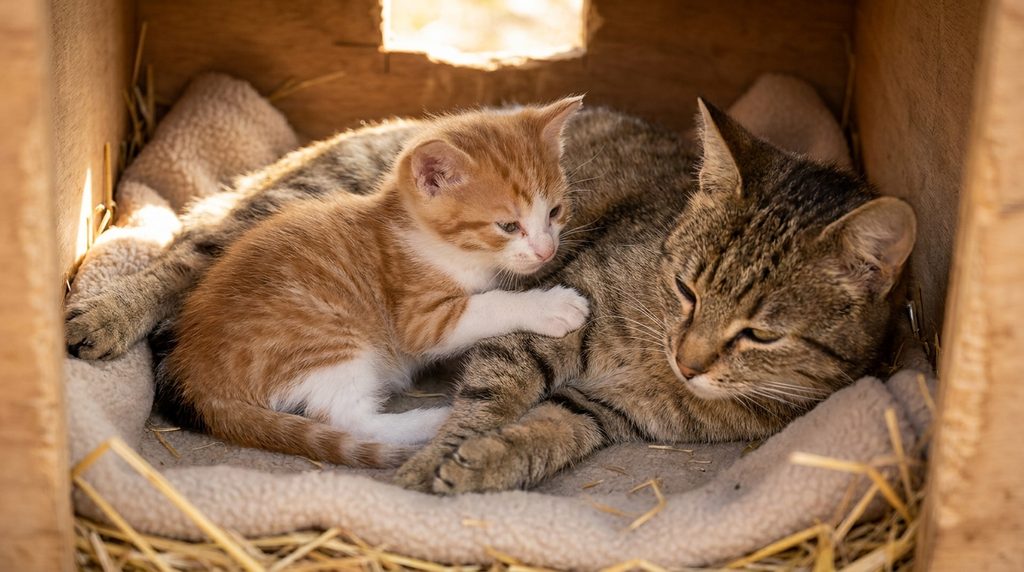
Young kittens knead their mother’s abdomen while nursing. The rhythmic movement is associated with feeding and early-life comfort.
As cats grow older, some continue this movement even though they no longer need to nurse. The behaviour can become associated with feelings of safety and relaxation.
This is why an adult cat may suddenly climb onto your lap, begin purring, and start kneading your clothing.
Your cat isn’t necessarily trying to nurse. Instead, the movement may simply be a familiar behaviour that has remained from its earliest days.
2. Your Cat May Be Showing That It Feels Comfortable
Have you ever noticed your cat kneading when it is relaxed?
That is no coincidence.
Cats often knead when they are in a comfortable environment. A soft blanket, warm bed, or your lap can provide the kind of surface that encourages this behaviour.
If your cat settles beside you, starts purring, and gently kneads your lap, it may simply be enjoying the moment.
This can be a positive sign that your cat feels secure in its surroundings.
A comfortable cat may also show other relaxed body-language signals, including:
- Soft or partially closed eyes
- Relaxed ears
- Loose body posture
- Slow blinking
- Gentle purring
- Resting on its side
Rather than trying to stop normal kneading, allow your cat to enjoy the behaviour as long as it is not causing a problem.
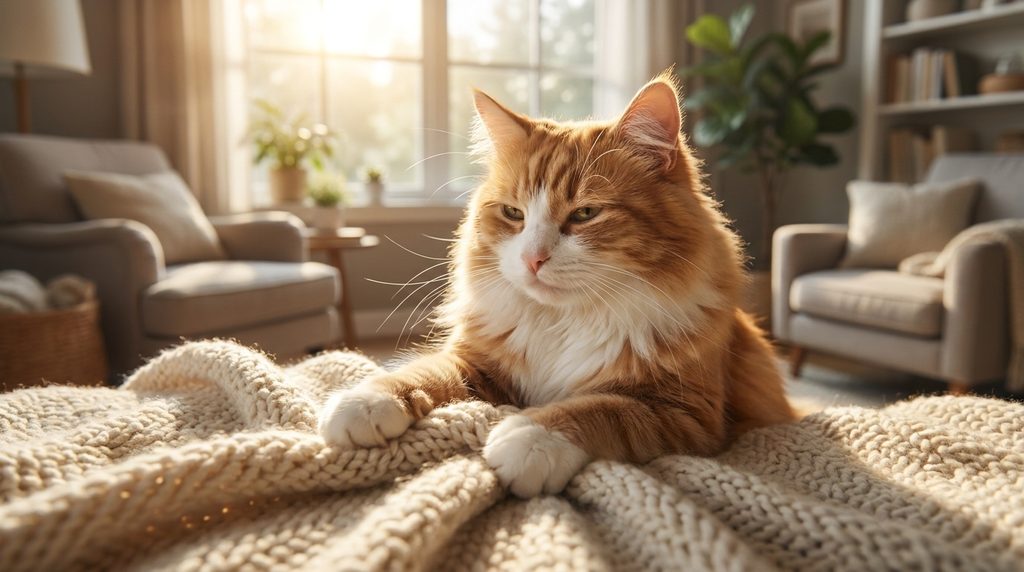
3. Kneading Can Be a Way to Prepare a Resting Place
Cats have natural instincts that can influence their everyday behaviour.
Before settling down, some cats knead blankets, cushions, or other soft surfaces. This may be connected to an instinct to prepare a comfortable place to rest.
You may notice your cat walking around a bed, turning in a circle, and then beginning to knead before lying down.
Think of it as your cat’s own little bedtime routine.
Not every cat does this, and researchers cannot say that every instance of kneading has exactly the same purpose. Cat behaviour can have several overlapping explanations.
Still, when kneading happens immediately before resting, creating a comfortable sleeping spot is a reasonable interpretation.
4. Your Cat May Be Leaving Its Scent
Cats communicate in ways that humans often cannot easily notice.
They have scent glands in several areas of their bodies, including around their paws. When a cat presses its paws against a surface, scent may be deposited.
This means kneading can potentially have a scent-marking component.
Your cat may knead its favourite blanket, bed, or another familiar area because that location feels important and familiar.
It does not necessarily mean your cat is being territorial or aggressive.
Instead, scent is an important part of how cats understand their environment.
Your cat’s favourite sleeping area may smell familiar because it has repeatedly spent time there. Kneading may contribute to that familiar scent profile.
5. Kneading May Be Connected to Affection
One of the sweetest possibilities is that your cat kneads you because it feels safe and comfortable around you.
Cats don’t always show affection in the same way dogs do. Some cats express their attachment through behaviours such as sitting nearby, following their owner around the house, slow blinking, grooming, purring, or kneading.
If your cat regularly chooses your lap for kneading rather than simply kneading random surfaces, it may be enjoying the warmth, comfort, and familiar scent you provide.
However, it is important not to assume that every kneading session has one specific emotional meaning.
The best way to understand your cat is to consider the whole body language and situation, rather than focusing on one behaviour alone.
Should You Let Your Cat Knead You?
Usually, yes.
If your cat is relaxed and the behaviour isn’t hurting you, there is generally no reason to stop it.
However, some cats have sharp claws, and kneading can become uncomfortable.
Instead of pushing your cat away, place a thick, soft blanket between your cat and your skin.
This allows your cat to continue its behaviour while protecting your legs or stomach from accidental scratches.
6. Kneading Can Be a Sign of Relaxation and Happiness
Sometimes the simplest explanation is the right one: your cat is relaxed.
Many cats knead when they are settling into a comfortable position. You may see your cat choose a soft blanket, curl up beside you, start purring, and then rhythmically move its paws.
This combination of behaviours often happens during calm periods.
For example, your cat might knead after:
- Eating a meal
- Playing
- Receiving gentle attention
- Getting comfortable on the sofa
- Settling into its favourite bed
- Spending time with you
If your cat looks relaxed while kneading, there is usually little reason to worry.
Why Does My Cat Knead My Lap?
Your lap offers several things that cats enjoy: warmth, softness, familiarity, and your scent.
If your cat climbs onto you and begins kneading, it may simply have found a comfortable place to relax.
You may also notice purring or slow blinking at the same time. These behaviours can indicate that your cat is comfortable in the situation.
Of course, every cat has an individual personality. Some cats are very affectionate and constantly seek physical contact, while others prefer to show affection from a nearby chair.
Both can be completely normal.
7. Kneading May Be Part of Your Cat’s Individual Personality
Not every cat kneads.
Some cats knead frequently, while others rarely do it. A cat that kneads several times every day isn’t necessarily happier than one that never kneads.
Cats develop individual habits just like people do.
One cat may have a favourite blanket that it kneads every evening. Another may knead only when sitting on its owner’s lap. Some cats may knead for a few seconds before sleeping, while others can continue for several minutes.
The important thing is to understand what is normal for your individual cat.
A behaviour that has remained consistent for years is generally less concerning than a sudden and dramatic change in behaviour.
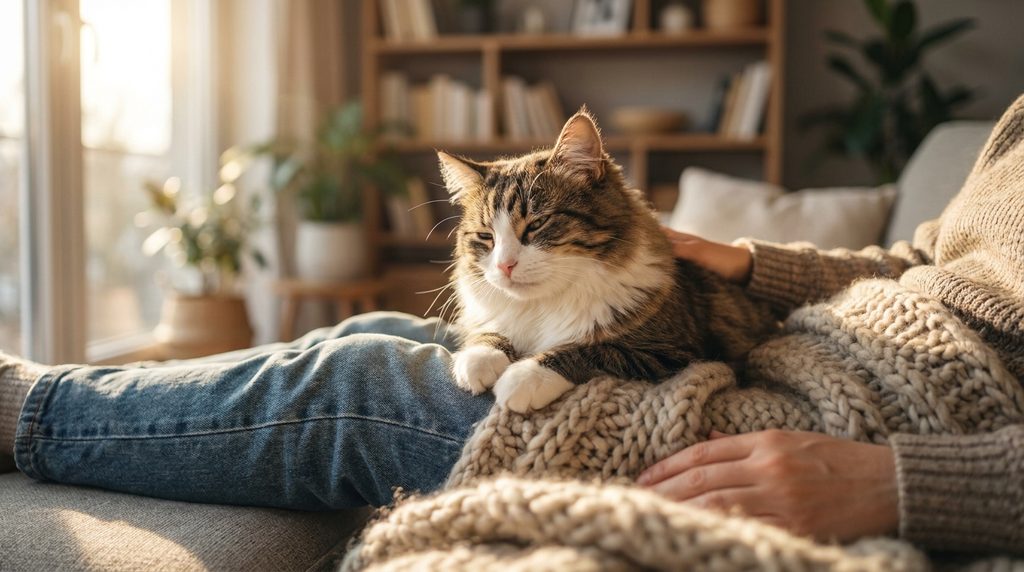
Why Does My Cat Knead and Purr at the Same Time?
This is a question many cat owners ask.
Kneading and purring often occur together because both behaviours can appear during periods of comfort and relaxation.
Imagine your cat settling into a warm blanket after a long day of exploring the house. It begins kneading with its paws while purring softly and eventually curls up to sleep.
That is often simply part of its relaxation routine.
Purring itself can have several meanings, so it should not automatically be interpreted as proof that a cat is happy. Cats can also purr in other situations. Looking at the complete context and your cat’s body language gives you a better understanding of what is happening.
Why Does My Cat Knead Blankets?
Soft blankets are particularly attractive to many kneading cats.
A blanket can provide a surface that resembles the softness and resistance associated with early kittenhood. It also provides warmth and comfort.
Some cats develop a strong attachment to a particular blanket.
You might notice your cat:
- Walk toward the blanket.
- Sniff or inspect it.
- Turn around several times.
- Begin kneading.
- Purr or relax.
- Eventually lie down.
If this has become your cat’s normal routine, there is generally no need to interfere.
In fact, providing a dedicated soft blanket can be a good way to give your cat a comfortable place where it can knead without damaging furniture.
Why Does My Cat Knead Me With Its Claws?
This is where a cute behaviour can become uncomfortable.
Cats naturally extend their claws during some kneading sessions. Your cat may not realise that its claws are hurting you.
Do not punish your cat for this.
Your cat isn’t necessarily trying to scratch you. Kneading is usually a natural movement rather than an aggressive action.
Instead, gently place a thick blanket or cushion between your skin and your cat’s paws.
You can also keep your cat’s claws appropriately trimmed if necessary. If you are unsure how to trim them safely, ask a veterinarian or professional groomer to demonstrate the technique.
Is Kneading Always a Sign That Something Is Wrong?
No.
Normal kneading by itself is usually not a reason for concern.
The bigger issue is a sudden change in behaviour.
For example, if your cat has never kneaded before and suddenly begins repeatedly kneading while also showing other unusual behaviours, it is worth paying attention.
Look for additional signs such as:
- Changes in appetite
- Changes in drinking
- Hiding more than usual
- Vocalising unusually
- Aggression
- Restlessness
- Difficulty getting comfortable
- Excessive grooming
- Limping
- Changes in litter-box habits
- Reduced interest in normal activities
One behaviour alone rarely tells the whole story.
If you notice several unusual changes together, contact your veterinarian for advice.
What If My Cat Kneads and Suckles a Blanket?
Some cats knead while sucking, licking, or chewing soft fabrics.
This behaviour is sometimes called wool sucking.
It can occur in cats for different reasons, including comfort-seeking behaviour. However, there is an important safety issue: swallowing pieces of fabric can be dangerous.
If your cat is simply kneading a blanket without damaging or swallowing it, there may be little cause for concern.
But if your cat repeatedly chews and swallows fabric, remove unsafe materials and speak with your veterinarian.
Swallowed fabric can potentially cause a gastrointestinal obstruction, which can become a serious medical emergency.
So don’t focus only on the cute kneading behaviour. Pay attention to what your cat is actually doing with the material.
How Can You Stop Painful Kneading Without Stopping the Behaviour?
You don’t necessarily need to stop kneading.
Instead, make it more comfortable for both of you.
Use a Thick Blanket
Place a soft, thick blanket on your lap before your cat settles down.
This creates a barrier between your skin and your cat’s claws.
Redirect Gently
If your cat starts kneading an uncomfortable area, slowly move a blanket underneath its paws.
Avoid shouting or suddenly pushing your cat away.
Give Your Cat a Special Kneading Spot
A fleece blanket, soft cat bed, or comfortable cushion can become your cat’s dedicated relaxation area.
Keep Claws Maintained
Regular claw care can reduce accidental scratches.
If your cat strongly resists nail trimming, don’t force the process. A veterinarian or qualified groomer can help.
When Should Cat Owners Be Concerned?
Kneading is generally a normal feline behaviour, but changes in behaviour deserve attention.
Contact your veterinarian if kneading appears alongside signs that your cat may be uncomfortable or unwell.
For example, pay attention if your cat:
- Suddenly becomes extremely restless
- Cannot settle comfortably
- Cries or vocalises when touched
- Stops eating
- Becomes unusually withdrawn
- Develops a limp
- Shows signs of pain
- Repeatedly chews and swallows fabric
- Develops other sudden behavioural changes
You don’t need to panic every time your cat behaves differently. Cats can have occasional changes in mood and routine.
The key is to look for persistent or significant changes, especially when physical symptoms appear at the same time.
Does Kneading Mean My Cat Loves Me?
It can be a comforting sign, especially when your cat chooses to knead on you while remaining relaxed and affectionate. Cats don’t express attachment exactly like humans do, but kneading can happen during moments when they feel safe and comfortable.
You might notice your cat:
- Climbing onto your lap
- Kneading your clothing
- Purring softly
- Slow blinking at you
- Relaxing its body
- Eventually falling asleep beside you
When these behaviours occur together, your cat is likely enjoying the interaction.
However, it is better not to interpret kneading as a direct “I love you” message every time. Kneading has several possible functions, and your cat’s overall body language provides much more useful information.
Why Does My Cat Knead Only Me?
Some cats seem to have a favourite person for kneading.
If your cat consistently chooses you, it may be because your lap is warm, your clothing is comfortable, or your scent has become familiar and reassuring.
Your cat may also associate you with positive experiences such as:
- Food
- Play
- Gentle attention
- A safe environment
- Comfortable sleeping places
- Predictable daily routines
Over time, these positive experiences can strengthen your cat’s preference for spending time with you.
It doesn’t necessarily mean your cat dislikes everyone else. Cats simply develop individual relationships with the people around them.
Why Does My Cat Knead Before Going to Sleep?
This is particularly common in cats that have developed kneading as part of their relaxation routine.
Your cat may walk onto a blanket, knead it several times, circle around, and then settle down.
The behaviour may help create a familiar routine before resting.
Cats are creatures of habit. Once they discover that a particular sequence of actions is associated with comfort, they may repeat it regularly.
So if your cat kneads its favourite blanket every night before sleeping, you may simply be witnessing a personal bedtime ritual.
Why Does My Cat Knead the Sofa?
The sofa can be an attractive kneading surface because it is soft, comfortable, and often smells familiar.
There can also be a practical problem: repeated kneading may gradually damage upholstery.
If your cat has chosen your expensive sofa as its favourite kneading location, don’t punish it.
Instead, place a dedicated blanket or washable throw over the area.
You can also provide a comfortable cat bed nearby and reward your cat with gentle attention when it chooses the appropriate spot.
The goal is redirection rather than punishment.
Common Mistakes Cat Owners Make About Kneading
Understanding kneading is important, but knowing what not to do is equally useful.
Mistake 1: Punishing the Cat
Never yell at your cat simply because it is kneading.
The behaviour is natural, and punishment can create fear or confusion.
Mistake 2: Assuming Every Kneading Session Has the Same Meaning
Kneading can happen for different reasons.
One session might occur because your cat is relaxing. Another might happen because it is preparing a sleeping area.
Context matters.
Mistake 3: Ignoring Sudden Behavioural Changes
Normal kneading is usually nothing to worry about.
But if your cat suddenly changes its normal behaviour and also shows other signs of discomfort, don’t ignore those changes.
Mistake 4: Allowing Fabric Chewing
Kneading itself is usually harmless. Swallowing fabric is a different matter.
If your cat chews or eats blankets, clothing, or other materials, take appropriate precautions and speak with your veterinarian if the behaviour persists.
Mistake 5: Pushing the Cat Away Because of Claws
If kneading hurts, use a blanket as protection instead of punishing your cat.
This lets you maintain the positive interaction while preventing scratches.
How to Read Your Cat’s Body Language While Kneading
Kneading becomes easier to understand when you look at everything your cat is doing.
Relaxed Body
A loose body, relaxed paws, normal breathing, and soft facial expression generally suggest that your cat is comfortable.
Purring
Purring frequently accompanies relaxation, although purring can have other meanings too.
Slow Blinking
Slow blinking and relaxed eyes can be signs of calm social interaction.
Flattened Ears
If your cat’s ears become flattened against its head, don’t assume kneading means happiness. Flattened ears can indicate stress, fear, irritation, or overstimulation.
Tail Movement
A rapidly flicking or thumping tail can suggest that your cat is becoming irritated or overstimulated.
This is particularly important if you are touching your cat while it kneads.
Sudden Tension
If your cat’s body becomes stiff, its pupils become very large, or it attempts to move away, give it some space.
Learning these signals can help prevent misunderstandings between you and your cat.
Can Kittens and Adult Cats Knead Differently?
Yes.
Kittens may knead in situations closely associated with nursing and their mother.
Adult cats can retain the movement but use it in different contexts.
An adult cat may knead:
- Before sleeping
- While sitting with its owner
- On a soft blanket
- During a calm evening
- When settling into a favourite bed
Therefore, the same physical movement can continue throughout a cat’s life while its context changes.
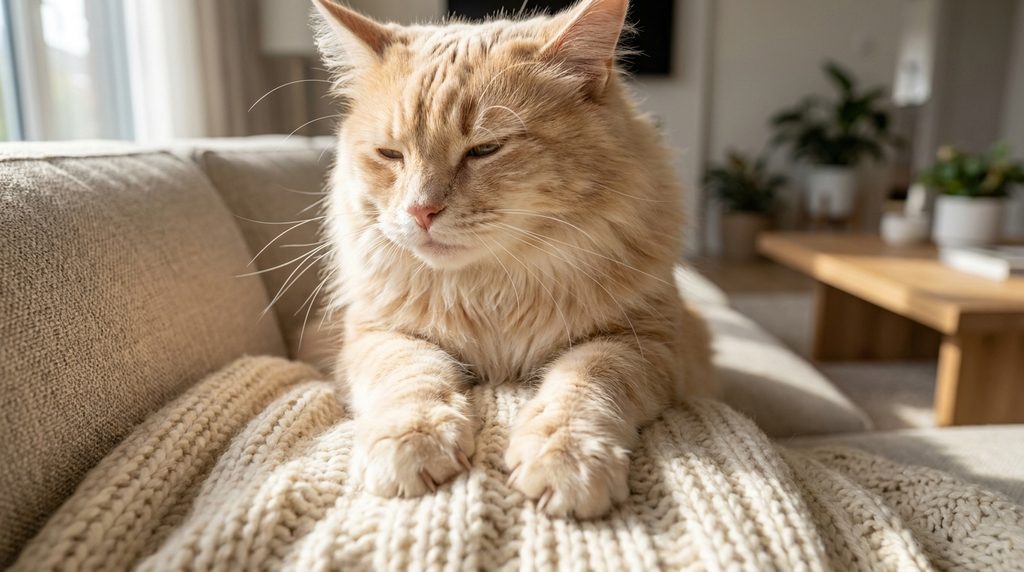
Should You Encourage Your Cat to Knead?
There is usually no need to actively encourage or discourage normal kneading.
If your cat enjoys kneading and it isn’t causing harm, simply allow it.
You can make the experience safer by providing:
A soft blanket:
A dedicated blanket gives your cat a comfortable surface.
A suitable cat bed:
A warm, washable bed can become a favourite resting location.
Regular claw maintenance:
Keeping claws appropriately maintained can reduce accidental scratches.
A calm environment:
Cats generally benefit from predictable routines and places where they can rest undisturbed.
The goal isn’t to control every natural behaviour your cat displays. Instead, create an environment where normal behaviours can happen safely.
Frequently Asked Questions About Cat Kneading
Is it normal for cats to knead?
Yes. Kneading is a common feline behaviour. Many cats knead blankets, beds, furniture, or their owners. If your cat appears comfortable and healthy, normal kneading is generally nothing to worry about.
Why does my cat knead me but not other people?
Your cat may simply find your lap, clothing, body temperature, or scent especially comforting. Cats can develop individual preferences for particular people and resting places.
Why does my cat knead and purr?
Kneading and purring frequently occur together when cats are relaxed. However, purring can have different meanings, so consider your cat’s complete body language rather than relying on purring alone.
Why does my cat knead blankets?
Soft blankets provide a comfortable surface for kneading. Some cats also develop a strong preference for particular blankets because they associate them with warmth, safety, and rest.
Should I stop my cat from kneading?
Usually, no. If your cat is relaxed and the behaviour isn’t causing damage or injury, there is generally no reason to stop it.
If the claws are uncomfortable, place a thick blanket between your cat and your skin.
What if my cat’s claws hurt while kneading?
Gently redirect the paws onto a blanket or cushion. Keeping your cat’s claws appropriately maintained can also reduce accidental scratches.
Avoid shouting or punishing your cat.
Is excessive kneading a problem?
Frequent kneading isn’t automatically a problem. Some cats simply knead more than others.
However, if kneading is accompanied by sudden behavioural changes, signs of pain, appetite changes, unusual vocalisation, or other concerning symptoms, consult a veterinarian.
Why does my cat knead and bite a blanket?
Some cats combine kneading with licking, sucking, or chewing fabric. If your cat is swallowing pieces of material, this can be dangerous and should not be ignored.
Speak with your veterinarian if fabric-eating behaviour is persistent.
A Simple Cat Kneading Checklist
The next time your cat starts kneading, take a moment to observe what is happening.
Ask yourself:
☐ Does my cat look relaxed?
☐ Is its body loose rather than tense?
☐ Are its ears in a normal position?
☐ Is it kneading a safe surface?
☐ Is it chewing or swallowing fabric?
☐ Has this behaviour been normal for my cat?
☐ Are there any other sudden changes in behaviour?
If your cat is relaxed, healthy, and simply enjoying its favourite blanket, there is usually no reason to interrupt the moment.
The Bottom Line: Why Is My Cat Kneading?
So, why is my cat kneading?
There isn’t always one single answer.
Kneading is a behaviour that can be connected to kittenhood, comfort, relaxation, preparing a resting area, scent marking, and individual habits. In many cases, it is simply something your cat does when it feels comfortable and secure.
The most important thing is to consider the context.
A cat peacefully kneading a blanket before falling asleep is very different from a cat suddenly displaying unusual behaviour alongside signs of illness or discomfort.
Instead of looking at kneading as an isolated behaviour, pay attention to your cat’s complete body language and daily routine.
And if your cat chooses your lap for its nightly kneading session, consider it one of those little feline rituals that makes living with a cat so special.
After all, cats have plenty of mysterious habits. Kneading is one of the sweetest—and once you understand it, those tiny rhythmic paws become a little easier to appreciate.
Quick Takeaway
Cat kneading is usually normal. It can be associated with comfort, relaxation, early kitten behaviour, resting routines, scent communication, and personal preference.
You don’t normally need to stop your cat from kneading. If claws are uncomfortable, use a soft blanket as a protective barrier.
Most importantly, watch for sudden changes or other signs of illness rather than worrying about ordinary kneading itself.