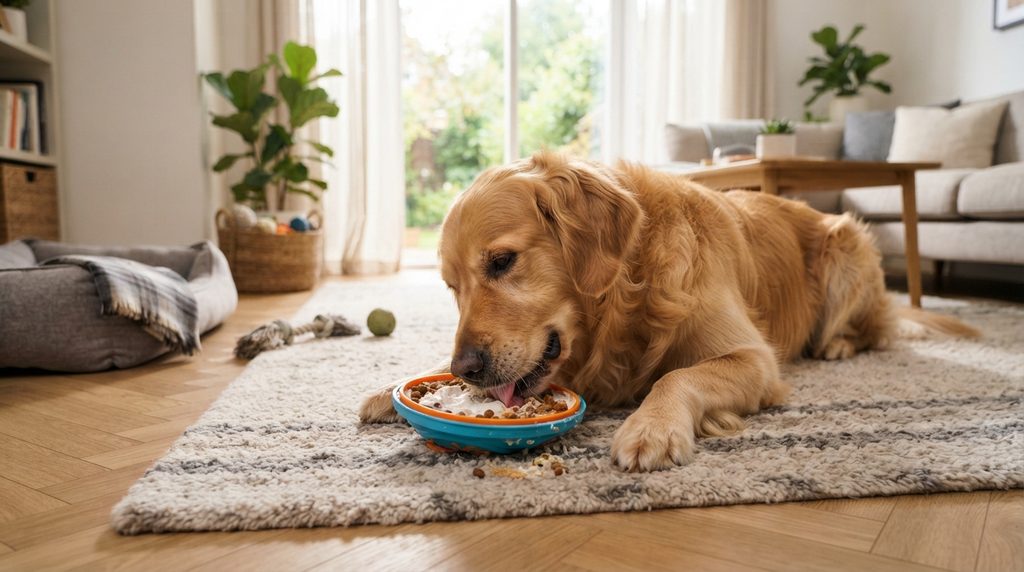
Ultimate Guide to Dog Separation Anxiety. Proven Ways to Help Your Dog Feel Safe Alone, and Leaving your dog at home for a few hours should be a normal part of everyday life. But for some dogs, being separated from their owner can trigger intense fear and distress. They may bark continuously, scratch doors, pace around the house, destroy furniture, have accidents indoors, or desperately try to escape.
This behavior can be upsetting for both the dog and the owner. It is important to understand that dog separation anxiety is not simply bad behavior. A dog experiencing separation-related distress may genuinely feel unsafe when left alone.
The good news is that many dogs can improve with the right approach. A combination of predictable routines, gradual training, mental enrichment, appropriate exercise, and professional guidance when necessary can make being alone much easier for a dog.
In this guide, we will look at the signs of separation anxiety, why it happens, practical training techniques, common mistakes, and ways you can create a calmer daily routine for your dog.
What Is Dog Separation Anxiety?
Dog separation anxiety occurs when a dog experiences significant distress when separated from their owner or another person they are strongly attached to.
Some dogs become anxious as soon as their owner begins preparing to leave. Others remain calm initially but become increasingly distressed after the person has gone.
It is important to distinguish separation anxiety from ordinary boredom. A bored dog might chew a toy, sleep, or occasionally get into something interesting. A dog experiencing separation-related distress may show much stronger reactions, such as persistent vocalization, destructive attempts to escape, heavy panting, pacing, drooling, or repeated attempts to get through doors and windows.
Every dog is different, so symptoms can vary considerably.
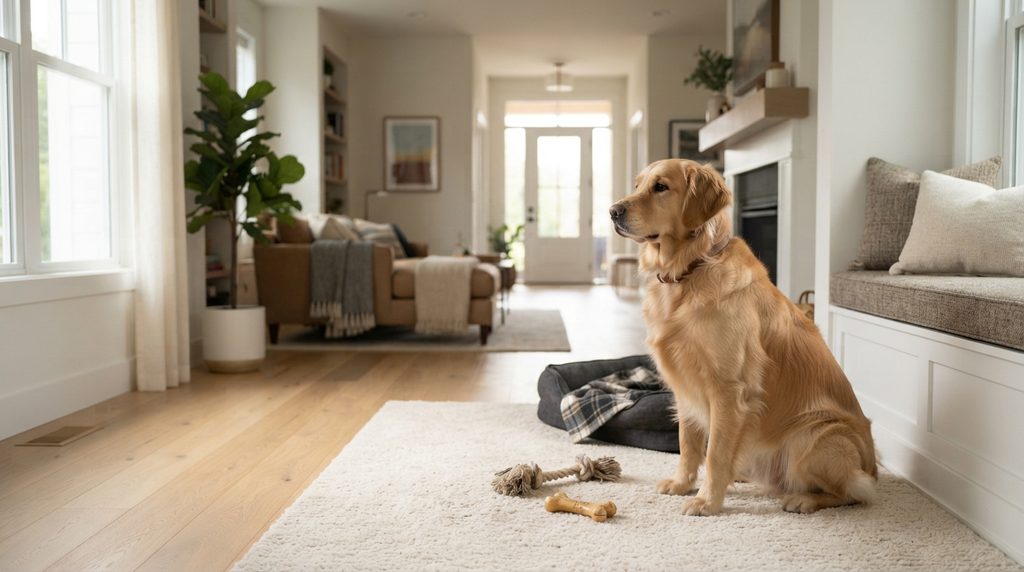
Common Signs of Separation Anxiety in Dogs
Recognizing the signs early can help you address the problem before it becomes more difficult.
Some common signs include:
- Excessive barking or whining after you leave
- Scratching or chewing doors
- Destructive behavior around windows or exits
- Pacing repeatedly
- Excessive drooling or panting
- Restlessness
- Attempts to escape confinement
- Urinating or defecating indoors despite being house-trained
- Refusing food when left alone
- Following the owner constantly around the home
- Becoming extremely excited or distressed when the owner returns
One important clue is when the behavior happens. If destructive behavior occurs primarily when the dog is left alone and disappears when someone is present, separation-related distress may be worth considering.
However, these behaviors can also have other causes. A veterinarian can help rule out medical problems or other behavioral issues when necessary.
Why Do Some Dogs Struggle With Being Alone?
There is not always one single reason a dog develops separation anxiety.
Changes in a dog’s environment or routine can sometimes contribute. Moving to a new home, changes in the household, a new work schedule, or spending significantly more time with an owner before suddenly being left alone can affect some dogs.
Dogs can also have individual differences in temperament. Some are naturally more independent, while others form particularly strong attachments to their people.
The important thing is not to blame yourself or your dog. Instead, focus on teaching your dog that being alone is safe and temporary.
The First Step: Observe Your Dog
Before beginning a training program, try to understand exactly what happens when your dog is alone.
A simple camera can help you observe behavior without being physically present. Look for when anxiety begins and what behaviors appear first.
For example, your dog might remain calm for ten minutes and then start pacing. Another dog might become anxious immediately after the front door closes.
Knowing your dog’s individual pattern can help you create a gradual training plan rather than expecting them to suddenly tolerate several hours alone.
Practical Ways to Help Your Dog
How to Help a Dog With Separation Anxiety
Helping a dog with separation anxiety usually requires patience and consistency. The goal is not to force your dog to tolerate long periods alone. Instead, you want to gradually teach your dog that separation is safe.
1. Start With Very Short Separations
One of the most useful approaches is gradual alone-time training.
If your dog becomes anxious after only a few minutes, don’t begin by leaving for an hour. Start with a period your dog can handle comfortably.
For example:
- Step away for a few seconds.
- Return calmly.
- Repeat several times.
- Gradually increase the duration.
- Stop before your dog becomes highly distressed.
The exact timing will depend on your individual dog.
The important principle is gradual progress. If your dog becomes extremely anxious, the session may have progressed too quickly.
2. Make Leaving Less Dramatic
Many owners unintentionally create a big emotional event around leaving.
Long goodbyes, repeated hugs, excited talking, or constantly telling your dog that you’ll be back can increase the emotional importance of the departure.
Instead, aim for calm and predictable departures.
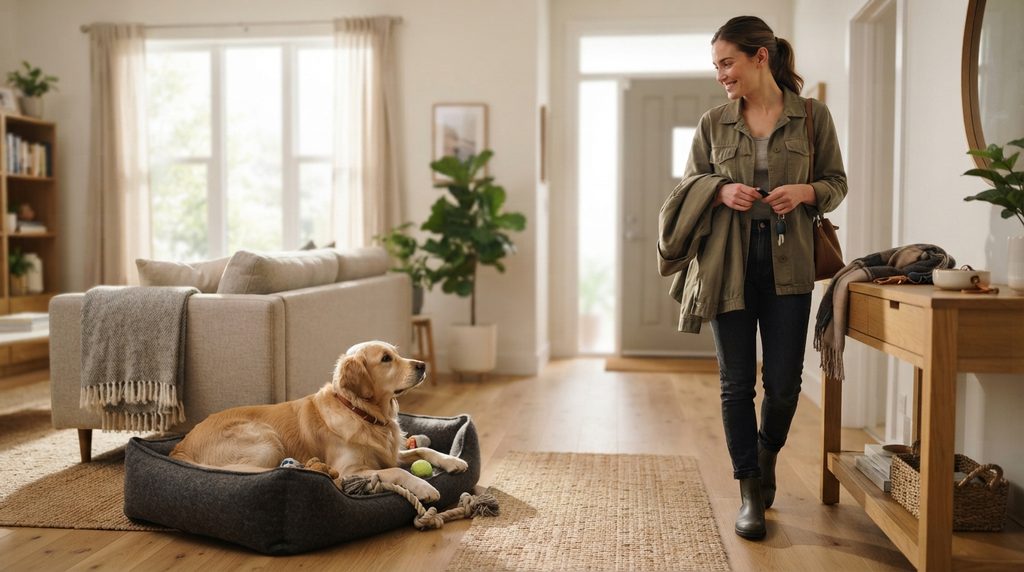
You can practice picking up your keys, putting on your shoes, or walking toward the door without actually leaving. This can help your dog learn that these signals do not always mean a long separation is coming.
3. Create a Calm Leaving Routine
Dogs often feel more comfortable when they know what to expect.
Try establishing a simple routine before leaving:
Bathroom break → exercise → water → enrichment activity → calm departure
Keep the routine predictable without making the departure dramatic.
Over time, these familiar steps can become signals that your dog is going to settle down rather than panic.
4. Give Your Dog Something Appropriate to Do
Mental enrichment can make alone time more productive.
Before leaving, consider providing a safe activity such as a food puzzle, stuffed enrichment toy, or another item your dog already knows how to use safely.
The activity should be appropriate for your dog’s size, chewing habits, and individual needs.
An enrichment activity is not a magic cure for separation anxiety, but it can provide an opportunity for your dog to focus on something positive.
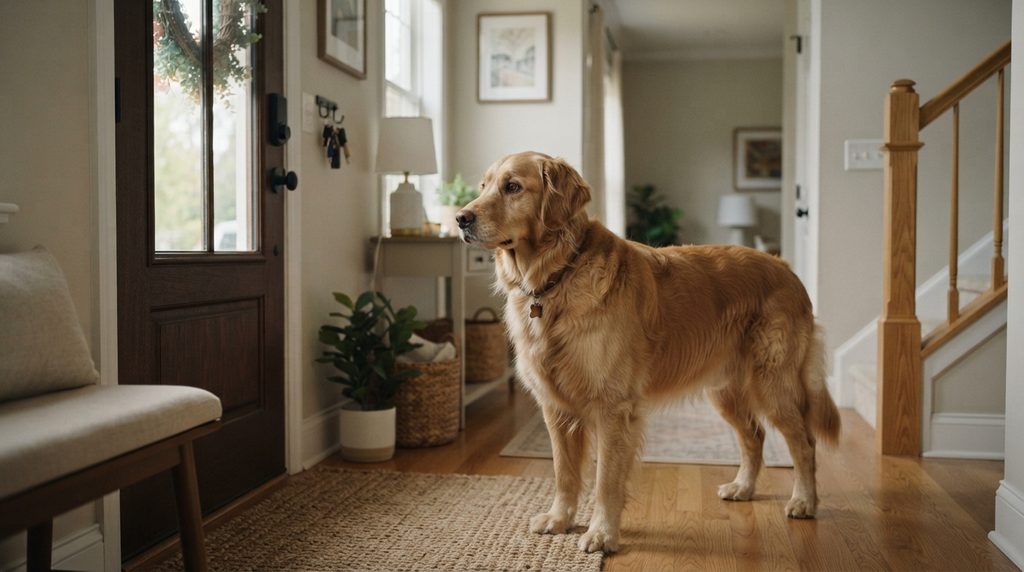
5. Encourage Independence While You Are Home
Training does not only happen when you leave the house.
During normal daily life, encourage your dog to spend short periods relaxing away from you.
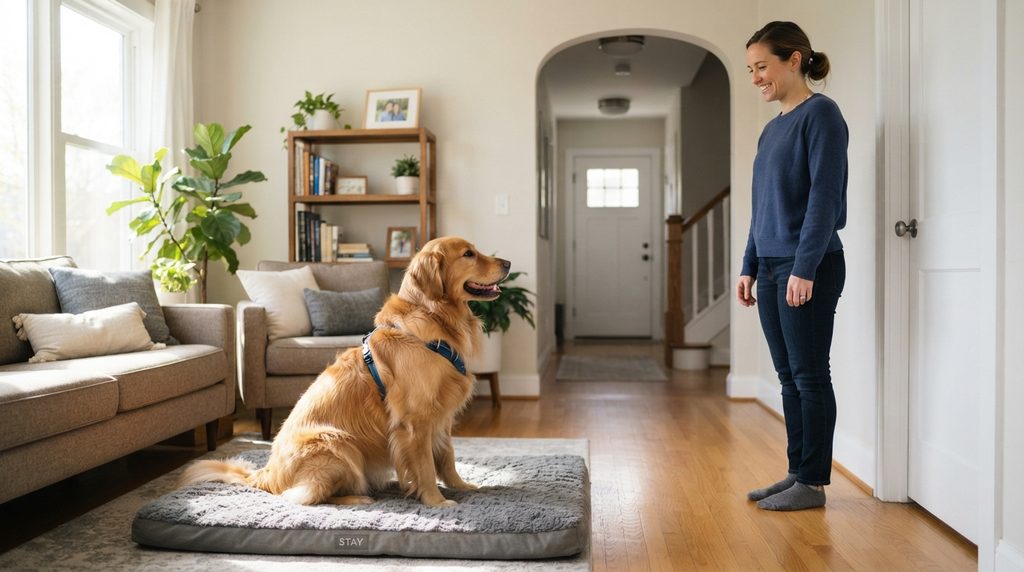
For example, if your dog constantly follows you from room to room, you can gradually teach them that relaxing on a bed or mat nearby is perfectly safe.
Reward calm behavior rather than constantly responding to attention-seeking behavior.
The goal is not to ignore your dog. It is to help them become comfortable without needing constant physical contact.
6. Avoid Punishment
Punishing a dog for barking, scratching, chewing, or having an accident after you return can make the situation worse.
Your dog is unlikely to understand that the punishment is connected to something they did while you were away. Instead, they may simply become more worried about your return.
Separation-related behavior should be approached as a problem to solve, not a reason to punish your dog.
7. Exercise Before Alone Time
Physical activity can be an important part of a healthy routine.
A suitable walk or play session before a planned period alone may help your dog settle afterward. However, exercise should not be viewed as a replacement for behavioral training.
Give your dog enough time to cool down and relax before leaving rather than immediately rushing out after intense activity.
8. Build Progress Slowly
One of the biggest mistakes owners make is increasing alone time too quickly.
If your dog successfully stays calm for five minutes, that does not necessarily mean they are ready for thirty minutes.
Think of training as building a skill.
Calm → repeat → small increase → calm → repeat again.
Some dogs progress quickly, while others need considerably more time.
A Simple Example
Imagine your dog becomes anxious whenever you walk out of the room.
You could begin by stepping into another room for a few seconds and returning while your dog remains relaxed. Repeat this until the behavior becomes boring and predictable.
Then gradually increase the distance or duration.
If your dog starts panicking, return to an easier step rather than pushing through the distress.
The goal is progress, not speed.
Mistakes, Enrichment & Professional Help
Common Mistakes That Can Make Separation Anxiety Worse
Helping an anxious dog takes patience, and some well-intentioned actions can accidentally make the problem harder.
Leaving for too long too soon is one of the biggest mistakes. If your dog becomes distressed after five minutes, repeatedly leaving for several hours doesn’t teach them to become comfortable. It may simply expose them to more fear.
Another mistake is making every departure emotional. Calm, predictable departures are generally easier for an anxious dog to understand.
You should also avoid punishing your dog after returning home. Barking, scratching, or accidents may be signs of distress rather than deliberate disobedience.
Finally, don’t expect a single toy, supplement, or training session to solve the entire problem. Separation anxiety often requires a consistent combination of strategies.
Use Enrichment to Make Alone Time More Positive
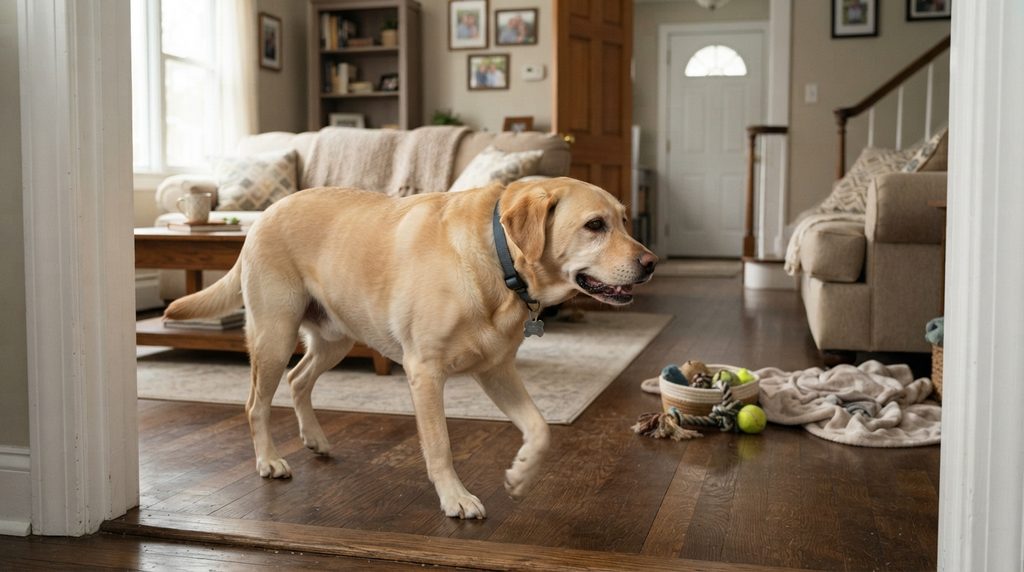
Enrichment gives your dog appropriate ways to use their brain while you’re away.
Depending on your dog’s preferences, you can provide:
- Food puzzles
- Treat-dispensing toys
- Safe chew items
- Snuffle mats
- Frozen food-filled enrichment toys
- Rotating toys that remain interesting
- A comfortable resting area
Introduce new enrichment while you’re home first. You want to make sure your dog knows how to use it and that it is safe for them.
Some dogs won’t eat when they are highly anxious. If your dog completely ignores a favorite food toy when you leave, that can be useful information—it may indicate that their anxiety is too high for enrichment alone to solve the problem.
Create a Comfortable Resting Area
Your dog should have a quiet place where they can relax.
This could be a comfortable dog bed in a calm area of the home. Some dogs prefer being able to look outside, while others settle better in a quieter room.
Don’t force your dog to remain in one particular location if that area makes them uncomfortable.
The goal is to create a place associated with relaxation and safety.
What About Crate Training?
A crate can be useful for dogs that already view their crate as a comfortable, safe space.
However, a crate is not automatically a solution for separation anxiety.
If a dog panics when confined, forcing them to remain in a crate while alone can increase distress and may create a safety risk if they attempt to escape.
If your dog already loves their crate, continue using it appropriately. If they show panic when confined, discuss the situation with a qualified professional rather than assuming more crate time will fix it.
When Should You Contact a Veterinarian?
If your dog’s anxiety is severe, persistent, or causing injury or significant disruption, professional guidance is important.
Consider speaking with a veterinarian if your dog:
- Attempts to escape and injures themselves
- Shows extreme panic when left alone
- Has persistent destructive behavior
- Suddenly develops anxiety after previously being comfortable alone
- Stops eating or drinking normally
- Has repeated indoor accidents
- Shows other unusual behavioral or physical changes
A veterinarian can help determine whether an underlying medical issue could be contributing to the behavior and can advise whether referral to a qualified veterinary behavior professional is appropriate.
For severe cases, behavior modification may sometimes be combined with veterinary treatment.
Be Patient With the Process
There is no universal timeline for overcoming separation anxiety.
One dog may improve noticeably with consistent training, while another may need a much longer period of gradual work.
Try to measure small improvements rather than expecting an overnight transformation.
If your dog used to become anxious immediately and can now remain relaxed for several additional minutes, that’s meaningful progress.
A Simple Daily Routine
A consistent routine might look something like this:
Morning:
Bathroom break → appropriate exercise → breakfast → quiet rest.
During the day:
Short independence exercises → calm interaction → enrichment.
Before leaving:
Bathroom break → calm preparation → safe enrichment → quiet departure.
After returning:
Calm greeting → bathroom break → normal interaction.
Remember that this is only an example. Your dog’s age, health, temperament, exercise requirements, and training history should determine the routine that works best.
Final Takeaway
Dog separation anxiety can be challenging, but it doesn’t mean your dog is being difficult or that you’re a bad owner.
The most helpful approach is usually to understand the behavior, avoid punishment, keep departures predictable, build alone-time tolerance gradually, provide appropriate enrichment, and seek professional help when the anxiety is severe.
Most importantly, don’t measure success by how quickly your dog can tolerate being alone. Measure it by how much calmer and more confident your dog becomes over time.
FAQs + SEO Package
Frequently Asked Questions About Dog Separation Anxiety
1. How do I know if my dog has separation anxiety?
Look for repeated distress specifically when your dog is separated from you. Barking, whining, pacing, destructive behavior near exits, escape attempts, excessive panting, or indoor accidents can be signs. A veterinarian can help determine whether separation anxiety is the likely cause.
2. Can separation anxiety be cured?
Many dogs can improve significantly with appropriate behavior modification and a consistent routine. However, progress varies from dog to dog. Severe cases may require guidance from a veterinarian or qualified veterinary behavior professional.
3. Should I ignore my dog when I leave?
You don’t need to completely ignore your dog. The goal is to make departures calm and predictable rather than turning them into an emotional event.
4. Does exercise help separation anxiety?
Appropriate physical and mental activity can help a dog settle, but exercise alone usually isn’t enough to address significant separation anxiety. Gradual alone-time training is an important part of the overall approach.
5. Should I get another dog for my anxious dog?
Getting another dog isn’t a guaranteed solution. Separation anxiety is usually related to separation from a particular person, so another pet may not resolve the underlying problem.
6. Can a puppy develop separation anxiety?
Yes. Puppies can struggle with being alone, particularly when they haven’t gradually learned how to spend time away from their people. Early, positive independence training can help establish healthy habits.
7. What should I do if my dog destroys things when I’m gone?
First, consider safety and prevent access to dangerous objects. Then work on identifying what triggers the behavior and begin gradual alone-time training. If destruction is severe or accompanied by panic, professional guidance is recommended.
Final Thoughts
Dog separation anxiety can be stressful, but understanding what your dog is experiencing is the first step toward helping them.
Instead of treating anxious behavior as stubbornness or disobedience, focus on building confidence. Keep your routine predictable, practice short separations, reward calm independence, provide appropriate enrichment, and increase alone time gradually.
Most importantly, give your dog time. Progress doesn’t have to be perfect to be meaningful.
A calmer dog isn’t created through punishment or pressure. Confidence is built through patience, consistency, and positive experiences.
If your dog’s anxiety is severe, causes injuries, or isn’t improving despite consistent training, speak with your veterinarian or a qualified behavior professional.