Why Is My Cat Hiding? 9 Important Reasons to Know, Have you noticed your cat spending more time under the bed, behind the sofa, inside a closet, or in another quiet corner of your home?
If your cat suddenly starts hiding, it is natural to become concerned. Cats are naturally private animals, and occasional hiding is completely normal. However, a noticeable change in your cat’s behavior can sometimes tell you that something has changed in their environment—or that they are not feeling well.
Understanding why your cat is hiding can help you respond in the right way instead of pulling them out of their hiding place or making them feel even more stressed.
In this guide, we will look at the most common reasons cats hide, what you can do to make your cat feel safer, and the warning signs that mean it may be time to contact a veterinarian.
Is It Normal for Cats to Hide?
Yes. Hiding is a normal behavior for many cats.
Cats often look for quiet, enclosed spaces because these places make them feel protected. A cat may hide after hearing a loud noise, meeting a stranger, experiencing a change at home, or simply wanting some uninterrupted rest.
Some cats are naturally more cautious than others. A shy cat may spend more time hiding than a confident, outgoing cat.
The important thing is to understand your cat’s normal behavior.
If your cat has always enjoyed sleeping underneath the bed for a few hours each day and otherwise eats, drinks, plays, grooms and behaves normally, there may be nothing to worry about.
The situation is different when a cat that normally spends time with the family suddenly disappears for long periods or refuses to come out.
A sudden behavioral change deserves attention.
1. Your Cat May Be Feeling Stressed
Stress is one of the most common reasons a cat may suddenly start hiding.
Cats can become stressed by changes that humans may consider small or unimportant.
For example, your cat might become uncomfortable after:
- Moving furniture
- Bringing home new furniture
- Having visitors
- Introducing another pet
- Changing feeding times
- Moving to a new house
- Having construction work nearby
- Hearing loud music
- Experiencing unfamiliar smells
- Changing their litter box location
Because cats depend heavily on familiar surroundings and routines, even a small environmental change can make them feel insecure.
When a cat feels stressed, hiding can provide a sense of safety.
How Can You Tell If Stress Is the Problem?
Hiding may be accompanied by other changes in behavior.
Your cat might:
- Spend less time around people
- Become unusually quiet
- Avoid other pets
- Groom excessively
- Stop playing
- Eat less
- Become more vocal
- Use the litter box differently
- Become more irritable
Not every stressed cat will show all of these signs.
If you suspect stress, think about what changed shortly before your cat started hiding.
Sometimes identifying the trigger is the first step toward solving the problem.
2. Something Changed in Your Home
Cats are creatures of routine.
They become familiar with where their food is located, where they sleep, where they use the litter box and where they can escape when they want privacy.
A change in the household can therefore make your cat feel uncertain.
Imagine that your cat normally sleeps in a quiet bedroom. You suddenly rearrange the room, move their favorite bed and begin spending more time there.
To you, it may simply look like redecorating.
To your cat, the familiar environment has changed.
Your cat may respond by searching for another safe place.
This is especially common after moving house.
Give Your Cat Time to Adjust
If you have recently changed your home, do not expect your cat to immediately behave normally.
Give them access to a quiet area containing:
- Fresh water
- Food
- A clean litter box
- A comfortable bed
- A familiar blanket
- A scratching post
- A safe hiding place
Allow your cat to explore at their own pace.
Avoid forcing them to investigate every room immediately.
The goal is to make their environment predictable again.
3. Your Cat May Have Been Frightened
Sometimes the explanation is very simple: something scared your cat.
Cats have sensitive hearing, and sudden sounds can be particularly frightening.
A cat may hide after hearing:
- Thunder
- Fireworks
- Vacuum cleaners
- Loud appliances
- Construction noise
- Shouting
- A dropped object
- A barking dog
- An unfamiliar alarm
A frightened cat may run directly to the place where they feel safest.
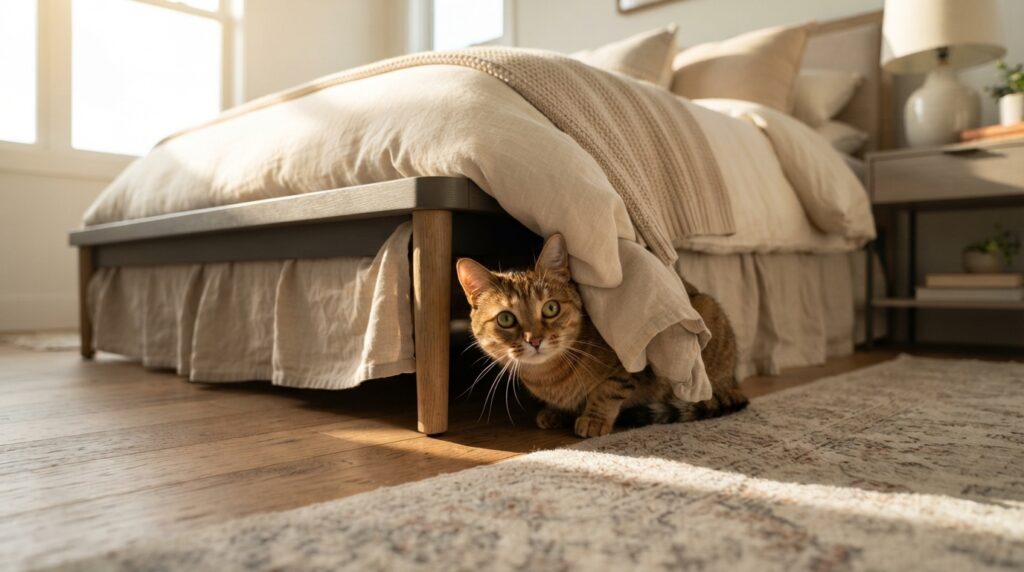
Under a bed, inside a closet or behind furniture can feel like a protective shelter.
What Should You Do?
The best response is usually to give your cat space.
Do not repeatedly reach into the hiding place.
Instead, keep the environment calm and allow your cat to decide when it is safe to come out.
You can speak softly and normally so your cat knows you are nearby.
Keep other pets and children away from the hiding area until your cat becomes comfortable again.
Most cats will gradually return to their normal behavior once the frightening event has passed.

4. Your Cat Simply Wants Some Privacy
Not every hiding episode means something is wrong.
Sometimes your cat is simply looking for a peaceful place to sleep.
Cats can sleep for many hours throughout the day, and they often choose quiet or enclosed spaces for rest.
Your cat may hide because:
- The house is busy
- People are moving around
- Children are playing
- Another pet is bothering them
- They want uninterrupted sleep
- The room is too bright
- They prefer a warmer or cooler location
Providing appropriate hiding places can actually be beneficial.
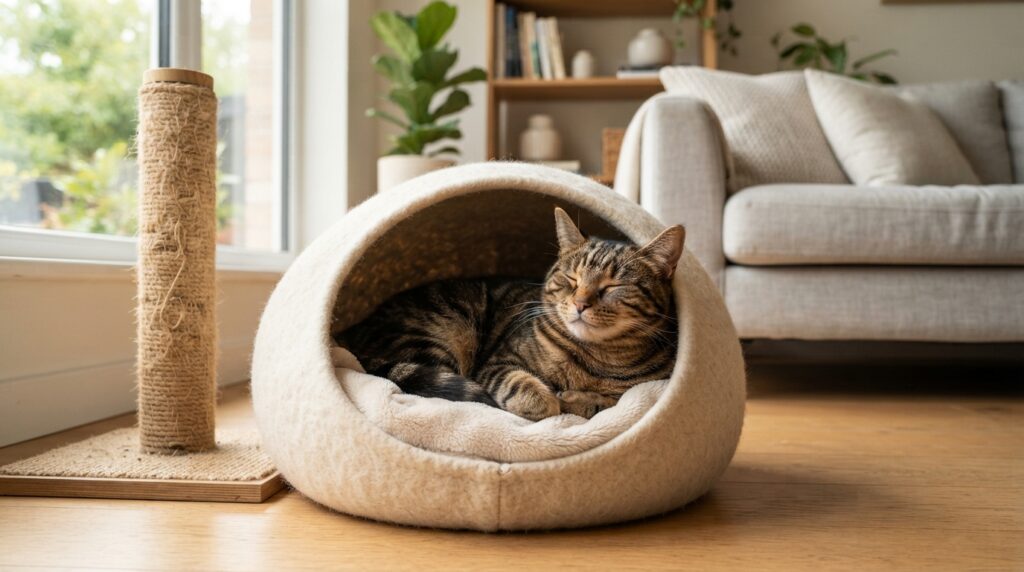
A cardboard box, covered cat bed or quiet elevated area can give your cat somewhere to retreat when they need a break.
The key is to make sure hiding does not become the only thing your cat does.
A healthy cat should still have normal interest in food, water, grooming, play and interaction according to their usual personality.
5. Another Pet May Be Making Your Cat Feel Unsafe
If you have more than one pet, hiding may be connected to tension between them.
Cats do not always openly fight when they are uncomfortable with another animal.
One cat may simply avoid the other.
For example, a more confident cat may block access to food, water, litter boxes or favorite resting areas without causing an obvious physical fight.
The more nervous cat may respond by hiding.
Look for Subtle Signs
Watch how your pets behave around each other.
You may notice:
- Staring
- Chasing
- Blocking pathways
- Hissing
- Growling
- Avoiding shared areas
- One cat refusing to enter a room
- A cat waiting until another pet leaves before eating
If this is happening, make sure each cat has access to essential resources.
Ideally, provide multiple food and water areas, resting spaces, scratching locations and litter boxes so one animal cannot easily control everything.
Your cat should have somewhere they can retreat without being followed.
6. Your Cat May Be Sick or in Pain
One of the most important reasons to consider when a cat suddenly starts hiding is illness or pain.
Cats are very good at hiding discomfort. In the wild, appearing weak could make an animal more vulnerable, and domestic cats may still instinctively withdraw when they do not feel well.
This means a cat may hide before you notice obvious signs of illness.
Pay attention if hiding is accompanied by changes such as:
- Not eating or drinking normally
- Eating much less than usual
- Vomiting
- Diarrhea
- Trouble using the litter box
- Urinating more or less than usual
- Difficulty walking or jumping
- Excessive sleeping
- Unusual aggression when touched
- Changes in breathing
- Poor grooming
- Sudden weight changes
- Extreme weakness
Do not assume your cat is hiding simply because they are shy if this behavior is unusual for them.
A sudden change combined with other symptoms may mean your cat needs veterinary care.
When Is It an Emergency?
Contact a veterinarian promptly if your cat is hiding and also appears seriously unwell.
Urgent warning signs can include difficulty breathing, collapse, severe weakness, repeated vomiting, obvious severe pain, or trouble urinating.
Male cats, in particular, can experience urinary blockages that require urgent veterinary treatment.
If you are unsure whether your cat’s symptoms are serious, it is safer to contact a veterinary professional for advice.
7. Your Cat Is Adjusting to a New Home
Moving into a new home can be overwhelming for a cat.
Everything smells different. The rooms are unfamiliar. There may be new sounds, people, pets and objects.
Even a confident cat may hide after arriving somewhere new.
Your cat is not necessarily unhappy with you. They simply need time to understand that the new environment is safe.
Create a Safe Room
During the first stage of adjustment, consider giving your cat one quiet room rather than immediate access to the entire home.
Set up the room with:
- Food
- Fresh water
- A litter box
- A comfortable bed
- Familiar toys
- A scratching surface
- A blanket carrying familiar scents
- A safe hiding area
Let your cat settle in.
Spend quiet time in the room without constantly trying to touch or pick them up. You can sit nearby, speak softly or read quietly while allowing your cat to observe you.
As your cat becomes more comfortable, they may gradually begin exploring.
Every cat adjusts at a different speed. Some need only a short time, while others need much longer.
Patience is extremely important.
8. Visitors or Noise May Be Making Your Cat Hide
Does your cat disappear every time guests arrive?
This is common.
Visitors can bring unfamiliar voices, movements and scents into your cat’s territory. A social gathering may be enjoyable for humans but stressful for a cautious cat.
Your cat may choose to hide until the house becomes quiet again.
The same can happen during:
- Parties
- Family gatherings
- Home repairs
- Renovations
- Cleaning with loud equipment
- Fireworks
- Thunderstorms
Do not force your cat to greet visitors.
A frightened cat should always have access to a quiet escape area.
You can tell visitors not to chase, corner or pull your cat from their hiding place.
Allowing the cat to decide when to approach people can help them feel more in control.
9. Your Cat’s Routine Has Changed
Cats often feel secure when daily life is predictable.
Changes in routine can therefore affect some cats more than owners expect.
For example, your cat may become stressed if:
- You recently started a new job schedule
- Feeding times changed
- Someone in the household moved away
- A family member is away more often
- Your sleeping schedule changed
- Another pet was introduced
- Daily playtime has decreased
If your cat suddenly begins hiding, think about what has changed during the previous days or weeks.
Restoring a predictable routine may help.
Try to keep feeding, play and quiet interaction at reasonably consistent times.
Your cat does not need every minute of the day to follow a strict schedule, but consistency can make their environment feel safer.
How to Help a Hiding Cat Feel Safe
The biggest mistake many owners make is trying to force a cat out of their hiding place.
You may be worried and want to check on them, but pulling a frightened cat out can increase fear and make them trust the hiding place even more.
Instead, focus on helping your cat feel secure.
1. Do Not Force Your Cat to Come Out
Unless there is an immediate safety or medical reason, avoid reaching into your cat’s hiding place and dragging them out.
Give them time.
Your cat is more likely to become confident when they feel they have control over when they leave their safe space.
2. Keep the Environment Calm
Reduce unnecessary noise around your cat.
Avoid loud music, shouting and repeated attempts to attract their attention.
If children are present, explain that the cat needs space.
A calm home can make a significant difference for a nervous cat.
3. Provide Safe Hiding Places
Instead of trying to stop your cat from hiding completely, provide safe places where they can hide comfortably.
Examples include:
- Cardboard boxes
- Covered cat beds
- Cat caves
- Shelves
- Cat trees
- Quiet corners
A safe hiding place can help your cat cope with stress.
Make sure the area is safe and that your cat cannot become trapped.

4. Encourage, But Do Not Pressure
You can encourage your cat to come out by placing food, treats or a favorite toy near their hiding area.
Do not place everything directly inside the hiding place if you want to encourage gradual exploration.
Move items slowly over time as your cat becomes more confident.
Never chase your cat around the house to make them interact with you.
Trust develops through positive experiences.
5. Spend Quiet Time Nearby
Sometimes your presence can help, especially if your cat trusts you.
Sit quietly in the same room without staring directly at your cat or demanding attention.
You can speak in a calm voice and allow your cat to observe you.
Your cat may eventually come out when they realize there is no threat.
The important thing is patience.
Should You Bring Food to a Hiding Cat?
It depends on the situation.
If your cat is temporarily hiding because of visitors or a loud noise, they may come out later to eat normally.
However, if your cat has been hiding for an unusually long time, make sure you know whether they are eating, drinking and using the litter box.
A cat that refuses food should not simply be ignored because you assume they are stressed.
Loss of appetite can be associated with medical problems and deserves attention, especially when combined with continued hiding or other unusual behavior.
If you cannot monitor your cat properly because they remain hidden, contact a veterinarian for guidance.
Can I Pull My Cat Out From Under the Bed?
Usually, no.
If your cat is hiding because they are frightened, pulling them out can make the situation worse.
They may scratch or bite because they feel threatened, and they may become even more determined to hide in the future.
Instead, make the room quiet and safe.
Give your cat a chance to come out voluntarily.
However, there are exceptions. If your cat is in danger, needs urgent medical treatment, or must leave an unsafe location, you may need to remove them carefully and safely.
If possible, ask a veterinary professional for advice when dealing with a frightened or potentially injured cat.
When Should You Call a Veterinarian?
A cat hiding occasionally is not automatically a medical problem.
But you should take sudden behavioral changes seriously.
Consider contacting a veterinarian if your cat:
- Suddenly hides much more than usual
- Refuses food
- Stops drinking normally
- Vomits repeatedly
- Has diarrhea
- Has trouble urinating
- Appears weak
- Has difficulty breathing
- Seems to be in pain
- Stops grooming
- Cannot walk or jump normally
- Remains hidden for an extended period and does not return to normal behavior
You know your cat better than anyone else.
If something feels unusual, do not ignore your instincts.
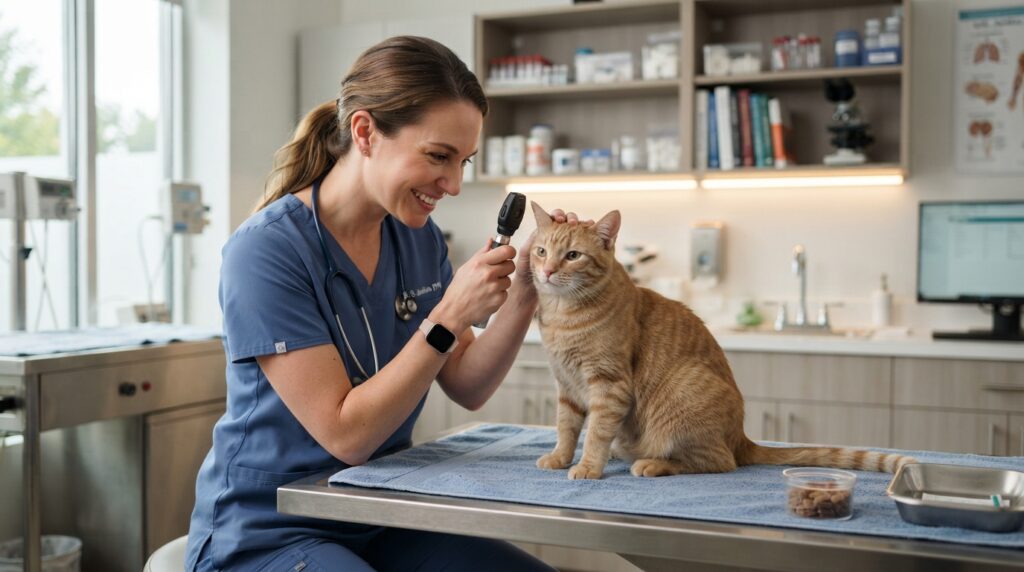
A veterinary examination can help identify whether an underlying health problem is contributing to the change.
Final Thoughts
If you are asking, “Why is my cat suddenly hiding?”, the answer may be as simple as stress, fear, visitors or a change in routine.
But sudden hiding can also be your cat’s way of showing that something is wrong.
The most important step is to look at the complete picture.
Ask yourself: Is my cat eating normally? Drinking normally? Using the litter box? Playing? Grooming? Moving comfortably?
A cat that hides occasionally while behaving normally may simply need privacy and a safe space.
A cat that suddenly hides and shows other changes deserves closer attention.
Be patient, avoid forcing your cat out and give them a calm environment where they can feel safe.
And if hiding is unusual for your cat or comes with signs of illness, do not wait too long to seek professional advice.
Understanding your cat’s behavior can help you respond with patience, care and confidence—and give your feline friend the security they need to feel comfortable in their home again.
Frequently Asked Questions About Cats Hiding
Why is my cat suddenly hiding?
A cat may suddenly hide because of stress, fear, environmental changes, unfamiliar visitors, another pet, or illness. If hiding is unusual for your cat or occurs with changes in eating, drinking, grooming, litter-box habits, or energy, speak with a veterinarian.
Why is my cat hiding under the bed?
Under the bed is dark, quiet and enclosed, which can make cats feel protected. Your cat may hide there after becoming frightened, stressed or simply because they want a peaceful place to rest.
Should I force my cat out of hiding?
Usually, no. Forcing a frightened cat out can increase stress and may make them hide more. Give your cat a safe environment and allow them to come out on their own unless there is an immediate safety or medical reason to intervene.
Why is my cat hiding and not eating?
Hiding combined with a loss of appetite can be more concerning than hiding alone. Stress can affect appetite, but illness and pain can also cause these changes. If your cat is refusing food or appears unwell, contact a veterinarian.
How long can a cat hide because of stress?
There is no single amount of time that applies to every cat. Some cats recover quickly after a frightening event, while others need more time to adjust. If hiding persists or your cat develops other unusual symptoms, seek veterinary advice.
How can I make my hiding cat feel safe?
Provide a quiet room or safe area with food, water, a clean litter box and comfortable bedding. Avoid chasing or pulling your cat from hiding. Calm interaction and a predictable routine can help your cat regain confidence.
Do cats hide when they are sick?
Yes. Cats can become withdrawn or hide when they are experiencing illness or pain. A sudden increase in hiding, especially when combined with appetite changes, weakness, vomiting, breathing problems or litter-box changes, should not be ignored.
Is hiding normal for a new cat?
Yes. A new cat may hide while adjusting to unfamiliar people, smells, sounds and surroundings. Give them a quiet safe space and allow them to explore gradually rather than forcing interaction.

Key Takeaway
A hiding cat is not always a sick cat, but a sudden change in hiding behavior should never be dismissed. Pay attention to your cat’s complete behavior and look for changes in appetite, drinking, grooming, movement, litter-box use and energy.